.jpeg)
Making dresses in the United States means working with a small, specialized set of cut-and-sew factories. Most of them cluster in the Los Angeles and New York garment districts. The domestic industry is compact: US cut-and-sew apparel manufacturing is estimated at roughly $5.3 billion across about 1,200 businesses (IBISWorld, 2025). Against that sits roughly $196 billion in annual US women's apparel demand (Statista, 2026).
That gap is the whole story of American dress manufacturing. Demand is enormous, and the domestic supply base is thin. The factories that can actually cut and sew a dress at your volume are worth knowing by name. This directory profiles eight of them, with real minimums and a look at what LA and NYC each do well. It also gives a clear read on cost, lead time, and when domestic beats offshore. It's an editorial map built from company disclosures, not a roster of factories OneAim owns.
Heads up: We're OneAim, a group of 100+ documented clothing manufacturers across 15+ countries. The companies profiled below are independent US manufacturers listed on their own public sources, not members of our group. OneAim's role is separate: route your brief to a documented factory in our group built for your product.
Key Takeaways
- US dress production is concentrated in two districts. Los Angeles holds the larger cut-and-sew base; New York runs shorter, higher-finish and bridal work.
- "Made in USA" has a volume ceiling. Several factories keep production domestic only at lower quantities, then shift larger runs to Mexico or Asia. Confirm where your order will actually be sewn.
- Minimums range from about 20 to 600 units per style, depending on the factory and on cut-make-trim versus full-package.
- Domestic costs more per unit but buys speed and oversight. US cut-and-sew apparel manufacturing is a $5.3 billion industry against $196 billion in demand (IBISWorld, 2025). That's exactly why the domestic base is small and premium-priced.
- A dress-capable factory is not always a dress specialist. Match your dress type to demonstrated work, not a general capability page.
Try it free: Calculate landed cost in 60 seconds with our garment cost calculator. No email required.
Where are dresses manufactured in the USA?
Almost all US dress production sits in two places: the Los Angeles garment district and the New York garment district. Los Angeles carries the larger share of domestic cut-and-sew capacity. It favors knits, casual and contemporary dresses, and brands scaling into the hundreds or thousands of units. New York leans toward shorter runs, tailored and structured pieces, and bridal or eveningwear where finishing quality matters more than volume.
Why so concentrated? Both districts hold what a dress brand needs within a few blocks: fabric and trim suppliers, pattern makers, graders, sample rooms, and the sewing lines themselves. That density is the reason a domestic dress program moves faster than an offshore one. You can walk a sample from the cutting table to a fitting in an afternoon. No email thread with an overseas factory can match that.
.jpeg)
How did we choose these manufacturers?
We built this list from public sources. Those include each factory's own website and stated capabilities, published minimums, and industry directories such as the CFDA production resources. Every company here is a real, verifiable US entity with a documented footprint. We didn't rank them one to eight. The right factory depends on your dress type, volume, and whether you need full-package or cut-make-trim.
Where a factory advertises "low minimums" without a public number, we say so rather than invent one. Where a factory keeps only lower volumes domestic, we flag it. And where a factory is a womenswear generalist rather than a dedicated dress house, we note that too. Treat this as a starting map, not a substitute for an audit and a paid sample round.
Who are the leading US dress manufacturers?
The eight factories below span the full range of US dress production. They run from 20-unit New York runs to 600-unit Los Angeles full-package programs. Read each profile for what it actually does well, not just where it sits.
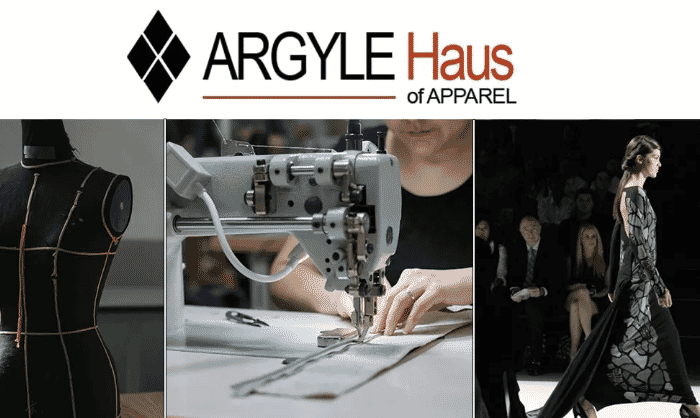
ARGYLE Haus of Apparel (San Fernando, CA)
A Los Angeles-area full-package manufacturer that owns its factory and lists womenswear and dresses among its capabilities. ARGYLE Haus handles design development, patterns, and production under one roof. It sets no fixed minimum for development work, with typical production runs around 500 units per style scaling into the thousands. Because it controls the full process domestically, it suits brands that want a single accountable partner from tech pack to finished dress. That beats juggling a pattern maker, a fabric source, and a separate sewing line. Best for emerging and growth-stage womenswear brands ready to produce at a few hundred units per style. Service: full-package.
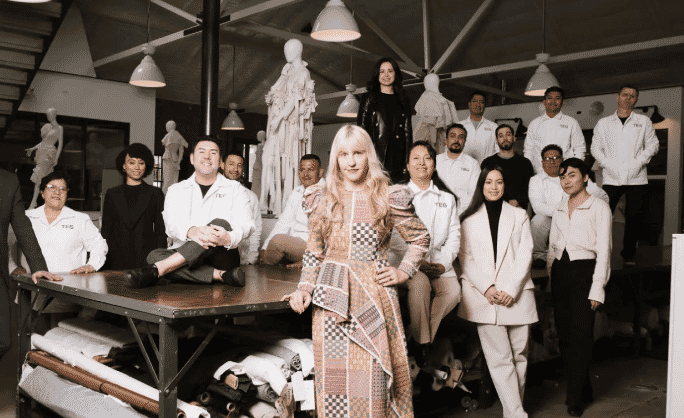
The Evans Group / TEG (Los Angeles, CA + NYC)
A vertically integrated sewing factory with locations in downtown Los Angeles and New York. TEG specializes in small-batch womenswear, bridal, and couture-level dresswear. It's built for designers who need low volumes and high finishing quality rather than mass output. It doesn't publish a fixed unit minimum, because its work is quoted per project. If your dress has structure, hand-finishing, or bridal detailing, this is the kind of factory that can execute it domestically. Best for designer and bridal labels producing short, detailed dress runs. Service: full-package, small-batch.
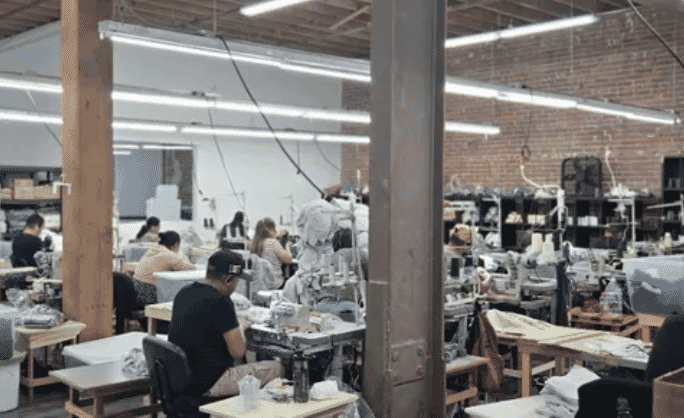
KJLA Fashion (Vernon, CA)
A Los Angeles-area Made-in-USA manufacturer working across knit and woven garments, with dresses explicitly listed among its products. KJLA advertises low minimums without publishing an exact number, and positions itself for domestic private-label production. It's a practical option for a brand that wants US-made knit or woven dresses. That avoids committing to the higher minimums of a full-scale program. Confirm the real floor for your specific garment before you plan around it. Best for brands wanting accessible US-made dress runs. Service: full-package (Made in USA).
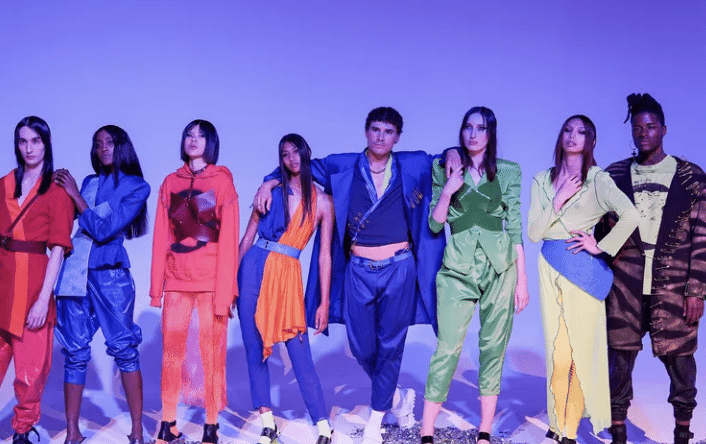
Bomme Studio (Los Angeles, CA)
A full-package Los Angeles manufacturer serving womenswear, activewear, and loungewear brands. Bomme is one of the few US factories that publishes clear minimums: 150 units per style for cut-make-trim and 600 units per style for full-package. That transparency makes it easy to plan against, which is rarer than it should be in domestic manufacturing. It's a womenswear-capable generalist rather than a dedicated dress house, so match your dress complexity to its demonstrated work. Best for brands that value published, predictable minimums. Service: full-package and CMT.
Apparel Production Inc. (New York, NY)
A New York Garment District private-label manufacturer operating since 1947. Its domestic minimum is around 200 units per style, with nearshore or overseas options at higher volumes. Its longevity is a signal: a factory doesn't survive nearly eight decades in Manhattan without reliable production. It's a long-established generalist rather than a dress specialist, so confirm dress-specific capability for your pattern. Best for brands wanting a heritage NYC factory with a moderate domestic minimum and a path to scale. Service: full-package (US + nearshore).
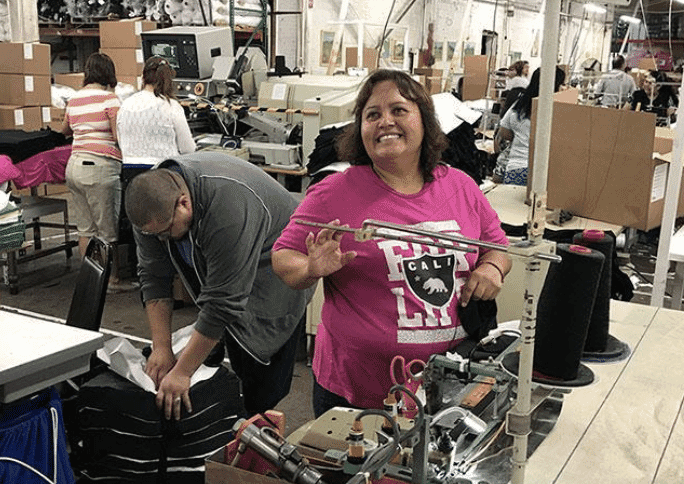
LA Fashion Source (Los Angeles, CA)
A Los Angeles cut-and-sew manufacturer that keeps production Made-in-USA in the 250-to-roughly-3,000-unit range. It shifts larger volumes to Mexico or Asia. That structure is honest and useful. It gives a growing brand a domestic option for mid-size runs, plus an explicit offshore path once volumes outgrow the US tier. The catch is that you must confirm your specific order stays in Los Angeles rather than quietly moving offshore. Best for brands whose volumes fit the US tier and who want a defined scaling route. Service: cut-and-sew (US at lower volumes).
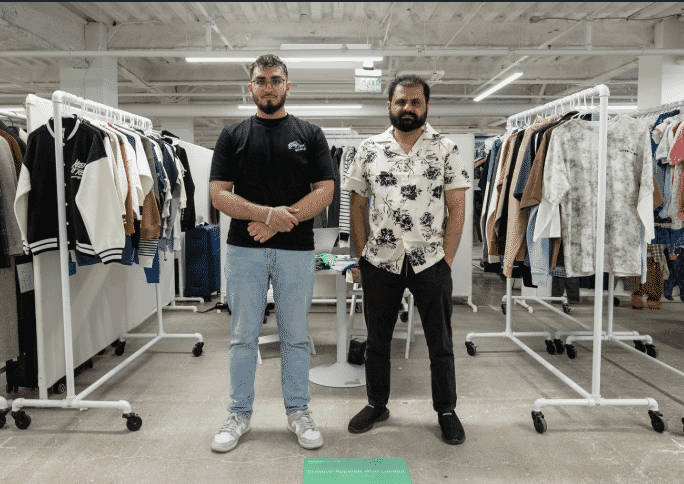
Make It LA (Los Angeles, CA)
A Los Angeles cut-and-sew and full-package manufacturer that markets among the lowest minimums in the city and short three-to-six-week lead times. It doesn't publish an exact unit floor. For an early-stage brand testing a first dress, a small domestic run with a fast turnaround beats waiting months on an overseas sample cycle. Ask for the specific minimum and lead time on your garment in writing. Best for early-stage brands that need a small, fast domestic first run. Service: full-package and CMT.
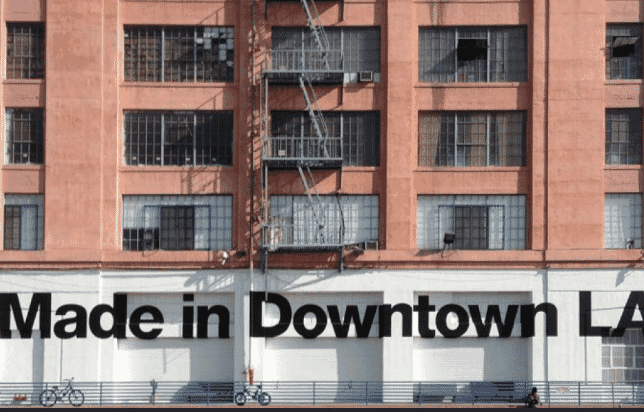
Grace Apparel Production (New York, NY)
A New York Garment District factory reported to make dresses, bridal, and knits, with a wide minimum range of roughly 20 to 1,500 units per style. It's marketed as "Made in New York." That 20-unit low end is among the most flexible in the country. It makes Grace a genuine option for a designer testing a small dress capsule before committing to volume. Confirm current terms directly, since ranges this wide depend on the specific garment. Best for brands wanting a genuinely small NYC dress run. Service: full-package.
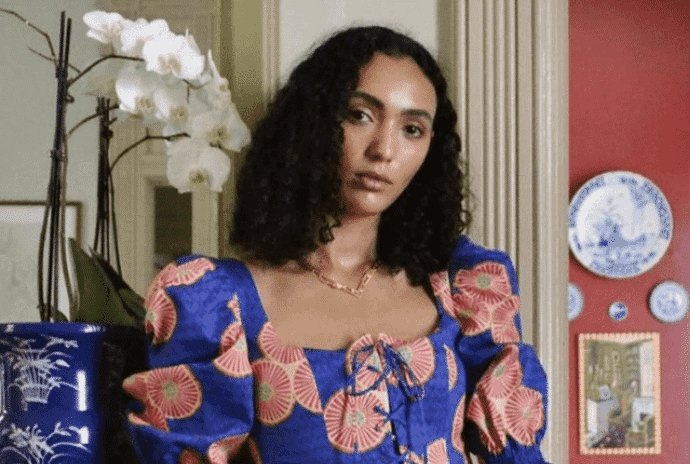
Here is how the eight factories compare at a glance.
| Factory | Base | Service | Published MOQ | Best for |
|---|---|---|---|---|
| ARGYLE Haus | San Fernando, CA | Full-package | ~500/style (no dev min) | Emerging womenswear wanting one domestic partner |
| The Evans Group (TEG) | LA + NYC | Full-package, small-batch | Not published | Bridal and couture-level short runs |
| KJLA Fashion | Vernon, CA | Full-package | "Low" (unspecified) | US-made knit or woven dresses |
| Bomme Studio | Los Angeles, CA | Full-package + CMT | 150 CMT / 600 FPP | Brands wanting transparent minimums |
| Apparel Production Inc. | New York, NY | Full-package | ~200/style | Heritage NYC factory, moderate min |
| LA Fashion Source | Los Angeles, CA | Cut-and-sew | 250 (US tier) | Mid-size US runs with an offshore path |
| Make It LA | Los Angeles, CA | Full-package + CMT | "Lowest" (unspecified) | Small, fast domestic first runs |
| Grace Apparel | New York, NY | Full-package | ~20 to 1,500/style | Genuinely small NYC dress runs |
Source: company websites and published capabilities, and the CFDA production resource directory, 2024 to 2026. Minimums as stated by each factory; confirm current terms directly.
Citation capsule: US dress manufacturing is concentrated in the Los Angeles and New York garment districts. There, full-package factories such as ARGYLE Haus, The Evans Group, and Bomme Studio cut and sew womenswear domestically. Published minimums range from roughly 20 units per style at the low end to 600 for full-package programs. Several factories keep production Made-in-USA only at lower volumes.
The chart below compares the lowest published minimum order quantity at the US factories that state one. Several others advertise "low minimums" without a public number and are excluded rather than estimated.
LA or NYC: which garment district fits your dress brand?
Pick the district by what your dress needs, not by where you happen to be based. Los Angeles is the volume answer: a deeper bench of cut-and-sew lines, strong knit and contemporary capability, and full-package minimums. Those reward runs of a few hundred units and up. New York is the finish answer: shorter runs, tailored and structured construction, and bridal and eveningwear expertise. That expertise lives in the Manhattan garment district.
Fabric access differs too. Los Angeles has its own fabric district for knits and casual wovens. New York's strength is trims, specialty fabrics, and the sample rooms that support high-finish work. If your dress is a rayon slip that needs to move at 500 units, LA fits. If it's a structured cocktail dress at 60 units with hand-finishing, New York fits.
| Factor | Los Angeles | New York |
|---|---|---|
| Cut-and-sew capacity | Larger, deeper bench | Smaller, boutique |
| Sweet spot | Knits, contemporary, casual dresses at volume | Bridal, eveningwear, tailored, short runs |
| Typical minimums | 150 to 600 units (full-package) | Can go as low as ~20 units |
| Fabric strength | LA fabric district (knits, casual wovens) | Trims, specialty fabric, sample rooms |
| Best for | Growth-stage brands scaling domestically | Designer, bridal, small premium runs |
Source: OneAim sourcing observations and public factory capabilities, 2024 to 2026. General guidance; individual factories vary.
Citation capsule: Los Angeles and New York serve different dress programs. Los Angeles offers deeper cut-and-sew capacity and stronger knit and contemporary capability, suited to runs of several hundred units. New York specializes in shorter, higher-finish, tailored, and bridal production that can start near 20 units per style.
How much does it cost to manufacture dresses in the USA?
Domestic dresses cost more per unit than offshore ones, and the reason is labor. US cut-and-sew wages are the single biggest gap versus major offshore hubs. That's why domestic manufacturing is a $5.3 billion industry against $196 billion in US women's apparel demand (IBISWorld, 2025). Most apparel sold in America is imported precisely because the domestic cut-and-sew price sits above the offshore one.
But unit price is only part of the real cost. Fabric is often the largest single line item. For a first order it frequently sets the true floor, because a fabric supplier's minimum can exceed the sewing minimum. Add pattern and grading as a one-time development cost, then trims and finishing, then freight and duty. Freight and duty are low for a domestic order and meaningful for an offshore one. When you add all of it, a domestic quote and an offshore quote can be closer than the FOB unit prices suggest.
| Cost component | What drives it |
|---|---|
| Cut-and-sew labor | US wage rates; the biggest gap versus offshore |
| Fabric | Often the largest line item; can set the real minimum |
| Pattern and grading | One-time development cost per style |
| Trims and finishing | Zippers, linings, labels, hand-finishing |
| Freight and duty | Low for domestic; significant for offshore |
Source: general apparel cost structure and OneAim pipeline observations, 2024 to 2026. Illustrative; actual splits vary by garment.
The chart below puts the demand-versus-supply gap in perspective. It's the structural reason US dress capacity is thin and priced at a premium.
What are the lead times for US dress production?
Domestic dress production is faster than offshore. That's mostly because you remove three to five weeks of ocean freight and the customs clearance that follows it. A typical domestic program runs sampling and pattern work first, then a production window measured in weeks. That beats the months an overseas first order often takes. Reorders compress further once the pattern is graded and the fabric is booked.
Speed is the main reason to pay the domestic premium. If your dress is tied to a season, a launch, or a restock you can't afford to miss, a US factory a short drive away has the edge. It beats a lower unit price on a container that clears port a month after your window closed. The trade-off is real, so weigh it against how time-sensitive your specific dress actually is. Is a two-month faster turnaround worth a higher unit cost on this style? For seasonal dresses, it usually is.
Citation capsule: US dress production is faster than offshore mainly because it removes several weeks of ocean freight and customs clearance. Domestic sampling and a production window measured in weeks let brands hit seasonal launches and restocks. An overseas first order, often measured in months, would miss them.
How do you source fabric for US dress manufacturing?
Fabric is where most dress programs succeed or stall. Full-package factories such as ARGYLE Haus or Bomme Studio will source fabric for you. That's the easier path for a first-time brand, and it folds material into one quote. Cut-make-trim factories expect you to supply the fabric yourself. That's cheaper per unit, but it hands you the sourcing risk and the fabric minimum.
Los Angeles brands often buy from the LA fabric district, while New York offers deeper access to specialty fabric and trims. Either way, confirm the fabric minimum before you lock a sewing minimum, because the two rarely match. A factory happy to sew 150 dresses does you no good if the only fabric you love comes with a 500-meter minimum. Get the fabric spec, weight, composition, and minimum in writing, and approve a physical swatch before the cut.
Should you manufacture dresses in the USA or offshore?
Manufacture domestically when speed, oversight, low order quantities, and a genuine Made-in-USA label matter more than the lowest unit price. Manufacture offshore when volume is high, timelines are relaxed, and the FOB price gap outweighs freight, duty, and the slower cycle. Most dress brands don't have to choose forever. Several US factories, LA Fashion Source among them, keep lower volumes domestic and hand you an explicit offshore path as you scale.
The honest read is that the domestic premium buys risk reduction, not just a label. Shorter shipping means less capital tied up in transit. A factory you can visit means fit problems get caught in a sample room instead of in a container. For a new dress brand testing demand at 100 to 300 units, those advantages usually outweigh the unit-cost gap. For an established brand running 5,000 units of a proven style, the math often flips offshore.
How do you choose a manufacturer by dress type?
Let the garment pick the factory. A soft knit or rayon dress at volume points to a Los Angeles full-package line like Bomme Studio or KJLA Fashion. A structured cocktail dress, an eveningwear piece, or a bridal gown points to New York finish, TEG or Grace Apparel. A tiny designer capsule you want to test points to the lowest minimums, Make It LA or Grace. A run you expect to scale points to a factory with an offshore path, LA Fashion Source or Apparel Production Inc.
Then confirm demonstrated capability, not just a capability list. Ask each shortlisted factory to show comparable dresses it has actually produced in your construction and fabric type. A factory that sews beautiful knit dresses may not be the one to build a boned bodice. The fastest way to find out is to look at real work before you pay for a sample.
Citation capsule: Choose a US dress manufacturer by garment type first. Knit and contemporary dresses at volume suit Los Angeles full-package factories. Structured, eveningwear, and bridal dresses suit New York finishing specialists. Small test capsules suit the lowest-minimum factories, and styles expected to scale suit factories that offer an explicit offshore path.
How do you work with a US dress factory?
Bring a complete tech pack. Domestic factories quote and sample faster when they receive a documented spec. That means a bill of materials, graded measurements, construction and stitch callouts, fabric specification with weight and composition, and a reference sample. For dresses, fit and drape carry the most risk. Name the exact fabric, lining, closures, and finishing rather than leaving them to the factory's discretion. A clean tech pack turns a month of back-and-forth into a two-week quote.
Then agree timeline and payment up front. Standard practice is a deposit against production, with the balance on completion or delivery. Add a pre-production sample approved against your tech pack before the full cut. Book a final inspection before releasing the balance. If you're weighing several domestic factories, a paid sample from your top two is the cheapest insurance you can buy. It settles the fit and finish questions no capability page ever will.
Frequently Asked Questions About US Dress Manufacturers
Where are most dresses manufactured in the USA?
Most US dress and womenswear factories are in two garment districts. Los Angeles is home to full-package manufacturers like ARGYLE Haus, Bomme Studio, and Make It LA. New York is home to factories such as Apparel Production Inc. and Grace Apparel. Los Angeles carries the larger share of domestic cut-and-sew capacity, while New York specializes in shorter, higher-finish and bridal runs.
What is the minimum order to manufacture dresses in the USA?
It ranges widely. The most flexible New York factories report minimums as low as roughly 20 units per style. Full-package programs in Los Angeles run to 600. Cut-make-trim minimums sit lower than full-package because you supply the fabric and pattern. Several factories advertise "low minimums" without publishing a number, so always confirm the real floor for your specific garment.
Is it more expensive to manufacture dresses in the USA?
Yes, on cut-and-sew unit price, because domestic labor costs more than in major offshore hubs. That's why US cut-and-sew apparel manufacturing is a roughly $5.3 billion industry against about $196 billion in annual US women's apparel demand. The premium buys faster turnaround, closer oversight, lower freight and duty, and a genuine Made-in-USA label. Compare quotes on a landed-cost basis before deciding.
How long does it take to manufacture dresses in the USA?
Domestic production is faster than offshore mainly because it removes three to five weeks of ocean freight plus customs clearance. A typical US program runs sampling and pattern work first, then a production window measured in weeks. Reorders compress once the pattern is graded and fabric is booked. Exact timelines depend on the factory, the fabric, and the complexity of the dress.
What is the difference between full-package and cut-make-trim?
Full-package means the factory handles sourcing, patterns, grading, and production, so you hand over a tech pack and receive finished dresses. Cut-make-trim means you supply the fabric and a graded pattern and the factory cuts and sews. Full-package is easier for first-time brands but carries higher minimums. Cut-make-trim is cheaper per unit if you can manage fabric and patterns yourself.
Are these factories dress specialists?
Some are, some are womenswear-capable generalists. Factories like The Evans Group focus on bridal and couture-level dresswear. Others are full-package apparel manufacturers that make dresses among many garment types. Ask to see comparable dresses a factory has actually produced, rather than relying on a general capability list, before committing your program.
How do I verify a US clothing manufacturer is real?
Confirm the business registration and physical address, and ask for a live video or in-person factory walkthrough. Match the address on quotes and invoices to the same legal entity. Because several US factories shift larger volumes offshore, get written confirmation of where your specific order will be sewn. Industry directories such as the CFDA production resources are a useful cross-check for legitimate domestic factories.
We're a group of 100+ documented clothing manufacturers across 15+ countries. Tell us your product, volume, and timeline. We'll route your brief to the factory in our group built for it, usually within 24 hours. You produce directly with the factory. Flat fees, no markups, no pitch.
Get in contact Download the directory ($39)Need a tech pack? Get a factory-ready single-style tech pack for $79. See what's included.
Sources used in this article
- IBISWorld, Cut & Sew Apparel Manufacturing in the US, 2025.
- Statista, Women's Apparel, United States market forecast, 2026.
- ARGYLE Haus of Apparel, company and capabilities, 2024 to 2026.
- The Evans Group (TEG), company and capabilities, 2024 to 2026.
- Bomme Studio, capabilities and minimums, 2024 to 2026.
- Apparel Production Inc., company information, 2024 to 2026.
- LA Fashion Source, cut and sew services, 2024 to 2026.
- Make It LA, cut and sew services, and KJLA Fashion and Grace Apparel Production company disclosures, 2024 to 2026.
- CFDA production and manufacturing resources, 2024 to 2026.
- OneAim Apparel internal sourcing and pipeline data, 2024 to 2026.
.jpeg)
