Two numbers decide a US crop top run before anyone sews a seam: the weight of the knit, and the length of fabric the knitting mill will run for you. Get the weight wrong and the top either clings and shows every seam or stands off the body like cardboard. Ignore the mill's run length and the minimum a cut-and-sew shop quotes you will look arbitrary, when it is really yards of jersey divided by the size of your garment.
This guide is built around those two numbers. It sets out the jersey and rib weights US makers actually publish, in grams per square metre and ounces per square yard, explains where small-run minimums come from, and then lists seven US companies that make or sell crop tops, each checked on its own website in November 2026. After the list we add where US sewing capacity sits, what an imported crop top pays at the border, and a planning sheet for a first run of 150 to 300 pieces. Every company and figure is listed in the Sources section at the end.
About us: OneAim places and manages production with documented clothing factories in the United States. The companies below are independent US makers listed from their own public websites. They are not members of our group. What OneAim does instead: we place your production with a documented factory in our group built for your product.
The short list
- Weight first. Published US jersey weights run from 136 GSM (a triblend) to 227 GSM (a cotton spandex jersey); a heavy 2x1 rib crop tank reaches 355 GSM.
- The mill sets the minimum. Essentials Made says a mill's minimum knit can start around 600 yards, which is why its 40/1 jersey starts at 150 pieces per style and heavier jerseys usually at 300.
- Published minimums vary widely. The Evans Group starts at 10 pieces, Bomme Studio at 150 units per style for CMT, Royal Apparel's garment-dye program at 180 units, Apparel Production Inc. at 200 per style in New York.
- Check where it is sewn. Bomme Studio, Lefty Production Co. and Apparel Production Inc. also offer production outside the US. Ask which site will sew your order.
- Capacity is concentrated. California employs 13,240 sewing machine operators, the most of any state, and 9,310 of them work in the Los Angeles metro area (BLS, May 2025).
- Fibre changes the duty. An imported cotton crop tee or tank pays 16.5% general duty; the same garment in man-made fibre pays 32%.
Free estimate: calculate your landed cost with our garment cost calculator in about a minute. No email needed.
What fabric weight should a crop top be?
For a jersey crop tee or tank, the US jerseys published by the makers in this guide run from 136 to 227 GSM, with heavy rib and stretch fabrics going higher. GSM is grams per square metre. US mills and blank makers often quote ounces per square yard instead, and Royal Apparel's fabric weight reference gives the conversion: 1 oz per square yard equals 33.9057 GSM. A 4.4 oz jersey is 149 GSM; a 6.5 oz jersey is 220 GSM.
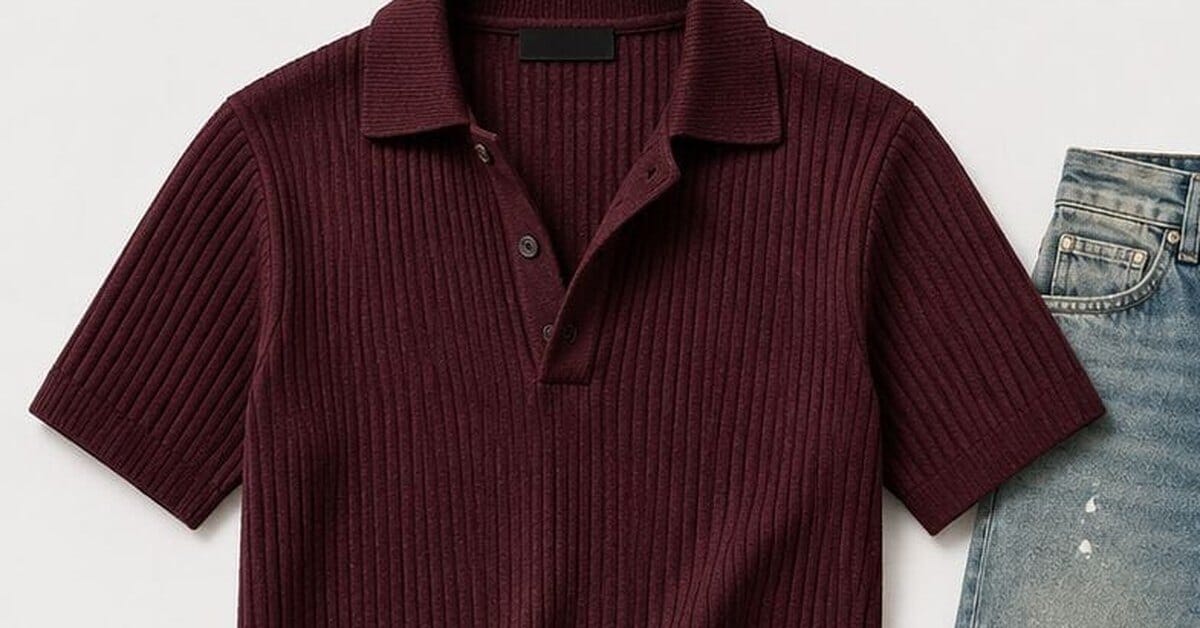
Royal Apparel groups its jersey and knit fabrics into three bands on that page. Lightweight is under 4.5 oz, or under 153 GSM, and the company describes it for tees, tanks and fitted, fashion-led shapes. Midweight runs from 4.5 to 6.0 oz, or 153 to 203 GSM, for everyday basics. Heavyweight is 6.0 oz and above, 203 GSM and up. Those bands are useful for a crop top because a short body has less fabric hanging below the bust to pull it straight, so the weight you choose shows more.
Read the chart as a menu, not a ranking. A light triblend or modal blend at around 136 to 149 GSM drapes and reads as soft and casual, but it shows the seam allowance and any bra line through it. A midweight cotton around 200 GSM holds a boxy, cropped shape and survives garment dyeing. A heavy rib with spandex, like the 355 GSM 2x1 rib Los Angeles Apparel uses for one of its crop tanks, behaves more like a light compression fabric and is chosen for fit rather than drape.
Yarn count tells you the same thing from the other side
Makers that knit to order often name the yarn rather than the weight. Essentials Made lists three cotton jerseys on its t-shirt page: 40/1 lightweight at 140 GSM, 30/1 midweight at 160 to 180 GSM, and 20/1 heavyweight at 200 to 220 GSM. Los Angeles Apparel describes several of its crop styles as 18/1 open-end cotton at 6.5 oz, or 220 GSM. In a single-ply count like 40/1 or 18/1, a lower first number means a thicker yarn, and a thicker yarn knits into a heavier, more opaque jersey.
| Knit | Published example | Weight | How it behaves in a crop top |
|---|---|---|---|
| Fine jersey | Royal Apparel Fine Jersey #5 | 4.4 oz / 149 GSM | Soft drape, light, shows seams and edges |
| Lightweight cotton jersey | Essentials Made 40/1 | 140 GSM | Fluid, fashion tee weight |
| Midweight cotton jersey | Essentials Made 30/1 | 160 to 180 GSM | Holds shape better, still drapes |
| Heavyweight cotton jersey | Los Angeles Apparel 18/1 open-end (1822GD crop tank) | 6.5 oz / 220 GSM | Boxy, structured, opaque |
| Baby 1x1 rib | Royal Apparel Organic Baby 1x1 Rib #2ORG | 6.0 oz / 203 GSM | Close fit with stretch and recovery |
| Cotton spandex jersey | Royal Apparel Cotton Spandex Jersey #1 | 6.7 oz / 227 GSM | Body-hugging, recovers its shape |
| Heavy 2x1 rib with spandex | Los Angeles Apparel 3380GD crop tank | 10.47 oz / 355 GSM | Firm, compressive, made for fit |
Weights are the makers' own published figures. Behaviour notes are general guidance, not lab tests.
Jersey, baby rib or 2x1 rib: which knit fits a short body?
The knit structure matters as much as the weight. Single jersey is smooth on the face, has looped columns on the back, curls at a cut edge and stretches more across the width than down the length. Rib knits alternate face and back stitches, which gives them much more width stretch and better recovery, so a rib crop hugs the body without needing elastic.
Los Angeles Apparel gives a useful pair of numbers for its combed cotton baby rib, knitted from 30 singles yarn: it says the fabric stretches up to 2 times its original size and that the 100% cotton style shrinks 7% in wash, with the garment designed to fit before and after washing. That is the kind of detail to ask any maker for, because a crop top has little length to spare. If a cotton rib shrinks after the first wash, the hem rides up on a garment that was already short.
- Single jersey for boxy and oversized crops, printed graphics and garment-dyed tees. Ask for the finished weight after washing, not only the greige weight.
- Baby rib (1x1) for fitted tanks, spaghetti-strap crops and close-fitting tees. Expect a narrower pattern, because rib is cut smaller and stretched on.
- 2x1 rib for a bolder rib texture and stronger hold, often with spandex for athletic crops.
- Cotton spandex jersey for tube tops and bra-like crops. Los Angeles Apparel describes its tube top jersey as 95% cotton and 5% elastane, knitted in its Los Angeles factory from US grown cotton.
Whichever knit you pick, tell the maker how the hem will be finished, because finishing uses fabric and affects the pattern. A self-fabric rib band, a turned and coverstitched hem and a bound edge each take a different allowance, and a band on a cropped body also changes how high the top sits once it is worn.
Why does the knitting mill set your minimum?
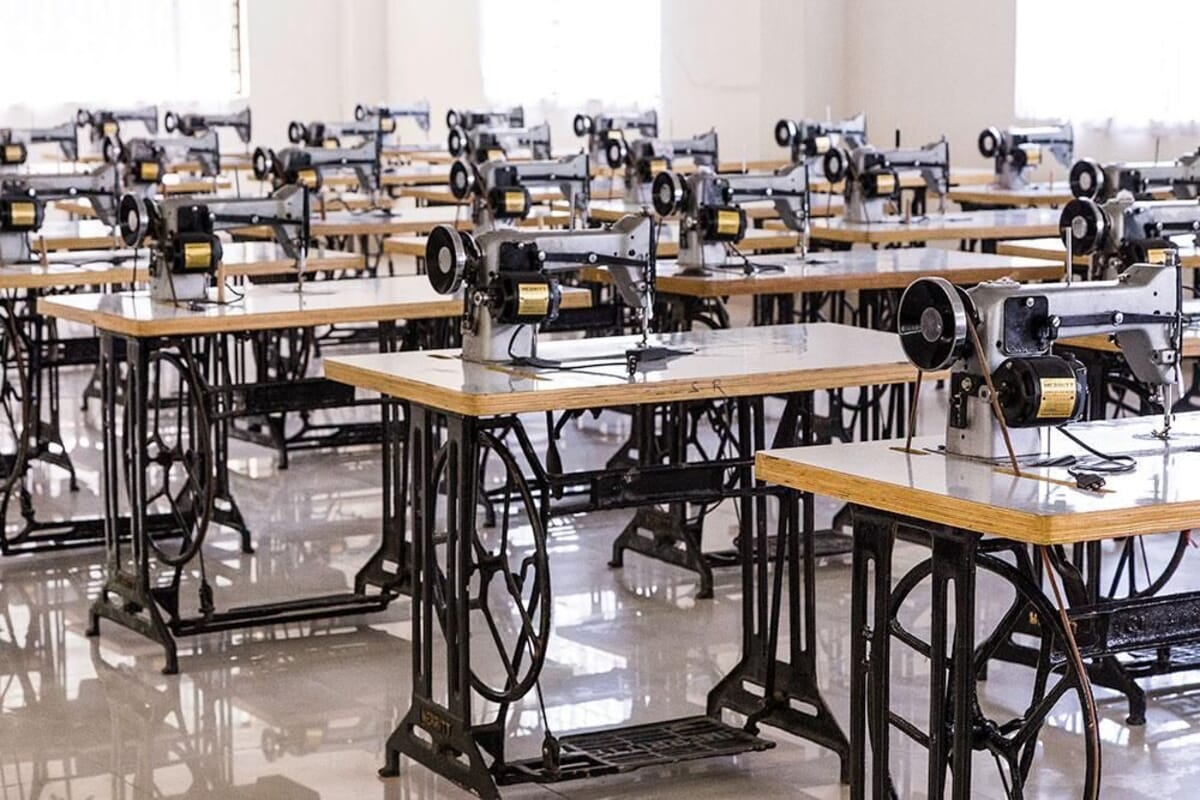
Because a custom knit run has a floor measured in yards, and a cut-and-sew shop can only spread that yardage over your pieces. Essentials Made, a Los Angeles maker that knits fabric to order for each run, explains this plainly on its t-shirt page: a knitting machine has to run a certain length to be worth setting up, and depending on the fabric and quality, the mill's minimum knit can start around 600 yards and goes up from there. That yardage, it says, is what sets the piece count, not a house rule.
Its published figures follow from that. A 40/1 lightweight jersey runs from 150 pieces per style. A 30/1 or 20/1 jersey usually needs 300 pieces per style. There is no separate per-colour minimum, so 300 pieces in three colours is 100 of each. On its home page the company adds that two or more jersey styles on one spec and one dye lot drop the minimum to 150 pieces per style. For organic cotton it gives a much higher floor: roughly 2,000 yards from the mill, about 1,500 tees, and more if GOTS certification is required.
Two practical points come out of this for crop tops. First, a crop uses less fabric per piece than a full-length tee, but the mill does not knit less for you, so the saving shows up as a lower unit cost rather than a lower minimum. Second, the cheapest way to a small run is to share one fabric across styles. A crop tee, a crop tank and a full tee cut from the same jersey and dyed in the same lot can reach a maker's minimum together, where each alone would not.
Blanks and stock fabric change the maths
If the maker cuts from fabric it already holds, or sells a finished blank, the mill run is someone else's problem and minimums fall. That is why a garment-dye or relabel program can quote lower numbers than a fully custom knit. Royal Apparel's garment-dye program, for example, states minimums as low as 180 units, with production 4 weeks from sample approval based on having stock on hand. The trade-off is choice: you use the maker's fabrics and bodies instead of your own.
Seven US makers for small crop top runs
We looked for companies whose own websites show three things: a US production site, knit tops or crop tops in their range, and either a published minimum or a clear description of how they take small runs. Six are custom cut-and-sew shops or relabel programs; one, Los Angeles Apparel, is a US-made blank line with an unusually deep crop top range. They are listed by how you would use them, not ranked. Where a company also produces outside the US, we say so.
| Maker | US base | How it makes crop tops | Published minimum | Production outside the US |
|---|---|---|---|---|
| Essentials Made | Los Angeles, CA | Custom cut and sew, knit-to-order jersey, garment dyed | 150 per style (40/1), usually 300 (30/1, 20/1) | Not offered on its site |
| Bomme Studio | Los Angeles, CA | CMT with your fabric; full package | CMT 150 per style, 2 colourways max | Full package uses Vietnam and Mexico; Tijuana sewing available |
| The Evans Group (TEG) | Los Angeles, CA | Small-batch cut and sew, patterns, samples | Starting at 10 pieces | Not stated |
| Lefty Production Co. | Los Angeles, CA | Development and production, low minimums | Not published | Stateside and overseas |
| Apparel Production Inc. | New York, NY | Full package, cut and sew | 200 per style domestic | Dominican Republic, China, Indonesia |
| Royal Apparel | Long Island, NY | Blanks, relabel, garment-dye program | Garment dye from 180 units | Not stated; uses domestic and imported yarns |
| Los Angeles Apparel | Los Angeles, CA | US-made crop top blanks, wholesale | Not published | Says it never uses off-shoring |
1. Essentials Made (Los Angeles, California)
Essentials Made describes itself as a Los Angeles clothing manufacturer building 100% cotton, garment-dyed essentials for brands, and says every piece is cut, sewn and dyed in Los Angeles. On its t-shirt page it lists cropped and oversized fits, and among its tank styles it names cropped tanks in the same 100% cotton jersey as its tee program. Fabric is knitted to order from Los Angeles mills rather than bought off the shelf, which is why its minimums are tied to yardage.
For a crop top program the useful numbers are the three jersey weights above (140, 160 to 180 and 200 to 220 GSM), a 40/1 minimum from 150 pieces per style and usually 300 for the heavier jerseys, and no separate per-colour minimum. Its cut-and-sew page gives a production timeline of 6 to 7 weeks after deposit: 2 to 3 weeks to knit, then 4 weeks of production, with about 2 weeks added when pattern or sample work comes first. Watch for: it runs only 100% cotton for garment dyeing, so heather and triblend looks need a separate conversation.
2. Bomme Studio (Los Angeles, California)
Bomme Studio's CMT page describes cut-and-sew manufacturing in Los Angeles for brands that supply their own fabric, covering knitwear and jersey, activewear, streetwear and ready-to-wear, with t-shirts among its product categories. Its CMT program starts at 150 units per style with a maximum of two colours per style, sizes XS to XL as standard and extended sizes quoted separately. Sample development is paid and comes before bulk production, and the company says its cutting includes CO2 laser cutting.
Watch for: the same page says current CMT programs are cut, sewn, finished and checked in Los Angeles, and that Tijuana sewing is available as an alternative but is not used in current CMT programs, with any future program using it labelled for its actual origin. If you choose full package instead, Bomme says that starts at 600 units per style with Vietnam production and Mexico nearshoring. For a Made in USA crop top, CMT with your own fabric is the option that supports the Los Angeles claim; put the sewing location in your purchase order.
3. The Evans Group, TEG (Los Angeles, California)
The Evans Group's small-batch page presents it as a Los Angeles clothing manufacturer focused on low minimum order quantities for high-end and emerging designers, under the heading low MOQs starting at 10 pieces. It offers studio-level and factory-level production options, plus pattern making, sample making and fabric sourcing, and its menu lists cut-and-sew and sampling pages for both Los Angeles and New York City.
That makes TEG a candidate for the very first step: a sample and a test run of a new crop block before you commit fabric to a mill minimum. Watch for: TEG is a generalist across menswear, womenswear, activewear and dresses rather than a jersey specialist, so confirm it has knit machines and binders for your hem finish before you send fabric.
4. Lefty Production Co. (Los Angeles, California)
Lefty Production Co. is a development house and apparel manufacturer in downtown Los Angeles. Its production page says it produces batches large and small and offers low minimums to clients who develop their garments with it. Its listed specialties include womenswear, athletic wear, swimwear and lingerie, the categories where fitted, stretch crop tops usually sit.
Watch for: Lefty co-founder Marta Miller acquired Stitch Texas, an Austin development studio, in 2022, and the Stitch Texas site says Lefty offers production capabilities both stateside and overseas. Lefty does not publish a number, so ask for the minimum per style and per colour, and ask in writing which production site a quote is for.
5. Apparel Production Inc. (New York, New York)
Apparel Production Inc. runs a cut-and-sew factory in New York's Garment District. Its domestic production page lists t-shirts, loungewear and body wear among its garment capabilities, says its domestic team has 75 skilled sewing operators, and states minimums of 200 per style for domestic orders and 300 per style for overseas orders. Its home page adds that the New York City minimum covers 3 different colours and 3 different sizes.
On timing, it says domestic patterns and samples take 1 to 2 weeks, and domestic production takes 2 to 3 weeks once patterns and samples are made, if the fabric is available domestically, with about 4 weeks more when fabric comes from overseas. Watch for: the company also offers production in the Dominican Republic, China and Indonesia, so state that you want the New York factory.
6. Royal Apparel (Long Island, New York)
Royal Apparel says it was founded in the early 1990s in Manhattan's Garment District and now has its headquarters on Long Island, with East Coast locations in New York, New Jersey and Pennsylvania. Its Made in USA page says it produces vertically, from knitting and dyeing to cutting, sewing and shipping. It sells mainly wholesale blanks, and it publishes a detailed fabric weight reference with the weight of each of its knits.
For a branded crop top without a custom fabric run, its customize page offers relabeling and a garment-dye color program with minimums as low as 180 units, a $75 lab dip credited back on a bulk order, 1 to 2 weeks for a lab dip, production 4 weeks from sample approval based on stock on hand, and a 50% deposit for bulk. Watch for: the same Made in USA page says its garments are made with domestic and imported yarns, depending on yarn availability. That matters for how you word a Made in USA label, covered below.
7. Los Angeles Apparel (Los Angeles, California)
Los Angeles Apparel is not a contract factory, but it is the clearest US-made reference for crop top fabrics. Its women's crop top collection lists dozens of styles, the product pages we opened are marked Made in Los Angeles, and its product pages state fabric weights: the 1822GD crop tank and the 1820GD oversized crop tee are 18/1 open-end cotton at 6.5 oz, or 220 GSM, and the 3380GD crop tank is a cotton spandex 2x1 rib at 10.47 oz, or 355 GSM.
Its values page says it controls manufacturing from start to finish, rarely subcontracts and never uses off-shoring, and its product pages say its sewers earn up to $25 an hour and no less than $18.42. It runs a wholesale program, so it suits brands that print, embroider or relabel stock crop tops rather than develop their own fit. Use its published weights to brief a custom maker, even if you never buy its blanks.
Where does US cut-and-sew capacity sit?
More of it is in California than in any other state, and within California most of it is in the Los Angeles area, which is also where five of the seven makers above are based. The Bureau of Labor Statistics counts 104,880 sewing machine operators in the United States in May 2025. California has 13,240 of them, more than any other state, and 9,310 work in the Los Angeles metro area alone, about 70% of the state total.
Two caveats keep the chart honest. The occupation covers sewing for garment and non-garment products alike, so the figures measure sewing labour in general, not crop top capacity. And a state total says nothing about minimums or knit skills, so read the chart as a map of where to look, not a list of crop top factories. For the makers in this guide, the two clusters are Los Angeles and New York.
What does an imported crop top pay at the border?
It depends on the fibre and on how the garment is classified. A knit crop tee or tank generally falls under HTS heading 6109, which covers t-shirts, singlets, tank tops and similar garments, knitted or crocheted. A crop top made more like a blouse, with a collar or front opening, can instead fall under heading 6106 for women's or girls' knit blouses and shirts, and a cropped sweater falls under 6110. Classification is decided garment by garment, so treat the rates below as a guide and confirm the line with a customs broker.
The fibre gap is the striking part. Under 6109, a cotton crop tee pays 16.5% general duty, while the same tee in man-made fibre, such as polyester or nylon, pays 32%. On a crop top with a customs value of $10, that is $1.65 in general duty for cotton and $3.20 for a polyester version, before freight, brokerage or any additional duties that apply by country of origin. A crop top cut and sewn in the US pays no import duty on the finished garment, although imported fabric or yarn can carry its own duty.
How to plan a first run of 150 to 300 crop tops
A first US run is a sequence of decisions, and most of the cost is fixed by the first three. Here is the order we would take them in.
- Pick the knit and the weight together. Choose from the chart above, then ask the maker for the finished weight after washing and the shrinkage they allow for.
- Decide whether you need a custom fabric. If a maker's stock jersey or a blank works, minimums fall. If you need your own colour or yarn, plan around the mill's yardage.
- Share the fabric. Put a crop tee, a crop tank and a full tee on one fabric and one dye lot where the maker allows it, so they count toward one minimum.
- Sample before you split colours. Approve fit, hem height and hem finish on one colour first; colour changes are cheap, pattern changes after cutting are not.
- Set the size split. Spread the run evenly by size or weight it to your sales history, and confirm whether extended sizes are quoted separately.
- Confirm the sewing location in writing. Several makers here also produce outside the US. Your purchase order should name the site.
- Write the label. Fibre content, origin, care and your brand name or registered identification number, worded to reflect where the yarn, fabric and sewing actually happened.
Labelling a crop top as Made in USA
The FTC's Made in USA rule, 16 CFR Part 323, says a product may only be labelled Made in the United States when its final assembly or processing happens here, all significant processing happens here, and all or virtually all of its ingredients or components are made and sourced here. The textile labelling rules in 16 CFR Part 303 give Made in USA of imported fabric as the example wording for a garment made here from imported materials.
So a crop top sewn in Los Angeles from US-knit fabric can usually carry Made in USA, while one sewn here from imported fabric should say so. Where a maker states that it uses domestic and imported yarns, ask which applies to your run before the labels are printed. A permanent care label is required as well under 16 CFR Part 423.
What to send a US maker with a crop top brief
A clear brief gets a real quote in one round instead of three. Send these with your first email:
- A flat sketch or reference garment with the body length marked from the high point of the shoulder, so the maker sees exactly where the hem sits.
- Fabric: knit type, fibre content and target weight in GSM or oz per square yard, or the maker's own fabric code if you are choosing from stock.
- Hem and neck finish: rib band, coverstitch, binding or raw edge, and the width of each.
- Size range and split per colour, and whether you want extended sizes.
- Quantity per style and per colour, and whether other styles will share the fabric.
- Dye method: piece dyed fabric or garment dyed after sewing, and your colour standard.
- Labels and trims: neck label or print, care label, hang tags, packaging.
- Target delivery date and destination, so the maker can say whether the knit time fits.
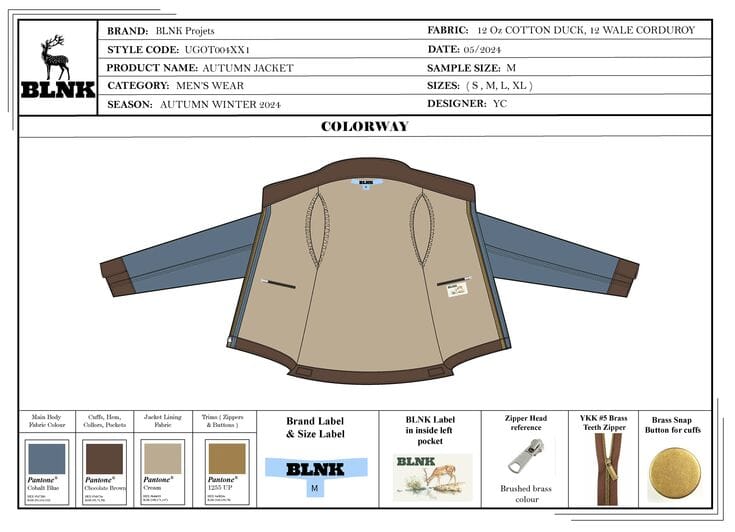
If you do not have a tech pack yet, a single-style pack with measurements and construction notes saves a sample round. You can also compare US tank top makers for sleeveless styles, or read our guide to blank clothing manufacturers if you plan to start from stock bodies.
Crop top manufacturing FAQ
How many crop tops do I need to order from a US maker?
It depends on whether the fabric is custom. Published minimums in this guide start at 10 pieces at The Evans Group, 150 units per style for CMT at Bomme Studio, 150 pieces per style for 40/1 jersey at Essentials Made (usually 300 for heavier jerseys), 180 units for Royal Apparel's garment-dye program and 200 per style at Apparel Production Inc. in New York.
What does GSM mean on a crop top spec, and how does it convert to ounces?
GSM is grams per square metre, the weight of the fabric. One ounce per square yard equals 33.9057 GSM, so a 4.4 oz jersey is about 149 GSM and a 6.5 oz jersey about 220 GSM. The US jersey weights published by the makers in this guide run from 136 to 227 GSM.
Is baby rib or jersey better for a fitted crop top?
Baby rib, for most fitted styles. Rib has far more width stretch and recovery than single jersey, so it hugs the body without elastic. Ask about shrinkage: Los Angeles Apparel says its 100% cotton baby rib shrinks 7% in wash, which a short garment cannot absorb unless the pattern allows for it.
Why do US makers quote higher minimums for custom fabric?
Because the knitting mill has its own minimum run. Essentials Made says a mill's minimum knit can start around 600 yards, and that yardage, not a house rule, sets the piece count. Sharing one fabric and dye lot across several styles is the usual way to reach it.
Can a crop top be labelled Made in USA if the yarn or fabric is imported?
Final assembly in the US is not enough on its own. Under the FTC rule, all significant processing must happen in the US and all or virtually all components must be made and sourced here. For a garment sewn here from imported fabric, the textile rules give Made in USA of imported fabric as the example wording.
What duty does an imported crop top pay?
A knit crop tee or tank under HTS 6109 pays 16.5% general duty in cotton and 32% in man-made fibre. A blouse-style knit crop top under 6106 pays 19.7% in cotton. Additional duties can apply by country of origin, and a crop top sewn in the US pays no duty on the finished piece.
How long does a small US crop top run take?
Expect several weeks. Essentials Made gives 6 to 7 weeks after deposit for knit-to-order production, and Apparel Production Inc. gives 2 to 3 weeks for domestic production once patterns and samples are done, if fabric is available domestically. Royal Apparel's garment-dye program states 4 weeks from sample approval when it has stock on hand.
OneAim places and manages production with 80 documented clothing manufacturers in the United States. Send the product, the quantity and your target date. Within 24 hours we reply, and we place the order with the US factory in our group that already makes it. Production, invoicing and shipping run directly between you and the factory. Flat fee, no mark-up.
Start my brief US factory directory ($49)References and data
- Essentials Made, t-shirt manufacturer page, cut and sew page and home page, checked November 2026. Jersey weights, mill minimum knit, minimums per style, organic floor, cropped fits, LA cut, sew and dye, timeline. Company-stated.
- Bomme Studio, CMT manufacturing USA, checked November 2026. CMT minimum and colourways, sizes, knitwear and jersey, LA production, Tijuana option, full package minimum with Vietnam and Mexico. Company-stated.
- The Evans Group (TEG), small batch clothing manufacturers, checked November 2026. Low MOQs starting at 10 pieces, studio and factory level options, Los Angeles and New York pages. Company-stated.
- Lefty Production Co., production and home page, checked November 2026; Stitch Texas, Lefty Production Co. page. Low minimums, specialties, stateside and overseas production, 2022 acquisition. Company-stated.
- Apparel Production Inc., domestic production and home page, checked November 2026. Garment District factory, 75 sewing operators, minimums, timelines, overseas locations. Company-stated.
- Royal Apparel, fabric weight reference, Made in USA, about and customize, checked November 2026. Weights, conversion factor, weight bands, history, locations, vertical production, yarns, relabel and garment-dye program terms. Company-stated.
- Los Angeles Apparel, women's crop tops, product pages 1822GD, 1820GD, 3380GD, 43016 and 8393, and our values, checked November 2026. Weights, yarns, baby rib stretch and shrinkage, wages, no off-shoring. Company-stated.
- US Bureau of Labor Statistics, Occupational Employment and Wage Statistics, May 2025 estimates for sewing machine operators (SOC 51-6031), national, state and Los Angeles metro area, queried November 2026.
- US International Trade Commission, Harmonized Tariff Schedule, headings 6106, 6109 and 6110, checked November 2026. Source of the general duty rates.
- 16 CFR Part 323, Made in USA Labeling Rule; 16 CFR Part 303, Textile Fiber Products Identification Act rules; 16 CFR Part 423, Care Labeling. eCFR, checked November 2026.
Every company named above appears in this source list. Locations, minimums, weights, timelines and production sites are the companies' own published statements unless another source is cited; we did not inspect the factories. The knit behaviour and planning notes are general guidance, not measured data. No company here is a OneAim group member, and none paid to appear. Reviewed and updated 14 November 2026 by Will Godax.
Related guides
- Tank top manufacturers
- Blank clothing manufacturers
- Leggings manufacturers
- Clothing manufacturers in Los Angeles