Most blank T-shirts sold by US companies are not sewn in the US, and the ones that are cost more for a reason. This directory profiles 8 blank clothing manufacturers based in the United States, each checked on its own website on 3 and 4 November 2026. Three state that they make their blanks in the US (Los Angeles Apparel, Royal Apparel and Camber Sportswear). One dyes and cuts most of its garments in Los Angeles (BELLA+CANVAS). Four are US-based brands whose garments you should check style by style for country of origin (Next Level Apparel, Independent Trading Company, Cotton Heritage and JERZEES). The market they sell into is growing fast: Grand View Research values global print on demand at $10.8 billion in 2025, forecast to reach $57.5 billion by 2033, with apparel the largest product segment at 39.5% (Grand View Research).
Every weight, minimum and "Made in USA" statement below is the company's own published claim, labelled as such, not a figure we tested. If you are weighing a blank against your own design, our guide to private label versus white label explains the difference between buying a finished product and having one made for you.
Heads up: We're OneAim, a group of documented United States clothing factories. The companies below are independent blank-apparel suppliers listed from their own websites, not members of our group. OneAim's role is separate: we place your production with a documented factory in our group built for your product.
Key Takeaways
- "US blank brand" and "made in the US" are different things. Of the 8 companies here, Los Angeles Apparel, Royal Apparel and Camber state US manufacturing; BELLA+CANVAS dyes and cuts most garments in Los Angeles; the other four do not claim US sewing.
- The volume tier is now one group. Gildan completed its acquisition of HanesBrands on 1 December 2025 and reported record 2025 revenue from continuing operations of $3,619 million (Gildan, 2026).
- Weight is the first spec. Published US blank weights run from 180 GSM tees to fleece above 450 GSM. That is a different garment, not a different colour.
- Imported blanks carry real duty. General US rates are 16.5% on cotton knit tees and sweatshirts and 32% on man-made fibre versions, before any origin-specific duties (USITC HTS).
- Blanks cap your ceiling. A competitor can buy the identical garment. A proprietary fit, fabric and label is the one thing a blank cannot give you.
Try it free: Estimate what your garment costs to make in the USA in about 60 seconds with our garment cost calculator. No signup.
What is a blank clothing manufacturer?
A blank clothing manufacturer makes finished, undecorated garments at volume and sells them into the decoration trade rather than to consumers. The tee is knitted, cut, sewn, dyed, labelled and boxed. What it does not have is your artwork. You buy it through the company's wholesale site or a distributor, print or embroider it, and sell it under your brand.
The model exists because decoration and manufacturing are separate businesses. A screen printer does not want to run a knitting and sewing operation, and a garment factory does not want to hold thousands of one-off designs. Blanks are the interface between the two, and the reason a merch brand, a band or a print-on-demand store can launch without ever placing a production order.
Three things separate one blank from another, and they matter more than the logo on the neck label:
- Fabric and weight. Fibre content (100% cotton, a cotton and polyester blend, a triblend), the yarn (open-end or combed ring-spun) and the weight in GSM or ounces per square yard.
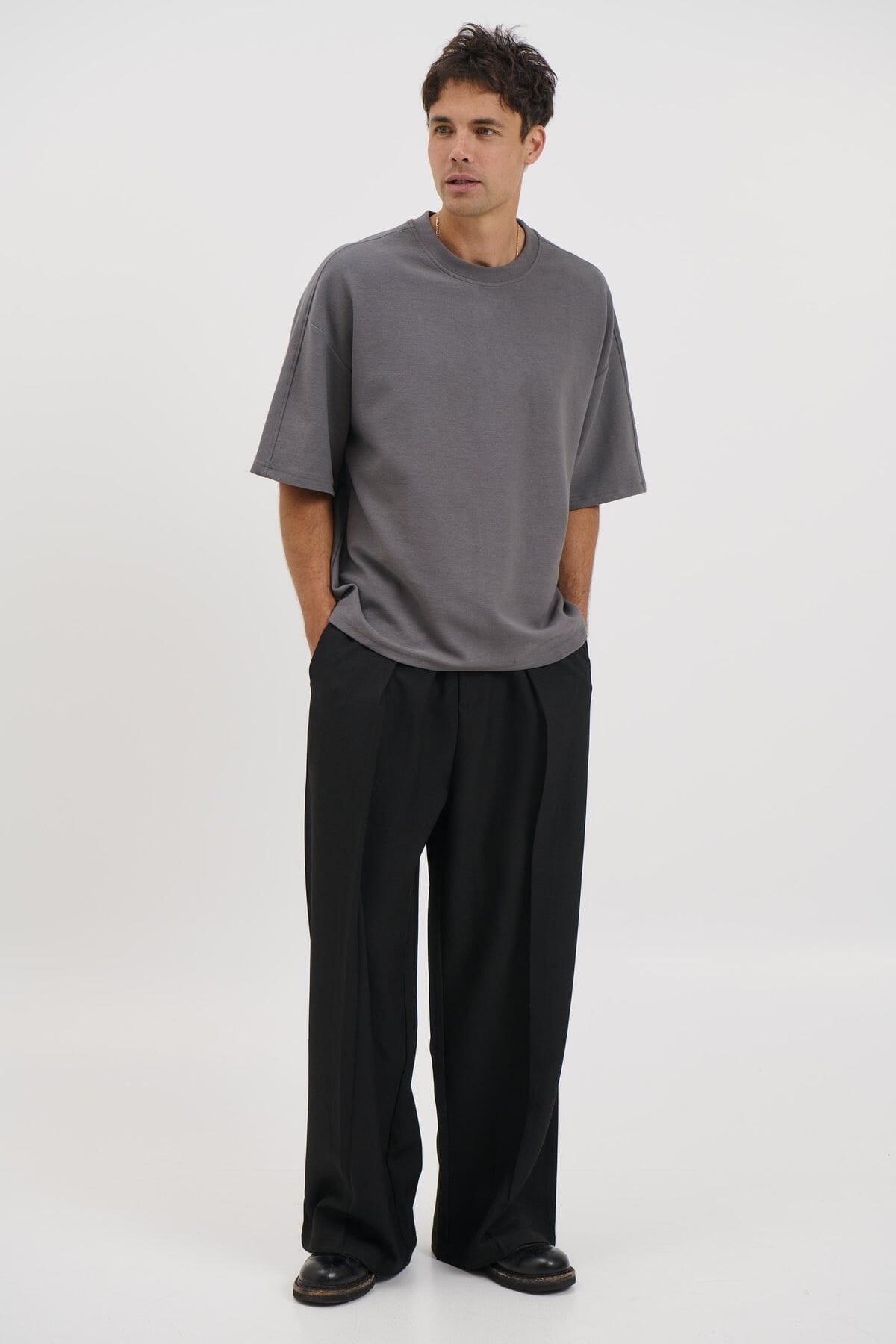
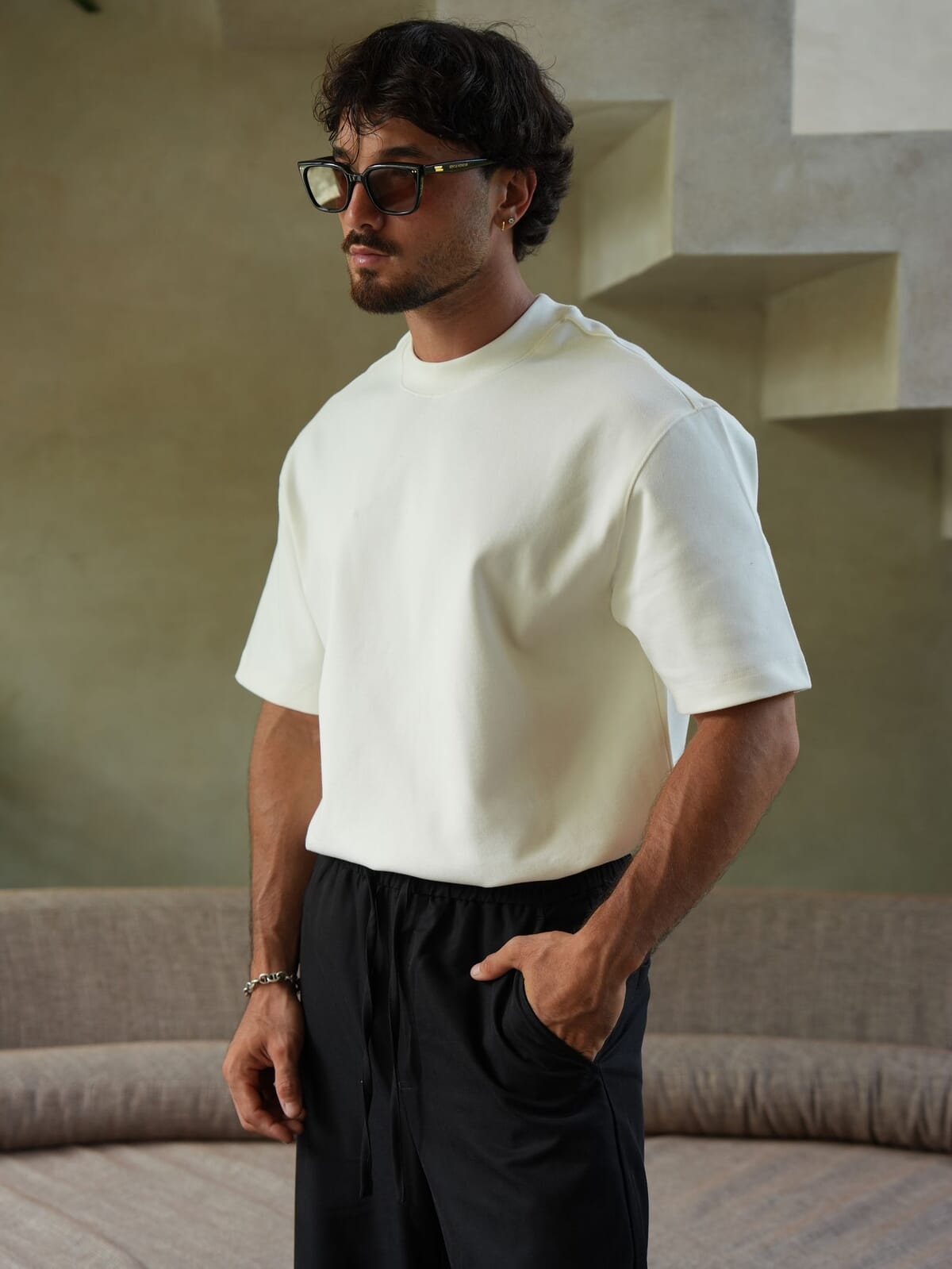
- Fit block. A classic boxy promo cut, a modern retail fit with a narrower body and sleeve, or an oversized streetwear block with a dropped shoulder.
- Where it was made. The country of origin goes on the label, sets the import duty and decides whether you can say "Made in USA".
Who controls the blank apparel market?
The biggest names in blank tees and fleece have consolidated. On 1 December 2025 Gildan Activewear, headquartered in Montreal, completed its acquisition of HanesBrands. Gildan reported record revenue from continuing operations of $3,619 million for 2025 and fourth-quarter net sales of $1,078 million, up 31.3%, a quarter that included one month of HanesBrands. For 2026 it guided to revenue of $6.0 to $6.2 billion, about 65% to 70% higher, with HanesBrands in the numbers for the full year (Gildan Activewear, Q4 and full-year 2025 results).
In practice that means Gildan, Hanes, Comfort Colors and American Apparel now belong to one group, which lists all four on its brand page (Gildan and HanesBrands). Gildan is a Canadian company with its own vertically integrated production, so we cover it here as market context rather than as a US manufacturer.
Champion is the other name old directories still get wrong. HanesBrands agreed in June 2024 to sell the Champion business to Authentic Brands Group in a deal valued at $1.2 billion, rising to as much as $1.5 billion with contingent payments (CNBC), and announced the sale complete in autumn 2024 (PPAI). Champion is now a licensed brand, not a HanesBrands blank line.
Citation capsule: Gildan Activewear completed its acquisition of HanesBrands on 1 December 2025 and reported record 2025 revenue from continuing operations of $3,619 million, guiding to $6.0 to $6.2 billion for 2026. Global print on demand, the channel behind much blank demand, was valued at $10.8 billion in 2025 with apparel the largest segment at 39.5% (Gildan; Grand View Research).
How did we choose these manufacturers?
We started from the blank brands US decorators actually order from and kept only companies that are headquartered in the United States and sell their own blank styles. Each one was checked on its own website: who they are, where they say they make garments, and the product details they publish. We left out pure distributors, marketplaces and print-on-demand platforms, which are a different job, and we left out non-US brands, however popular, because this is a directory of US companies.
We did not rank them one to eight. The right blank depends on whether you want the cheapest printable tee, a retail-fit garment someone would wear undecorated, or a garment you can honestly label "Made in USA". Where a claim is the company's own, such as a "number one" ranking or a certification, we say so. State business registry records could not be read automatically for these companies, so treat this as a website-verified list and check the registry before you sign anything large.
Which blank brands are made in the USA?
Three companies on the list state that they make their blanks in the US. Expect to pay more per piece than for an imported blank, and expect fewer colourways, in exchange for short supply lines, a "Made in USA" claim you can stand behind, and no import duty.
Los Angeles Apparel (Los Angeles, California)
Los Angeles Apparel runs its own factory in Los Angeles. On its values page it says it is vertically integrated, controls manufacturing "from start to finish", rarely subcontracts and never offshores, dyes and finishes its textiles in California, and sources over half its yarn domestically. It also states that starting employees average $20 an hour and that experienced garment workers can earn up to $35 an hour with productivity bonuses (Los Angeles Apparel). Its heavyweight fleece is a good example of where it sits: the HF04 sweatpant is a 14 oz garment-dyed fleece knitted, cut, sewn and dyed in Los Angeles (Los Angeles Apparel, HF04). The company sells wholesale as well as retail. Best for: brands that want a heavyweight, US-made blank and a clean origin story.
Royal Apparel (Hauppauge, New York)
Royal Apparel was founded in the early 1990s in Manhattan's Garment District and says it has stayed committed to American-made apparel since, describing its range as the largest collection of US-made premium knitwear in the industry, which is its own claim (Royal Apparel). In January 2026 it bought a second facility in Hauppauge, Long Island, to expand manufacturing (ASI Central). The range runs from organic cotton and triblend tees to fleece and kidswear, and Royal lists private labelling, relabelling and tear-away labels among its services for US-made shirts (Royal Apparel, American made shirts). Best for: a merch or eco brand that wants US-made blanks and a simple path to its own neck label.
Camber Sportswear (Norristown, Pennsylvania)
Camber states that all its products are manufactured in the USA and sold only to the wholesale trade, with imprinters and embroiderers serving schools, athletic associations and uniform companies among its customers. It publishes its fabric weights plainly: the Finest T-shirt at 6 oz of 100% ring-spun cotton, the Max-Weight tee at 8 oz, Cross-Knit sweatshirts and sweatpants at a full 12 oz of 90/10 cotton and polyester, and X-Treme Jersey at 14.5 oz. Sizes run from S to 8XL with extra tall to 8XLT, and its custom design programme starts at 6 dozen pieces (Camber Sportswear). Best for: heavyweight workwear-style blanks, big and tall sizing and US-made fleece for team and uniform decorators.
Which premium blank brands are based in the US?
The tier above commodity. These garments are cut to a retail block, so the shirt reads as a product rather than as merch, and you pay for that. Both companies below are headquartered in Los Angeles; neither says its whole range is sewn in the US.
BELLA+CANVAS (Los Angeles, California)
BELLA+CANVAS started in 1992, when its two founders began screen printing in a garage. It launched its own cut-and-sew operation in 1995 and merged its Bella and Canvas lines into one brand in 2002. Its About page says it dyes and cuts most of its garments in the United States and employs hundreds of people in Los Angeles (BELLA+CANVAS, About us), and its USA Strong page says its production takes place in the USA and Central America (BELLA+CANVAS, USA Strong). Read that wording closely: dyeing and cutting in the US is not the same as sewing in the US, so treat "Made in USA" as a per-style fact and ask for the country of origin on the style you want. The range covers Airlume combed ring-spun cotton, CVC, triblend, garment-dyed and heavyweight tees plus fleece. In November 2026 the company announced a new wholesale site for eligible decorators and promotional distributors, powered by SanMar, while bellacanvas.com stays the home of its product resources. Best for: retail-fit tees that print cleanly and are worn as fashion, not as giveaways.
Next Level Apparel (Los Angeles, California)
Next Level Apparel dates from 2003, when it set out to make a lightweight tee that could take sublimation: a 65% polyester, 35% combed ring-spun cotton fabric that became its 6200 Unisex Festival tee. It calls itself "the #1 wholesale producer and seller of premium quality blank apparel", which is the company's own positioning, not a verified ranking. It refers to Los Angeles and "our manufacturing facilities around the world", so its garments are not presented as US-sewn (Next Level Apparel, About us). The range now spans 100% cotton, CVC, triblend, sueded and poly-cotton jersey and two fleece platforms. Best for: soft, smooth-faced tees for DTG, screen printing and, on the poly-rich styles, sublimation.
Which US blank brands specialise in fleece?
Fleece is its own competence. A tee is a single knit shell. A hooded sweatshirt has a loop-back or brushed interior, a hood block, rib cuffs and hem, and a pouch pocket, and cheap fleece pills and fights the ink. If you are still choosing the silhouette, our guide to types of hoodie covers pullover, zip, boxy and cropped blocks, and our sweatshirt manufacturers directory profiles US factories that make sweatshirts to your own design.
Independent Trading Company (San Clemente, California)
Independent Trading Company has made sweatshirts since 1987 and describes itself as a manufacturer and supplier of blank and custom apparel. Its corporate address is in San Clemente, California, with distribution centres in Fullerton, California and Hazle Township, Pennsylvania (Independent Trading Company, locations). What makes it useful is how clearly it sorts fleece by weight: 7.5 oz and under, 8.5 oz midweight, 10 oz heavyweight and 12 oz and over. The IND4000 is a 10 oz heavyweight pullover hood, the Legend IND5000 crew and hood are 13.5 oz (450 GSM) cross-grain fleece, and the PRM180 is a 180 GSM premium tee (Independent Trading Company). It also runs a custom manufacturing programme for brands. It does not state on these pages where its garments are sewn, so check origin per style. Best for: streetwear-weight fleece at blank prices.
Cotton Heritage (City of Commerce, California)
Cotton Heritage sells blank tees and fleece for men, women and unisex fits from City of Commerce, near Los Angeles. It describes itself as a mill-direct, WRAP-certified company focused on ethically produced garments with good printability, and publishes a 2026 catalogue and colour card for decorators (Cotton Heritage). WRAP certification applies to production facilities, so ask which facilities make the style you want and for the current certificates before you repeat the claim in your own marketing. Best for: value-to-mid fleece and knits bought mill-direct.
Which US blank is built for value?
JERZEES, Fruit of the Loom (Bowling Green, Kentucky)
JERZEES is the decoration-trade blank label of Fruit of the Loom, Inc., which lists its headquarters at One Fruit of the Loom Drive, Bowling Green, Kentucky (Fruit of the Loom). The company's own history timeline records Berkshire Hathaway acquiring Fruit of the Loom in 2002 (Fruit of the Loom, history). JERZEES sorts its range into good, better and best tiers, from budget workhorses to midweight ring-spun and a recycled-content Jerzees Eco line, with NuBlend fleece covering sweatpants, shorts, crews, hoodies and youth sizes (JERZEES). It does not present the range as US-made. Best for: promo, team and event orders where unit cost is the whole brief.
How do the 8 compare?
Here is how the eight compare at a glance, using only what each company publishes.
| Company | Base | Where it says it makes blanks | Strength | Published detail |
|---|---|---|---|---|
| Los Angeles Apparel | Los Angeles, CA | Own LA factory, no offshoring | Heavyweight, garment-dyed | 14 oz HF04 fleece |
| Royal Apparel | Hauppauge, NY | USA | Eco and organic knits | Private label, tear-away labels |
| Camber Sportswear | Norristown, PA | USA, trade only | Heavyweight, S to 8XL | 6 to 14.5 oz; custom from 72 pieces |
| BELLA+CANVAS | Los Angeles, CA | Most dyed and cut in the US; production in the USA and Central America | Retail fit | Airlume, triblend, heavyweight |
| Next Level Apparel | Los Angeles, CA | Facilities around the world | Print and sublimation tees | 65/35 Festival tee |
| Independent Trading Company | San Clemente, CA | Not stated | Fleece by weight | 7.5 to 13.5 oz fleece |
| Cotton Heritage | City of Commerce, CA | Not stated; WRAP-certified | Value fleece and knits | Mill-direct |
| JERZEES (Fruit of the Loom) | Bowling Green, KY | Not stated | Unit cost | Good, better, best tiers |
Source: each company's own website, read 3 and 4 November 2026. "Not stated" means the pages we read do not say where garments are sewn.
What weight should a blank be?
Weight is quoted two ways in the US: ounces per square yard, which most American blank brands use, and grams per square metre (GSM), which most mills outside the US use. One ounce per square yard is about 33.9 GSM, so an 8 oz tee is roughly 271 GSM and a 10 oz hoodie roughly 339 GSM. Mixing the two units on one brief is a common source of wrong quotes.
As a working guide, around 150 to 180 GSM reads as a lightweight retail tee, 180 to 220 GSM as a midweight and 220 GSM and above as the heavyweight, boxy tee streetwear brands want. Fleece starts around 250 GSM for a light hoodie and runs past 450 GSM for the heaviest. The chart puts the weights the companies in this directory publish side by side.
Heavier is not automatically better. A 450 GSM hoodie feels premium but costs more to ship and is too warm for much of the year. A 180 GSM tee drapes better on a fitted body and is the natural canvas for fine-line DTG. Pick the weight your customer expects from the reference garment, then pick the brand.
Which blank suits your decoration method?
The decoration method narrows the choice of blank before price does. These are general printing practices; your printer's own recommendations on specific styles should win.
- Direct to garment (DTG). Works best on cotton-rich fabric with a smooth face, such as combed ring-spun jersey. Slub yarns and heavy texture break up fine detail.
- Screen printing. The most forgiving method. Cotton, cotton-poly and fleece all take plastisol and water-based inks; on polyester-rich blanks, ask the printer about dye migration and a blocking underbase for light inks on dark garments.
- Sublimation. Needs a high polyester content and a light base colour, because the dye bonds with polyester fibres. Next Level built its first style, the 65/35 Festival tee, for exactly this.
- Embroidery. Needs weight and stability. Heavyweight tees and fleece hold stitching without puckering; a 150 GSM jersey usually needs backing and still distorts.
- Garment dye and washes. Garment-dyed blanks are dyed after sewing, so colour and size can shift more between batches. Order enough of one dye lot for a full drop.
What duty does an imported blank pay?
If a blank is made outside the US, someone in the chain paid import duty on it, and that cost is in your price. The general US duty rates on the lines that cover most blank tees and sweatshirts are set in the Harmonized Tariff Schedule (USITC HTS):
Two things follow. First, fibre content changes the duty: a man-made fibre tee pays roughly twice the general rate of a cotton one, which is one reason cotton-rich blanks dominate. Second, the general rate is not the whole story. Additional Chapter 99 duties tied to the country of origin can sit on top, and goods from free-trade partners can pay less, so the effective rate on the same blank can change with where it was sewn. A blank made in the US pays no import duty at all, which narrows the price gap with imported blanks more than the sticker price suggests.
Can you put your own label on a blank?
Yes, and it is one of the cheapest ways to make a blank feel like your product. The FTC's textile labelling guide says replacing a label is legal as long as the new label lists the name or RN of the company making the change, and the substitute label must still carry the required information: fibre content, country of origin and either the company name or the Registered Identification Number. If you remove the original label, you must keep records of the information on it and of who supplied the goods, for three years (FTC, Threading Your Way Through the Labeling Requirements).
The country of origin does not change because you relabel. Printing a blank sewn abroad in, say, Ohio generally does not make it a US product. The FTC's Made in USA standard requires that "all or virtually all" of a product be made in the US, and a textile product made partly in the US and partly abroad must be labelled to show both (FTC, Complying with the Made in USA Standard). That is why the three US-made companies above command a premium: their blanks are the only ones on this list you can relabel "Made in USA" without qualification, provided the fabric is US-made too.
Tear-away neck labels make relabelling quick, and some suppliers, Royal Apparel among them, offer relabelling as a service. Budget for the labels themselves, the labour to remove and sew, and a care label that states the original fibre content.
Blanks or custom cut-and-sew?
Use blanks if the artwork is your product. There is no per-design minimum, no fabric risk and no development time, so you can test twenty designs on one base garment in a week. Use custom cut-and-sew if the garment is your product. You accept a per-style minimum and a few weeks of sampling in exchange for your own fit, your own fabric and colour, your own trims and labels, and a product no competitor can buy off the same shelf.
Custom does not have to mean thousands of pieces. Camber, for example, starts its custom programme at 6 dozen pieces, and US cut-and-sew shops publish minimums in a similar range for sweatpants and sweatshirts, as our sweatpants manufacturers directory shows. Many brands start on blanks, prove which designs and colours sell, and move their best-selling style to a custom block once they know the volume is there. If you are planning that step, our guide on how to get clothes manufactured walks through the process from tech pack to first production run.
- Name the reference garment, with a photo, and the weight you want, stated once in one unit.
- Give the fibre content and whether the fabric must be US-made.
- Describe the fit: chest width, body length and sleeve length on your sample size, plus the size range.
- List the decoration method and placement, so the factory knows what the fabric must take.
- Specify labels, care labels and packaging.
- Give the quantity per style per colour, a target price and the date the goods must arrive.
If you need a factory-ready document first, our tech pack service produces one for a single style.
Blank clothing FAQ
Which blank clothing brands are made in the USA?
Among the eight companies checked here, Los Angeles Apparel (Los Angeles), Royal Apparel (Hauppauge, New York) and Camber Sportswear (Norristown, Pennsylvania) state that they make their blanks in the United States. BELLA+CANVAS says it dyes and cuts most of its garments in the US. Next Level Apparel, Independent Trading Company, Cotton Heritage and JERZEES are US-based companies whose garments are not stated as US-sewn, so check the country of origin on each style.
What is the minimum order for blank clothing?
There is usually no per-design minimum. Blanks are finished stock sold by the piece or the case, so you can print twenty designs on one base garment. Custom cut-and-sew is different: Camber, for example, starts its custom programme at 6 dozen (72 pieces) per order.
What GSM should a blank T-shirt be?
Published US blank tees in this directory run from 180 GSM (Independent Trading Company's PRM180) to about 271 GSM (Camber's 8 oz Max-Weight). Around 150 to 180 GSM reads as a lightweight retail tee, 180 to 220 as midweight and 220 GSM and above as heavyweight. Fleece starts around 250 GSM and the heaviest blanks here pass 450 GSM.
Is Hanes still a separate blank supplier?
No. Gildan Activewear completed its acquisition of HanesBrands on 1 December 2025, so Gildan, Hanes, Comfort Colors and American Apparel now sit in one group. HanesBrands had already sold the Champion brand to Authentic Brands Group in a deal valued at $1.2 billion, completed in autumn 2024.
What import duty does a blank T-shirt pay in the US?
Under the general rates of the US Harmonized Tariff Schedule, knitted cotton T-shirts (6109.10.00) and cotton sweatshirts and hoodies (6110.20.20) pay 16.5%, and man-made fibre versions (6109.90.10 and 6110.30.30) pay 32%. Origin-specific Chapter 99 duties can apply on top. A blank made in the US pays no import duty.
Can I replace the label on a blank with my own?
Yes, under FTC rules, as long as your new label carries the required information: fibre content, country of origin and your company name or RN. If you remove the original label you must keep records of what it said and where the goods came from for three years.
We're a group of 80 documented clothing manufacturers in the United States. Tell us your product, volume, and timeline. We'll place your production with the factory in our group built for it, usually within 24 hours. You produce directly with the factory. Flat fees, no markups, no pitch.
Get in contact Download the directory ($49)Need a tech pack? Get a factory-ready single-style tech pack for $79. See what's included.
Sources
- Gildan Activewear, Q4 and full-year 2025 results, 26 February 2026. Record 2025 revenue from continuing operations of $3,619 million, Q4 net sales of $1,078 million (+31.3%), HanesBrands acquisition completed 1 December 2025, 2026 revenue guidance of $6.0 to $6.2 billion.
- Gildan, Gildan and HanesBrands homepage, read 4 November 2026. Brand list including Hanes, Comfort Colors and American Apparel.
- CNBC, Hanesbrands to sell Champion brand to Authentic Brands in $1.2 billion deal, 5 June 2024.
- PPAI, HanesBrands completes sale of Champion to Authentic Brands Group, 1 October 2024.
- Grand View Research, Print On Demand Market Size and Share Report, read 4 November 2026. $10.8 billion (2025), $57.5 billion (2033), 23.6% CAGR 2026 to 2033, apparel 39.5% of 2025 revenue.
- Los Angeles Apparel, Our Values, read 4 November 2026. Vertical integration, no offshoring, wages, California dyeing, domestic yarn share.
- Los Angeles Apparel, HF04 Heavy Fleece Sweatpants (Garment Dye), read 3 November 2026. 14 oz fleece made in Los Angeles.
- Royal Apparel, About Royal Apparel, read 4 November 2026.
- Royal Apparel, American made shirts, read 4 November 2026. Private label, relabelling and tear-away labels.
- ASI Central, Royal Apparel Acquires Second Hauppauge, NY, Facility for Manufacturing, 19 January 2026.
- Camber Sportswear, home page, read 4 November 2026. Address, US manufacturing, fabric weights, sizes and custom minimum.
- BELLA+CANVAS, About us, read 4 November 2026. Timeline, dye and cut in the US statement, SanMar-powered wholesale site.
- BELLA+CANVAS, USA Strong, read 4 November 2026. Los Angeles cutting facility; production in the USA and Central America.
- Next Level Apparel, About us, read 4 November 2026. 2003 origin, 6200 Festival tee fabric, "#1" claim.
- Independent Trading Company, home page, read 4 November 2026. Since 1987, fleece weight classes, IND4000, IND5000 and PRM180 weights.
- Independent Trading Company, locations, read 4 November 2026.
- Cotton Heritage, home page, read 4 November 2026. City of Commerce address, mill-direct and WRAP-certified statement.
- JERZEES, home page, read 4 November 2026. Good, better, best tiers, Jerzees Eco and NuBlend.
- Fruit of the Loom, Inc., contact us, read 4 November 2026. Bowling Green, Kentucky headquarters.
- Fruit of the Loom, Inc., history, Berkshire Hathaway acquisition in 2002.
- USITC, Harmonized Tariff Schedule of the United States, subheadings 6109.10.00, 6109.90.10, 6110.20.20 and 6110.30.30, general rates read 4 November 2026.
- FTC, Threading Your Way Through the Labeling Requirements Under the Textile and Wool Acts, label substitution and record keeping.
- FTC, Complying with the Made in USA Standard, "all or virtually all" standard and textile origin labelling.
Every company named above appears in this source list. Founding dates, certifications, rankings, fabric weights and Made-in-USA statements are the companies' own published claims, labelled as such in the text, and we did not independently audit them. No company in this article is a OneAim group member, and none paid to appear. Reviewed and updated 4 November 2026 by Will Godax.