The best sweatpants manufacturers in the USA are not always the ones that sew the tops. Sweatpants carry construction a hoodie never does: an elastic waistband, a drawcord, pockets set into the side seam and a cuff sized against a taper. This directory profiles 8 US companies that make sweatpants and joggers, each checked on its own website on 3 November 2026. Three sell their own sweatpant styles from US production (Royal Apparel, Los Angeles Apparel and Camber Sportswear), and five cut and sew sweatpants to your design (Essentials Made, Full Speed 100, Apparel Branders, Argus Apparel and Apparel Production Inc.). For scale, the global athleisure market these garments sit inside was valued at about $422.0 billion in 2025 and is forecast to reach about $892.5 billion by 2033, growing 9.9% a year from 2026, with North America holding 32.8% of 2025 revenue (Grand View Research, 2026). No credible source breaks out sweatpants on their own, so we do not quote a figure for them.
This directory covers sweatpants and joggers only. For the tops, read our sweatshirt manufacturers directory; for the full two-piece set, read our tracksuit manufacturers directory. Every fabric weight, minimum and price below is the company's own published claim, labelled as such, not a figure we tested.
Heads up: We're OneAim, a group of documented United States clothing factories. The companies below are independent manufacturers listed from their own websites, not members of our group. OneAim's role is separate: we place your production with a documented factory in our group built for your product.
Key Takeaways
- Two kinds of US sweatpants maker. Royal Apparel, Los Angeles Apparel and Camber sell their own US-made styles; Essentials Made, Full Speed 100, Apparel Branders, Argus Apparel and Apparel Production Inc. make sweatpants to your pattern.
- Fabric weight is the first decision. Published weights run from 7.0 oz per square yard (about 237 GSM) at Royal Apparel to 16 oz (about 542 GSM) at Los Angeles Apparel. That is two different garments wearing the same name.
- Small runs are possible in the US. Published minimums start around 50 pieces per style in Los Angeles, 72 at Camber and 200 per style at Apparel Production Inc. in New York.
- Imported sweatpants pay real duty. General US rates are 16.1% for men's cotton knit trousers, 14.9% for women's and 28.2% for synthetic knits, before any origin-specific Chapter 99 duties (USITC HTS).
- The label is regulated. Fibre content, country of origin, your name or RN and care instructions all go on the garment, and "Made in USA" means US-made fabric too.
Try it free: Estimate what your garment costs to make in the USA in about 60 seconds with our garment cost calculator. No signup.
What's the difference between French terry and fleece?
The brush. French terry and fleece start from the same loop-back knit. Fleece is the version whose reverse has been brushed or napped, so the loops break open into a fuzzy pile that traps air. French terry leaves the loops intact, visible on the inside as small rows of yarn.
That one process step changes everything downstream. French terry is lighter, more breathable, drapes softer and works year-round, which is why many "elevated" joggers use it. Fleece is warmer, bulkier and cosier, and it pills sooner if the yarn is cheap, because brushing exposes short fibres. Both are usually cotton-rich with some polyester for stability, sometimes with a little elastane. Neither is better. They are different garments that share a name on a tech pack.
How heavy should sweatpants be?
Fabric weight is quoted two ways in the US: ounces per square yard, which most American knitters and blanks brands use, and grams per square metre (GSM), which most mills outside the US use. One ounce per square yard is about 33.9 GSM, so a 12 oz fleece is roughly 407 GSM. Mixing the two units on one brief is a common source of wrong quotes.
As a working guide, light French terry joggers sit around 220 to 260 GSM, midweight terry around 260 to 320, midweight brushed fleece around 280 to 340, and heavyweight fleece from about 340 GSM up. The makers in this directory publish weights across that whole range, which the chart below puts side by side.
Weight drives cost twice. Heavier fabric costs more per yard, and a heavier sweatpant uses more of it, because fleece is bought by weight and a 14 oz leg panel weighs about twice what a 7 oz one does. It also changes the sewing: heavyweight fleece needs heavier needles and thread, bulkier seams at the waistband and crotch, and more care at the cuff join. If your reference garment is a soft, slim, year-round jogger, start near 240 to 300 GSM. If it is a boxy, cold-weather sweatpant, start near 400 GSM and expect the price to follow.
Which construction choices set the cost?
After fabric, five construction calls set most of the cost of a sweatpant. Write each one into the tech pack, because a factory will otherwise quote its own default.
- Waistband. A covered elastic band (elastic sewn inside a fabric casing) looks cleaner than an exposed jacquard elastic but takes more fabric and an extra operation. Decide whether you want a drawcord, and if so whether it exits through metal eyelets or stitched buttonholes, and whether the cord ends get metal tips or knots.
- Pockets. Side-seam pockets are the cheapest to sew. Slant front pockets, a back patch pocket or a zipped pocket each add an operation and trims. Specify the pocket-bag fabric, because a self-fabric bag in heavyweight fleece adds bulk at the hip.
- Hem. A rib cuff, usually 1x1 or 2x2 rib, gives the tapered jogger look, but the leg opening has to be wider than the cuff's relaxed width or the cuff bells out. An open hem drapes straight, grades across sizes more easily and costs less to sew, which is why many high-volume blanks use it.
- Crotch and seat. A gusset or a separate crotch panel improves movement and reduces seam stress, at the cost of extra pattern pieces. It is worth specifying for heavyweight fleece and for anything sold as training wear.
- Inseam and size range. Regular, short and tall inseams are separate patterns. Camber, for example, publishes sizes S to 8XL plus extra-tall sizes to 8XLT, and every extra size or length adds grading and marker work.
Decoration comes on top: screen printing, embroidery, heat transfer or garment dyeing. Garment dyeing (dyeing the finished sweatpant rather than the fabric) gives a softer, lived-in colour, but the garment shrinks in the dye bath, so the pattern has to be cut larger to land on the target size. Essentials Made and Los Angeles Apparel both sell garment-dyed sweatpants, which is a useful check on whether a maker has done it before.
How did we choose these manufacturers?
We built this list from primary sources: each company's own website, read on 3 November 2026, plus trade press where a company's address was not on its own pages. A company made the list only if its own site shows sweatpants, joggers or sweats among the garments it makes, and if it makes them in the United States.
That rule removed a lot of familiar names. Blanks brands whose sweatpants are sewn outside the US are not here, however often they appear in other "best sweatpants manufacturer" lists, and neither are companies whose websites were offline when we checked. Where a company publishes a minimum, a price or a fabric weight, we quote it and name the page. Where it does not, we say so rather than guess. We did not rank the eight, because the right one depends on whether you need 60 custom joggers or 6,000 blanks to print.
Which US makers sell their own sweatpant styles?
Three of the eight sell their own sweatpant styles, made in the US. They suit brands that want to decorate or private-label an existing style rather than develop a new pattern, and two of them also take custom work.
Royal Apparel (Hauppauge, New York)
Royal Apparel calls itself an American clothing manufacturer that makes most of its clothes entirely in the USA and runs a union shop in New York. Its fleece joggers page lists an Organic RPET French Terry Jogger at 50% organic cotton and 50% recycled polyester, 7.2 oz per square yard, a Camo Fleece Jogger at 7.0 oz, and an ECO Triblend Fleece Jogger, each described as made in the USA, with side pockets and an elastic waistband on the triblend and French terry styles. The same page offers private label and custom finishing and says minimum wholesale orders apply, without giving a number. Its about page says the company was founded in the early 1990s in Manhattan's Garment District, and trade press reported in January 2026 that it bought a second manufacturing building in Hauppauge (ASI Central). Best for: lightweight, eco-blend joggers to print or private-label.
Los Angeles Apparel (Los Angeles, California)
Los Angeles Apparel sells heavyweight fleece sweatpants that it says are knitted, cut, sewn and dyed in Los Angeles. Its HF04 product page describes a 14 oz heavy fleece sweatpant, sold garment-dyed at $76 and piece-dyed at $74 retail, and its sweatpants collection also lists a wide-leg version (HF05), a 12 oz scour fleece sweatpant (SF1044) and a 16 oz garment-dyed plush fleece sweatpant (PLU04GD). Publishing fabric weight this openly is rare, and 16 oz is the heaviest figure in this directory. Best for: heavyweight, made-in-LA sweatpants where the fabric is the product.
Camber Sportswear (Norristown, Pennsylvania)
Camber's website, at 2 DeKalb Pike in Norristown, says all Camber products are manufactured in the USA and sold only to the wholesale trade. Its Cross-Knit line is a full 12 oz, 90% cotton and 10% polyester fabric made up as pullovers, zip hoods, crewnecks and sweatpants, in sizes S to 8XL plus extra-tall to 8XLT. Camber also offers custom design-it-yourself sweatshirts, sweatpants, T-shirts and jackets, with a choice of construction, materials and colours, "in minimum quantities as low as 6 dozen", which is 72 pieces. Best for: workwear-weight sweatpants, big and tall sizing, and custom runs from 72 pieces.
Which US factories make custom sweatpants?
The other five are cut-and-sew factories and production studios. You bring a design or a tech pack; they make the pattern, sample and run. This is the path for an original block, a specific fabric or a matching set.
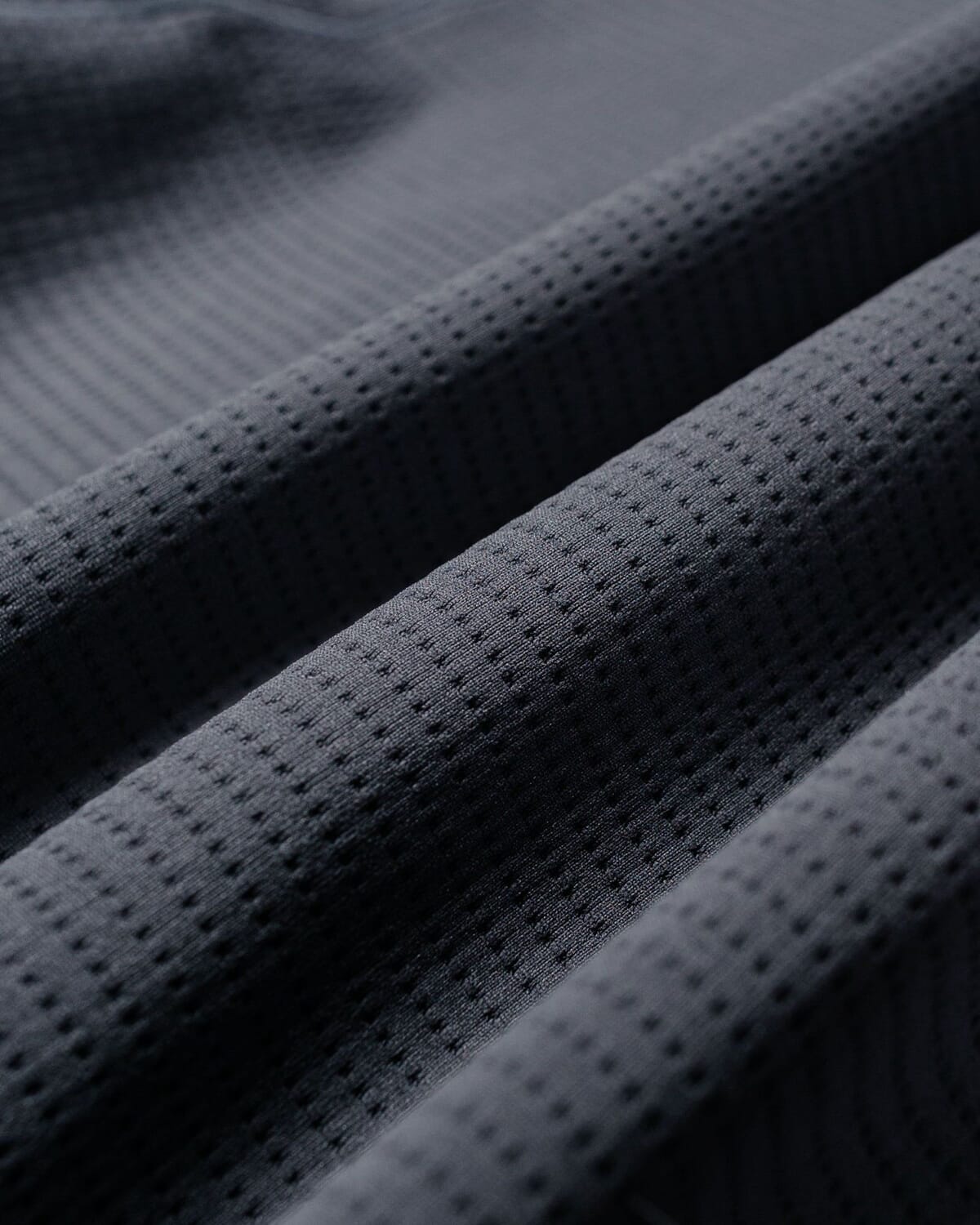
Essentials Made (1330 S Santa Fe Ave, Los Angeles)
A garment-dye specialist working in 100% cotton: hoodies, tees, sweatpants and loungewear. Its private label page says its sweatpants use the same 360 GSM, 100% cotton fleece as its hoodies, garment-dyed in Los Angeles. Its entry tier is the Capsule Run, for two or more styles that share one fabric and dye lot, such as a hoodie and a sweatpant in the same colour. The company's pages do not agree on the size of that run: its pre-sale programme page gives 50 pieces per style from about $3,500 per style, while its cut-and-sew page gives 72 pieces per style. Ask which applies when you request a quote. Development for a sweatpant is listed at $900, with half credited toward production if you order within two months of sample approval. Best for: garment-dyed cotton sweat sets.
Full Speed 100 (Downtown Los Angeles)
Full Speed 100 offers cut-and-sew production, private label and sourcing from Downtown Los Angeles, working with what it calls a network of material suppliers and cut-and-sew contractors. Its cut-and-sew page is one of the clearest on minimums: simple garments, a group it says includes sweatpants, run at 50 to 100 pieces per style per colour, with no-to-low minimums for select styles, and established labels typically produce seasonal runs of 500 to 2,000 pieces. It produces a fit sample in your base size before grading, and grades in standard S to 2XL or a custom range. Its fabric list includes French terry and fleece. Best for: first and second runs of an original jogger.
Apparel Branders (Los Angeles, California)
Apparel Branders is a Los Angeles cut-and-sew and private-label manufacturer whose website lists joggers, shorts and leggings among the garments it develops, sews and brands, next to fleece and French terry hoodies. It states minimums from 50 units per style, samples in two to four weeks, in-person fittings by appointment, and lists fabric knitting and dyeing, garment dyeing and printing among its services. Best for: small first runs that also need decoration under one roof.
Argus Apparel (200 W 8th St, Los Angeles)
Argus Apparel has a dedicated sweatpants manufacturing page that presents it as a custom sweatpants manufacturer offering "Made in USA & Private Label Production". It lists fleece, cotton, French terry, bamboo and sustainable blends, offers design help for new brands, and says it keeps minimum order quantities low, without publishing a number. Best for: start-up brands that want help turning a sketch into a sweatpant.
Apparel Production Inc. (Garment District, New York)
Apparel Production Inc. runs a factory in New York's Garment District with in-house pattern making and sampling, and its domestic production page lists joggers among its products. It states a domestic team of 75 sewing operators aimed at established, medium-sized brands, and minimums of 200 per style for domestic orders. The company also offers overseas production; this listing covers its New York factory only. Best for: a brand ready for 200-plus pieces per style that wants a New York sample room.
Here is how the eight compare at a glance.
| Company | Location | Type | Published sweatpant detail | Published minimum |
|---|---|---|---|---|
| Royal Apparel | Hauppauge, NY | US knitwear maker, own styles | 7.0 to 7.2 oz joggers; private label | Not published |
| Los Angeles Apparel | Los Angeles, CA | Vertical maker, own styles | 12, 14 and 16 oz fleece sweatpants | Not published |
| Camber Sportswear | Norristown, PA | US maker, trade only | 12 oz Cross-Knit, S to 8XL | 72 pieces (custom) |
| Essentials Made | Los Angeles, CA | Cut-and-sew, garment dye | 360 GSM cotton fleece | 50 or 72 per style (pages differ) |
| Full Speed 100 | Los Angeles, CA | Cut-and-sew, private label | French terry and fleece sourced | 50 to 100 per style per colour |
| Apparel Branders | Los Angeles, CA | Cut-and-sew, private label | Joggers and sweats | 50 per style |
| Argus Apparel | Los Angeles, CA | Cut-and-sew, private label | Fleece, French terry, bamboo | "Low", not published |
| Apparel Production Inc. | New York, NY | Cut-and-sew factory | Joggers | 200 per style (domestic) |
Source: each company's own website, read 3 November 2026; Royal Apparel's Hauppauge address from ASI Central (January 2026). Minimums and weights are company-stated and can change; confirm them in writing before you commit.
Citation capsule: US sweatpants are made by two kinds of company. Vertical makers such as Los Angeles Apparel, Camber Sportswear and Royal Apparel sell their own US-made styles, with published fabric weights from 7.0 oz to 16 oz per square yard. Cut-and-sew factories such as Full Speed 100, Apparel Branders and Essentials Made make sweatpants to a brand's pattern from about 50 pieces per style.
What duty does an imported sweatpant pay?
Most sweatpants and joggers are knitted trousers, classified in the US Harmonized Tariff Schedule under heading 6103 for men and boys and 6104 for women and girls, and then by the fibre that predominates by weight. The general (column 1) duty rates, which apply to countries without a trade agreement or special programme, are high for this category, as the chart shows.
On a cotton men's jogger with a customs value of $12, the 16.1% general rate adds about $1.93 in duty before freight, brokerage and any Chapter 99 duties tied to the country of origin. A polyester-rich jogger at the same value pays 28.2%, about $3.38. The fibre split on your tech pack therefore changes the duty line: a 60/40 cotton-polyester fleece is classified as cotton, a 40/60 one as synthetic. Countries with US free-trade agreements, such as Chile, Colombia, Korea and Peru, can qualify for free entry if the garment meets that agreement's rules of origin (USITC HTS). Sweatpants made in the US pay no import duty at all, which narrows the price gap with imported goods more than the factory quote alone suggests.
What labels do sweatpants need in the US?
Sweatpants are textile wearing apparel, so the FTC's rules under the Textile Act apply. The label has to show the fibre content by percentage of weight, the country of origin and the name or registered RN number of the company responsible (FTC, Threading Your Way Through the Labeling Requirements).
- Fibre content. Each fibre making up 5% or more of the weight, by its generic name and percentage, in order of weight, for example "80% Cotton, 20% Polyester". Smaller amounts are grouped as "other fiber" unless they have a function, such as spandex for stretch.
- Country of origin. Imported sweatpants name the country where they were made. Sweatpants sewn in the US from imported fabric must say so, for example "Made in USA of imported fabric".
- Care instructions. The Care Labeling Rule requires a permanent care label on textile wearing apparel, with at least one safe washing or dry-cleaning method and any warnings (FTC, Clothes Captioning).
- "Made in USA". An unqualified claim means the product is all or virtually all made in the US, which for a sweatpant includes the fabric (FTC, Complying with the Made in USA Standard).
Ask the maker who supplies the labels. Several factories here print or sew labels in-house, but the content of the label, and the legal responsibility for it, sits with the brand.
How to brief a sweatpants maker
Full Speed 100 lists what it needs before production: a completed tech pack, production markers and a sew-by sample; the fabric, trims and supplies; branding artwork and placement; and the purchase order quantity, target price and delivery date. That list works for any of the eight. For sweatpants, make sure the brief also answers these questions:
- Fabric type (French terry or brushed fleece), fibre split and weight, in GSM or oz per square yard, stated once in one unit.
- Waistband construction: covered or exposed elastic, width, drawcord yes or no, eyelets or buttonholes, cord-end finish.
- Pockets: type, number and pocket-bag fabric.
- Hem: rib cuff (rib type and height) or open hem.
- Inseam and size range, with a measurement chart and grading rules.
- Colours and dye method: piece-dyed fabric or garment-dyed finished pants.
- Decoration, labels and packaging.
- Quantity per style per colour, target price and the date the goods must arrive.
Send the same brief to two or three makers and compare quotes line by line. A quote that is far below the others usually means the factory read the fabric weight, the waistband or the quantity differently, not that it is cheaper. If you want a factory-ready document first, our tech pack service produces one for a single style.
Sweatpants manufacturing FAQ
Who manufactures sweatpants in the USA?
The eight companies we checked are Royal Apparel (Hauppauge, New York), Los Angeles Apparel, Camber Sportswear (Norristown, Pennsylvania), Essentials Made, Full Speed 100, Apparel Branders and Argus Apparel in Los Angeles, and Apparel Production Inc. in New York's Garment District. The first three sell their own sweatpant styles; the other five cut and sew sweatpants to a brand's own design.
What is the minimum order for custom sweatpants in the USA?
Published minimums among the makers here run from about 50 pieces per style (Apparel Branders; Full Speed 100 at 50 to 100 per style per colour; Essentials Made's Capsule Run) to 72 pieces (Camber's custom programme, 6 dozen) and 200 per style (Apparel Production Inc.'s domestic orders). Royal Apparel, Los Angeles Apparel and Argus Apparel do not publish a number.
What is the difference between French terry and fleece sweatpants?
Both start as the same loop-back knit. Fleece has been brushed on the reverse so the loops open into a soft pile that traps air, which makes it warmer and bulkier. French terry keeps the loops intact, so it is lighter, more breathable and drapes better.
What GSM is best for joggers?
Light French terry joggers sit around 220 to 260 GSM, midweight fleece around 280 to 340 GSM and heavyweight fleece from about 340 GSM up. Published US examples run from Royal Apparel's 7.0 oz per square yard fleece jogger (about 237 GSM) to Los Angeles Apparel's 16 oz plush fleece sweatpant (about 542 GSM).
What import duty do sweatpants pay in the US?
Under the general rates in the US Harmonized Tariff Schedule, knitted cotton trousers pay 16.1% for men (6103.42.10) and 14.9% for women (6104.62.20), and knitted synthetic-fibre trousers pay 28.2% for both (6103.43.15 and 6104.63.20). Additional Chapter 99 duties can apply depending on the country of origin. Sweatpants made in the US pay no import duty.
Can I label my sweatpants Made in USA?
Only if they are all or virtually all made in the US, which under FTC guidance includes the fabric. Sweatpants sewn in the US from imported fabric must say so, for example 'Made in USA of imported fabric'.
How big is the market for sweatpants and joggers?
There is no credible sourced figure for sweatpants on their own, and we will not invent one. The category they sit inside is large: global athleisure was valued at about $422.0 billion in 2025 and is forecast to reach about $892.5 billion by 2033, a 9.9% annual growth rate from 2026, with North America holding 32.8% of 2025 revenue (Grand View Research).
We're a group of 80 documented clothing manufacturers in the United States. Tell us your product, volume, and timeline. We'll place your production with the factory in our group built for it, usually within 24 hours. You produce directly with the factory. Flat fees, no markups, no pitch.
Get in contact Download the directory ($49)Need a tech pack? Get a factory-ready single-style tech pack for $79. See what's included.
Sources
- Grand View Research, Athleisure Market Size, Share and Trends Report, 2026. Source of the $422.0 billion (2025), $892.5 billion (2033), 9.9% CAGR and 32.8% North America share figures, read on the publisher's page.
- Grand View Research, press release: Athleisure Market Size To Reach $892.48 Billion By 2033, March 2026.
- Royal Apparel, fleece joggers wholesale, read 3 November 2026. Jogger fabrics and weights, union shop, private label and minimums statement.
- Royal Apparel, about Royal Apparel, read 3 November 2026.
- ASI Central, Royal Apparel Acquires Second Hauppauge, NY, Facility for Manufacturing, January 2026.
- Los Angeles Apparel, HF04 Heavy Fleece Sweatpants (Garment Dye), 14 oz fleece, knitted, cut, sewn and dyed in Los Angeles; price.
- Los Angeles Apparel, sweatpants collection, HF05, SF1044 and PLU04GD styles.
- Camber Sportswear, home page, read 3 November 2026. Address, Cross-Knit weight and blend, size range, custom minimum.
- Essentials Made, private label clothing manufacturer, 360 GSM cotton fleece, garment dye in Los Angeles.
- Essentials Made, pre-sale programme, Capsule Run at 50 pieces per style.
- Essentials Made, cut and sew manufacturing in Los Angeles, Capsule Run at 72 pieces per style; development pricing.
- Full Speed 100, cut and sew production, read 3 November 2026. Minimums, sampling, grading and production requirements.
- Apparel Branders, home page, read 3 November 2026.
- Argus Apparel, sweatpants manufacturer, read 3 November 2026.
- Apparel Production Inc., domestic production, read 3 November 2026.
- USITC, Harmonized Tariff Schedule of the United States, subheadings 6103.42, 6103.43, 6104.62 and 6104.63, general and special rates read 3 November 2026.
- FTC, Threading Your Way Through the Labeling Requirements Under the Textile and Wool Acts.
- FTC, Clothes Captioning: Complying with the Care Labeling Rule.
- FTC, Complying with the Made in USA Standard.
Every company named above appears in this source list. Fabric weights, minimums, prices and Made-in-USA claims are the companies' own published statements, labelled as such in the text, and we did not independently audit them. No company in this article is a OneAim group member, and none paid to appear. Reviewed and updated 3 November 2026 by Will Godax.