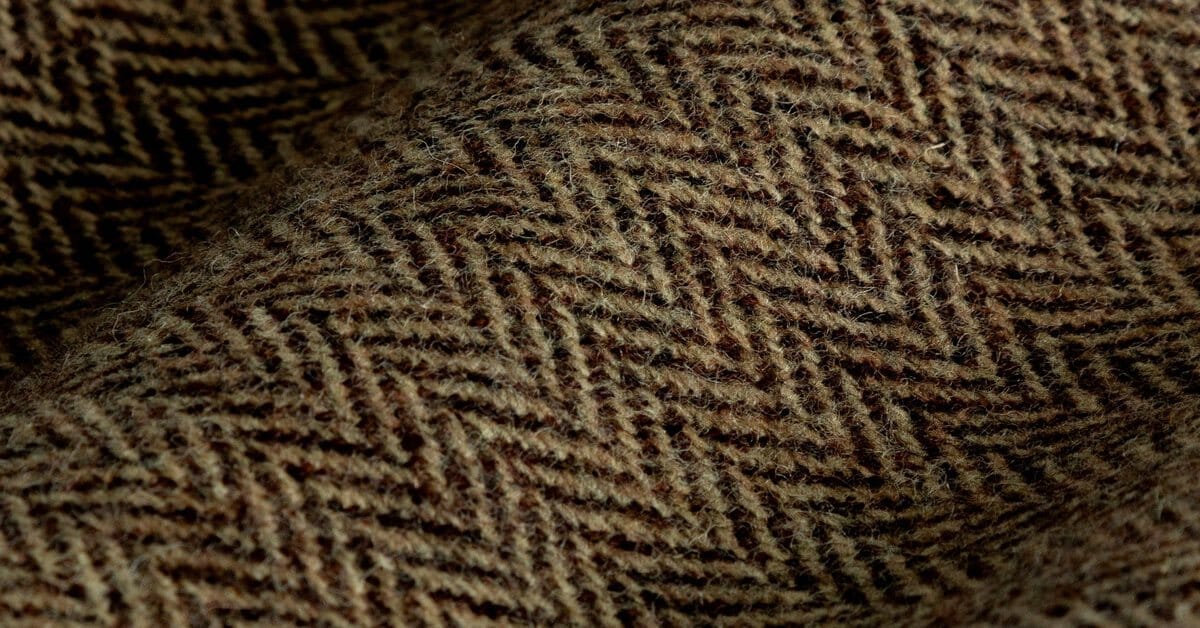
Scarf manufacturers split into two camps: knitters and weavers. They are different companies, with different machines, and one cannot do the other's job. A rib or jacquard scarf comes off a knitting machine. A printed silk square or a herringbone wool scarf comes off a loom, or off a printer, and then gets cut and finished. Ask a knitter to weave and you get a polite no, or a subcontracted mess. The global scarves and shawls market was worth $26.22 billion in 2025, and is forecast to reach $56.37 billion by 2034 (Fortune Business Insights, 2025).
This directory profiles 6 US companies that make scarves for other brands, teams and organisations, each checked on its own website: two logo-knit suppliers, a custom scarf printer, a Minnesota woollen mill, and two whole-garment knitters. It then explains the methods, fibres, import duties and labelling rules that decide what your scarf costs and what it must say on the label. It is an editorial map built from company disclosures and official sources, not a roster of factories OneAim owns.
Heads up: We're OneAim, a group of documented United States clothing factories. The companies below are independent US scarf makers listed from their own websites. They are not members of our group. OneAim's role is separate: we place your production with a documented factory in our group built for your product.
Key Takeaways
- Knit and woven are two different supply chains. Knitted scarves come from knitting mills; woven and printed scarves come from weavers and printers. Pick the method before you pick the factory.
- The US scarf base is small and specialised. We verified 6 makers: four knitters, one woollen mill and one printer. Each one is a fit for a different kind of scarf.
- Published minimums run from none to 144 pieces. Tailored Industry and Knotty Tie state no minimums; Knit Wit Apparel states 144 pieces for custom scarves. The others don't publish one.
- Logo and team scarves have a clear domestic option. Knit Wit Apparel and Cap America both offer USA-made knit scarves built to carry a logo.
- The category is growing. $26.22 billion in 2025 to a forecast $56.37 billion by 2034, about 9.12% a year, with the US market projected at $3.62 billion in 2026 (Fortune Business Insights, 2025).
- Imported scarves pay duty; US-made ones don't. General US duty rates on scarves run from 1.2% to 11.3% depending on fibre and construction, before any origin-specific Chapter 99 duties (USITC HTS).
- Labels are not optional. The FTC lists scarves as covered textile products: fibre content, country of origin and your company name or RN go on the label, and "Made in USA" means US-made materials too.
Try it free: Estimate what your garment costs to make in the USA in about 60 seconds with our garment cost calculator. No signup.
Knit or woven: which scarf are you making?
Look at the ends. If the scarf has a rib, a cable, or a stretchy hand-feel, it was knitted from yarn on a knitting machine. If it drapes flat, holds a print, or carries a hand-rolled hem, it was woven as cloth on a loom and then cut and finished. That one observation tells you which half of this directory to call.
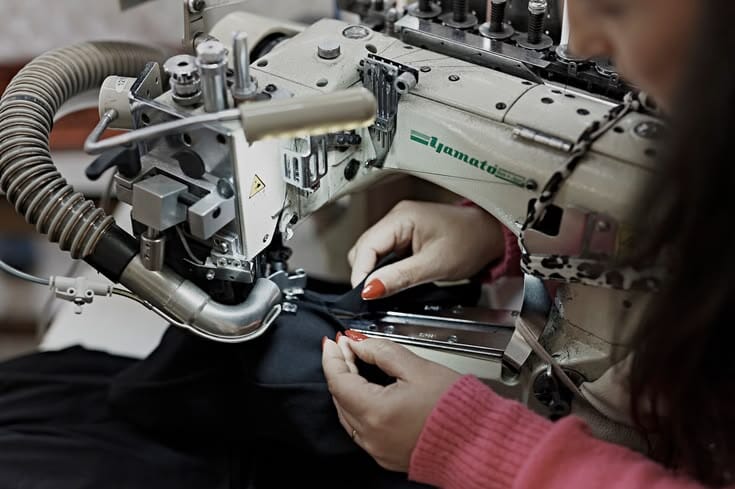
The knitted method runs on flat-bed machines, typically 3 to 12 gauge. The scarf is knitted as a panel, or knitted in one piece on a whole-garment machine. Ends are linked or cast off, fringes twisted or knotted, and the piece is wet-finished to bloom the fibre.
Gauge matters more than most first briefs admit. Gauge is the number of needles per inch on the machine bed: a low gauge such as 3 or 5 gives a chunky, lofty scarf that uses more yarn per piece, while a fine gauge such as 12 gives a thin, drapey knit that feels closer to a jersey. Rib structures (1x1, 2x2) make a scarf lie flat and spring back; plain single jersey curls at the edges unless it is doubled or finished with a border. A jacquard knit builds the colours of a logo or pattern into the fabric itself, so the back of the scarf shows floats or a second face, which is why two-ply "double jacquard" knits are often used for team scarves. Knit Wit Apparel's semi-custom range, for example, is a two-ply knit (more on it below).
The woven method, and what it runs on
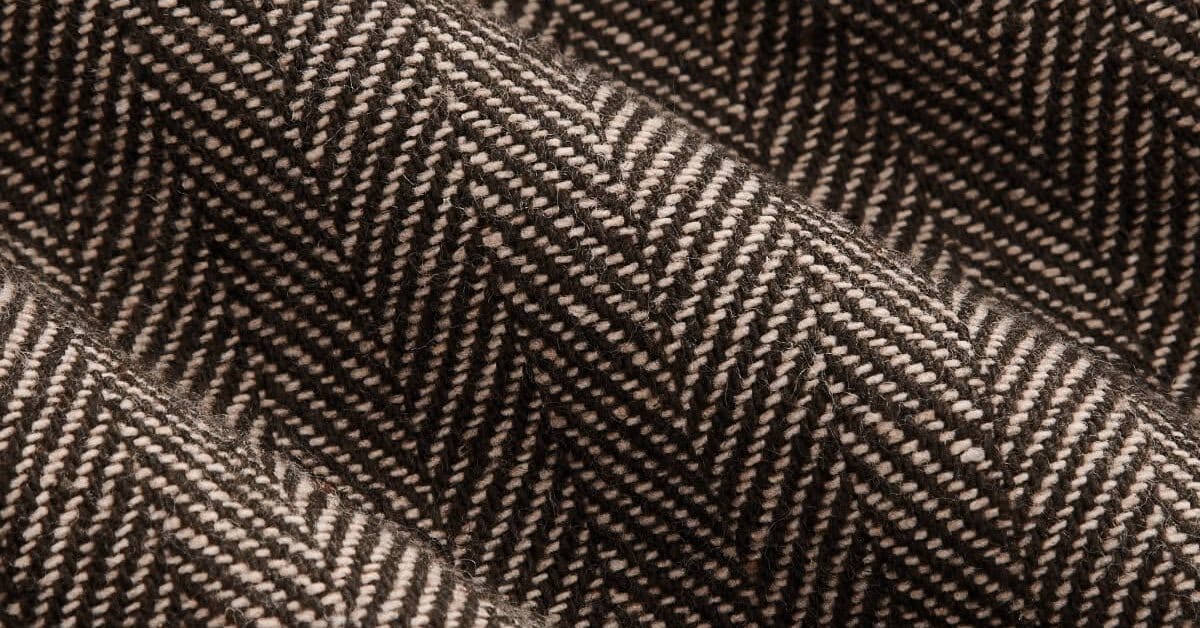
The woven method runs on dobby or jacquard looms. Cloth comes off the loom and gets cut to length. The ends are then secured by a knotted fringe or a hem. On silk, that hem is the whole game. Printed scarves add one more step: the design goes onto finished cloth by screen or digital printing before the piece is cut and hemmed.
A woven scarf is really a piece of cloth with designed edges. Weavers often set up a long warp and weave several scarf lengths in a row, separated by unwoven gaps that later become the fringe. That is efficient once the loom is threaded, but threading a new warp takes time, which is one reason woven minimums tend to be set per warp or per colourway rather than per piece. Herringbone, twill and plain weaves in wool are the classic winter scarf; satin and crepe de chine in silk are the classic printed square.
Two different manufacturing methods
The two methods differ at every step, from the machine to the way the ends are finished. This is a general guide to how the work is organised, not a price list; each maker sets its own terms.
| Step | Knitted scarf | Woven or printed scarf |
|---|---|---|
| Machine | Flat-bed or whole-garment knitting machine | Dobby or jacquard loom; printer for printed scarves |
| Starts from | Yarn on cones | Yarn on a warp beam, or finished cloth for printing |
| Pattern or logo | Knitted in (jacquard), or decorated after | Woven in (jacquard), or printed on the cloth |
| Design change | A new knitting program | A new warp or loom set-up; a new file for digital print |
| Ends | Linked, cast off, fringed or tasselled | Knotted fringe, rolled hem or machine hem |
| What drives the minimum | Machine set-up and yarn lots | Warp length, cloth width and printing set-up |
General guide to standard knitting and weaving sequences. Confirm the process with each maker.
Which fibre should your scarf be?
Fibre sets the hand-feel, the price, the care instructions and, as the duty section below shows, the import tariff. It also narrows the list of makers, because a mill set up for acrylic logo scarves is rarely the right place for a cashmere stole.
- Acrylic and acrylic blends. The workhorse of team, club and promotional scarves: bright, colourfast, machine-washable and inexpensive. Knit Wit Apparel's semi-custom range uses a 95% acrylic, 5% elastic yarn.
- Merino and other fine wool. Warm, breathable and soft enough to wear against the neck. Faribault Mill lists its solid herringbone scarf as 100% fine merino, and Tailored Industry lists a 100% merino jersey-knit scarf. Wool usually means dry cleaning or careful hand washing, which goes on the care label.
- Alpaca. Very warm for its weight, with a natural halo. Evolution Knitwear knits alpaca scarves and will knit a customer's own fibre.
- Cashmere. The premium knit. Tailored Industry lists cashmere scarves and stoles alongside merino. Expect a higher yarn cost and more care in finishing.
- Silk. The classic printed square or long scarf, with a rolled hem. Silk is the largest single material segment in the scarf market, forecast at a 32.60% share in 2026 (Fortune Business Insights, 2025).
- Cotton, linen, viscose and modal. Lighter, all-season scarves, often printed. Plant-based and regenerated fibres take print well and drape softly, but lightweight versions need flammability attention (see the labels section).
If you are new to fabric choices, our guide to fabric sourcing for clothing brands explains how composition, weight and finish are specified, and how to ask a mill for them.
How big is the scarf market?
Bigger than the size of the US maker base suggests. Fortune Business Insights values the global scarves and shawls market at $26.22 billion in 2025 and $28.04 billion in 2026, and forecasts $56.37 billion by 2034, a 9.12% compound annual growth rate. It puts North America at $6.88 billion in 2025 and projects the US market at $3.62 billion in 2026. Offline stores are expected to hold 79.24% of sales in 2026, which is why so many scarves are designed with a hang tag and a retail fold in mind.
Treat these as one firm's estimates rather than settled fact: other research firms publish very different numbers for scarves and shawls, so quote one source rather than blending them. What matters for a brand is the direction. Demand is large and growing, and most of it is still sold in physical stores.
How did we choose these manufacturers?
We started from US manufacturing directories and trade coverage, then kept only companies whose own website shows three things: that they make scarves, that the work happens in the United States, and that they take orders from other brands, organisations or resellers. We read each site ourselves, and the page we checked is listed in Sources.
We dropped every name we could not confirm. One long-established Minnesota knitting mill had its website offline when we checked. A New Jersey headwear mill's current made-in-USA catalogue showed hats but no scarves. Several neckwear houses sell scarves but did not show that they make them in the US. We didn't rank one to six, because "best" depends on whether your scarf is knitted, woven or printed, and on your volume.
Which US scarf manufacturers make scarves for brands?
Six companies, grouped by method: logo knits first, then printed, woven, and whole-garment knits.
Knit Wit Apparel (Wheeling, Illinois)
A custom knitwear company for team, club and business scarves, beanies and caps. It states that in 2018 it brought its knitted product customisation to the Midwest, and that its scarves are customised in the USA. Its custom scarf page sets a 144-piece minimum; semi-custom designs carry up to three colours in a 95% acrylic, 5% elastic yarn, and scarves run about 60 inches before fringe. Fully custom jacquard work, where the logo is knitted into the scarf, is quoted separately. It offers resale pricing for distributors. Its FAQ defines jacquard as a pattern "knit directly into the item" and says you receive a final proof for approval after you order; it does not publish lead times, so ask for one with your quote, and ask which steps happen in the USA.
Knotty Tie Co. (Denver, Colorado)
Custom-printed neckwear and scarves, made to order in Denver. The company's own pages state no minimums for custom scarves, and that it prints its designs onto fabric, which is what makes one-off and short runs possible. It describes itself as a social enterprise that employs resettled refugees. Its custom scarf page, read in a browser on 2 November 2026, says there is no overseas production and no minimum order, and lists fabrics from draping chiffon to a soft poplin, designed to mimic silk scarves without silk prices. The fit is a printed scarf for a launch, an event or a corporate order, not a knitted or woven scarf. Its site blocks automated fetching, so these details are company-stated.
Cap America (Fredericktown, Missouri)
A promotional headwear maker with a USA-made knit line that includes scarves. Its catalogue lists "USA Made Elite Knit Caps & Scarves", and style RK60, a 60-inch scarf with fringe, is listed as in stock and USA made, ready for logo decoration. The important limit: its home page states that it sells headwear exclusively to distributors of promotional products and advertising specialties, so a brand orders through a distributor rather than direct. Best for logo merchandise scarves rather than a fashion scarf developed from scratch. Minimums are not published.
Faribault Mill (Faribault, Minnesota)
A historic woollen mill, best known for blankets and throws, that also weaves wool scarves. Its solid herringbone scarf is listed as 100% fine merino, 12 by 76 inches, origin "Made in USA". Its custom page describes work with emerging brands and established companies, from co-labelling its in-line products to translating a client's artwork onto its looms. The custom programme is built around blankets and throws and its scarf range is narrow, so confirm a scarf project directly before you plan around it. Minimums are not published.
Evolution Knitwear (Kennewick, Washington)
A small-batch knitter of natural-fibre accessories on WHOLEGARMENT machines, which knit a piece in one go with no seams. Its range includes alpaca scarves, and it states products are "Made Exclusively in the United States". It sells wholesale and invites customers to work with its team on their own product, including knitting a customer's own fibre. It says the whole-garment process allows smaller minimum orders, and that minimums can scale from smaller to larger production. Built for small producers and brands that want alpaca or merino scarves in short runs. No number is published.
Tailored Industry (Brooklyn, New York)
An on-demand knitwear factory in Brooklyn whose 3D knitting process, it says, builds garments in a single piece with no cutting and no sewing. Its catalogue includes merino and cashmere scarves and stoles; its merino scarf is a 100% merino jersey knit with a seed-stitch trim, listed as dry clean only. For brands it offers ready styles under your label, customised silhouettes, and full custom development, with "On-Demand, Zero Minimums" as the headline terms. It states a library of more than 300 market-ready styles and 9 business days from order to launch, both company-stated. Best for a fashion knit scarf sold under your own label without holding stock.
Here's how the six compare at a glance.
| Maker | Location | Method | Published minimum | Best for |
|---|---|---|---|---|
| Knit Wit Apparel | Wheeling, IL | Knit, logo and jacquard | 144 pieces (custom scarves) | Team, club and business scarves |
| Knotty Tie Co. | Denver, CO | Printed, cut and sewn | None (company-stated) | Short-run printed scarves |
| Cap America | Fredericktown, MO | Knit, decorated | Not published; sells via distributors | Logo merchandise scarves |
| Faribault Mill | Faribault, MN | Woven wool | Not published | Co-labelled woven wool |
| Evolution Knitwear | Kennewick, WA | Whole-garment knit | Not published | Small-batch alpaca and merino |
| Tailored Industry | Brooklyn, NY | Whole-garment knit, on demand | None (company-stated) | Fashion knit scarves, own label |
Source: each company's own website, checked October 2026. Minimums as published; confirm current terms.
Citation capsule: US scarf manufacturing is a small, specialised base. Knit Wit Apparel (Illinois) and Cap America (Missouri) supply USA-made knit scarves built for logos, Knotty Tie (Colorado) prints custom scarves with no stated minimum, Faribault Mill (Minnesota) weaves wool scarves, and Evolution Knitwear (Washington) and Tailored Industry (New York) knit scarves in one piece on whole-garment machines.
What duty does an imported scarf pay?
If you compare a US maker's quote with an overseas one, the overseas price is not the full cost. Every imported scarf is classified in the US Harmonized Tariff Schedule (HTS), and the duty depends on two things: whether it is knitted or woven, and what it is made of. Woven scarves sit in heading 6214 ("shawls, scarves, mufflers, mantillas, veils and the like"); knitted scarves sit in subheading 6117.10.
The general (column 1) rates below are the base rates for countries without a trade agreement. Many free trade partners pay nothing under the special column, and goods from some countries pay additional Chapter 99 duties on top, so check the HTS entry for your exact origin before you compare quotes. Rates were read from the USITC HTS on 2 November 2026.
Three things stand out. Scarves of 70% or more silk carry the lowest base duty, at 1.2% woven and 1.5% knitted. Wool scarves pay more when knitted (9.6%) than when woven (6.7%). And a knitted man-made fibre scarf, the typical acrylic team scarf, sits at the top of the table at 11.3%, the same as a woven cotton scarf. Duty comes on top of freight, customs brokerage and the extra weeks an import takes, so count all of it when you compare a US quote with an imported one. Our guide to tariffs on apparel imports covers the wider picture.
What labels does a scarf need in the US?
A scarf is small, but it carries the same legal labelling as a sweater. The FTC's guide to the Textile and Wool Acts lists scarves among covered products, which means the label must show:
- Fibre content, by generic name and percentage, such as "100% Merino Wool" or "60% Cotton, 40% Polyester". Products containing wool also fall under the Wool Act and Rules.
- Country of origin. Scarves are one of the "flat" goods (with sheets, towels, handkerchiefs and napkins) for which Customs requires the country where the fabric was made. A scarf cut and sewn in the US from imported fabric must name both, for example "Made in U.S.A. of fabric made in China" or "Fabric made in China, cut and sewn in U.S.A."
- Who made or sells it: the company name, or the Registered Identification Number (RN) of the manufacturer, importer or other dealer.
"Made in USA" has a strict meaning. The FTC says a label may say "Made in U.S.A." only if the product is made completely in the US of materials that were made in the US. A scarf knitted in the US from imported yarn can still be a US-made product, but its label has to disclose the imported material. Ask every maker what they can certify about yarn or fabric origin before you print hang tags.
Care instructions. The FTC's Care Labeling Rule exempts shoes, gloves and hats, and excludes handkerchiefs, belts, suspenders and neckties. Scarves are not on that list, so plan for a permanent care label (for example "Dry clean only" on Tailored Industry's merino scarf). Our trims and labels guide covers label materials and placement.
Flammability. The federal standard for clothing textiles, 16 CFR Part 1610, applies to textiles for clothing. Its exception for hats does not cover hats that form part of a covering for the neck, face or shoulders, and scarves have no exception of their own. The rule does exempt from testing, for guaranty purposes, plain-surface fabrics of 2.6 ounces per square yard or more, and fabrics made entirely of acrylic, modacrylic, nylon, olefin, polyester or wool. That covers most acrylic and wool scarves. A lightweight silk, viscose or cotton scarf falls outside those exemptions, so ask the maker or fabric supplier how the fabric meets the standard.
How to brief a scarf maker
A complete first email gets a faster, more accurate quote. Before you contact any of the six makers above, write down:
- Method: knitted, woven or printed, with a reference photo of the scarf you want.
- Fibre and yarn: composition, and for knits the gauge or a reference for thickness.
- Finished size: length (state whether it includes the fringe) and width.
- Ends: fringe length and type, tassels, a rolled hem or a machine hem.
- Design: artwork as a vector file, the number of colours, and whether the logo is knitted or woven in, printed, or applied as a patch or label.
- Labels and packaging: fibre, origin, RN and care label wording, your brand label, hang tag and fold.
- Quantities: pieces per colourway, a target unit price and the date you need the goods.
Ask for a sample or a proof before bulk, and approve colour against a physical swatch rather than a screen. Our sample rounds playbook explains how many rounds to plan, and if you would rather hand the spec work over, our tech pack service draws a factory-ready tech pack for $79 per style. For other winter accessories, see our directories of beanie manufacturers and glove manufacturers; Knotty Tie also appears in our list of tie manufacturers.
Scarf manufacturing FAQ
Who makes scarves in the USA for brands?
The six companies we checked are Knit Wit Apparel, Cap America, Knotty Tie Co., Faribault Mill, Evolution Knitwear and Tailored Industry. Four knit, one weaves wool, and one prints. Choose by method first: a jacquard team scarf, a printed square and a woven wool scarf come from different companies.
Should I choose digital or screen printing for silk scarves?
Digital printing has no per-colour setup, so complex, multi-colour artwork and short runs are viable. Screen printing uses one screen per colour, costs more to set up, and gives deeper colour saturation and a lower unit cost at volume. For a first run of a few dozen pieces, digital is usually the practical choice.
What is the minimum order for custom scarves?
Among the six makers here, Tailored Industry and Knotty Tie state no minimums, and Knit Wit Apparel states 144 pieces for custom scarves. Cap America, Faribault Mill and Evolution Knitwear do not publish a scarf minimum, so ask each one for a quote. On woven scarves, ask how the minimum relates to the warp: threading a loom is set-up work, so minimums are often set per warp or colourway.
Are knitted and woven scarves made in the same factory?
Usually not. Knitted scarves come off knitting machines at knitting mills; woven scarves come off dobby or jacquard looms and then go to cutting, hemming or fringing. None of the six makers here does both: Faribault Mill weaves, Knotty Tie prints, and the other four knit.
Can a logo be knitted into a scarf in the USA?
Yes. A jacquard knit carries the pattern or logo in the knit itself rather than printed or stitched on top. Knit Wit Apparel offers jacquard and semi-custom knit scarves, and Cap America offers USA-made knit scarves ready for logo decoration through promotional distributors.
How big is the scarf market?
The global scarves and shawls market was worth $26.22 billion in 2025 and $28.04 billion in 2026, forecast to reach $56.37 billion by 2034 at a 9.12% CAGR (Fortune Business Insights, 2025). Other research firms publish very different numbers for this category, so cite one source rather than blending them.
What import duty does a scarf pay in the US?
Under the general (column 1) rates in the US Harmonized Tariff Schedule, woven scarves of heading 6214 range from 1.2% (70% or more silk) to 11.3% (other fibres, including cotton), and knitted scarves of subheading 6117.10 range from 1.5% (70% or more silk) to 11.3% (man-made fibres). Additional Chapter 99 duties can apply depending on the country of origin.
What labels does a scarf sold in the US need?
The FTC lists scarves as covered by the Textile Act, so a scarf needs a label with fibre content, country of origin and the company name or RN. Scarves are not on the Care Labeling Rule's exemption list, so plan for care instructions too. Because scarves are flat goods, a scarf sewn in the US from imported fabric must name both the US and the fabric's country of origin.
Can I label a scarf Made in USA?
Only if it is made completely in the US of materials made in the US, according to the FTC. A scarf finished in the US from imported fabric must say so, for example "Made in U.S.A. of fabric made in China".
We're a group of 80 documented clothing manufacturers in the United States. We do not place production overseas. Tell us your product, volume, and timeline. Our team replies within 24 hours, then we place your production with the factory in our group built for it, from 100 units per style. You produce directly with the factory. Flat fees, no markups, no pitch.
Get in contact Download the directory ($49)Need a tech pack? Get a factory-ready single-style tech pack for $79. See what's included.
Sources
- Fortune Business Insights, Scarves & Shawls Market Report, 2025. Source of $26.22B (2025), $28.04B (2026), $56.37B (2034 forecast), the 9.12% CAGR, North America $6.88B (2025), US $3.62B (2026 projection), silk 32.60% and offline stores 79.24% (2026); read 2 November 2026.
- Knit Wit Apparel, custom scarves, checked 2 November 2026. 144-piece scarf minimum and "customized in the USA"; yarn, colours and scarf length from its FAQ; 2018 Midwest move from its About page.
- Knotty Tie Co., custom scarves, read in a browser 2 November 2026. No-minimum, no-overseas-production and fabric claims are company-stated; the site blocks automated fetching.
- Cap America, RK60 USA-made 60-inch scarf, checked October 2026. USA-made knit scarf line; distributor-only sales and Fredericktown, MO address from its own site.
- Faribault Mill, custom opportunities and corporate gifting, read in a browser 2 November 2026. Co-labelling and custom collaborations; fibre, size and origin checked 2 November 2026 on its herringbone wool scarf page.
- Evolution Knitwear, checked 2 November 2026. Kennewick, WA; WHOLEGARMENT knitting, alpaca scarves, wholesale and custom products, self-reported.
- Tailored Industry, checked 2 November 2026. On-demand, zero-minimum terms, label and development tiers; Brooklyn factory per its factory page; scarves per its merino scarf page.
- USITC, Harmonized Tariff Schedule of the United States, heading 6214 and subheading 6117.10, general and special rates read 2 November 2026.
- FTC, Threading Your Way Through the Labeling Requirements Under the Textile and Wool Acts. Scarves as covered products, flat-goods origin rule, RN and "Made in U.S.A." standard.
- FTC, Clothes Captioning: Complying with the Care Labeling Rule. Exempt and excluded products.
- 16 CFR Part 1610, Standard for the Flammability of Clothing Textiles, section 1610.1 exceptions and exemptions.
Every company named above appears in this source list. Locations, minimums and capability claims are the companies' own published statements, labelled as such in the text, and we did not independently audit them. We left out companies whose websites did not confirm US-made scarves. No factory in this article is a OneAim group member, and none paid to appear. Duty rates and labelling rules are summarised from the official sources listed; check them for your own product before you import or label. Reviewed and updated 2 November 2026 by Will Godax.