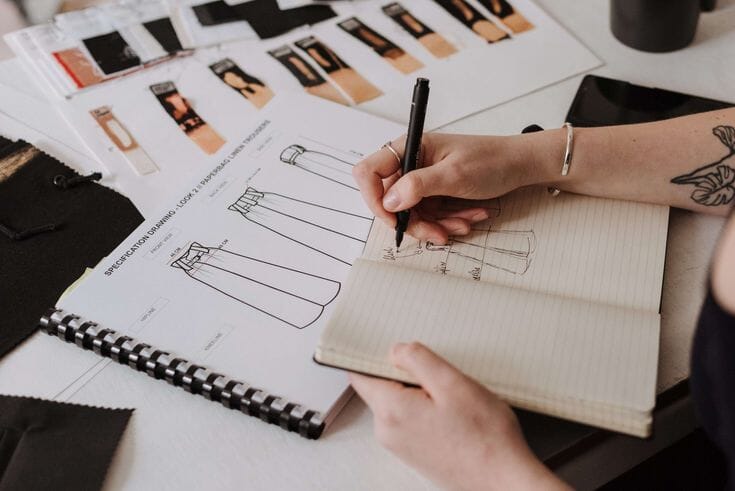
Most pajama manufacturers are not pajama companies. Sleepwear is a bigger and more technical category than it looks. It is made by factories that also sew lingerie, loungewear and soft knits, not by shops that only make pajamas. And if you sell it to children in the United States, it is a regulated product. The global sleepwear and loungewear market is forecast to add $36.46 billion of incremental growth between 2025 and 2029, at a 10.4% compound annual rate (Technavio via PR Newswire, January 2025).
This directory profiles 4 US manufacturers that make pajamas and sleepwear for other brands, in Los Angeles and New York City, each checked on its own website. Then it covers the part nobody puts in a listicle: the US children's sleepwear flammability standards, 16 CFR Parts 1615 and 1616, which decide whether your kids' PJ program is legal or unsellable. It's an editorial map built from company websites and federal regulation, not a roster of factories OneAim owns.
Heads up: We're OneAim, a group of documented United States clothing factories. The companies below are independent sleepwear makers listed on public sources, not members of our group. OneAim's role is separate: we place your production with a documented factory in our group built for your product.
Key Takeaways
- US pajama makers are cut-and-sew houses with a sleepwear line. All four in this directory also make other categories; none of them makes only pajamas.
- The market is growing fast. Sleepwear and loungewear is forecast to add $36.46 billion of incremental growth from 2025 to 2029 at a 10.4% CAGR (Technavio, 2025).
- US kids' sleepwear has exactly two legal routes. Pass the flammability test under 16 CFR 1615 or 1616, or qualify as tight-fitting. There is no third option.
- Untreated cotton flannel is the trap. Loose-fitting, untreated cotton generally cannot pass the vertical flame test, which is why so much US kids' sleepwear is snug-fit cotton with a hang tag.
- We found 4 US makers we could verify, and stopped at 4. Several better-known names are own brands that don't sew for anyone else.
Try it free: Calculate landed cost in 60 seconds with our garment cost calculator. No email required.
Who actually manufactures pajamas?
Soft-goods cut-and-sew factories, mostly. The single most useful thing to understand about sleepwear sourcing is that "pajama manufacturer" is almost never a company's whole identity. Sleepwear sits as a product line next to lingerie, loungewear and soft knits, because the machinery, the elastics, the soft-hand fabrics and the fine-seam finishing are shared.
That's why the US makers in this directory describe themselves as full-service or cut-and-sew manufacturers first, and list pajamas, sleepwear or lounge sets among their categories. If you go hunting for a US factory whose website says only "pajamas", you will mostly find own-label brands or storefronts that don't say where the sewing happens. Search for cut-and-sew houses that already make lingerie and loungewear instead. Our guide to clothing manufacturers in the USA sorts the US options by product and city.
How did we choose these manufacturers?
Every company here had to pass three checks on its own website: it makes pajamas, sleepwear or lounge sets, it makes them in the United States, and it makes them for other brands. Directory listings and "top 10" articles did not count as evidence. Where a figure is the company's own claim, such as a minimum or a staff number, we say so.
We also rejected names. Several well-known US pajama labels make their own line in the United States but don't offer production to other brands, and some large sleepwear groups have a US office but no US factory. Pages that offered "pajama manufacturing USA" without a city, a state or a sewing address were left out too. We didn't rank the four, because "best" depends on whether you need woven or knit, adult or child, and a first run of fifty or a program of thousands.
Which US pajama manufacturers are worth knowing?
Lefty Production Co. (Downtown Los Angeles, California)
A downtown LA production house at 318 West 9th Street that offers patterns, samples and production, and says it "remains committed to domestic, Made in the USA clothing manufacturing" (Lefty Production Co.). Its home page shows pajamas it made for the Beverly Hills Hotel, and its site also covers lingerie, which is the closest machinery to sleepwear (Lefty). It names past clients including Nordstrom, Neiman Marcus and Christian Siriano, and says it "offers low minimums to clients who develop their garments with us" without publishing a number. Best for a brand that wants development and production with one team.
Apparel Production Inc. (Garment District, New York, New York)
A family-run private-label house "Established in 1947", working from 270 W 39th St. Its domestic production page lists "Sleepwear / Pajama", loungewear and slips among its products, with a "domestic team of 75 skilled sewing operators" and production "all managed in-house in NYC" (Apparel Production Inc.). It is the only maker here that publishes a firm minimum: "200 per style for domestic orders". The company also runs overseas production, so state in writing that you want your order made in NYC. Best for woven sets with piping, where a Manhattan sample room pays for itself.
Full Speed 100 (Downtown Los Angeles, California)
A "Full-service clothing manufacturer in Downtown LA" offering cut-and-sew, private label, sourcing and branding, marked "MADE IN USA" (Full Speed 100). Its cut-and-sew page lists loungewear including "lounge sets, pajama sets", and says its program runs from a first 50-piece collection to seasonal runs of 500 to 2,000 pieces (Full Speed 100, cut and sew). Read one thing carefully: the sewing is done through its contractor network in downtown LA rather than a single own floor, so ask which shop will sew your sets. Best for knit lounge and pajama sets at small-batch volumes.
Argus Apparel (Downtown Los Angeles, California)
A downtown LA manufacturer at 200 W 8th St with a dedicated pajama service: custom and private-label pajama sets for women, men, kids and couples, with tech-pack support, sampling and fabric options from bamboo to silk (Argus Apparel). It advertises "Low MOQ for small businesses and brand launches" without publishing a number. The site describes a US-based facility but doesn't give its address, and it also mentions global clients and sourcing, so get the sewing location and the minimum in writing against your own fabric. Best for a private-label set with printed or custom-dyed fabric.
Citation capsule: US pajama manufacturing sits inside full-service cut-and-sew houses rather than pajama-only factories. Four that list pajamas or sleepwear for other brands on their own websites are Lefty Production Co. and Full Speed 100 in downtown Los Angeles, Argus Apparel in Los Angeles, and Apparel Production Inc. in New York's Garment District, which publishes a minimum of 200 per style for domestic orders.
Woven or knit: which pajama are you actually making?
Two different garments, two different factories, and the choice is upstream of everything else. Woven pajamas are the classic: cut from flat cloth like a shirt, with a collar, a placket, buttons, and piping. Cotton poplin gives the crisp resort look, flannel gives the winter weight, and silk or satin gives the luxury drape. They're sewn by shirt-trained operators and they show every construction flaw.
Knit pajamas are the modern default: jersey, interlock, ribbed cuffs, modal, or a cotton-modal blend. They stretch, they forgive fit errors, and they cost less to sew. Modal in particular has taken over premium sleep because it drapes softly and resists pilling better than plain cotton jersey. Which do you actually want? If your brand story is heritage, piping, and a monogrammed pocket, you're woven. If it's softness, comfort, and a set someone will also wear to make coffee, you're knit.
What do piping and contrast trim actually cost you?
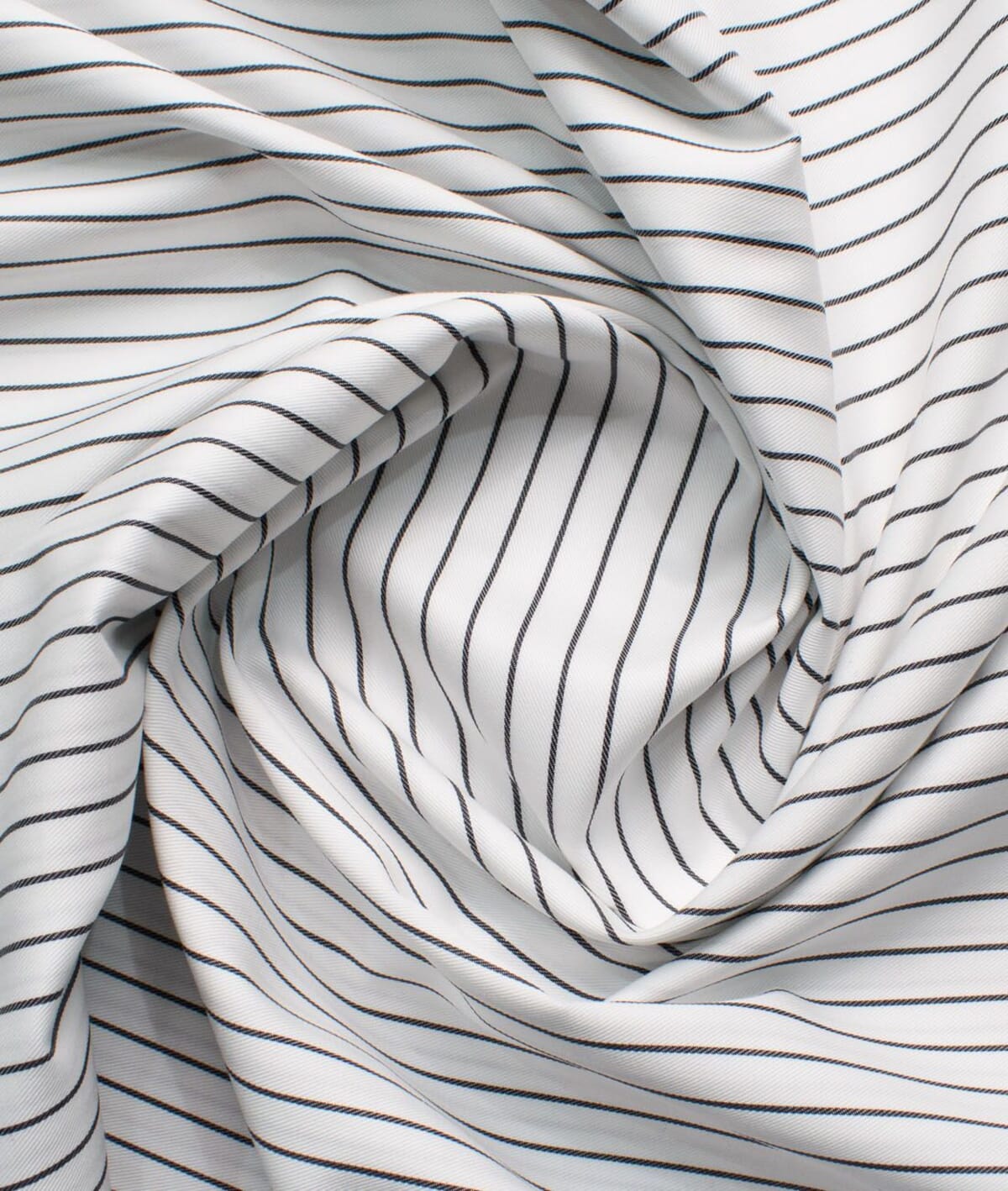
Time, mostly, and then consistency. Piping is a folded strip of contrast fabric sewn into a seam, and it's the detail that makes a woven pajama read as a pajama rather than a shirt and a pair of trousers. It runs the collar, the placket, the pocket, the cuff, and often the trouser side seam. Every one of those runs is an extra operation on the line.
The cost is not the fabric
The cost isn't the fabric. A metre of piping costs almost nothing. The cost is that piping has to be perfectly even. An uneven piped placket is visible from across a room. So it slows the line and raises the reject rate. Contrast trim compounds that, because a contrast colour needs a physical shade standard or your third production run won't look like your first. Specify piping width, contrast colour reference, and the exact seams it runs in your tech pack.
Which fabrics work for pajamas?
Five carry most of the category, and each buys you something different.
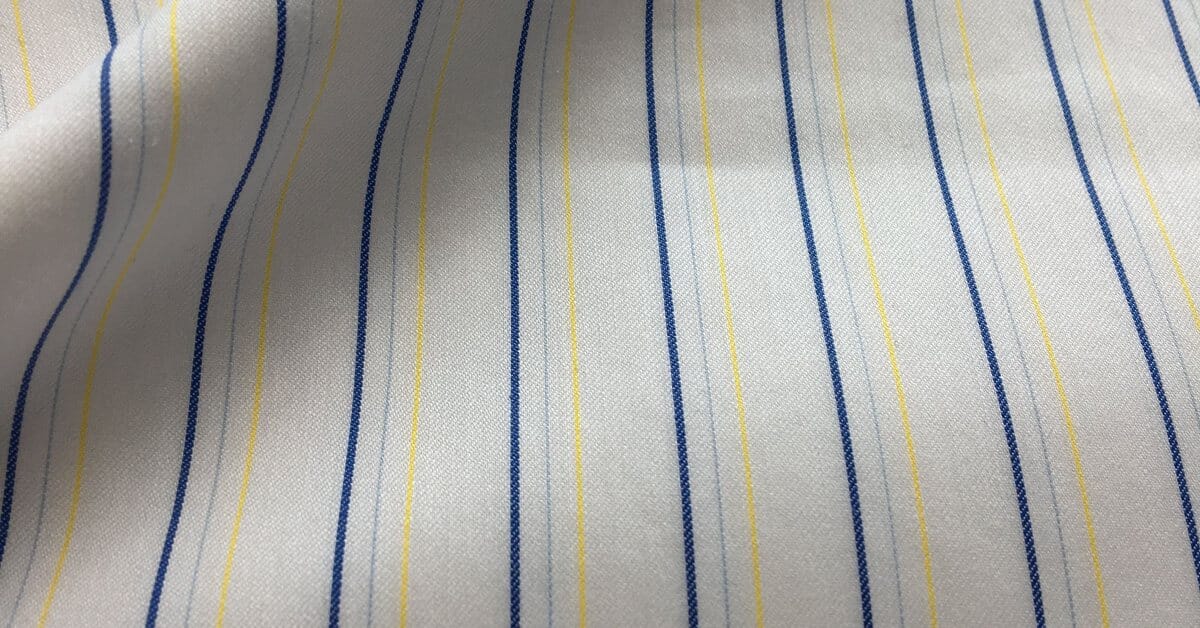
Cotton poplin is the crisp, cool, tightly woven classic. It's what a resort pajama is made of, it presses beautifully, and it handles piping cleanly because the weave holds a fold.
Cotton flannel is brushed cotton, warm and soft, the winter pajama. Be careful here. For children's sleepwear in the US, untreated flannel in a loose fit is exactly the fabric that struggles with the flammability standard. More on that below.
Modal is a regenerated cellulose fibre with an unusually soft hand and good drape. Blended with cotton, it's the workhorse of premium knit sleep sets.
Satin is a weave, not a fibre, which trips people up constantly. Polyester satin and silk satin both give the glossy face; only one costs like silk.
Silk tops the category. Momme weight is the spec that matters, and it needs a factory that already handles slippery wovens, because silk punishes an inexperienced sewing line.
Why is children's sleepwear a regulated product in the USA?
Because loose, untreated fabric near a heat source is a burn risk, and the US federal government regulates it accordingly. Two standards govern children's sleepwear sold in the United States. 16 CFR Part 1615 covers sizes 0 through 6X, and 16 CFR Part 1616 covers sizes 7 through 14 (eCFR / CPSC). The scope covers nightgowns, pajamas, robes, and similar or related items such as loungewear that are intended primarily for sleeping.
The test is a vertical flame test on five specimens. The pass criterion is exact: the average char length of five specimens must not exceed 7.0 inches (17.8 cm). No individual specimen may have a char length of 10 inches (25.4 cm) (16 CFR § 1615.3). Fail either condition and the garment fails.
What are the two compliance routes for kids' pajamas?
There are two, and no third. Route A is flame resistance: the garment is tested to 16 CFR 1615 or 1616 and passes the vertical flame test above. Route B is the tight-fitting exemption: the garment meets the snug-fit dimensional limits set out in 16 CFR 1615.1(o) or 1616.2(m) and is instead tested to the general apparel standard 16 CFR 1610 (CPSC Children's Sleepwear guidance). It must also carry the yellow hang tag the regulation prescribes, reading "For child's safety, garment should fit snugly" (16 CFR Part 1615). A loose, non-flame-resistant children's pajama is simply non-compliant in the US market.
What does that single fork explain?
That single fork explains almost everything you see in a US kids' pajama aisle. Snug-fit cotton with a yellow hang tag? That's Route B. Loose-fit polyester, which is inherently flame resistant? That's Route A. What you very rarely see is a loose, untreated 100% cotton flannel kids' pajama, because in a loose fit that fabric generally can't pass 1615 or 1616. If your brand vision is a billowy organic-cotton kids' nightgown, this is the standard that will end it, and it's much cheaper to learn that now than after a purchase order.
The two legal compliance routes
One more thing brands get wrong
One more thing brands get wrong constantly. A factory cannot be "CPSC certified", because the CPSC does not certify factories. The brand issues a Children's Product Certificate based on third-party testing at a CPSC-accepted laboratory. If a supplier tells you it is CPSC certified, that's a red flag about its understanding of the rule, not a credential. Build your testing plan into your quality control process from the first sample, not the final shipment.
Citation capsule: US children's sleepwear in sizes 0 through 14 has exactly two legal compliance routes. It can be flame resistant, tested under 16 CFR Part 1615 (sizes 0 to 6X) or Part 1616 (sizes 7 to 14), where the average char length of five specimens must not exceed 7.0 inches and no single specimen may char 10 inches. Or it can qualify as tight-fitting under 16 CFR 1615.1(o) or 1616.2(m), in which case it is tested to 16 CFR 1610 and must carry a hang tag reading "For child's safety, garment should fit snugly".
What actually drives the cost of a pajama set?
Not the fabric, which is the assumption almost every founder walks in with. A pajama set is two garments quoted as one unit, and that structure is where the money hides.
Start with the operation count
Start with the operation count. A woven set with a piped collar, a piped placket, a piped pocket, piped cuffs, and a piped trouser seam is a long line: every piped run is a separate operation, held to a tolerance that a plain seam is not. A knit set in jersey with a covered elastic waist and rib cuffs is a short line. Two sets that look comparable on a mood board can sit in genuinely different labour brackets, and no fabric swap closes that gap.
Then the set penalty. You are buying a top and a bottom that must match in shade, in shrinkage, and in hand feel, from the same dye lot, in the same size ratio. If the tops and bottoms drift apart in wash, the set fails even though each piece passed on its own. That is a costing and a quality risk at once, and it is the reason sleepwear factories care so much about your fabric approval before they care about your price target.
The third layer kids' sizes add
Kids' sizes add a third layer that adults' sizes do not have: third-party flammability testing, per style, per fabric, at a CPSC-accepted laboratory. That is a real line item, and it lands before you ship rather than after. It scales with how many fabrics your range carries rather than how many units you buy. A five-fabric kids' capsule is a more expensive compliance problem than a one-fabric kids' capsule at the same order quantity.
How do you brief a pajama manufacturer?
Give a sleepwear factory seven things and you'll get a usable quote on the first pass. Construction (woven or knit). Fabric with a weight and a composition, not a mood word. Fit intent (loose, relaxed, or snug, and for kids' sizes this is a legal question, not a style one). Trim spec: piping width, contrast colour standard, and the seams it runs in. Size range, because crossing from 6X into 7 crosses from 16 CFR 1615 into 1616. Branding and labelling, including the snug-fit hang tag if you're on Route B. And quantity per colourway, not just a total.
Then handle the commercial side. Confirm who pays for third-party flammability testing and at which lab, because that cost lands somewhere and it should land in the quote, not in a surprise invoice. Approve a pre-production sample before bulk. If you don't have a spec yet, our tech pack service builds one factory-ready.
Frequently Asked Questions About Pajama Manufacturers
Who makes pajamas in the USA for other brands?
We verified four on their own websites: Lefty Production Co. in downtown Los Angeles, Apparel Production Inc. in New York's Garment District, Full Speed 100 in downtown Los Angeles, and Argus Apparel in Los Angeles. Each one lists pajamas, sleepwear or lounge sets and offers production for other brands.
Do US pajama manufacturers have low minimum order quantities?
Lower than many founders expect, but only one publishes a firm number. Apparel Production Inc. states 200 per style for domestic orders. Full Speed 100 says its cut-and-sew clients range from a first 50-piece collection to seasonal runs of 500 to 2,000 pieces. Lefty Production Co. and Argus Apparel advertise low minimums without a figure, so get the number in writing against your own fabric.
What are the US flammability rules for children's sleepwear?
Two standards apply: 16 CFR Part 1615 covers sizes 0 through 6X and 16 CFR Part 1616 covers sizes 7 through 14. Under the vertical flame test, the average char length of five specimens must not exceed 7.0 inches (17.8 cm) and no single specimen may char 10 inches (25.4 cm). Alternatively, tight-fitting garments qualify for an exemption.
Can children's pajamas be made from 100% cotton?
Yes, but usually only in a snug fit. Untreated cotton and cotton flannel generally cannot pass the 16 CFR 1615 or 1616 vertical flame test in a loose cut. That's why so much US kids' sleepwear is either snug-fit cotton carrying the mandatory hang tag reading "For child's safety, garment should fit snugly", or loose-fit polyester, which is inherently flame resistant.
Is a factory ever "CPSC certified" for kids' sleepwear?
No. The CPSC does not certify factories. The brand issues a Children's Product Certificate based on third-party testing at a CPSC-accepted laboratory. A supplier claiming to be "CPSC certified" is telling you something about its grasp of the rule rather than presenting a real credential, so treat that phrase as a prompt to ask harder questions.
Should my pajamas be woven or knit?
Woven if the brand story is heritage, structure, and trim: cotton poplin, flannel, or silk with piped collars, plackets, and cuffs. Knit if the story is softness and versatility: cotton jersey, modal, or a cotton-modal blend that a customer will also wear around the house. Knit is cheaper to sew and more forgiving of fit errors; woven shows every construction flaw.
What makes one pajama set cost more than another?
Operation count, not fabric. A woven set with piped collar, placket, pocket, cuffs, and trouser seams carries far more line operations than a jersey knit set with a covered elastic waist, and every piped run is held to a tighter tolerance. A set is also two garments that must match in shade, shrinkage, and hand feel from one dye lot. In kids' sizes, third-party flammability testing adds a cost that scales with the number of fabrics in your range, not the number of units.
We're a group of 80 documented clothing manufacturers in the United States. Tell us your product, volume, and timeline. We'll place your production with the factory in our group built for it, usually within 24 hours. You produce directly with the factory. Flat fees, no markups, no pitch.
Get in contact Download the directory ($39)Need a tech pack? Get a factory-ready single-style tech pack for $79. See what's included.
Sources
- Technavio via PR Newswire, sleepwear and loungewear market to grow by USD 36.46 billion from 2025 to 2029, 30 January 2025. Source of the $36.46B incremental growth figure and 10.4% CAGR.
- 16 CFR § 1615.3, Cornell Legal Information Institute. Source of the vertical flame test pass criteria: average char length of five specimens not to exceed 17.8 cm (7.0 in), no individual specimen to reach 25.4 cm (10 in).
- 16 CFR Part 1615, eCFR. Source of the size scopes (Part 1615 covers sizes 0 through 6X, Part 1616 covers sizes 7 through 14) and the yellow tight-fitting hang tag and its wording.
- CPSC, Children's Sleepwear FAQ. Source of the tight-fitting exemption and testing to 16 CFR 1610.
- Lefty Production Co., about and home page, accessed October 2026. Source of the domestic manufacturing commitment, the pajama work, the client names and the low-minimums wording.
- Apparel Production Inc., domestic production, accessed October 2026. Source of the sleepwear and loungewear product list, the 75 sewing operators, in-house NYC production and the 200 per style domestic minimum. Founding year from the company home page.
- Full Speed 100, cut and sew production and home page, accessed October 2026. Source of the pajama-set and lounge-set capability, the downtown LA contractor network and the 50 to 2,000 piece range.
- Argus Apparel, pajama manufacturer, accessed October 2026. Source of the private-label pajama services and the low-MOQ wording.
- OneAim Apparel internal sourcing and pipeline observations, 2024 to 2026.
Every company named in the directory appears in this source list. Founding dates, staff numbers, minimums and product-capability claims are the companies' own published statements, and we did not independently audit them. Regulatory content reflects 16 CFR Parts 1610, 1615, and 1616 as published; it is editorial guidance, not legal advice, and you should confirm current requirements with a CPSC-accepted laboratory before you ship. No factory in this article is a OneAim group member, and none paid to appear. Reviewed 12 October 2026 by Will Godax.