.jpeg)
Vietnam is the world's third-largest apparel exporter, shipping about $34 billion in clothing during 2024, roughly 6.1% of global clothing exports and behind only China and Bangladesh (WTO textiles and clothing profile, 2024). Its total textile and garment export turnover reached about $44 billion the same year (VietnamPlus, reporting VITAS data, 2024). The country pairs three things almost no rival market combines, EVFTA duty-free access to the EU, CPTPP coverage across the Pacific Rim, and the deepest performance-fabric capability in Asia. That is why Nike, Adidas, Lululemon, Patagonia, and Arc'teryx all anchor production here.
The tradeoff for 2026 is real. Vietnam raised its regional minimum wage by an average 7.2% effective January 1, 2026 under Decree 293/2025/ND-CP (following a 6% rise in July 2024), capacity at tier-1 plants is booked through Q3 2026, and brands chasing $4 cotton tees still find Bangladesh cheaper. This guide covers clusters, MOQ tiers, FOB ranges, lead times, EVFTA rules of origin, and the pitfalls we see when brands skip due diligence.
Heads up: We're OneAim, a group of 100+ documented clothing manufacturers across 15+ countries. We've run programs in 15+ countries since 2022. Operational data below comes from our actual production pipeline. External sources are cited inline.
Key Takeaways
- Vietnam holds about 6.1% of global clothing exports. The world's third-largest clothing exporter behind China and Bangladesh, at roughly $34B in 2024; total textile and garment turnover was about $44B (WTO, 2024; VietnamPlus/VITAS, 2024).
- EVFTA drops most apparel tariffs to 0% by 2026. Yarn-forward rules of origin apply (European Commission, 2024).
- Tier-2 MOQs start at 300-1,000 units. Tier-1 plants want 3,000+ units and annual commitments (OneAim 2026 factory survey).
- 300 GSM fleece hoodie at 500 units lands $14-$18 FOB. Tier-2 Ho Chi Minh pricing for spring-summer 2026.
- US apparel duty stacks in layers. Base HTS/MFN (16.5% cotton knit tops, 32% synthetic knit) plus, since 2025, a shifting IEEPA/Section 122 surcharge, check the live HTS and CBP schedule (USITC, 2026).
- Vietnam has among the highest verified Higg FEM adoption in Southeast Asia. Based on OneAim's own factory network (OneAim 2026 factory survey).
- Capacity is tight through Q3 2026. Booking lead times now run 14 to 18 weeks at tier-1 plants (OneAim 2026 factory survey).
Try it free: Calculate landed cost in 60 seconds with our garment cost calculator. No email required.
- EVFTA
- EU-Vietnam Free Trade Agreement. Phases most apparel tariffs to 0% by January 2026 if rules of origin are met. Signed 2019, in force August 2020.
- CPTPP
- Comprehensive and Progressive Agreement for Trans-Pacific Partnership. Covers 11 economies including Canada, Japan, Mexico, UK. Vietnam is a founding member. The US is not.
- MFN
- Most-Favored-Nation tariff rate. The default duty applied by WTO members when no preferential FTA is in force. US MFN on cotton knit tops is 16.5%.
- BSCI
- Business Social Compliance Initiative. Audit framework run by Amfori covering labor, health, and safety standards. Most tier-2 Vietnamese plants hold a current BSCI report.
- Higg Index
- Suite of self-assessment and verified tools (FEM environmental, FSLM social) operated by Cascale. Standard scorecard requested by EU and US retailers.
- ZDHC
- Zero Discharge of Hazardous Chemicals. Industry program with a Manufacturing Restricted Substances List (MRSL) for textile dyeing and finishing.
- VITAS
- Vietnam Textile and Apparel Association. The country's main industry body, representing roughly 700 member companies and the primary publisher of export and capacity data.
- EVFTA RoO yarn-forward
- Rules of origin under EVFTA require the yarn to be spun in Vietnam, the EU, or a cumulating partner (Korea), and the fabric woven or knit there as well. Cut-and-sew alone does not qualify.
At a glance: Vietnam apparel snapshot for 2026
Vietnam exported about $34 billion in clothing during 2024, roughly 6.1% of global clothing trade and third worldwide behind China and Bangladesh (WTO, 2024); its total textile and garment export turnover reached about $44 billion the same year (VietnamPlus, reporting VITAS data, 2024). The sector employs roughly 2.7 million garment workers across several thousand registered factories. The US is the largest single buyer market, taking roughly 40% of apparel export value, with the EU and Japan the next-largest destinations.
| Metric | 2024 figure | Source |
|---|---|---|
| Clothing exports (WTO) | ~$34 billion | WTO 2024 |
| Textile & garment turnover | ~$44 billion | VietnamPlus/VITAS 2024 |
| Share of global clothing trade | 6.1% (3rd, behind China & Bangladesh) | WTO 2024 |
| Active garment factories | Several thousand (SME-dominated) | VietnamPlus/VITAS 2024 |
| Garment workforce | ~2.7 million | ILO/AFWA 2024 |
| Top export market | United States (largest, ~40%) | OneAim analysis 2024-2026 |
| Next-largest markets | EU, then Japan | OneAim analysis 2024-2026 |
| Cumulative textile & garment FDI | ~$37 billion (~3,500 projects) | VITAS via Xinhua 2024 |
| Higg FEM adoption (exporters) | Among SE Asia's highest | OneAim network 2024-2026 |
Source: VietnamPlus, reporting VITAS data, 2024.
Sources: WTO, 2024; VietnamPlus reporting VITAS, 2024; Xinhua reporting VITAS FDI data, 2024; OneAim Apparel internal data 2024-2026.
Why did Vietnam become the China-plus-one destination?
Vietnam captured a larger share of the apparel orders that shifted out of China between 2019 and 2024 than any other single country. The shift was driven by rising Chinese labor costs, US Section 301 tariffs, and a 15-FTA portfolio that gives Vietnam preferential access to 60+ economies. No other low-cost producer covers the EU, Japan, Canada, the UK, and Korea simultaneously, which is why Vietnam ranks near the top of most where-to-manufacture comparisons.
The China-plus-one thesis is usually framed as risk diversification, but the real driver we see across our brand pipeline is tariff arbitrage. US apparel duty stacks the base HTS/MFN rate, any China-specific Section 301 layer, and the 2025-26 IEEPA/Section 122 surcharge, so a cotton fleece hoodie from China lands with a materially higher combined duty than the same hoodie from Vietnam, which avoids the China-specific Section 301 layer. At 100,000 units per year that China-versus-Vietnam gap can cover the cost of a full sourcing team, though the exact spread shifts with the live CBP schedule. For EU buyers, EVFTA pushes that gap wider still, since most categories phase to 0% in 2026.
Vietnam also invested heavily in vertical integration, the gap that historically held the country back. Vietnam has drawn more than $37 billion in cumulative textile and garment FDI across roughly 3,500 projects, with Korean, Taiwanese, Chinese, and Japanese operators building spinning, knitting, and dyeing capacity inside the country (Xinhua, reporting VITAS data, 2024). That matters because EVFTA's yarn-forward rule of origin only rewards brands whose yarn and fabric are made locally or in a cumulating partner.
Citation capsule: Vietnam absorbed the largest single-country share of apparel orders leaving China between 2019 and 2024 during the China-plus-one shift. EVFTA tariff preferences and Section 301 arbitrage drove the transition.
Where are Vietnam's clothing manufacturing clusters?
Roughly three-fifths of Vietnam's garment output ships from the four southern provinces around Ho Chi Minh City, with the northern corridor producing close to a third and Da Nang plus the central coast accounting for the remainder (OneAim analysis of Vietnam production data, 2024-2026). Each cluster has a distinct specialization, tier mix, and logistics profile.
Ho Chi Minh City and District 12
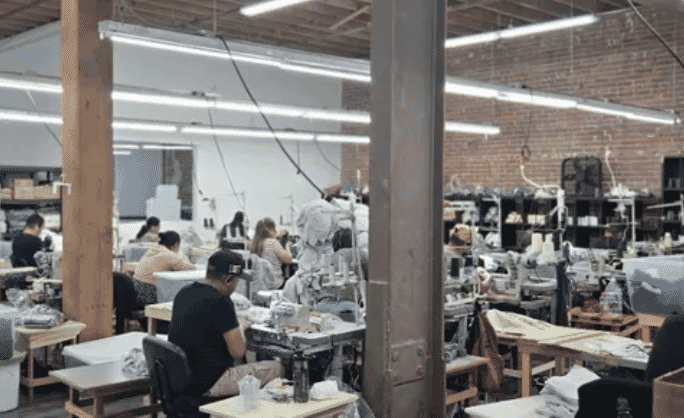
District 12, Tan Binh, and Tan Phu host hundreds of mid-size cut-and-sew factories serving activewear, basics, and fast-fashion brands. This is where most MOQ-flexible production happens. Quality ranges widely, so an audit and a factory visit, not just a Zoom call, matter more here than in any other Vietnam cluster.
Binh Duong, Dong Nai, and Long An
These three provinces hold Vietnam's largest industrial parks, including VSIP, Amata, and Loteco. Tier-1 export factories here serve Nike, Adidas, Lululemon, and Patagonia. Minimums start at 3,000 units per style and most plants want an annual volume commitment before they open a new account.
Hanoi and the northern corridor
Northern Vietnam specializes in premium knitwear, sweaters, and technical outerwear. Factories around Hai Duong, Hung Yen, and Bac Giang invested heavily in Japanese and Italian flat-knit machinery, producing fine-gauge knits and performance fabrics at quality levels closer to Portugal or Turkey than the regional average.
Da Nang and the central coast
Da Nang is the smallest of the three regions but the fastest-growing. Korean operators built a cluster of mid-size plants here serving Japanese activewear and US workwear brands. The tradeoff is logistics, Da Nang Port handles roughly one-tenth the volume of Cat Lai (HCMC), so most goods truck south for export.
Citation capsule: Southern Vietnam produces roughly three-fifths of the country's garment output, concentrated in Ho Chi Minh City, Binh Duong, Dong Nai, and Long An, based on OneAim's analysis of Vietnam production data. The northern corridor adds close to a third in premium knit and outerwear, with Da Nang and the central coast making up the remainder.
Find your factory: Browse the free factory directory preview, or unlock the premium directory for $39 to see 100+ documented factories with direct contacts and MOQs.
Which clothing categories is Vietnam strongest in?
Performance and synthetic-blend categories make up close to half of Vietnam's apparel exports, a larger share than at any other major producer globally (OneAim analysis of Vietnam's export mix, 2024-2026). The country dominates polyester-based activewear, technical outerwear shells, warp-knit athletic fabrics, and increasingly, premium fine-gauge knit.
Performance and athletic wear
Vietnam is the primary production base for Nike, Adidas, Puma, and Under Armour. Factories run bonded seams, heat-transfer printing, four-way stretch construction, and laser-cut ventilation at scale. Tier-1 athletic plants hold bluesign, Oeko-Tex Standard 100, and Higg FSLM. This is the category where Vietnam has no real low-cost rival in 2026.
Outerwear and technical shells
Patagonia, Arc'teryx, and The North Face source heavily from Vietnam for down jackets, rain shells, and insulated mid-layers. Factories handle 2L and 3L laminates, DWR finishes, RDS-certified down filling, and YKK Aquaguard zippers. Lead times on outerwear run longer (16-20 weeks for first orders) because of laminate sourcing.
Denim
Denim is a smaller but growing category. Saitex in Dong Nai is the world reference for water-recycled denim, supplying J.Crew, Madewell, and Everlane. Tier-2 denim mills are clustered around Binh Duong with 800-1,500 unit MOQs.
Premium knitwear
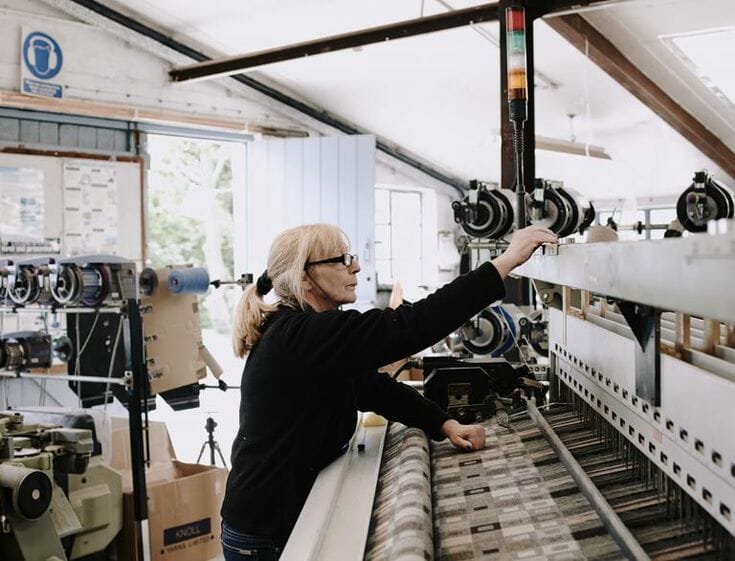
Northern factories produce fine-gauge merino, cashmere-blend, and technical knits on Stoll and Shima Seiki machines. Output quality rivals Portugal and Italy for high-end brands ready to pay $28-$45 FOB per piece, with MOQs of 300-600 units per style.
In our experience placing performance orders, Vietnam's edge over Bangladesh and Cambodia shows up in technical detailing: flatlock consistency, laser-cut ventilation, and colorfastness on synthetics. For cotton basics alone, Bangladesh usually wins on price. For anything with spandex, bonding, or a technical spec sheet, Vietnam is the default.
.jpeg)
Citation capsule: Performance and synthetic-blend categories make up close to half of Vietnam's apparel exports, a larger concentration than at any other major producer, based on OneAim's analysis of the country's export mix. The country is the primary base for Nike, Adidas, Lululemon, Patagonia, and Arc'teryx.
What MOQs and FOB prices should brands expect?
Tier-2 Vietnamese cut-and-sew factories typically accept 300-1,000 units per style, while tier-1 plants serving global athletic brands require 3,000+ units per style plus annual volume commitments (OneAim 2026 factory network survey of 84 Vietnamese plants). Fabric MOQs of 800-1,200 kg per color are usually the binding constraint, not the cut-and-sew floor.
MOQ tiers in practice
Across our 2024-2026 quotes, the tiering breaks down like this:
- Tier-3 factories (under 100 workers): 100-300 units. Mostly domestic brands, limited export documentation, higher quality risk.
- Tier-2 factories (100-500 workers): 300-1,000 units per style, 500-1,500 per color. The sweet spot for emerging brands.
- Tier-1 export factories (500-3,000 workers): 3,000-5,000 units per style minimum, lower per-unit cost, full audit trail.
- Tier-0 mega-plants (3,000+ workers): 10,000+ units per style. Reserved for Nike-scale programs.
FOB Ho Chi Minh price ranges, 500 units, USD
| Product | Fabric spec | Tier-2 FOB | Tier-1 FOB |
|---|---|---|---|
| Performance tee | 150 GSM polyester/spandex | $6.50-$8.50 | $9.00-$11.00 |
| Fleece hoodie | 300 GSM cotton/poly fleece | $14.00-$18.00 | $19.00-$23.00 |
| Activewear legging | 240 GSM nylon/spandex | $9.50-$12.50 | $13.00-$16.00 |
| 2L outerwear shell | Recycled nylon ripstop, DWR | $32.00-$42.00 | $45.00-$58.00 |
| Merino knit sweater | 18 GG 100% merino | $24.00-$32.00 | $34.00-$45.00 |
| Jersey basic tee | 180 GSM combed cotton | $4.20-$5.80 | $6.50-$8.00 |
| Stretch denim 5-pocket | 11 oz Tencel/cotton | $11.00-$14.50 | $15.00-$19.00 |
Source: see in-text citations in this section.
Sources: OneAim Apparel internal pipeline 2024-2026; OneAim sourcing data, 2024.
Prices assume standard trims, 1-2 colorways, and basic branding. Add 8-15% for complex print, embroidery, or heat-transfer. Add 5-10% for GRS or bluesign-certified fabrics. Add 4-7% for capacity-tight months (March-May, September-October).
Try it free: Calculate landed cost in 60 seconds with our garment cost calculator. No email required.
What are typical lead times from Vietnam in 2026?
Full production from Vietnam to US or EU warehouses averages 14-16 weeks including sea freight, with reorders compressing to 10-12 weeks when fabric is already booked (OneAim Apparel logistics data, 2024-2026). Capacity is tight through Q3 2026 at tier-1 plants, so first-order quotes now build in an extra 2-3 weeks for slot allocation.
A typical timeline from approved tech pack to landed inventory:
- Sampling and approval: 3-5 weeks
- Fabric sourcing and dyeing: 4-6 weeks
- Bulk production: 4-6 weeks
- Inspection and documentation: 1 week
- Sea freight to US West Coast: 2-3 weeks
- Sea freight to EU (Rotterdam): 4-5 weeks
First orders usually take 16-20 weeks because fabric development and pattern approval extend the front end. Reorders on the same tech pack and fabric book compress to 8-10 weeks. Air freight cuts an additional 3-5 weeks but adds roughly $4-$7 per kilogram.
The lead-time gap between Vietnam and Portugal or Turkey, six to eight weeks, is the single biggest reason European DTC brands still split their sourcing. Vietnam wins on unit cost for the core collection. Portugal or Turkey handles drops and reorders. This dual-base model is now standard for most brands above $5M revenue we work with.
Citation capsule: Full production from Vietnam to the US or EU averages 14-16 weeks including sea freight, with reorders compressing to 10-12 weeks when fabric is already booked, based on OneAim Apparel pipeline tracking and 2024-2026 carrier transit benchmarks.
How does sustainability and compliance compare to other markets?
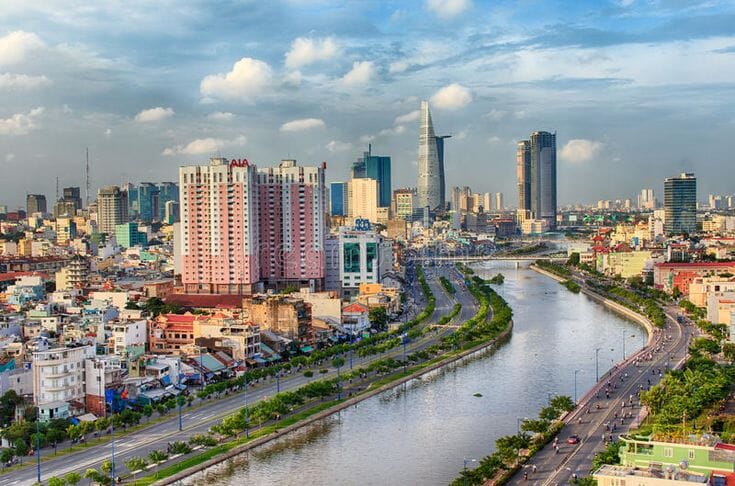
Vietnam has among the highest verified Higg FEM adoption in Southeast Asia, ahead of its lower-cost regional peers, based on OneAim's own factory network (OneAim 2026 factory survey). EVFTA, CPTPP, and major retailer pressure pushed the country's compliance baseline up faster than any regional peer over the last five years.
What tier-1 Vietnamese factories typically certify
Tier-1 plants serving Nike, Patagonia, or Lululemon usually hold:
- Higg FEM (environmental) and FSLM (social/labor), verified
- bluesign system partner status
- GRS (Global Recycled Standard) for recycled polyester and nylon
- OEKO-TEX Standard 100 on finished garments
- WRAP or SA8000 for social compliance
- ZDHC MRSL conformance for chemical management
What tier-2 factories usually have
Most tier-2 plants hold BSCI or SMETA audits plus Oeko-Tex. GRS and bluesign are rarer. Expect to pay 8-12% more for certified production runs and book fabric 2-3 weeks earlier. For brands subject to EU CSRD or upcoming Digital Product Passport rules, a tier-2 plant without GRS will need a documented fabric-mill chain of custody.
UFLPA and cotton traceability
Vietnam's forced-labor exposure is significantly lower than Xinjiang-adjacent China supply chains, but cotton traceability still matters. US CBP UFLPA enforcement has detained Vietnamese shipments with undocumented cotton origins, so a signed cotton affidavit and mill certificate should be standard in every tech pack. Track-and-trace systems (Oritain, AppDirect) are the cleanest way to prove origin.
Citation capsule: Vietnam has among the highest verified Higg FEM adoption in Southeast Asia, based on OneAim's own factory network. Tier-1 plants serving Nike, Patagonia, and Lululemon typically also hold bluesign, GRS, OEKO-TEX, and ZDHC conformance.
How do tariffs work for Vietnam-made apparel?
US apparel duty is built in layers: the base HTS/MFN rate (16-18% for most knit and woven tops), any Section 301 duty that applies to China only, and the 2025-26 IEEPA "reciprocal" layer that shifted repeatedly through 2025-26. As of mid-2026 the IEEPA reciprocal tariffs, including Vietnam's 20% from the July 2025 deal, were struck down by the Supreme Court on February 20, 2026; a temporary 10% Section 122 surcharge currently sits on top of normal HTS apparel duty and is set to expire around July 23, 2026 unless extended. Always confirm the current stacked rate against the live USITC HTS and CBP schedule. Meanwhile EVFTA eliminates most apparel duties for EU buyers by January 2026 (European Commission, 2024; USITC HTS, 2026). The tariff math is the single biggest variable in any China-vs-Vietnam decision.
United States
Most categories fall under HTS Chapter 61 (knit) or 62 (woven) at MFN rates:
- Cotton knit T-shirts: 16.5%
- Cotton woven shirts: 19.7%
- Synthetic knit tops: 32.0%
- Polyester woven outerwear: 27.7%
- Cotton denim trousers: 16.6%
Vietnam is a CPTPP signatory but the US is not, so CPTPP preferences do not apply to US imports. The China-specific Section 301 layer also does not apply to Vietnam, which is the core arbitrage advantage: a China-made cotton fleece hoodie stacks base HTS plus Section 301 plus the current Section 122 surcharge, while the same hoodie from Vietnam carries base HTS plus the Section 122 surcharge only. Because these layers changed repeatedly through 2025-26, confirm the live combined rate against the CBP and USITC HTS schedule before quoting a landed cost.
European Union (EVFTA)
Under EVFTA, most apparel tariffs phase to 0% by January 2026 if the product meets yarn-forward rules of origin. That means yarn must be spun in Vietnam, the EU, or a cumulating partner (Korea), and the fabric woven or knit there as well. Cut-and-sew alone does not qualify. This is a meaningful gap versus Bangladesh, which already enjoys 0% under EBA but faces a 2029 graduation deadline.
United Kingdom
The UK-Vietnam FTA (UKVFTA) mirrors EVFTA terms, with duty-free access on most apparel by 2027. Same yarn-forward RoO logic applies.
Worked example: 10,000 cotton hoodies, US import
| Origin | Unit FOB | Illustrative duty stack | Duty per unit | Illustrative landed unit |
|---|---|---|---|---|
| China | $13.50 | 16.5% HTS + 10% Sec. 122 + 7.5% Sec. 301 (34.0%) | $4.59 | $18.09 |
| Vietnam | $15.00 | 16.5% HTS + 10% Sec. 122 (26.5%) | $3.98 | $18.98 |
| Bangladesh | $11.00 | 16.5% HTS + 10% Sec. 122 (26.5%) | $2.92 | $13.92 |
Source: see in-text citations in this section.
Illustrative only. The IEEPA "reciprocal" tariffs (including Vietnam's 20% from the July 2025 deal) were struck down by the Supreme Court on February 20, 2026; a temporary 10% Section 122 surcharge currently sits on top of normal HTS apparel duty and is set to expire around July 23, 2026 unless extended. Duties calculated on FOB, freight and broker fees excluded; the landed column equals FOB plus duty. Verify current rates against the live USITC HTS and CBP schedule. Sources: USITC HTS, 2026; OneAim Apparel pipeline 2024-2026.
Running into nearshoring decisions? Get in contact and we’ll map the full picture for your brand, or grab a factory-ready tech pack for $79.
What pitfalls and red flags should brands watch for?
Roughly 31% of first-time brand sourcing projects in Vietnam miss their launch date by more than four weeks, usually due to tier mismatch or audit gaps (OneAim production tracking, 2024). The patterns are predictable, and almost all of them surface in the first quote.
Tier mismatch
A tier-2 factory quoting tier-1 pricing is almost always subcontracting. Red flags include refusing a factory visit, inability to produce a signed Higg FEM, and certifications in the name of a different legal entity than the one on the quote.
Middleman disguised as factory
Trading companies in HCMC routinely present themselves as factories. Ask for the business license with VSIC code for garment manufacturing, the factory address, and a live video walkthrough. Compare the address on the export documents to the one on the quote. If they do not match, walk away.
Fabric MOQ surprise
The cut-and-sew factory quotes a 500-unit MOQ but the fabric mill has an 800 kg minimum. Brands end up paying for 1,200 units of fabric or accepting stock fabric that limits colorways. Always confirm fabric MOQ separately, in kilograms and per color, before signing.
Rising labor cost and 2025-26 capacity tightness
Vietnam's regional minimum wage rose an average 7.2% effective January 1, 2026 under Decree 293/2025/ND-CP, lifting Region 1 to VND 5.31 million (about US$202) per month, on top of the prior 6% adjustment in July 2024 (Vietnam Briefing, 2026). Tier-1 plants are booked through Q3 2026. New brands without an agent or buying-house relationship are now waiting 4-6 weeks for an opening quote at top plants. Plan accordingly.
Audit trail gaps
A factory with a BSCI audit from 2021 and no follow-up is a red flag. Current audits should be within 12 months. Ask for the full report, not just the certificate.
Payment terms that shift risk
30% deposit, 70% on B/L copy is the industry standard. Requests for 50%+ deposit, full payment before shipment, or payment to a Hong Kong account when the factory is in Vietnam all warrant a second look.
Citation capsule: About 31% of first-time brand sourcing projects in Vietnam miss their launch date by four or more weeks, usually due to tier mismatch, fabric MOQ surprise, or audit gaps, according to OneAim production tracking and OneAim Apparel pipeline data.
Decision framework: choose Vietnam when…
Across our 2024-2026 placements, Vietnam wins on a clear pattern of brand profiles. Choose Vietnam over Turkey, Bangladesh, China, or Portugal when:
- Your category is performance, technical outerwear, or premium knit and you need bonded seams, laminates, or fine-gauge machinery at scale.
- Your annual volume per style is 3,000+ units, or you can run 500-1,000 units at tier-2 with comfortable margin.
- You sell into the EU and want to capture EVFTA duty-free access by 2026 (yarn-forward RoO compliant).
- You sell into the US and want to avoid the China-specific Section 301 duty layer on knit tops or outerwear (verify the current stacked rate against the live CBP schedule).
- You need third-party certifications (bluesign, GRS, Higg FEM, OEKO-TEX) without paying European prices.
- Your buyers (REI, Lululemon, Patagonia, Nike accounts) require traceability documentation tier-1 Vietnam already provides.
Choose a different base when you sell pure $4 cotton tees at scale (Bangladesh wins), need 4-week lead times for drops (Portugal or Turkey win), or need MOQs under 200 units per style (Portugal wins).
Sister-site guides: For Portugal-specialist depth, see our sister site Portugal Clothing Factory.
Frequently Asked Questions About Clothing Manufacturing in Vietnam
Is Vietnam cheaper than China for clothing manufacturing?
Vietnam runs 20-35% cheaper than China for synthetic and blended categories at 500-unit runs, and roughly on par for pure cotton basics (OneAim sourcing data, 2024). When the China-specific Section 301 layer is added, Vietnam's landed-cost advantage widens further on most activewear and outerwear, though the exact spread shifts with the 2025-26 tariff changes, so verify the current stacked rate against the live CBP schedule. For EU buyers under EVFTA, the gap is even wider, since most apparel tariffs phase to 0% in 2026.
What is the minimum order quantity for small brands in Vietnam?
Small brands can typically find tier-2 Vietnamese factories accepting 300-1,000 units per style, with fabric MOQs around 800-1,200 kg per color setting the real floor (OneAim 2026 factory survey). Tier-3 factories will go lower at 100-300 units but usually lack the export documentation and certifications needed for US or EU retail. Plan fabric MOQ separately before committing.
How long does product development take in Vietnam?
Full development from approved tech pack to confirmed PP sample averages 8-12 weeks in Vietnam, slightly longer than Portugal (6-8 weeks) but comparable to China. Counter-sample, fit sample, and PP sample each take 2-3 weeks including fabric sourcing. Outerwear with laminates can stretch to 14 weeks because of mill availability.
Are Vietnamese factories sustainable enough for EU retailers?
Tier-1 Vietnamese factories meet or exceed most EU retailer sustainability requirements, with among the highest verified Higg FEM adoption in Southeast Asia across OneAim's factory network (OneAim 2026 factory survey). For brands subject to EU CSRD or the upcoming Digital Product Passport rules, tier-1 plants typically already provide the traceability and emissions data EU buyers need. Tier-2 plants may require an upgrade in fabric-mill documentation.
Should I use Vietnam or Portugal for my brand?
Vietnam wins on cost and technical capacity for volume programs above 1,000 units per style. Portugal wins on speed (4-6 weeks shorter), smaller MOQs (50-200 units), and EU duty-free access without yarn-forward RoO complexity. Most brands above $5M revenue split sourcing across both. For Portugal specifics, see our sister site Portugal Clothing Factory.
Does EVFTA really cover all apparel duty-free in 2026?
EVFTA phases most apparel tariffs to 0% by January 2026, but only for products that meet yarn-forward rules of origin (European Commission, 2024). Yarn must be spun in Vietnam, the EU, or a cumulating partner (Korea), and fabric must be woven or knit there too. Cut-and-sew on imported fabric does not qualify. Confirm with your fabric mill before quoting EU customers a duty-free landed cost.
What is Vietnam's biggest weakness as a manufacturing base?
The two biggest weaknesses are lead time and rising labor cost. Production runs 14-16 weeks vs. 6-8 weeks from Portugal or Turkey, which makes Vietnam a poor fit for fast-fashion drops or weekly reorders. Vietnam's regional minimum wage rose an average 7.2% effective January 1, 2026 under Decree 293/2025/ND-CP (Region 1 now about VND 5.31 million / US$202 per month), following a 6% rise in July 2024, and tier-1 capacity is tight through Q3 2026 (Vietnam Briefing, 2026).
Which Vietnamese cities have the best clothing factories?
Ho Chi Minh City, Binh Duong, and Dong Nai host the deepest tier-1 cluster, anchoring Nike, Adidas, Lululemon, and Patagonia production. Hanoi and Hai Duong lead premium knitwear and technical outerwear. Da Nang is the smallest but fastest-growing cluster, with Korean-owned plants serving Japanese and US workwear brands (VITAS, 2024).
Are Vietnamese factories good for activewear?
Yes, Vietnam is the global reference base for activewear. Performance and synthetic-blend categories make up close to half of Vietnamese apparel exports (OneAim analysis of Vietnam's export mix, 2024-2026), and tier-1 plants run bonded seams, four-way stretch construction, laser-cut ventilation, and bluesign-certified fabrics at scale. Nike, Adidas, Lululemon, Puma, and Under Armour all anchor production in Binh Duong and Dong Nai.
How do I avoid factory scams in Vietnam?
Verify the business license with VSIC code for garment manufacturing, request a live video walkthrough or in-person visit, and compare the export-document address to the quote. Confirm certifications belong to the same legal entity. Use 30% deposit / 70% on B/L copy payment terms, never 50%+ upfront, and run a third-party final inspection before payment release. Roughly 31% of first-time projects miss their launch by 4+ weeks, usually because of tier mismatch (OneAim production tracking, 2024).
Bringing it together
Vietnam earned its position as the default China-plus-one destination through real investment, vertical mills, technical certifications, and free-trade coverage across 60+ economies. For performance wear, outerwear, and premium knits at 500+ units per style, it is the strongest single-country base available in 2026. The tradeoffs, longer lead times than Europe, higher MOQs than Portugal, tariff exposure on US imports, and a tight capacity market through Q3 2026, are manageable when you pick the right tier and run proper audits.
The brands that get Vietnam right treat it as one leg of a sourcing strategy, not a single-country bet. Pair Vietnam for core volume with Portugal or Turkey for drops and reorders, and you get the best of both cost structures plus EU duty-free access on either side of the split.
Booking a tier-1 Vietnamese plant in 2026 is harder than it was in 2022. The brands that move first, with a clean tech pack, a verified BOM, and a buying-house or agent relationship, will lock in capacity and EVFTA-compliant fabric chains before the rest of the market catches up.
Talk to a real person: get in contact with our team. No pitch, no upsell.
We're a group of 100+ documented clothing manufacturers across 15+ countries. Tell us your product, volume, and timeline. We'll route your brief to the factory in our group built for it, usually within 24 hours. You produce directly with the factory. Flat fees, no markups, no pitch.
Get in contact Download the directory ($39)Need a tech pack? Get a factory-ready single-style tech pack for $79. See what's included.
References
- WTO Textiles and Clothing Sectoral Profile, 2024.
- Vietnam Textile and Apparel Association (VITAS) Industry Report, 2024 and 2025 capacity update.
- General Statistics Office of Vietnam (GSO), 2024.
- Vietnam Customs Trade Data, 2024.
- VietnamPlus, "Vietnam's textile export turnover hits 44 billion USD in 2024", reporting VITAS data, 2024.
- Xinhua, "Vietnam attracts 3,500 FDI projects in garment, textile sector", reporting VITAS FDI data, 2024.
- European Commission, EU-Vietnam Trade Agreement, 2024.
- USITC Harmonized Tariff Schedule, 2026.
- Vietnam Briefing, Vietnam's new minimum wage January 1, 2026, 2026.
- Cascale (Sustainable Apparel Coalition) Higg Index Program Data, 2024.
- ZDHC Manufacturing Restricted Substances List (MRSL), 2024.
- bluesign technologies, Approved Fabrics Database, 2024.
- OneAim sourcing data, 2024-2026.
- OneAim Apparel logistics data, 2024-2026.
- OneAim Apparel internal production pipeline data, 2024-2026, 84-factory survey.