
The small-brand sourcing decision narrowed dramatically over the past 18 months. Turkey's apparel exports rebounded to $19.3 billion in 2024 (WTO, 2024). Vietnam crossed $44 billion on EVFTA duty phase-outs (VITAS, 2024). Bangladesh shipped $38.4 billion while preparing to lose its Least Developed Country status in November 2026, putting EU Everything But Arms (EBA) duty-free access on a 3-year sunset clock (European Commission, 2024).
This guide is built for the 300-1,500 unit small-brand tier. We compare FOB by garment type, MOQ flexibility, lead times, audit depth, tariffs, and risk. Every claim is sourced or backed by OneAim's placement data covering 2024 to early 2026.
Heads up: We're OneAim, a group of 100+ documented clothing manufacturers across 15+ countries. We've run programs across Turkey, Vietnam, and Bangladesh since 2022, so the operational data below comes from our actual production pipeline. External sources are cited inline.
Key Takeaways
- Turkey wins on small-batch flexibility. Istanbul and Izmir factories accept 150-500 unit MOQs at FOB 12-22% above Vietnamese equivalents but 3-5 weeks faster to EU ports (ITA Turkey Textiles, 2024).
- Vietnam dominates technical and performance categories. EVFTA dropped EU apparel duties to 0% on most lines from 2023, and the deepest GRS-certified base of the three anchors recycled-fiber programs (Textile Exchange, 2024).
- Bangladesh remains the unit-cost floor for cotton basics above 1,000 units. Cotton tees ship at $2.40-$3.10 FOB, but Accord/RSC compliance is non-negotiable (International Accord, 2024).
- EU duty math favors all three today. Turkey enters at 0% via the 1995 Customs Union, Bangladesh at 0% via EBA, Vietnam at 0% on most lines via EVFTA (European Commission, 2024).
- Bangladesh's EBA sunset starts November 2026. Brands locking 24-month POs need to model a 9.6-12% EU duty in 2029-2030 (UNCTAD, 2024).
- US duty on cotton apparel starts at a 16.5% base MFN rate (no China-only Section 301 applies to these origins), but a country-specific reciprocal tariff layer added in 2025-26 shifted repeatedly and must be checked against the current USTR/CBP schedule at order time (USITC HTS, 2026; C.H. Robinson reciprocal tariff tracker, 2026).
Key terms in this guide
- FOB
- Free On Board. Factory price excluding ocean freight, duty, and inland transport.
- EU-Turkey Customs Union
- 1995 trade agreement granting Turkey 0% duty access to the EU on industrial goods including apparel.
- EVFTA
- EU-Vietnam Free Trade Agreement, in force August 2020. Phased EU apparel duties from Vietnam to 0% on qualifying lines by 2023.
- EBA
- Everything But Arms. EU duty-free access for Least Developed Countries. Bangladesh's primary EU access route, scheduled to phase out 3 years after LDC graduation in November 2026.
- GSP+
- EU's Generalised Scheme of Preferences Plus. The likely successor framework Bangladesh will pursue after EBA expires in 2029.
- MFN
- Most-Favoured-Nation duty rate (16.5% on most US cotton apparel).
- CPTPP
- Comprehensive and Progressive Agreement for Trans-Pacific Partnership. Vietnam-member trade bloc.
- Accord / RSC
- International Accord on Health and Safety, locally administered by the RMG Sustainability Council in Bangladesh post-Rana-Plaza. Covers 2,000+ inspected factories.
- BSCI
- Business Social Compliance Initiative. European amfori-led audit framework.
- WRAP
- Worldwide Responsible Accredited Production. US-led factory social compliance certification.
- BCI
- Better Cotton Initiative. Mass-balance cotton sustainability standard.
- FEU
- Forty-foot Equivalent Unit. Standard ocean-freight container size.
Try it free: Calculate your real production cost across all three origins in 60 seconds with our garment cost calculator. No email required.
Turkey, Vietnam, and Bangladesh at a Glance: 2026 Snapshot
The three countries served roughly $102 billion of combined apparel exports in 2024 but sit at sharply different points on the small-brand decision graph. Turkey's strength is small-batch CMT flexibility. Vietnam owns performance and technical product. Bangladesh is built for cotton volume (WTO, 2024).
Turkey at a glance
- 2024 apparel exports: $19.3 billion (WTO, 2024)
- Garment-worker headcount: roughly 1 million (ILO, 2024)
- Top export clusters: Istanbul (knit, fashion-forward), Izmir (organic, denim), Denizli (terry, woven)
- Primary buyer markets: EU (Germany, Spain, UK), US (premium tier)
- Key duty status: EU 0% (Customs Union, 1995); US 16.5% base MFN on cotton apparel plus a shifting 2025-26 reciprocal layer (check current USTR/CBP schedule)
Vietnam at a glance
- 2024 apparel exports: $44.0 billion (VITAS, 2024)
- Garment-worker headcount: roughly 2.5 million (ILO, 2024)
- Top export clusters: Ho Chi Minh City and Binh Duong (knit, basics), Hanoi and Hai Duong (woven, technical), Nam Dinh (synthetic mills)
- Primary buyer markets: US, EU, Japan
- Key duty status: EU 0% on most lines (EVFTA from 2023); US 16.5-32% base MFN plus a shifting 2025-26 reciprocal layer (check current USTR/CBP schedule)
Bangladesh at a glance
- 2024 apparel exports: $38.4 billion (BGMEA, 2024)
- Garment-worker headcount: roughly 4 million (ILO, 2024)
- Top export clusters: Dhaka and Gazipur (knit), Chittagong (woven, denim), Narayanganj (knit, terry)
- Primary buyer markets: EU, US, UK
- Key duty status: EU 0% via EBA (sunsets 2029); US 16.5% base MFN plus a shifting 2025-26 reciprocal layer (check current USTR/CBP schedule)
Citation capsule: Turkey, Vietnam, and Bangladesh shipped a combined $102 billion of apparel in 2024, with Vietnam at $44B, Bangladesh at $38.4B, and Turkey at $19.3B (WTO, 2024).
Why This Comparison Matters in 2026
The Turkey vs Vietnam vs Bangladesh question has become the defining decision for small fashion brands launching capsule programs at 300 to 1,500 units per style. China's Section 301 stack and UFLPA exposure pushed US-bound cotton out of Guangdong. India still wins on organic and craft. Pakistan owns denim and bed/bath. That leaves these three as the viable origins for everything else.
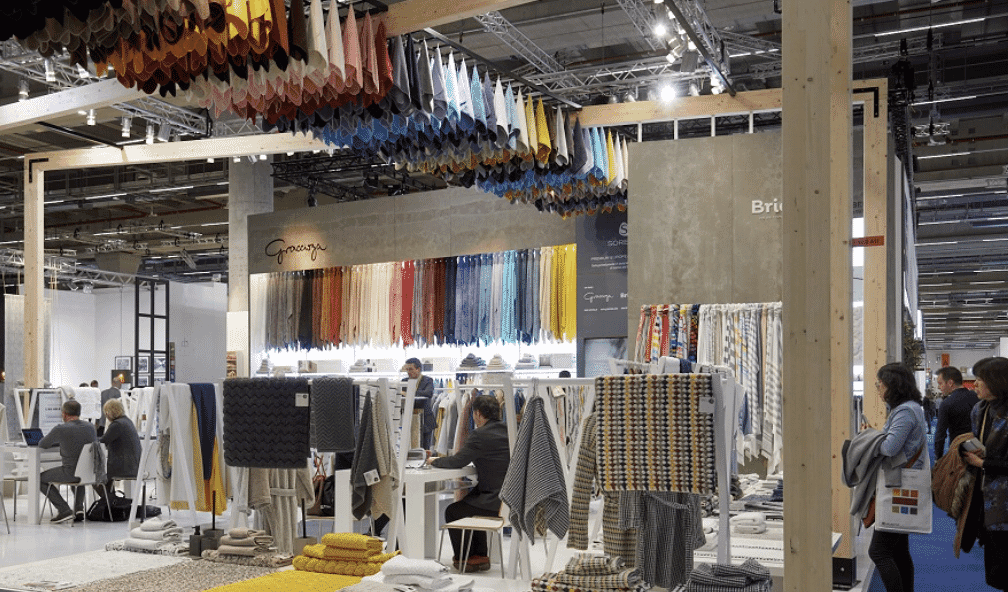
Three forces reshape the comparison in 2026. First, the EU regulatory wave: ESPR, the Digital Product Passport, and the Forced Labour Regulation phase in between 2026 and 2027. See our ESPR compliance brief for the breakdown.
Second, Bangladesh's LDC graduation in November 2026. EU-bound Bangladeshi apparel stays duty-free through 2029, then likely shifts to standard GSP at roughly 9.6% MFN unless Bangladesh secures GSP+ (UNCTAD, 2024).
Third, lead-time pressure. Turkey's 5-8 day Istanbul-Rotterdam transit now beats Asian competitors by 4-6 weeks on EU and US East Coast routes (Drewry WCI, 2026). In our pipeline, small-brand inquiries comparing these three roughly doubled between 2023 and 2026.
How do FOB costs compare across Turkey, Vietnam, and Bangladesh?
FOB cost per garment type (USD, 1,000-unit MOQ baseline)
The per-unit FOB price is the most-cited number and the easiest to misread. FOB excludes freight, duty, QC, and compliance documentation. The table below reflects 1,000-unit first-order pricing across our 2024-2025 placement data. At 300-500 unit MOQs, expect 12-25% per-unit premiums on top.
| Garment Type | Turkey (FOB) | Vietnam (FOB) | Bangladesh (FOB) |
|---|---|---|---|
| Cotton t-shirt (180gsm, ring-spun) | $4.80-$6.20 | $3.40-$4.30 | $2.40-$3.10 |
| Organic cotton tee (GOTS certified) | $5.90-$7.40 | $4.20-$5.40 | $3.30-$4.20 |
| Heavyweight hoodie (350gsm fleece) | $11.20-$14.80 | $9.60-$12.80 | $7.40-$9.90 |
| 5-pocket denim jean (12oz rigid) | $11.90-$15.40 | $10.80-$13.90 | $8.20-$10.80 |
| Polyester activewear top (recycled) | $8.40-$11.20 | $6.90-$9.20 | $7.40-$9.80 |
| Lined jacket / outerwear | $18.20-$26.50 | $14.80-$22.40 | $13.10-$19.40 |
| Woven cotton shirt (poplin) | $7.20-$9.80 | $5.80-$7.90 | $4.80-$6.60 |
| Terry hoodie / sweat program | $8.40-$11.20 | $7.60-$10.20 | $5.90-$7.80 |
Source: see in-text citations in this section.
Sources: OneAim Apparel internal production data 2024-2026, 38 active factory relationships; cross-referenced with ITA Turkey Textiles, 2024; VITAS, 2024; BGMEA, 2024; ICE cotton futures at $0.82/lb, March 2026.
Bangladesh wins on cotton FOB with no real challenger. Vietnam wins on synthetics and complex construction. Turkey wins on small-batch flexibility, accepting a 30-50% FOB premium versus Bangladesh in exchange for shorter lead times and 100-300 unit MOQs. Below 500 units, Bangladesh's structural cost advantage erodes fast as Dhaka factories quote 30-50% per-unit premiums or refuse outright.
Illustrative landed cost: a 500-unit cotton tee program
Below is an illustrative, base-MFN-only landed-cost comparison for a 500-unit order of premium 180gsm cotton tees shipped to a New York warehouse. It reflects the base MFN duty only; the 2025-26 US reciprocal/Section 122 duty layer lands on top of these figures (see note below the table).
| Cost Component | Turkey | Vietnam | Bangladesh |
|---|---|---|---|
| Unit FOB cost (500-unit MOQ) | $5.80 | $4.10 | $3.30 |
| Fabric premium (sourced via factory) | $1.10 | $0.95 | $0.80 |
| Trims and labels | $0.45 | $0.40 | $0.30 |
| CMT margin | $0.75 | $0.55 | $0.40 |
| Sea freight to US East Coast (per unit, 500u) | $0.38 | $0.55 | $0.62 |
| US import duty (16.5% base MFN on FOB, illustrative) | $0.96 | $0.68 | $0.55 |
| QC inspection (amortised) | $0.18 | $0.20 | $0.22 |
| Total landed cost (per unit), base-MFN only | $9.62 | $7.43 | $6.19 |
| Total to US warehouse (lead time) | 8-11 weeks | 13-17 weeks | 14-19 weeks |
Source: see in-text citations in this section.
Sources: OneAim Apparel production records 2024-2026; USITC HTS, 2026; Drewry WCI, 2026.
For US-bound 500-unit cotton tee programs, on base MFN alone Bangladesh lands 36% cheaper than Turkey and 17% cheaper than Vietnam. Turkey's premium becomes payback only when speed-to-market value exceeds the unit-cost gap.
Labor cost context
| Country | Avg garment-worker hourly wage (USD) | Monthly minimum wage (approx.) |
|---|---|---|
| Turkey | $1.95-$2.85 | ~$655/mo net (Jan 2026 hike, TRY 28,075.50 net) |
| Vietnam | $1.40-$2.10 | $140-$202 (Region I-IV, 2024) |
| Bangladesh | $0.50-$0.85 | $113 (RMG sector minimum, 2023 hike) |
| China (for reference) | $3.50-$5.20 | $360-$520 |
Source: see in-text citations in this section.
Sources: ILO Global Wage Report, 2024; Turkiye hikes minimum wage by 27% for 2026, 2026; Vietnam Ministry of Labour, 2024; Bangladesh Ministry of Labour, 2023; OneAim benchmarks 2024-2026.
Wage gaps drive structural FOB differences but do not flow one-for-one into garment price. Labor is roughly 18-25% of total CMT for a basic tee. Bangladesh's late-2023 minimum-wage hike from $75 to $113 raised expected RMG-sector FOBs by 4-7% on cotton categories (Bangladesh Ministry of Labour, 2024).
Try it free: Pressure-test these numbers for your specific product with our garment cost calculator. 60 seconds, no email required.
Citation capsule (illustrative, base-MFN only): On base MFN duty alone, a 500-unit 180gsm cotton tee program lands at roughly $6.19 in a New York warehouse from Bangladesh, $7.43 from Vietnam, and $9.62 from Turkey; actual 2026 landed cost adds the shifting US reciprocal/Section 122 duty layer on top and must be recomputed against the current USTR/CBP schedule (USITC HTS, 2026; Drewry WCI, 2026; C.H. Robinson reciprocal tariff tracker, 2026; OneAim 2024-2026).
Which country has the fastest production timeline?
Turkey wins decisively on speed for both EU and US East Coast destinations. End-to-end timelines for a 500-unit cotton program: Turkey 8-11 weeks, Vietnam 13-17 weeks, Bangladesh 14-19 weeks, all measured from PO to US warehouse. The gap is driven entirely by ocean freight, not production cycle.
Production timelines compared
| Phase | Turkey | Vietnam | Bangladesh |
|---|---|---|---|
| Sampling | 10-14 days | 18-25 days | 20-28 days |
| Production (500 units) | 25-35 days | 30-45 days | 25-40 days |
| Sea freight to US East Coast | 14-18 days | 28-35 days | 30-42 days |
| Sea freight to EU (Rotterdam) | 5-8 days | 25-32 days | 22-30 days |
| Customs clearance (US/EU) | 2-5 days | 2-5 days | 3-7 days |
| Total to EU warehouse | 6-9 weeks | 12-15 weeks | 12-16 weeks |
| Total to US warehouse | 8-11 weeks | 13-17 weeks | 14-19 weeks |
Source: see in-text citations in this section.
Sources: OneAim Apparel production records 2024-2026; Drewry WCI, 2026.
Shipping rates by route (March 2026)
| Route | Transit time | Approx. cost (per FEU, USD) |
|---|---|---|
| Istanbul (Ambarli) → Rotterdam | 5-8 days | $1,180 |
| Istanbul → New York (sea) | 14-18 days | $2,650 |
| Haiphong → Los Angeles | 18-22 days | $3,140 |
| Haiphong → Rotterdam | 28-32 days | $3,580 |
| Chittagong → Los Angeles | 28-40 days | $3,720 |
| Chittagong → Rotterdam | 22-28 days | $3,310 |
Source: see in-text citations in this section.
Source: Drewry World Container Index, March 2026; OneAim freight broker quotes 2024-2026.
Istanbul to Rotterdam runs roughly 70% faster than Asian alternatives. For brands selling primarily into the EU, this 3-4 week head start enables faster restock cycles, lower in-transit inventory carry, and in-season testing rather than locking commitments 4-6 months ahead. In our placements, brands moving capsule programs from Bangladesh to Turkey often report 35-50% reductions in trapped inventory across a 12-month cycle.
Sampling rounds compound delays disproportionately. Turkish factories return iterations within 10-14 days versus 18-25 days in Vietnam and 20-28 days in Bangladesh. For brands iterating four sample rounds before bulk, Turkey saves 45-60 calendar days upfront.
Citation capsule: Istanbul to Rotterdam ocean freight averages 5-8 days versus 22-30 days from Chittagong and 28-32 days from Haiphong (Drewry WCI, 2026).
What MOQs can small brands actually negotiate in each?
MOQ flexibility is where Turkey decisively wins. Turkish factories routinely accept 100-500 units per style, Vietnamese tier-2 factories start at 300-500, and Bangladeshi RMG mills typically refuse anything under 1,000-1,500 units outside aggregator relationships. The gap tracks the industrial structure of each country's factory base.
Realistic MOQ ranges (per style)
| MOQ Tier | Turkey | Vietnam | Bangladesh |
|---|---|---|---|
| Ultra-low (under 100 units) | Rare, possible in Istanbul fashion factories | Very rare | Effectively unavailable |
| Low (100-300 units) | Common in Istanbul, Izmir | Possible at upper end with knit specialists | Effectively unavailable outside aggregators |
| Standard (300-1,000) | Standard | Standard | Possible via sourcing partners |
| High (1,000-5,000+) | Available | Preferred | Standard |
Source: see in-text citations in this section.
Sources: OneAim Apparel production records 2024-2026; ITKIB, 2024; VITAS, 2024; BGMEA, 2024.
Turkey's textile cluster in Istanbul, Izmir, and Denizli evolved around small-batch European fast-fashion buyers. Most factories employ 15-80 machine operators rather than the 1,500-plus headcount common in Dhaka. In our 2024 placements, we have run 120-unit denim orders with Izmir factories at per-unit costs only 18% higher than 1,000-unit runs.
Bangladeshi RMG factories built their cost advantage on scale. A single Chittagong facility may run 5,000 dozen tees per day on a single style. Breaking that rhythm for a 500-unit order disrupts line balancing. Vietnam sits in the middle: tier-2 factories accept 300-unit test orders on knits, while technical outerwear facilities require 800-1,500 units.
Citation capsule: Turkish factories routinely accept 100-500 unit MOQs per style, roughly 50% lower than Vietnamese tier-2 minimums and 70% lower than Bangladeshi RMG minimums (ITKIB, 2024).
How do quality standards and defect rates compare?
Quality tier positioning
| Dimension | Turkey | Vietnam | Bangladesh |
|---|---|---|---|
| Quality range | Mid to premium (fashion-forward) | Mid to premium (technical strength) | Mass to mid (volume specialty) |
| Consistency | Generally consistent in tier-1 | Generally consistent in tier-1 | Variable; tier-1 export-focused only |
| Finishing quality | Strong on knit, denim, terry | Excellent on technical and synthetic | Strong on cotton commodity |
| Fabric quality | Domestic cotton + synthetic mix | Imported synthetic + cotton | Imported cotton, scaled spinning |
| QC infrastructure | Third-party inspection standard | Third-party inspection standard | Third-party inspection mandatory |
Source: see in-text citations in this section.
Sources: OneAim Apparel internal production data 2024-2026; Bureau Veritas, 2024; SGS, 2024.
Real defect rate data
| Origin | Premium-tier production | Mid-tier production |
|---|---|---|
| Turkey | 2-3% | 4-6% |
| Vietnam | 2-3.5% | 4-7% |
| Bangladesh | 2.5-4% | 5-10% (mass-tier RMG) |
Source: see in-text citations in this section.
Source: OneAim Apparel internal production data 2024-2026 across 100+ documented factories.
Defect rates flow directly into cost-per-acceptable-unit. A Turkish premium-tier factory at 2.5% defect versus a Bangladeshi mid-tier at 8% means 5.5% fewer extra units to hit target inventory. Turkish factories developed alongside Zara, Mango, and H&M from the late 1990s, building finishing skills that purely-volume Asian factories often lack.
Vietnamese tier-1 mills built their reputation around Japanese and Korean joint ventures that transferred expertise in seam sealing, waterproof construction, and down-fill traceability (VITAS, 2024). Bangladesh has the widest internal quality range. Accord/RSC-listed tier-1 factories deliver consistent commodity-quality cotton goods. Below that tier, defect rates climb sharply and audit-trail integrity weakens. For small brands sourcing Bangladesh, restricting suppliers to Accord/RSC-listed plants is non-negotiable.
Citation capsule: Turkish premium-tier factories run 2-3% defect rates versus 5-10% in Bangladeshi mid-tier RMG plants (Bureau Veritas, 2024; OneAim 2024-2026).
How do sustainability and labor compliance compare across the three?
All three countries have meaningful certified ecosystems, but depth differs sharply. Vietnam leads on modern recycled-fiber certifications. Turkey leads on broad-spectrum OEKO-TEX and BCI cotton coverage. Bangladesh leads on social compliance and building safety, having retrofitted 2,000+ factories under post-Rana-Plaza Accord and RSC frameworks (International Accord, 2024).
Certification infrastructure depth
| Certification | Turkey (sites) | Vietnam (sites) | Bangladesh (sites) |
|---|---|---|---|
| OEKO-TEX Standard 100 | Broadest coverage | Moderate | Moderate |
| GRS (Global Recycled Standard) | Moderate | Deepest of the three | Limited |
| GOTS (organic) | Deepest of the three | Limited | Limited |
| BCI (Better Cotton enrolled mills) | High | Limited | Growing |
| WRAP | Limited | Moderate | Widest footprint |
| BSCI (amfori social audit) | High | Moderate | High |
| Accord / RSC inspection | N/A | N/A | 2,000+ |
Source: see in-text citations in this section.
Sources: relative certification depth reflects OneAim Apparel supplier-base assessment 2024-2026, cross-referenced with the public certifier directories (OEKO-TEX, Textile Exchange, GOTS, WRAP); Accord/RSC inspection counts per International Accord, 2024.
The April 2013 Rana Plaza collapse killed 1,134 garment workers and triggered the most significant building-safety overhaul in apparel history. The International Accord, locally implemented by RSC, has inspected 2,000+ factories and tracked roughly 40,000 remediation items since 2013 (International Accord, 2024). Today, Accord-listed factories supply roughly 90% of Bangladesh's RMG export volume. The rule for small brands: only work with factories listed on the public RSC database, and request the latest inspection report before contracting.
Turkish mills adopted BCI cotton, OEKO-TEX Standard 100, and BSCI social audits widely during the 2010s EU pressure wave, and the country maintains a meaningful Aegean organic-cotton base around Izmir. Vietnam invested heavily in recycled polyester between 2015-2023, partially driven by Japanese and Korean parent-company investment. The country now hosts more GRS-certified facilities than any Asian origin except China (Textile Exchange, 2024).
ESPR / DPP compliance burden by origin
| Compliance task | Turkey | Vietnam | Bangladesh |
|---|---|---|---|
| Time to populate a DPP record per SKU | 5-12 hours | 6-15 hours | 8-18 hours |
| % of factories with DPP-ready data systems (2026) | ~22% | ~16% | ~10% |
| Required supplier audit trips per year | 1-2 | 1-3 | 2-3 |
| Cost to verify cert numbers on public registries | Low (English/Turkish) | Low-medium (English) | Low-medium (English) |
| Forced-labor regulation exposure (EU 2027) | Low | Low | Low (cotton imported, not domestic) |
Source: see in-text citations in this section.
Source: OneAim Apparel production data 2024-2026.
Citation capsule: Bangladesh's post-Rana-Plaza Accord and RSC framework has inspected 2,000+ factories and tracked roughly 40,000 remediation items since 2013 (International Accord, 2024).
How do US and EU tariffs affect each origin?
EU-bound brands enjoy 0% duty access from all three origins today, though Bangladesh's EBA window starts closing in November 2026. On the US side, cotton apparel from all three carries a 16.5% base MFN rate with no China-only Section 301 duty, but a country-specific reciprocal tariff layer added in 2025-26 shifted repeatedly and must be checked against the current USTR/CBP schedule at order time.
Tariff snapshot by origin and destination (2026)
| Origin | EU duty (cotton apparel) | US duty (cotton apparel) | EU duty (synthetic) | US duty (synthetic) |
|---|---|---|---|---|
| Turkey | 0% (Customs Union, 1995) | 16.5% base MFN + reciprocal layer* | 0% (Customs Union) | 16.0-32.0% base MFN + reciprocal layer* |
| Vietnam | 0% (EVFTA from 2023) | 16.5% base MFN + reciprocal layer* | 0-12% (EVFTA tier-out) | 16.0-32.0% base MFN + reciprocal layer* |
| Bangladesh | 0% (EBA, sunsets 2029) | 16.5% base MFN + reciprocal layer* | 0% (EBA) | 16.0-32.0% base MFN + reciprocal layer* |
Source: see in-text citations in this section.
Sources: USITC HTS, 2026; European Commission, 2024; EU-Vietnam FTA, 2024. *The US reciprocal tariff layer shifted repeatedly in 2025-26 (IEEPA reciprocal rates struck down by the Supreme Court in February 2026, replaced by a temporary Section 122 tariff); verify the current rate against the USTR/CBP schedule at order time.
Today, all three origins enter the EU duty-free on most apparel categories. Turkey's Customs Union is permanent. Vietnam's EVFTA preferential rates are locked through 2030. Bangladesh's EBA access begins phasing out 3 years after LDC graduation in November 2026, jumping EU duty from 0% to roughly 9.6% MFN in late 2029 unless GSP+ is secured (UNCTAD, 2024).
A $3.30 FOB Bangladeshi cotton tee landing in Hamburg in 2026 carries 0% duty plus roughly $0.55 freight, for a landed cost of $3.85. The same tee in 2030, post-EBA expiry under standard GSP at 9.6%, lands at $4.17 (an 8% increase). For EU-distributed brands locking 2-year POs in 2027-2028, this delta should sit in the model.
On the US side, the 16.5% figure is only the base MFN rate on cotton apparel (16.0-32.0% MFN on synthetics per HTS code), and no China-only Section 301 duty applies to these origins. On top of the base rate, a country-specific reciprocal tariff layer moved repeatedly through 2025-26: IEEPA reciprocal rates of roughly 46% (Vietnam), 37% (Bangladesh), and 10% (Turkey) ran from April 2025 until the Supreme Court struck IEEPA down on 20 February 2026, after which a temporary 10% Section 122 global tariff took over through roughly 24 July 2026, with USTR proposing a 12.5% Section 301 measure on 46 countries (including Vietnam) as the successor. Because this layer keeps changing, verify the current rate against the USTR/CBP schedule at order time rather than relying on a flat percentage (USITC HTS, 2026; C.H. Robinson reciprocal tariff tracker, 2026).
Citation capsule: EU-bound apparel from all three origins enters at 0% duty in 2026, but Bangladesh's EBA program sunsets in November 2029, pushing EU duty to roughly 9.6% MFN unless GSP+ is secured (European Commission, 2024; UNCTAD, 2024).
How well is your IP protected in each country?
| Factor | Turkey | Vietnam | Bangladesh |
|---|---|---|---|
| IP legal framework | Strong; EU-aligned, customs union | Improving; CPTPP-aligned obligations | Reasonable; English-language commercial courts |
| Risk of design copying | Low to moderate | Low to moderate | Low |
| NDA enforceability | High (EU-style commercial law) | Moderate (improving since EVFTA) | Moderate (commercial courts, slow) |
| Pattern / sample security | Strong in tier-1 | Strong in tier-1 | Strong in tier-1 RMG |
| Average time to recover stolen IP | 12-24 months | 18-30 months | 18-36 months |
Source: see in-text citations in this section.
Sources: WIPO, 2024; USTR Special 301 Report, 2024.
Turkey offers the strongest IP framework by virtue of its EU Customs Union obligations and EU-aligned commercial law. NDAs typically hold up in arbitration with predictable outcomes. Vietnam has improved meaningfully under EVFTA and CPTPP obligations. Bangladesh has functional commercial courts but slow timelines. The practical risk for small brands is sub-tier subcontracting rather than outright design theft.
Find your factory: Browse the free factory directory preview, or unlock the premium directory for $39 to see 100+ documented factories with direct contacts and MOQs.
What's it like to actually work with factories in each?
| Factor | Turkey | Vietnam | Bangladesh |
|---|---|---|---|
| Time zone overlap (with US East Coast) | 7-8 hours ahead | 11-12 hours ahead | 10-11 hours ahead |
| Time zone overlap (with London) | 2-3 hours ahead | 6-7 hours ahead | 5-6 hours ahead |
| Primary business language | English (universal in export tier) | English (universal in tier-1) | English (universal in RMG) |
| Factory visit accessibility | Short-haul flight from EU | Long-haul flight; e-visa | Long-haul flight; visa required |
| Communication style | Direct, relationship-driven | Direct, formal | Direct, relationship-driven |
| Digital communication | WhatsApp / email | WhatsApp / Zalo | WhatsApp / email |
| Typical email response time | 4-12 hours | 12-24 hours | 12-36 hours |
Source: see in-text citations in this section.
Turkey's time-zone overlap with Europe compounds across sampling rounds. A morning tech-pack revision sent from London at 9am hits Istanbul at 11am, gets reviewed same-day, and feedback often returns by end-of-day London. The same email cycle to Dhaka or Ho Chi Minh City typically runs 24-48 hours longer.
Currency and payment terms
| Factor | Turkey | Vietnam | Bangladesh |
|---|---|---|---|
| Quoted currency | USD (lira volatility makes USD standard) | USD | USD |
| Currency stability (2024-2026) | Lira -40% vs USD 2022-2024, USD pricing mitigates | VND moderately stable | BDT stable but devaluations mid-2023 |
| Typical payment terms | 30% deposit, 70% before shipping | 30% deposit, 70% before shipping | 30% deposit, 70% before/on shipping |
| Letter of Credit availability | Common | Common | Common (often required) |
| Payment processing time (international wire) | 1-3 business days | 2-5 business days | 3-5 business days |
Source: see in-text citations in this section.
Most Turkish export mills now quote firmly in USD, which mitigates direct exposure but transfers FX risk back to the factory. In practice, FOBs drift up after major lira depreciations as factories rebase USD pricing.
Running into nearshoring decisions? Get in contact and we’ll map the full picture for your brand, or grab a factory-ready tech pack for $79.
Why each country is gaining or losing market share
Turkey's apparel exports rebounded to $19.3 billion in 2024 (WTO, 2024). Growth concentrates on small-batch, fashion-forward, EU-bound programs as Asian lead times stretched after Red Sea reroutes started in late 2023. In our pipeline, Turkey-bound small-brand inquiries grew roughly 60% between 2023 and early 2026.
Vietnam grew to $44 billion in 2024 (VITAS, 2024), driven by technical outerwear, performance synthetic, and recycled-fiber. Three structural advantages compound: Japanese-Korean joint-venture mills, EVFTA duty-free EU access, and the deepest GRS-certified base in Asia outside China.
Bangladesh's $38.4 billion concentrated in cotton categories where its scaled spinning, knitting, and CMT economics remain unmatched at MOQs above 1,000 units (BGMEA, 2024). The 2026 LDC graduation will pressure cotton-tee margins for EU-bound programs from 2029.
Which Country Is Best for Each Garment Category?
The right small-brand origin depends as much on the product as the brand stage. Across our 100+ documented factories and 2024-2026 placement data, Turkey anchors fashion-forward, Vietnam owns technical, and Bangladesh holds cotton-volume.
Cotton t-shirts (180-220 GSM)
Bangladesh wins on cost above 1,000 units; Turkey wins below 500. Bangladeshi 180gsm tees run $2.40-$3.10 FOB, Vietnamese $3.40-$4.30, Turkish $4.80-$6.20 with 150-unit MOQs and half the lead time.
Denim (rigid and stretch, 11-13oz)
Turkey leads on small-batch fashion denim. Turkish 12oz rigid jean FOB runs $11.90-$15.40 at 200-500 unit MOQs with in-house wash. Bangladesh wins above 2,000 units at $8.20-$10.80.
Heavyweight hoodies (350gsm fleece)
Bangladesh wins on volume at $7.40-$9.90 FOB. Turkey wins on small batch at $11.20-$14.80 with 300-unit MOQs. Vietnam splits the middle at $9.60-$12.80 with technical-finish capability.
Polyester activewear (recycled, GRS-certified)
Vietnam wins clearly. GRS recycled polyester runs $6.90-$9.20 at 500-1,500 unit MOQs, anchored by the deepest GRS-certified base of the three (Textile Exchange, 2024). Turkey runs $8.40-$11.20 with thinner recycled-poly depth.
Organic cotton tees (GOTS certified)
Turkey leads below 1,000 units at $5.90-$7.40 FOB with 300-unit MOQs and strong Aegean organic supply. Bangladeshi GOTS tees run $3.30-$4.20 at 1,000+ units. India still owns deepest GOTS globally.
Technical outerwear (shells, puffers, lined jackets)
Vietnam wins clearly. Lined jacket FOB runs $14.80-$22.40, anchored by Japanese-Korean mills with seam-sealing and bonded construction. Turkey runs $18.20-$26.50 with stronger fashion-finishing.
Knitwear (sweaters, cardigans)
Turkey wins on fashion knit at 200-500 units; Bangladesh on volume above 2,000 units at strong commodity pricing. Vietnam splits cotton-blend programs.
Loungewear and sleep cotton
Bangladesh wins on volume at $5.90-$7.80 FOB at 1,500+ units. Turkey wins on small batch at $8.40-$11.20 at 300-unit MOQs with significantly better trim and finishing.
Should you split production across multiple origins?
In our pipeline since 2023, the small brands hitting best blended margins aren't choosing one country. They route different products to the origin built for that category. The hybrid model spreads risk across geopolitical, currency, and tariff dimensions.
Hybrid sourcing matrix
| Product tier | Best origin | Reasoning |
|---|---|---|
| Capsule fashion drops, 200-500 units | Turkey | MOQ flexibility, EU lead time, fashion-finish quality |
| Technical outerwear, shell, puffer | Vietnam | Japanese-Korean technical depth, EVFTA duty-free EU |
| Recycled polyester activewear | Vietnam | Deepest GRS-certified base of the three |
| Cotton basics, 1,000+ units, EU-bound | Bangladesh (pre-2029) or Turkey | Bangladesh on cost; Turkey on speed and tariff stability |
| Cotton basics, 1,000+ units, US-bound | Bangladesh | Lowest base landed cost; verify the current US reciprocal tariff at order time |
| Denim small-batch, EU-bound | Turkey | In-house wash, Customs Union, fashion-forward finish |
| Knitwear, fashion-forward | Turkey | 200-500 unit MOQs, premium-finish quality |
| Knitwear, commodity | Bangladesh | Volume economics on standardized constructions |
| Loungewear and sleep terry | Bangladesh on volume; Turkey on small batch | Cost vs flexibility split |
| Organic cotton (GOTS), small batch | Turkey | Aegean organic supply, 300-unit MOQs |
Source: see in-text citations in this section.
We typically recommend splitting once a program crosses 8,000 annual units across three or more categories, or once the gap between FOB-leader and lead-time-leader on a single category exceeds 25%. For brands weighing European small-batch alternatives beyond Turkey, see portugalclothingfactory.com for Portugal MOQ, cost, and certification depth.
Sister-site guides: For Portugal-specialist depth on small-batch knit, jersey, and organic cotton programs, see our sister site Portugal Clothing Factory.
What does it cost to switch production between these three?
| Switching cost item | Typical range (USD) | Notes |
|---|---|---|
| Tech pack reformatting for new factory specs | $400-$1,200 | Or $79/style if using a service |
| Sample production round (3 SKUs) | $350-$900 | Premium factories may include in retainer |
| Factory visit (flights + 3 days on the ground) | $1,400-$3,800 | $1,400 for EU-Turkey, $3,000-$3,800 for EU-Asia |
| Sourcing or QC partner (optional) | $490 | Optional flat fee |
| First-batch fabric sourcing setup | $250-$700 | One-off; reused on repeat orders |
| Compliance documentation rebuild | $300-$1,200 | Lower if moving Bangladesh-Vietnam |
| Typical total switching cost | $3,190-$8,290 | One-off; amortizes over future orders |
Source: see in-text citations in this section.
Source: OneAim Apparel internal production data, 2024-2026.
Switching cost typically pays back within 2-3 production cycles via tariff savings, lead-time gains, or working-capital improvements. A small brand running an 8,000-unit annual cotton tee program at $3.30 FOB in Bangladesh pays roughly $26,400 in CMT. The same program at $5.80 FOB in Turkey runs $46,400, a $20,000 increase. But if the Turkish program reduces in-transit inventory by 6 weeks and supports 4 in-season restocks instead of 2, working-capital improvement is often $15,000-$25,000 annually.
For US-bound cotton programs above 5,000 units, Bangladesh remains the cleanest landed-cost choice. The switching math favors Turkey only for fashion-forward DTC brands optimizing speed over unit cost.
Running into nearshoring decisions? Get in contact and we’ll map the full picture for your brand, or grab a factory-ready tech pack for $79.
How do geopolitical, logistics, and currency risks compare?
| Risk factor | Turkey | Vietnam | Bangladesh |
|---|---|---|---|
| Tariff / trade-policy risk | Low (Customs Union stable) | Low (EVFTA stable through 2030) | High (EBA sunset Nov 2026, fully out 2029) |
| Currency volatility risk | High (lira -40% vs USD 2022-2024) | Moderate (VND managed) | Moderate (BDT controlled, periodic devaluations) |
| Logistics disruption risk | Low (short EU routes; Med stable) | Moderate (Suez/Red Sea exposure) | Moderate (Suez/Red Sea exposure) |
| Geopolitical risk | Moderate (regional border tensions) | Low | Low to moderate (political transitions) |
| Force majeure (climate, energy) | Low | Moderate (typhoon season) | High (monsoon flooding, energy grid stress) |
| LDC graduation impact | N/A | N/A | Major (EBA sunset) |
| Compliance regulatory risk | Low | Low | Low (post-Accord baseline strong) |
Source: see in-text citations in this section.
Sources: USITC, 2024; European Commission, 2024; UNCTAD, 2024.
The biggest forward risk is Bangladesh's EBA sunset in late 2029. EU-bound brands locking 36-month POs should model a 9.6% landed-cost increase or build break clauses tied to GSP+ negotiation. The second-largest risk is Turkish lira volatility, which lifted USD-equivalent CMT costs roughly 18% in 2024 alone. Vietnam offers the cleanest current risk profile.
Decision Framework: Which Country Is Right for Your Small Brand?
Choose Turkey when:
- You launch capsule collections at 100-500 units per style with multiple drops per year
- Your products are fashion-forward denim, knitwear, basics, or organic cotton at small batch
- Your primary market is the EU and speed-to-market matters
- You iterate 3+ sample rounds before bulk on tight calendars
- Your target retail price exceeds $45 per unit and supports the FOB premium
Choose Vietnam when:
- Your order volumes run 500-5,000 units per style and grow annually
- You produce performance wear, technical outerwear, or recycled-fiber product
- GRS, bluesign, or similar certifications are core to your brand story
- You sell into the US, EU, Japan, or CPTPP markets
- You can absorb 13-17 week US lead times and want the cleanest tariff risk profile
Choose Bangladesh when:
- Your order volumes run 1,500+ units per style or run uniform programs
- You produce cotton basics, knitwear, terry, or institutional uniforms
- Unit cost drives your business model above lead-time or MOQ flexibility
- You commit to Accord/RSC-listed factories and sourcing-aggregator relationships
- Your primary market is the EU before late 2029 (full EBA window) or the US
For brands evaluating all eight major Asian and EU origins together, see our where to manufacture clothing 2026 guide, China vs India vs Pakistan comparison, and EU vs Asia landed cost analysis. Country breakdowns are available for Turkey, Vietnam, and Bangladesh.
Frequently Asked Questions About Turkey vs Vietnam vs Bangladesh Manufacturing
Which is cheapest: Turkey, Vietnam, or Bangladesh?
Bangladesh is structurally cheapest on cotton FOB at 1,000+ unit MOQs, with cotton tees at $2.40-$3.10 FOB versus Vietnam at $3.40-$4.30 and Turkey at $4.80-$6.20 (BGMEA, 2024). Below 500 units, Bangladesh's advantage erodes due to MOQ premiums of 30-50%. For technical and synthetic categories, Vietnam wins. For small-batch fashion under 500 units, Turkey often beats Bangladesh on landed cost.
Can a small brand realistically work with Bangladeshi factories?
Yes, but only through sourcing aggregators or by accepting MOQs of 1,000+ units with Accord/RSC-listed factories. Direct outreach by brands ordering 200 units typically yields no response from tier-1 RMG plants. Aggregators unlock access at 500-700 unit minimums. Compliance verification is non-negotiable, with 2,000+ inspected facilities tracked by International Accord (2024).
What is the best country for sustainable clothing manufacturing?
It depends on the certification you need. Vietnam leads on recycled synthetics with the deepest GRS-certified base of the three (Textile Exchange, 2024). Turkey leads on the broadest OEKO-TEX coverage and the deepest GOTS organic base of the three (OEKO-TEX, 2024). Bangladesh leads on social compliance via Accord/RSC with 2,000+ inspected factories (International Accord, 2024).
How long does Turkey take versus Vietnam or Bangladesh?
Turkey ships in 8-11 weeks to a US warehouse and 6-9 weeks to an EU warehouse for a 500-unit cotton program, versus 13-17 weeks (US) for Vietnam and 14-19 weeks (US) for Bangladesh (OneAim production tracking, 2026). Istanbul to Rotterdam is 5-8 days versus 22-30 days from Chittagong.
What is the minimum order quantity for these three countries?
Turkey accepts the lowest MOQs at 100-500 units per style, especially in Istanbul and Izmir. Vietnam typically starts at 300-500 units for tier-2 knit factories. Bangladesh tier-1 RMG plants effectively start at 1,000-1,500 units, with 30-50% per-unit premiums on smaller programs when accepted at all (ITKIB, 2024; OneAim 2024-2026).
Will Bangladesh's LDC graduation in 2026 change my sourcing decision?
Possibly, especially for EU-bound multi-year programs. Bangladesh graduates in November 2026, triggering a 3-year EBA transition that ends duty-free EU access in late 2029 (UNCTAD, 2024). EU duty jumps from 0% to roughly 9.6% MFN unless GSP+ is secured. Brands locking 36-month POs in 2027-2028 should model both scenarios.
Should I worry about Rana Plaza and factory safety in Bangladesh today?
Less than in 2013, but verification remains essential. The International Accord, locally administered by RSC, has inspected 2,000+ factories and tracked 40,000 remediation items since 2013 (International Accord, 2024). Today, Accord-listed factories supply 90% of Bangladesh's RMG export volume. Only work with factories listed on the public RSC database and request the latest inspection report.
Is Turkey better than Vietnam for small fashion brands?
Yes for EU-bound, fashion-forward, small-batch programs at 100-500 units. Turkey's 5-8 day Rotterdam transit, 100-unit MOQs, EU Customs Union 0% duty, and stronger fashion-finishing make it the structural choice for capsule fashion, denim, knitwear, and organic cotton. Vietnam wins for performance, technical outerwear, and any program scaling above 1,000 units annually.
Which country has the best recycled polyester capability?
Vietnam wins by a wide margin among these three. Vietnam hosts the deepest GRS-certified base of the three, with direct synthetic-mill-to-factory integration in Nam Dinh and Hai Duong (Textile Exchange, 2024). Turkey's GRS capacity is thinner and mostly focused on recycled cotton. Bangladesh has the shallowest recycled-poly depth of the three.
How do US tariffs affect a small brand sourcing from these three?
The base US MFN rate is 16.5% on cotton apparel for all three (16.0-32.0% on synthetics), and no China-only Section 301 duty applies to them, unlike China, where Section 301 stacks 7.5-25% on top of MFN. But a country-specific reciprocal tariff layer added in 2025-26 shifted repeatedly (IEEPA reciprocal rates struck down by the Supreme Court in February 2026 and replaced by a temporary Section 122 tariff), so the three no longer sit at an identical US rate and you must check the current USTR/CBP schedule at order time (USITC HTS, 2026; C.H. Robinson reciprocal tariff tracker, 2026).
Conclusion
Turkey is the EU small-brand default for fashion-forward capsules, denim, knitwear, and organic cotton at 100-500 unit MOQs. Vietnam is the technical-and-recycled-fiber default for performance wear and certified synthetic programs at 500-5,000 units. Bangladesh remains the cotton-volume floor above 1,500 units per style. The best small brands in our pipeline don't lock one country for years: they start with the origin that matches current order profile and stage, then add a second once a category crosses 8,000 annual units or a tariff event approaches like Bangladesh's November 2029 EBA sunset.
Talk to a real person: get in contact with our team. No pitch, no upsell. We'll tell you honestly which of these three origins fits your brand stage and what a hybrid program would look like for your category mix.
We're a group of 100+ documented clothing manufacturers across 15+ countries. Tell us your product, volume, and timeline. We'll route your brief to the factory in our group built for it, usually within 24 hours. You produce directly with the factory. Flat fees, no markups, no pitch.
Get in contact Download the directory ($39)Need a tech pack? Get a factory-ready single-style tech pack for $79. See what's included.
References
- WTO World Trade Statistical Review 2024
- USITC Harmonized Tariff Schedule
- European Commission, EU Trade Relationships and GSP
- EU-Vietnam Free Trade Agreement (EVFTA)
- International Accord on Health and Safety in the Textile and Garment Industry
- Bangladesh Garment Manufacturers and Exporters Association (BGMEA)
- Vietnam Textile and Apparel Association (VITAS)
- Istanbul Textile and Apparel Exporters' Associations (ITKIB)
- International Trade Administration, Turkey Textiles and Apparel
- Drewry World Container Index
- ILO Global Wage Report
- UNCTAD, LDC Graduation Programme
- Textile Exchange GRS Directory and Material Market Reports
- GOTS (Global Organic Textile Standard) Public Database
- OEKO-TEX Certification Database
- WRAP Compliance Database
- McKinsey State of Fashion 2026 (full report PDF)
- Bangladesh Ministry of Labour and Employment
- WIPO Country IP Profiles
- USTR Special 301 Report 2024
- C.H. Robinson US Reciprocal Tariff Tracker
- Turkiye Hikes Minimum Wage by 27% for 2026 (Daily Sabah)

.jpeg)
.jpeg)
