Peru is the quiet luxury of apparel sourcing. While Bangladesh races on volume and Vietnam scales on synthetics, Peru has spent a century perfecting two fibers the rest of the world cannot replicate at scale: extra-long-staple Pima cotton and baby alpaca. Textile and apparel exports reached $1.97 billion in 2024, the most recent full-year ADEX total, with the United States absorbing roughly 60% of that volume (US ITA Peru textile market report); trade reporting indicates 2025 exports rose, US-led. That share is not by accident. The US-Peru Trade Promotion Agreement keeps yarn-forward apparel duty-free into the United States, and brands like Buck Mason, Stance, and Everlane have run Lima Pima programs for years.
The pitfalls are real. Scale is small compared with Asian sourcing hubs, tech packs need Spanish translation before they hit the floor, and the country's strength is narrow: premium knit, alpaca, and certified-organic cotton. If your product story is volume-priced synthetics or 100-unit MOQs across dozens of colors, Peru is the wrong country. If you sell premium basics or fiber-led storytelling, Peru should be on your sourcing shortlist.
Heads up: We're OneAim, a group of 100+ documented clothing manufacturers across 15+ countries. We've run programs in 14 countries since 2022. Operational data below comes from our actual production pipeline. External sources are cited inline.
Key Takeaways
- Peru exported $1.97B in textiles and apparel in 2024, the most recent full-year ADEX total, with 2025 exports rising per trade reporting. The United States absorbed roughly 60% of that volume under the Peru TPA (US ITA Peru textile market report).
- Pima cotton and alpaca drive premium pricing. Peru produces about 80% of global alpaca fiber and is one of three countries growing extra-long-staple Pima at commercial scale (IPAC, 2024).
- MOQs sit at 200-500 units per style per color at export-grade Lima mills, with Gamarra factories accepting 50-100 units for small brands.
- PTPA yarn-forward preference removes the base US apparel duty when rules of origin are met, a meaningful advantage over MFN-rate Asian sourcing. The net 2026 advantage depends on current US baseline surcharges and should be checked against the USTR/CBP schedule (USTR).
- Lead times run 8-12 weeks from approved sample to FOB, with alpaca programs requiring 18-week forward planning around the November-April shearing season.
- Lima handles cotton cut-and-sew, Arequipa dominates alpaca, Trujillo and Gamarra serve specialty runs. 68% of registered firms sit in Lima Metropolitana (INEI, 2024).
Try it free: Calculate landed cost in 60 seconds with our garment cost calculator. No email required.
- Peru-US TPA
- The United States-Peru Trade Promotion Agreement, in force since February 2009. Eliminates US import duties on most apparel categories from Peru, conditional on yarn-forward rules of origin.
- ATPDEA (legacy)
- Andean Trade Promotion and Drug Eradication Act, the temporary preference program that preceded the PTPA. Expired in July 2013 and replaced fully by the bilateral PTPA framework.
- Pima cotton
- Extra-long-staple cotton variety with fibers measuring 35-42mm, compared with 25-28mm for standard upland. Grown commercially in Peru, the United States (as Supima), Australia, and parts of Central Asia.
- Tangüis cotton
- Native Peruvian cotton variety cultivated in coastal valleys for over 100 years. Drought-tolerant, pest-resistant, often grown without irrigation. Common in GOTS-certified organic programs.
- Alpaca
- Camelid fiber from adult alpacas, with diameter typically 26-32 microns. Hypoallergenic, thermoregulating, and naturally flame-resistant. Peru produces roughly 80% of global supply.
- Baby alpaca
- First-shearing fiber from young alpacas, typically 22 microns or finer. Comparable in softness to cashmere and priced 40-50% lower at landed cost.
- Vicuña
- Wild Andean camelid producing the world's finest natural fiber, averaging 12 microns. Protected and shorn under controlled CITES quotas. Used in luxury accessories, not volume apparel.
- ADEX Peru
- Asociación de Exportadores, Peru's exporters' association. Publishes monthly trade data and sector reports for textile, apparel, and agro-export categories.
- FOB
- Free on Board. The price for goods loaded onto a vessel at the port of origin (Callao, in Peru's case). Excludes ocean freight, insurance, and import duties.
Why is Peru a premium-knit destination in 2026?
Peru ranks as Latin America's third-largest apparel exporter and produces about 80% of global alpaca fiber, with Pima cotton commercially grown in only three countries worldwide (IPAC, 2024). The combination of Andean altitude, Pacific coastal humidity, and 3,000 years of textile tradition created growing conditions and craft skills that volume-led countries cannot replicate.
Pima cotton fibers measure 35-42mm in staple length, compared with 25-28mm for standard upland. That length is why Peruvian T-shirts feel smoother, resist pilling longer, and hold dye with richer saturation. Baby alpaca fiber, shorn from animals under two years old, measures 22 microns or finer. That places it in the same softness range as cashmere at a lower wholesale price.
In our 2024-2025 quote pipeline, Peruvian Pima T-shirts averaged 23% higher FOB than comparable Turkish jersey but 11% lower than Portuguese Supima programs at the same construction. Most brands assume "Pima" on a label means Peruvian. It does not. American Pima is only a small fraction of total US cotton production, and much of what carries a "Pima" label originates outside Peru. Peruvian Pima is the only fiber tracked back to specific coastal cotton-growing valleys with chain-of-custody documentation through ADEX-affiliated programs.
Citation capsule: Peru produces approximately 80% of global alpaca fiber and ranks among the top three nations growing extra-long-staple Pima cotton commercially, according to the International Alpaca Association (2024). This dual-fiber dominance underpins the country's $1.97B textile export economy and its reputation for premium, traceable raw materials.
Where are Peru's manufacturing clusters?
Peru's apparel production concentrates in three distinct zones, each serving different categories and price points. Lima Metropolitana houses 68% of registered textile and apparel firms, with Arequipa contributing another 14% focused almost exclusively on alpaca processing (INEI Economic Census, 2024). Trujillo on the north coast handles a smaller share of cotton cut-and-sew, while Gamarra in central Lima absorbs micro-scale runs.
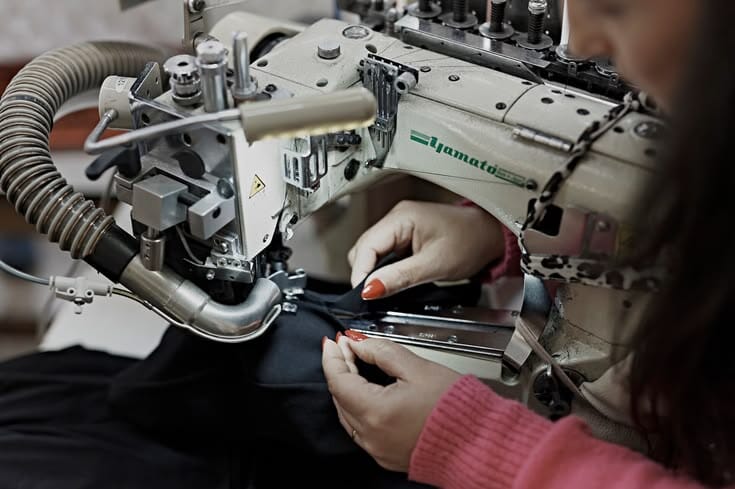
Lima: cotton cut-and-sew and vertical knitwear
Lima is the headquarters city for vertically integrated cotton producers. Factories here run knitting, dyeing, cutting, sewing, and finishing under one roof. Most export-grade Pima T-shirt production happens within a 40-kilometer radius of the capital. Expect English-speaking merchandisers at larger mills. Floor supervisors work in Spanish.
The big Lima players run programs for Buck Mason, Stance, Everlane, Faherty, and various private-label premium brands. Vertically integrated operations matter here because the PTPA yarn-forward rule rewards single-country cut-and-sew.
Arequipa: alpaca knitwear capital
Arequipa sits at 2,335 meters elevation near the alpaca herding regions of Puno and Cusco. The city's mills handle spinning, dyeing, and knitting of alpaca, baby alpaca, and royal alpaca blends. Lead times here stretch longer because raw fiber collection happens in shearing seasons between November and April.
The dominant Arequipa names are Michell and Inca Tops, which run integrated yarn-to-garment programs. Smaller specialty mills produce for European luxury labels and US-based heritage knitwear brands.
Trujillo and the north coast
Trujillo and surrounding Piura and La Libertad regions handle cotton agriculture and a growing share of cut-and-sew. The Piura valley is the heart of true Peruvian Pima cultivation. Mills here are smaller but increasingly chosen by brands that want closer farm-to-factory traceability.
Gamarra: the small-run garment district
Gamarra in La Victoria district packs more than 24,000 textile and apparel businesses into 40 city blocks (Municipalidad de La Victoria, 2024). This is where small brands find lower MOQs, faster samples, and factory-scale sewing. Quality varies widely, and vetting matters more here than anywhere else in Peru.
Find your factory: Browse the free factory directory preview, or unlock the premium directory for $39 to see 100+ documented factories with direct contacts and MOQs.
Citation capsule: Lima Metropolitana houses 68% of Peru's registered textile and apparel firms, while Arequipa holds 14% focused on alpaca processing, according to INEI (2024). Gamarra contains over 24,000 micro and small businesses, making it the largest garment district in South America.
What categories is Peru strongest in?
Peru's competitive edge is narrow but deep. The country wins in four specific categories: premium Pima cotton T-shirts and basics, alpaca knitwear, performance underwear using Pima blends, and certified organic cotton programs using the native Tangüis variety. Cotton apparel makes up the majority of Peru's textile export value, with knitwear the next-largest category (US ITA Peru textile market report).
Pima cotton basics and premium T-shirts
This is Peru's global reputation category. Brands like Stance, Buck Mason, Faherty, and Everlane have run Pima programs in Lima for years. Expect fabric weights from 140 gsm jersey to 280 gsm heavyweight. The strongest mills run 60s, 80s, and even 100s yarn counts, which is rare elsewhere outside Italy and Japan.
Alpaca knitwear and baby alpaca accessories
Sweaters, cardigans, scarves, and throws. Baby alpaca at 22 microns competes directly with cashmere at roughly 40-50% lower landed cost. Royal alpaca, the rarest grade at under 19 microns, is reserved for ultra-premium programs.
Premium Pima polo and pique knits
Polo and pique are an underrated Peruvian category. The fiber length supports clean stitch definition on knit collars and plackets, and Lima mills have refined garment-dyed and pigment-dyed finishes for heritage menswear.
Certified organic cotton (Tangüis variety)
Tangüis is a Peruvian native cotton cultivated organically in the Pisco and Ica valleys. GOTS-certified fabric programs are established and traceable to farm GPS coordinates.
What MOQs and FOB prices can you negotiate in Peru?
Minimum order quantities in Peru typically run 200-500 units per style per color for small brands at export-grade mills, which is significantly lower than premium Asian knitwear factories that often require 1,000-2,000 unit minimums (OneAim Apparel production pipeline). Gamarra factories accept runs as low as 50-100 units. Larger Lima export mills require 500+ per color.
For alpaca knitwear, MOQs tend to sit at 300-500 pieces per style because of yarn-dyeing economics. Baby alpaca can start at 200 units if you accept natural undyed shades (white, fawn, brown, black) that skip the dye step entirely.
The following costs reflect FOB Callao port pricing at 300-unit quantities with standard trims and basic branding, based on quotes collected through our sourcing network between January and March 2026.
| Product | Fabric | FOB Cost (USD) | MOQ |
|---|---|---|---|
| Pima cotton T-shirt, 180 gsm | 100% Peruvian Pima jersey | $8.40 - $11.20 | 300 |
| Pima cotton polo, pique | 100% Pima, 220 gsm | $12.80 - $16.40 | 300 |
| Organic Tangüis cotton hoodie | GOTS 320 gsm French terry | $16.50 - $22.00 | 300 |
| Alpaca crew sweater | 70% alpaca, 30% merino, 7gg | $42.00 - $58.00 | 300 |
| Baby alpaca knit dress | 100% baby alpaca, 12gg | $78.00 - $105.00 | 300 |
Source: see in-text citations in this section.
Sources: OneAim Apparel production pipeline, 2024-2026 RFQ dataset.
In our experience running Peru sourcing projects, first-time buyers consistently underestimate trim and label costs. Imported woven labels, YKK zippers, and custom hangtags can add $1.20-$2.80 per unit because most specialty trims and sourced fabrics and components get imported from Asia. Build that into your costing sheet before approving production samples.
Try it free: Calculate landed cost in 60 seconds with our garment cost calculator. No email required.
Citation capsule: Peruvian factory MOQs for small brands range from 200 to 500 units per style per color, with Gamarra factories accepting as few as 50-100 units, based on OneAim Apparel's 2024-2026 RFQ dataset. Alpaca minimums rise to 300-500 due to yarn-dyeing economics.
What are typical lead times in Peru?
Standard lead times for Peruvian apparel production run 8-12 weeks from approved production sample to FOB shipment, with cotton programs closer to 8 weeks and alpaca programs closer to 12 weeks (OneAim Apparel pipeline data). Sampling adds another 3-5 weeks on top of production, so total order-to-port runs 12-17 weeks for cotton and 15-19 weeks for alpaca.
Ocean transit from Callao to Los Angeles runs 12-16 days. Callao to Miami runs 8-11 days. Callao to Rotterdam runs 22-28 days, and these figures sit mid-pack against lead times benchmarked across sourcing countries. Air freight from Lima cuts delivery to 2-4 days but adds roughly $4-$7 per kilogram on top of FOB cost.
The big timing variable is alpaca. Shearing happens November through April. If you place an alpaca order in May, the yarn gets spun from fiber sheared six months earlier. Plan backward from retail drop dates by at least 18 weeks. We have seen first-time alpaca buyers lose entire seasons by placing orders in June for September delivery. The yarn simply was not available.
| Stage | Cotton (weeks) | Alpaca (weeks) |
|---|---|---|
| Sampling and approval | 3-5 | 4-6 |
| Production | 8-10 | 10-12 |
| Ocean to US East Coast | 1-2 | 1-2 |
| Total order-to-DC | 12-17 | 15-20 |
Source: see in-text citations in this section.
Sources: Maersk Peru schedule data, 2024; OneAim Apparel pipeline data.
How sustainable and compliant is Peruvian production?
Peruvian textile manufacturing ranks among the most certified in Latin America, hosting an established base of GOTS-certified vertical mills and growing Better Cotton uptake across its cotton farmland. Fair Trade USA certifies several alpaca cooperatives in Puno and Cusco, channeling premiums to indigenous Quechua and Aymara herding communities.
GOTS Pima programs
Several Lima-based vertical mills maintain Global Organic Textile Standard certification for full cut-and-sew cotton programs. Traceability runs from farm GPS coordinates through yarn lot numbers to finished garment hangtags. For brands with EU customers asking ESPR digital product passport questions, this matters more in 2026 than it did three years ago.
Fair Trade alpaca cooperatives
Puno and Cusco host multiple Fair Trade certified alpaca herder associations. Premium pricing guarantees flow back to indigenous Quechua and Aymara herding communities. The Fair Trade premium typically adds $0.40-$0.80 per kilogram of fiber, which translates to $1.20-$2.40 per finished sweater at the consumer level.
Better Cotton Initiative
BCI coverage is expanding year over year. Peru's cotton sector is small enough that certification uptake scales faster than in larger producer countries.
Citation capsule: Peru hosts an established base of GOTS-certified vertical mills and growing Better Cotton uptake across its cotton farmland. Fair Trade USA certifies multiple alpaca cooperatives in Puno and Cusco, channeling premiums to indigenous herding communities.
What tariffs apply to Peruvian apparel in 2026?
The US-Peru Trade Promotion Agreement (PTPA), in force since 2009, zeroes the base MFN duty on the vast majority of apparel categories entering the United States, provided yarn-forward rules of origin are met (USTR). That base preference remains a meaningful advantage over MFN-rate Asian sourcing. The important 2026 caveat: a 2025-26 US baseline surcharge (the IEEPA "reciprocal" tariff, struck down by the Supreme Court on 20 February 2026 and replaced by a roughly 10% Section 122 baseline surcharge scheduled to lapse around 24 July 2026) has applied on top of base rates for most imports, reportedly touching even FTA/TPA-partner goods. US apparel rates shifted repeatedly through 2025-26, so the exact treatment of TPA-qualifying Peruvian apparel is in flux and must be confirmed against the current USTR and CBP schedule at the time of reading.

Peruvian apparel entering the European Union pays Most-Favored-Nation rates, typically 9.6-12% for knit and woven categories, because Peru is not part of the EU's GSP+ scheme for apparel at the same preferential level as some competitors. The Peru-EU Free Trade Agreement, in force since 2013, provides reduced rates on agro-export categories but limited apparel benefit. EU-bound brands often weigh that 9.6-12% landed cost against Portugal or Turkey alternatives.
The table below is illustrative only; verify every US figure against the current USTR/CBP schedule.
| Destination | Tariff regime | Apparel duty mechanism |
|---|---|---|
| United States | Peru TPA, yarn-forward | 0% base MFN on qualifying apparel, plus any 2025-26 US baseline surcharge (see note) |
| European Union | Peru-EU FTA + MFN | 9.6-12% on most apparel |
| Canada | Canada-Peru FTA | 0% on qualifying apparel |
| China (comparison) | Base MFN/HTS + Section 301 + US baseline surcharge | Base HTS rate plus Section 301, plus the 2025-26 IEEPA "reciprocal" layer (struck down 20 Feb 2026, replaced by ~10% Section 122 baseline surcharge to the US) |
| Bangladesh (comparison) | Base MFN/HTS + US baseline surcharge | Base HTS/MFN rate plus the 2025-26 IEEPA "reciprocal" layer (replaced by ~10% Section 122 baseline surcharge to the US) |
Source: USTR.
US apparel rates shifted repeatedly through 2025-26; treat all US figures above as illustrative and verify against the current USTR/CBP schedule at time of reading.
Sources: USTR Peru TPA; USTR reciprocal tariff initiative; CBP trade remedies; European Commission Peru FTA, 2024; OneAim Apparel landed cost models.
Yarn-forward rule of origin
To qualify for PTPA preference on US entry, which zeroes the base MFN duty (any 2025-26 US baseline surcharge applies separately), yarn must be spun in Peru, the United States, or another PTPA partner country. Fabric knit or woven from that yarn must also originate in the territory. This is why most export-grade Peruvian mills run vertically integrated operations from yarn through finished garment.
Worked example: 300-unit Pima T-shirt program
This worked example is illustrative only. A 300-unit Pima T-shirt at $9.80 FOB ships to Miami at roughly $0.85 per unit ocean freight, and PTPA zeroes the base US duty, so the base landed cost lands near $10.65. The same construction sourced from Bangladesh at $5.20 FOB carries its base MFN duty plus higher freight, landing near $7.10-$7.40 before surcharges. Both the Peru and Bangladesh landed costs must be recomputed with the current US baseline surcharge (Section 122 roughly 10% as of mid-2026, subject to change) on top of base rates, per the live USTR/CBP schedule. Even so, Peru remains more expensive at landed cost; the premium fiber story and traceability are what justify the gap, the kind of trade-off that pushes US brands to weigh nearshoring against Asian production.
Running into nearshoring decisions? Get in contact and we’ll map the full picture for your brand, or grab a factory-ready tech pack for $79.
What are the common pitfalls when sourcing from Peru?
Three recurring issues trip up brands sourcing in Peru for the first time: language barriers outside export-focused mills, seasonality of alpaca supply, and altitude-related production scheduling in Arequipa. The World Bank Logistics Performance Index ranks Peru 61st globally for logistics efficiency, which adds friction compared with top-tier sourcing countries (World Bank LPI, 2023).
The Spanish-language gap
Export merchandisers in Lima speak English. Production supervisors, pattern makers, and quality staff generally do not. Tech packs, measurement specs, and comments on fit samples should be translated into Spanish before they go to the floor. Misunderstandings at sample review cost weeks. We translate every spec sheet for our Peru placements.
Alpaca fiber seasonality
Alpaca shearing runs November through April. Order windows matter. Placing alpaca orders in August against October delivery often fails because yarn inventories run low before the next shearing cycle. Brands that sell holiday alpaca knitwear must place orders by April or May at the latest.
Altitude and Arequipa logistics
Arequipa sits at 2,335 meters. Trucking finished goods down to Callao port for export adds 2-3 days over coastal production. Some mills air-freight alpaca garments to Lima for consolidation, which affects cost.
Narrow category range
Peru does not do tailored suiting at scale, technical activewear, or volume-priced fast fashion. If your line includes jackets, denim, or synthetics, you will need a second sourcing country. Hybrid sourcing, splitting cotton knits with Peru and the rest of the line with Portugal or Turkey, is the common pattern in our pipeline.
Limited scale
Peru's full apparel sector exports about $2 billion annually. China exports roughly $160 billion. If your brand needs to scale past several hundred thousand units across multiple categories, Peru cannot absorb that volume. Plan accordingly.
Decision framework: choose Peru when
Peru is the right choice for specific product profiles. It is not a general-purpose sourcing country. Use the conditions below to decide whether Peru fits your line.
Choose Peru when your brand is built on premium knit
If your hero product is a Pima cotton T-shirt, polo, or sweatshirt at $40-$120 retail, Peru gives you fiber quality that customers can feel and a story that justifies the price. Lima vertical mills handle 200-500 unit MOQs cleanly, lead times are predictable, and PTPA keeps US landed cost competitive.
Choose Peru when alpaca is your category
For sweaters, cardigans, scarves, and accessories at $150-$600 retail, Arequipa is the world's deepest pool of alpaca and baby alpaca expertise. The fiber quality, dye craft, and Fair Trade traceability are not available at this depth elsewhere. Plan 18 weeks forward and budget for shearing-season constraints.
Choose Peru when GOTS-certified organic cotton matters to your brand
Tangüis cotton in the Pisco and Ica valleys is one of the most established GOTS programs in Latin America. Farm-to-garment traceability is documented. For brands with sustainability claims that need third-party verification, Peru cleared this bar before many competitors.
Choose Peru when US duty-free landed cost beats your alternative
For brands shipping to the United States in volumes of 1,000-50,000 units per style per season, PTPA's base-duty-free entry can offset Peru's higher FOB, though a 2025-26 US baseline surcharge now applies on top of base rates for most origins, including FTA partners. Run the math against China (base HTS + Section 301), Bangladesh (base MFN), or even Vietnam, always against the current USTR/CBP schedule. Peru often wins on landed cost for premium fiber categories despite higher FOB.
Do not choose Peru when
Skip Peru if you sell synthetic activewear, tailored suiting, denim at scale, fast-fashion turn times under 6 weeks, or volumes over 100,000 units per style per season. Skip it if your brand requires English-only communication on the production floor. Skip it if your launch budget cannot absorb 18-week alpaca planning.
Frequently Asked Questions About Clothing Manufacturing in Peru
Is clothing manufacturing in Peru cheaper than Portugal?
Peru generally runs 15-25% cheaper than Portugal for comparable Pima cotton programs at 300-unit MOQs, based on FOB pricing collected across our 2024-2026 RFQs. Portugal retains advantages in European Union market access, shorter lead times to EU retailers, and more advanced finishing technology (Eurostat, 2024). For US-focused brands, Peru's PTPA duty-free access often tips the landed cost equation. For European brands, Portugal usually wins.
What is the minimum order for alpaca sweaters in Peru?
Minimum orders for alpaca sweaters typically start at 300 units per style per color at export-grade mills in Arequipa. Smaller factories can accept 100-200 units, though yarn availability limits dyed-color programs below 300. Undyed natural shades (white, fawn, gray, brown, black) can start lower because they skip the dyeing step, according to International Alpaca Association member mill data (2024).
How long does shipping from Peru to the US take?
Ocean freight from Callao port takes 8-11 days to Miami, 12-16 days to Los Angeles, and 14-18 days to New York and New Jersey, according to Maersk Peru schedule data (2024). Air freight from Lima to major US airports runs 2-4 days but costs roughly $4-$7 per kilogram additional. Most brands ship ocean for production runs and air for samples or urgent replenishment.
Do Peruvian factories work with small brands?
Yes, many Peruvian factories work with small brands, particularly in the Gamarra district where MOQs start at 50-100 units and in specialized alpaca cooperatives accepting 200-unit runs. Export-grade Lima mills typically require 300-500 units minimum per color. The Gamarra district alone holds over 24,000 small and micro textile and apparel enterprises (Municipalidad de La Victoria, 2024).
Is Pima cotton always from Peru?
No. "Pima" is a cotton variety name, not an origin designation. Pima is grown in Peru, the United States (marketed as Supima), Australia, and parts of Central Asia. True Peruvian Pima is distinct because of its extra-long staple length (35-42mm) and coastal growing conditions in the Piura valley, verified through chain-of-custody programs operated by PromPeru and ADEX (2024).
What is the best city for cotton manufacturing in Peru?
Lima is the dominant city for Pima cotton cut-and-sew, housing 68% of registered textile and apparel firms (INEI, 2024). Most export-grade vertical mills sit within a 40-kilometer radius of the capital. Trujillo and the Piura valley handle a smaller share, often chosen by brands that want closer farm-to-factory traceability for true Pima programs.
Does Peru offer duty-free access to the US?
Yes, the US-Peru Trade Promotion Agreement, in force since February 2009, zeroes the base US import duty on most apparel categories provided yarn-forward rules of origin are met (USTR). Note that a 2025-26 US baseline surcharge (the IEEPA "reciprocal" tariff, replaced by a ~10% Section 122 baseline surcharge after the 20 February 2026 Supreme Court ruling) has applied on top of base rates for most imports, so confirm the current net treatment against the live USTR/CBP schedule. The yarn must be spun in Peru, the United States, or another PTPA partner country. This is why Peruvian export mills run vertically integrated operations from yarn through finished garment.
What is the difference between alpaca and baby alpaca?
Standard alpaca fiber averages 26-32 microns in diameter and comes from adult animals across multiple shearings. Baby alpaca, sheared from animals under two years old at first shearing, averages 22 microns or finer and offers a softer hand comparable to cashmere (IPAC, 2024). Baby alpaca commands roughly 60-80% higher wholesale prices than standard alpaca grades.
Can I get GOTS-certified organic cotton from Peru?
Yes, Peru has an established GOTS-certified organic cotton sector centered on the native Tangüis variety grown in the Pisco and Ica coastal valleys, with an established base of export-grade mills holding GOTS certification. Farm-to-garment traceability is documented and well-suited to brands needing third-party-verified sustainability claims.
What languages do Peruvian factories operate in?
Export merchandisers and account managers at Lima mills typically speak English. Production supervisors, pattern makers, and quality control staff generally work in Spanish. Tech packs, measurement specs, and fit comments should be translated into Spanish before they reach the production floor. Quechua is also spoken in alpaca herding regions, though mill-level operations run in Spanish.
Conclusion
Peru rewards brands that value fiber quality over cost optimization. If your product story centers on Pima cotton, alpaca luxury, or certified organic cotton, Peru belongs at the top of your sourcing shortlist. If you need low-cost synthetics, fast-fashion turn times, or 100-unit MOQs across dozens of colors, other countries will serve you better.
The 2026 setup favors Peru more than it did three years ago. PTPA's base-duty-free access still matters as Section 301 stays in force on China and MFN rates pinch Bangladesh and Vietnam, though a 2025-26 US baseline surcharge now applies across most origins and should be checked against the current USTR/CBP schedule; ESPR meanwhile pushes EU buyers toward traceable supply chains. Lima vertical mills can deliver in 12-17 weeks order-to-DC at MOQs that fit small premium brands. Arequipa alpaca needs 18-week planning but produces the closest substitute to cashmere at half the landed cost.
Start with a shortlist of 3-5 documented factories for your category. Request lab dips, yarn samples, and a formal costing sheet before committing to production samples. Budget 4-6 weeks for proper sampling and 8-12 weeks for production. For alpaca, add the shearing-season buffer.
Talk to a real person: get in contact with our team. No pitch, no upsell.
We're a group of 100+ documented clothing manufacturers across 15+ countries. Tell us your product, volume, and timeline. We'll route your brief to the factory in our group built for it, usually within 24 hours. You produce directly with the factory. Flat fees, no markups, no pitch.
Get in contact Download the directory ($39)Need a tech pack? Get a factory-ready single-style tech pack for $79. See what's included.
References
- ADEX Peru, Asociación de Exportadores - Annual textile and apparel export statistics, 2025.
- PromPeru, Comisión de Promoción del Perú - Sector reports and Pima cotton chain-of-custody programs, 2024.
- INEI, Instituto Nacional de Estadística e Informática - Economic Census textile and apparel firm distribution, 2024.
- International Alpaca Association (IPAC) - Alpaca fiber production data and member mill statistics, 2024.
- USTR, United States-Peru Trade Promotion Agreement - Tariff schedules and yarn-forward rules of origin.
- USTR, Reciprocal Tariff Initiative - 2025-26 reciprocal tariff and baseline surcharge context.
- US Customs and Border Protection, Trade Remedies - Current US duty and surcharge administration.
- US International Trade Administration, Peru Textile and Apparel Market Report - Peru textile/apparel export value and US share.
- European Commission, EU-Peru Free Trade Agreement - Apparel tariff schedules, 2024.
- Municipalidad de La Victoria, Gamarra district statistics - Garment district enterprise count, 2024.
- World Bank Logistics Performance Index - Peru ranking and logistics efficiency benchmarks, 2023.
- Eurostat, EU apparel imports by origin - Comparative trade data Peru vs Portugal, 2024.
- Maersk Peru schedule data - Callao port transit times to US and EU destinations, 2024.
- MINCETUR, Ministerio de Comercio Exterior y Turismo - Peru trade agreements and sector policy, 2024.
- Cotton Peru, Asociación Peruana de Industriales del Algodón - Pima cotton production and traceability data, 2024.
Related Reading
- 10 Best Clothing Manufacturers in Peru
- Where to manufacture clothing globally: 2026 country guide
- Clothing manufacturing in Mexico: 2026 nearshoring guide
- Pima cotton vs Supima vs Egyptian: 2026 fiber guide
- Alpaca vs cashmere: landed cost and sourcing comparison
.jpeg)