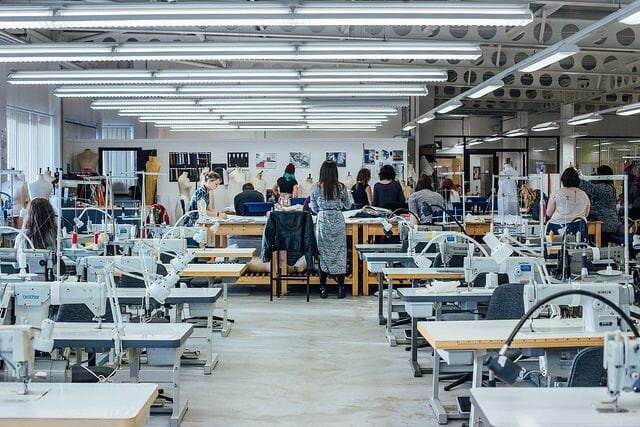
Men's clothing manufacturers do not share one supply chain. Menswear has five, and the factory that makes a beautiful suit almost never makes a good tee. According to IMARC Group, the global menswear market reached USD 654.1 billion in 2025 and is projected to reach USD 990.9 billion by 2034, a 4.72% CAGR. That's a big market served by narrow specialists, which is the single thing most new brands get wrong on their first sourcing round.
This directory profiles 7 US manufacturers that make menswear for other brands, in New York, Massachusetts and California, grouped by the specialism they actually run: tailoring, woven shirts, knits, full-package cut-and-sew, and outerwear. Each one was checked on its own website. We found 7 companies we could stand behind, so we're listing 7.
Heads up: We're OneAim, a group of documented United States clothing factories. The companies below are independent manufacturers listed on public sources, not members of our group. OneAim's role is separate: we place your production with a documented factory in our group built for your product.
Key Takeaways
- Menswear splits across factory specialisms more sharply than womenswear. Tailoring needs canvassing and pressing. Denim needs a laundry. Knits need circular knitting and dyeing. No factory in this roster credibly does all five.
- The market is large and steady, not explosive. USD 654.1 billion in 2025, projected to USD 990.9 billion by 2034 at a 4.72% CAGR (IMARC Group).
- Only two of the seven publish a minimum. Apparel Production Inc. states 200 per style for domestic orders; Royal Apparel states 1,200 to 2,400 units per style and colour for private label.
- US tailoring is real but concentrated in New York. Ferrara runs a 50,000 sq ft plant in Long Island City with 115 employees (Manufacturing Dive), and Martin Greenfield hand-tailors in Brooklyn.
- Start from the garment, not the city. Pick the specialism first, then the maker. Our companion women's clothing manufacturers directory is organised differently, because womenswear behaves differently.
Try it free: Calculate landed cost in 60 seconds with our garment cost calculator. No email required.
Why does menswear split across factory specialisms?
Because the machines don't overlap. A canvassed blazer needs canvassing and fusing lines, industrial pressing, and hand-finishing stations. A tee needs circular knitting and dyeing. Jeans need a laundry. A technical jacket needs seam sealing and insulation handling. A dress shirt needs collar and cuff fusing plus dedicated shirt machinery. These are five different capital investments.
Why womenswear factories flex more easily
Womenswear factories can often flex across silhouettes because so much of it is cut-and-sew from woven or jersey fabric. Menswear doesn't flex the same way, because so much of its value sits in construction: the canvas in a jacket chest, the wash on a jean, the collar roll on a shirt. Ask a knit factory for a half-canvas sport coat and you'll get a polite yes and a bad jacket.
What does that mean for your first collection?
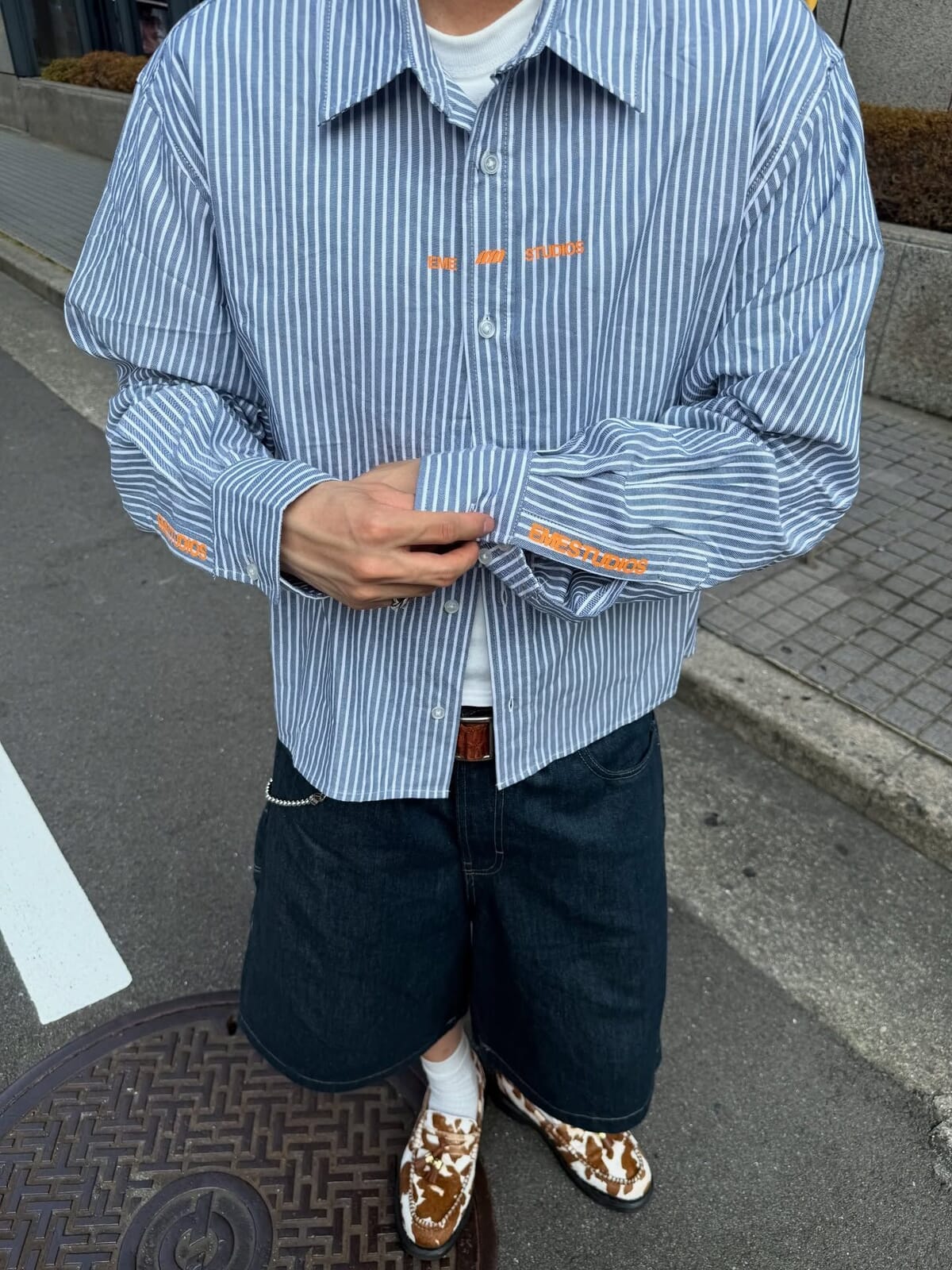
A common planning mistake is to send one supplier the whole first collection: a blazer, a shirt, a tee and a jean in a single email. One factory will often quote all four, but it can only be strong at the ones its machinery was bought for. Plan the range by specialism from the start, even when that means more than one factory.
Citation capsule: Menswear production divides across five factory specialisms that use different machinery: tailored (canvassing, pressing, hand finishing), wovens (collar and cuff fusing, shirt machinery), knits (circular knitting and dyeing), denim (laundry and wash), and outerwear (seam sealing, insulation handling). A single factory rarely covers more than two of the five credibly.
How did we choose these manufacturers?
Every company here had to pass three checks on its own website: it makes menswear, it makes it in the United States, and it makes it for other brands, whether as contract production, private label or custom collaborations. Directory listings and "top 10" articles did not count as evidence. Where a figure is the company's own claim, such as a minimum or a founding date, we say so.
We deliberately stopped at 7. Several well-known US menswear factories make only their own label, and some famous names have closed or no longer have a working website, so they are not here. We found no US denim specialist that both runs its own laundry and says on its own site that it produces for other brands, so denim sits with the full-package maker below rather than in its own section.
Who makes tailored menswear (suits, blazers, coats)?
Tailoring is the deepest specialism in menswear and the least transferable. Canvassed construction, full or half, means the chest is built from layers of interlining shaped to the body. It isn't glued to the shell. That takes machinery and trained hands most garment factories do not have.
Martin Greenfield Clothiers (East Williamsburg, Brooklyn, New York)
A Brooklyn tailoring factory at 239 Varet Street in East Williamsburg. Martin Greenfield started as a floor boy at GGG Clothes in the same building and bought the factory in 1977; the company says clothing has been made in that workroom since 1917. It makes suits, tuxedos, sport coats, trousers and overcoats by hand, with every jacket built on a full canvas through "roughly 108 steps", by a team of 65 tailors and craftspeople working as a union shop (Martin Greenfield Clothiers). Its own list of what it makes includes "Private-label production for leading menswear brands", but the same page says its focus today is on individual clients, so confirm it has contract capacity before you plan a season around it. It publishes no minimum and no production calendar. Best for fully hand-tailored, full-canvas suiting.
Ferrara (Long Island City, Queens, New York)
A family tailoring factory that has run in New York City since 1987, "producing fine garments for leading American brands, public figures, and institutions", from a building in Long Island City "dedicated entirely to making" (Ferrara). Trade press reports a 50,000 sq ft plant with 115 employees, automated cutting and sewing, and work including Ralph Lauren's Olympic ceremony blazers and jackets and US military garments (Manufacturing Dive, February 2025). Read one thing carefully: its website now leads with its own made-to-measure label, so confirm it has contract capacity before you send a tech pack. Best for blazers, trousers and tailored outerwear at program scale.
Who makes men's woven shirts?
Shirts are the second construction specialism: collar and cuff fusing, fine stitch density, and a yoke and placket that have to sit flat. A shirt factory is set up differently from a tailoring floor and from a knit line.
New England Shirt Co. (Fall River, Massachusetts)
A shirt factory sewing in Fall River since 1933, which calls itself "the oldest operating ready-to-wear shirt manufacturer in America". It makes oxfords, dress shirts and sport shirts, and says it has made for Ralph Lauren, the US Olympic uniforms, "top Fashion Design houses, and the most prestigious Classic Menswear labels in the industry" (New England Shirt Co.). It also sells its own oxford line and publishes no minimum. Best for a classic American oxford or dress shirt program.
Apparel Production Inc. (Garment District, New York, New York)
A family-run private-label house "Established in 1947", working from 270 W 39th St. Its domestic production page lists dress shirts, suits and pants among its products, with a "domestic team of 75 skilled sewing operators" and production "all managed in-house in NYC" (Apparel Production Inc.). It states "low minimums of 200 per style for domestic orders". The company also runs overseas production, so state in writing that you want your order made in NYC. Best for a first menswear capsule developed and sewn in one Manhattan building.
Who makes men's knits?
Royal Apparel (New York, New York)
Founded in the early 1990s in Manhattan's Garment District, Royal Apparel says it learned its trade in Southern factories "from knitting to sewing" and stayed with American-made apparel through the industry's global shift in the late 1990s (Royal Apparel). It sells eco and US-made tees, tanks, fleece and bottoms for men, women and kids, and runs a private-label program with minimums of "1200-2400 units, per style and color" and an estimated 8 to 10 weeks from the date samples are approved (Royal Apparel, private label). The private-label page is titled "Eco or USA Made", so state in writing that your run must be sewn in the US. Best for a private-label tee and fleece program once you have volume.
Who makes full-package menswear?
Lefty Production Co. (Downtown Los Angeles, California)
A downtown LA production house at 318 West 9th Street that describes itself as "a men's wear manufacturer in Los Angeles", offering sourcing and design, development, pre-production and production, and sourcing fabrics from cotton jersey and denim to French terry (Lefty Production Co., men's wear). Its production page covers pattern making, sample making and full production sewing, and says it "offers low minimums to clients who develop their garments with us" (Lefty, production), without publishing a number. It says it "remains committed to domestic, Made in the USA clothing manufacturing" and names past clients including Nordstrom, Neiman Marcus and Christian Siriano (Lefty, about). Best for a mixed first collection where you need development help, including denim and French terry pieces.
Who makes men's outerwear?
Golden Bear Sportswear (San Francisco, California)
An outerwear maker that "began making hard-wearing coats for San Francisco longshoremen in 1922" and still handcrafts leather, varsity and wool jackets in San Francisco (Golden Bear Sportswear). Its wholesale page says "We offer full custom collaborations as well as access to an endless archive of timeless designs" (Golden Bear, wholesale). It sells its own label too and publishes no minimum. Best for a branded varsity, leather or wool jacket.
Here's how the seven compare at a glance.
| Company | Location | Specialism | Works for brands as | MOQ (published) |
|---|---|---|---|---|
| Martin Greenfield Clothiers | Brooklyn, NY | Hand-tailored suits, tuxedos, overcoats | Private label for menswear brands (focus now on individual clients) | Not published |
| Ferrara | Long Island City, NY | Blazers, trousers, oxford shirts, jackets | Production for American brands and institutions | Not published |
| New England Shirt Co. | Fall River, MA | Oxfords, dress and sport shirts | Shirts for fashion and menswear labels | Not published |
| Apparel Production Inc. | New York, NY | Dress shirts, suits, pants | Private label, full package | 200 per style (domestic) |
| Royal Apparel | New York, NY | Tees, tanks, fleece, bottoms | Private label (eco or US-made) | 1,200 to 2,400 per style and colour |
| Lefty Production Co. | Los Angeles, CA | Full-package menswear | Development and production | Not published |
| Golden Bear Sportswear | San Francisco, CA | Leather, varsity and wool jackets | Custom collaborations | Not published |
Source: each company's own website, checked October and November 2026, plus Manufacturing Dive for Ferrara's plant size and headcount. Minimums are the figures each company publishes; confirm them before you commit.
How long have these menswear factories been running?
Longer than most brands that call them. Five of the seven publish a founding year, and the youngest of those five has been sewing for almost four decades. Golden Bear started making coats for San Francisco longshoremen in 1922, New England Shirt Co. has sewn shirts in Fall River since 1933, Apparel Production Inc. dates itself to 1947, Martin Greenfield bought his Brooklyn factory in 1977 and Ferrara has run its New York tailoring factory since 1987.
Age is not a quality guarantee, but it tells you two useful things. First, these factories have survived the move of most US apparel production offshore, which usually means they found a niche they do better than an importer: hand tailoring, heritage shirting, leather and wool outerwear. Second, older factories tend to run their own way. Expect to talk to an owner or a production manager, to follow their sampling process rather than yours, and to fit into a calendar that existing customers already fill. Several of them also sell their own label now, so ask early whether contract work is still a core part of the business.
What are the minimums at US menswear manufacturers?
Mostly unpublished, and that's the accurate answer. Only two of the seven post a number: Apparel Production Inc. at 200 per style for domestic orders, and Royal Apparel at 1,200 to 2,400 units per style and colour for private label. Lefty says it offers low minimums to brands that develop with it. The tailoring houses and the outerwear maker give no figure at all.
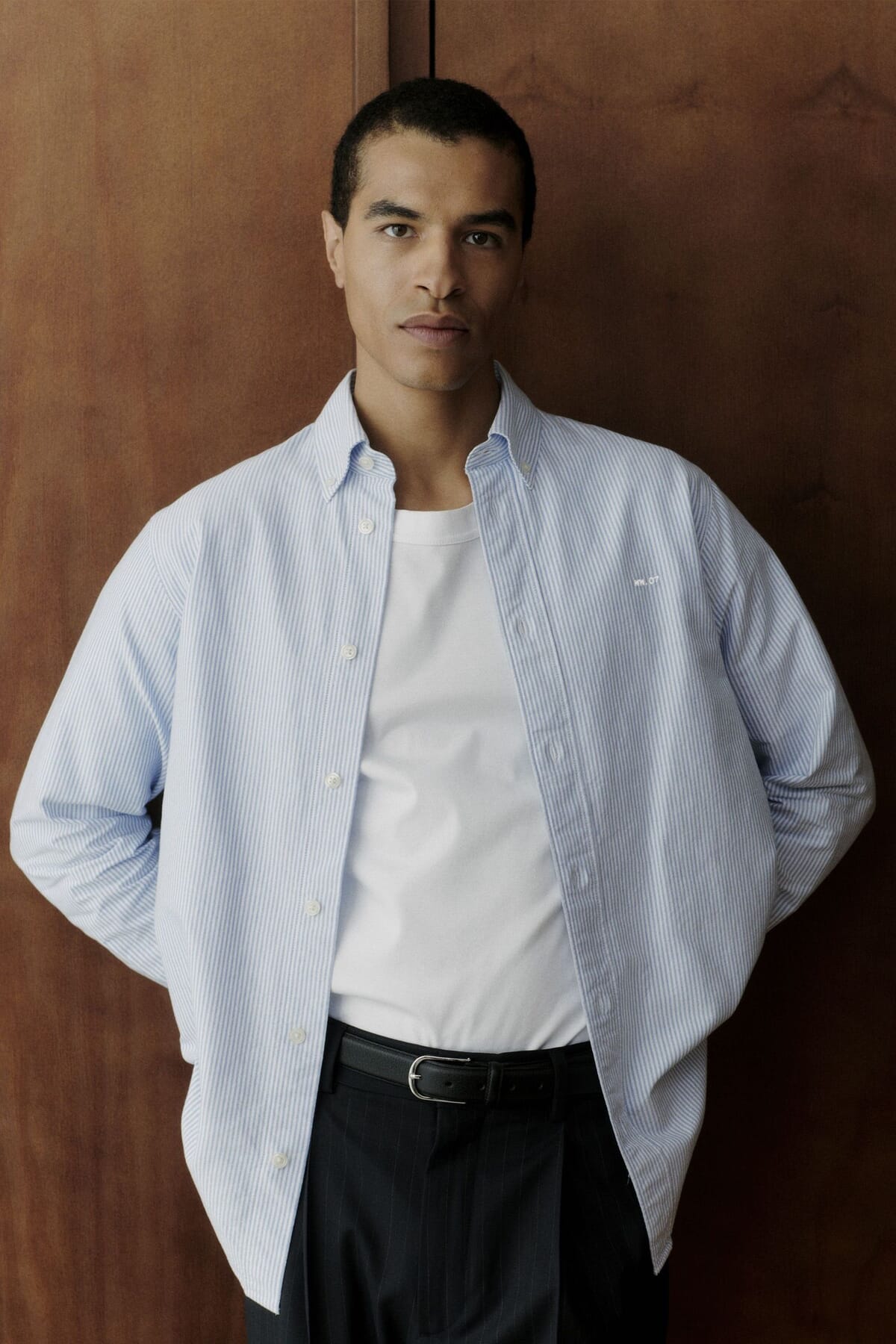
Practically, your minimum is set by the factory's setup cost and the fabric mill's minimum, not by a policy. Ask for a quote at three quantities of the same style and watch where the per-unit price stops dropping steeply. That inflection is the real minimum. In tailoring it tends to sit lower, because the work is labour-led; in outerwear it tends to sit higher, because seam sealing and insulation need setup.
What import duty does menswear pay if you make it abroad?
It depends on the garment and, above all, on the fibre. The US Harmonized Tariff Schedule sets a separate general duty rate for each line, and for menswear those rates run from single digits for some outerwear to well over 25% for synthetic tailoring. That is the cost a domestic quote is competing against before freight, brokerage and any extra duties tied to the country of origin.
Three patterns are worth knowing before you compare a US quote with an overseas one:
- Fibre moves the rate more than the style does. A men's blazer of wool falls under HTS 6203.31.90 at 17.5%; the same blazer in synthetic fibre falls under 6203.33.20 at 27.3%. A cotton woven shirt is 19.7% (6205.20.20), a synthetic one 25.9% plus 29.1 cents per kilogram (6205.30.20).
- Construction details change outerwear lines. A man-made-fibre anorak or windbreaker that qualifies as water resistant is 7.1% (6201.40.45); the same kind of jacket without that property is 27.7% (6201.40.50). Whether a jacket qualifies depends on the HTS test, not on the marketing copy.
- The basics sit in the middle. Cotton knit T-shirts are 16.5% (6109.10.00) and men's cotton trousers, including blue denim jeans, are 16.6% (6203.42.07).
These are the general (column 1) rates published by the US International Trade Commission. Additional duties under chapter 99 of the schedule can apply on top, depending on where the goods are made, and free-trade-agreement rates can be lower. Rates change, so have a customs broker classify your exact product before you rely on a number. A garment cut and sewn in the US pays none of this, which is part of why a higher domestic unit price can still land close to an imported one once duty, freight and minimums are counted.
What labels does a men's garment need in the US?
Whoever makes your menswear, the label rules are the same, and they are enforced by the Federal Trade Commission. Under the Textile Act rules, a garment label must show fibre content, country of origin, and either the company name or a registered identification number (RN) (FTC, Threading Your Way Through the Labeling Requirements).
- Fibre content is listed by generic fibre name and percentage by weight, largest first. Fibres under 5% are usually grouped as "other fiber", but wool must always be named, and a small fibre with a clear function, such as spandex for stretch, can be named too.
- Country of origin goes on the front of a label at the inside centre of the neck on any garment with a neck. "Made in U.S.A." is only allowed when the garment is made in the US of materials made in the US; a shirt sewn in New York from Italian shirting must say so, for example "Made in U.S.A. of imported fabric".
- Care instructions fall under a separate FTC rule. The label must give complete instructions for regular care, warn against methods that would harm the garment, be attached permanently and stay legible for the useful life of the product (FTC, Complying with the Care Labeling Rule).
Settle the label artwork with the factory at sampling, not at production. Tailored jackets often carry several labels (brand, size, content and care), and a shirt factory will want to know whether your neck label is woven or printed before it cuts a single collar.
How do you work with a US menswear factory?
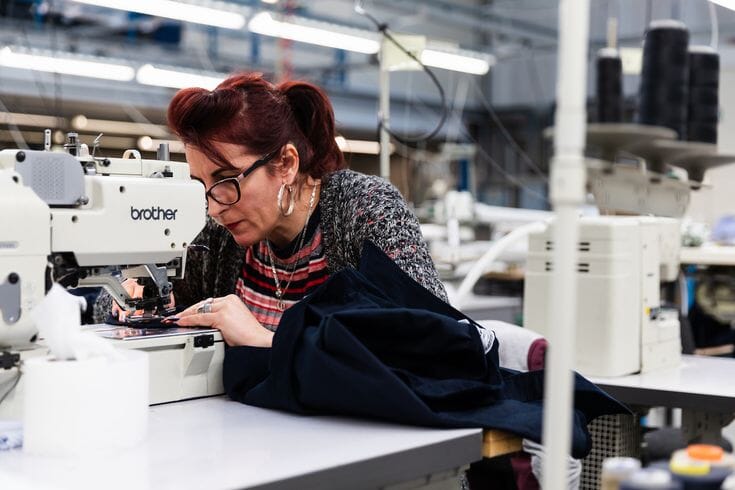
Bring a finished tech pack and expect to pick up the phone. Most of the makers here are owner-run and busy, and many still qualify work by conversation rather than web form. Send a spec, a pattern if you have one, and a clear quantity, then ask three questions: can you cut this fabric, what's your lead time at this quantity, and are you sewing it in-house? That last one matters, because subcontracting is common and it's where timelines quietly slip.
What should a menswear tech pack cover for each specialism?
Every factory needs measurements, materials and construction notes, but each menswear specialism looks for different details first. Answer these before the first call and the quote you get back will be far closer to the real cost.
- Tailoring: full canvas, half canvas or fused chest; lapel style and width; shoulder construction; lining and pocketing; button type; and which hand operations you expect (pick stitching, hand-set collar). These choices drive most of a jacket's labour time.
- Woven shirts: collar style and interlining weight, cuff type, placket, yoke (one or two piece), stitches per inch, button count and pattern matching at the front and pockets. Shirt factories price heavily on collar and cuff work.
- Knits: fabric weight, fibre blend, rib for the neck and cuffs, whether the fabric is garment dyed or piece dyed, and a shrinkage allowance. Knit programs also need a clear colour list early, because minimums are usually set per colour.
- Denim and washed bottoms: fabric weight and stretch, wash recipe and target shade, rivets and buttons, and the measurements after washing, not before.
- Outerwear: shell and lining materials, insulation, seam sealing, zips and snaps, and any water resistance you plan to claim, which also matters for the duty line if you ever import.
Add a graded size chart with tolerances for every point of measure. Menswear customers notice a sleeve that is a centimetre off far more than a print placement, and a clear tolerance is what lets you reject a bulk delivery that misses it.
Buy a sample before you buy a run
Then buy a sample before you buy a run. A paid sample is the cheapest audit you'll ever run. Approve the pre-production sample against the tech pack, agree a deposit-and-balance structure, and set a written inspection standard before cutting starts. If you don't have a spec yet, our tech pack service builds one factory-ready.
One simple question helps tell a shop that cuts and sews in-house from a broker: ask what happens to your fabric leftovers. A shop that cuts on its own floor deals with remnants every week and can answer straight away; a broker has to ask someone else, because the fabric never reaches its building.
Frequently Asked Questions About Men's Clothing Manufacturers
Who manufactures men's clothing in the USA?
We verified seven on their own websites: Martin Greenfield Clothiers (Brooklyn) and Ferrara (Long Island City, Queens) for tailoring, New England Shirt Co. (Fall River, Massachusetts) and Apparel Production Inc. (Manhattan) for woven shirts, Royal Apparel (New York) for knits, Lefty Production Co. (Los Angeles) for full-package menswear, and Golden Bear Sportswear (San Francisco) for outerwear.
What is the minimum order for men's clothing?
Only two of the seven publish a figure. Apparel Production Inc. states 200 per style for domestic orders, and Royal Apparel states private-label minimums of 1,200 to 2,400 units per style and colour. The others give no number, so ask for a quote at two or three quantities and see where the unit price stops dropping.
How big is the global menswear market?
According to IMARC Group, the global menswear market reached USD 654.1 billion in 2025 and is projected to reach USD 990.9 billion by 2034, a 4.72% CAGR. Research firms define the category differently, so always cite the source alongside the number.
Where are men's suits made in the USA?
New York City is the clearest answer. Martin Greenfield Clothiers hand-tailors suits, tuxedos, sport coats, trousers and overcoats in its Brooklyn factory and lists private-label production for menswear brands among its work. Ferrara runs a tailoring factory in Long Island City that has made blazers and jackets for Ralph Lauren's Olympic uniforms.
Can one factory make my whole menswear collection?
Rarely, and that's the core message of this directory. Tailoring, shirts, knits, denim, and outerwear each need different machinery: canvassing and pressing, collar fusing, circular knitting and dyeing, a wash laundry, and seam sealing. No factory in this roster credibly covers all five. Split the range by specialism and accept more than one supplier.
What import duty does a men's shirt pay in the US?
The general rate for a men's cotton woven shirt is 19.7% (HTS 6205.20.20), and a synthetic woven shirt is 25.9% plus 29.1 cents per kilogram (6205.30.20), according to the USITC Harmonized Tariff Schedule. Additional duties can apply depending on the country of origin. A shirt cut and sewn in the US pays no import duty.
Is menswear cheaper to manufacture than womenswear?
Not inherently, but it behaves differently. Menswear repeats more across seasons, so tooling and pattern costs amortise better over time. It also concentrates cost in construction, canvas, wash, seam sealing, rather than in trend-driven trims. That means a menswear unit cost is more stable but less compressible than a comparable womenswear piece.
We're a group of 80 documented clothing manufacturers in the United States. We do not place production overseas. Tell us your product, volume, and timeline. Our team replies within 24 hours, then we place your production with the factory in our group built for it. You produce directly with the factory. Flat fees, no markups, no pitch.
Get in contact Download the directory ($49)Need a tech pack? Get a factory-ready single-style tech pack for $79. See what's included.
Sources
- IMARC Group, Menswear Market Report, accessed October 2026. Source of the USD 654.1 billion (2025) figure and the USD 990.9 billion by 2034 projection at a 4.72% CAGR.
- Martin Greenfield Clothiers, about us, accessed November 2026. Source of the 1977 purchase, the 1917 workroom, the product range, full-canvas hand construction, the 65-person team, private-label work and the current focus on individual clients.
- Ferrara, our world, accessed October 2026, and Manufacturing Dive, February 2025. Source of the 1987 founding and Long Island City factory (company) and the 50,000 sq ft, 115 employee, automation and client details (trade press).
- New England Shirt Co., factory notes, accessed October 2026. Source of the 1933 founding, Fall River production and the labels it has made for.
- Apparel Production Inc., domestic production, accessed October 2026. Source of the menswear product list, the 75 sewing operators, in-house NYC production and the 200 per style domestic minimum. Founding year from the company home page.
- Royal Apparel, about us and private label, accessed October 2026. Source of the founding story, the private-label offer ("Eco or USA Made"), the 1,200 to 2,400 unit minimums and the 8 to 10 week lead time. Accessed November 2026.
- Lefty Production Co., men's wear, production and about, accessed November 2026. Source of the menswear services and fabrics, the pattern, sample and production services, the low-minimum statement, the domestic manufacturing commitment and the client names.
- Golden Bear Sportswear and wholesale page, accessed October 2026. Source of the 1922 founding, San Francisco production and the custom collaboration offer.
- US International Trade Commission, Harmonized Tariff Schedule, accessed November 2026. Source of the general duty rates for HTS 6109.10.00, 6201.30.50, 6201.40.45, 6201.40.50, 6203.31.90, 6203.33.20, 6203.42.07, 6205.20.20 and 6205.30.20.
- Federal Trade Commission, Threading Your Way Through the Labeling Requirements Under the Textile and Wool Acts, accessed November 2026. Source of the fibre content, country of origin, RN, neck-label and "Made in U.S.A." rules.
- Federal Trade Commission, Clothes Captioning: Complying with the Care Labeling Rule, accessed November 2026. Source of the care label requirements.
Every company named in the directory appears in this source list. Founding dates, staff numbers, minimums and lead times are the companies' own published statements or trade-press reports, labelled as such in the text, and we did not independently audit them. Client names are what the companies or trade press have published, not current customer lists. No factory in this article is a OneAim group member, and none paid to appear. Duty rates are general rates only and are not customs advice. Reviewed 2 November 2026 by Will Godax.