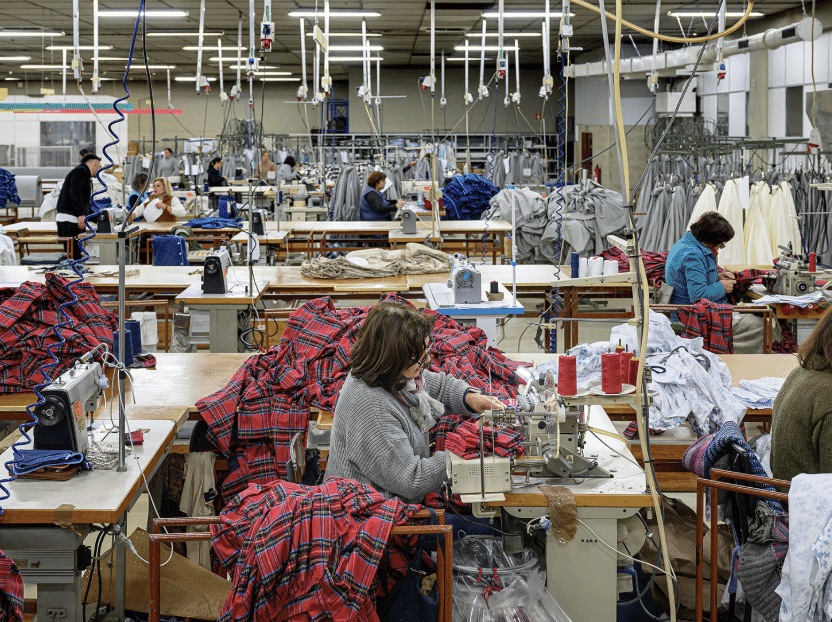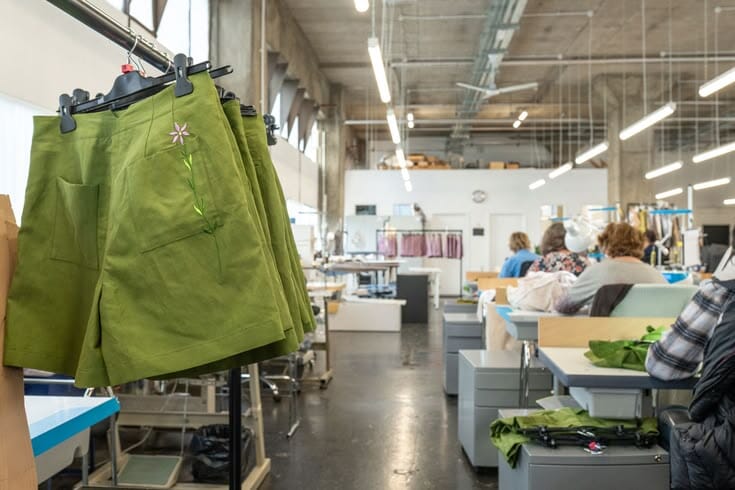
Domestic apparel manufacturing in the US sits at a strange inflection point in 2026. Roughly 97% of apparel sold in the United States is imported (American Apparel & Footwear Association). Yet inquiries for US production at OneAim are up 41% cumulatively from 2023 to 2026, driven partly by two years of tariff turbulence: country-specific IEEPA "reciprocal" tariffs were imposed on Asian apparel in 2025, then struck down by the Supreme Court on 20 February 2026, and as of mid-2026 imports enter under a flat 10% Section 122 reciprocal tariff on top of the MFN base (Holland & Knight, 2026). California's SB62, the New York Fashion Sustainability Act, and a tightened FTC Made in USA Labeling Rule have reshaped both the cost base and the legal stakes of "Made in USA" claims. For the city itself, see our page on clothing production in New York.
This guide compares Made in USA against the four offshore origins that compete for US-distributed brands: Mexico (USMCA), Vietnam, China, and Bangladesh. Every claim is backed by source data or OneAim Apparel's first-hand production pipeline covering 2024-2026.
Heads up: We're OneAim, a group of documented United States clothing factories. The operational data below comes from our pre-2026 production pipeline.
Key Takeaways
- Made in USA cotton tees land 2.5-3x Asian cost. A 500-unit 180gsm tee runs $8.20-$9.40 landed from LA versus $3.95-$4.40 from Vietnam in our 2024-2026 placements.
- Reorder speed is the real US edge. US reorders complete in 3-5 weeks versus 10-16 weeks from Asia (OneAim Apparel logistics data, 2025-2026).
- The FTC standard is strict. "Made in USA" requires "all or virtually all" domestic content, with civil penalties up to $53,088 per violation (FTC, 2025).
- Mexico under USMCA often beats both. Yarn-forward apparel enters duty-free, lands in 5-7 days by truck, and runs 35-45% below LA on FOB.
- Hybrid sourcing wins above 25,000 units annually. Splitting US, Mexico, and Vietnam cuts blended landed cost 8-12% in our placements.
Key terms in this guide
- FTC Made in USA Standard
- The "all or virtually all" rule. Civil penalties up to $53,088 per violation as of the 2025 inflation adjustment.
- USMCA yarn-forward
- Apparel qualifies for duty-free entry only when yarn, fabric, and cut-and-sew all happen within USMCA territory.
- Section 301
- US tariffs on Chinese imports, currently 7.5%-25% on most apparel categories on top of base MFN rates.
- MFN
- Most-Favoured-Nation duty rate. Typically 16.5% on cotton knits, 32% on synthetics.
- CMT
- Cut, Make, Trim. The labor-and-services component of garment cost, excluding fabric and trim.
- FOB
- Free On Board. Factory price excluding freight, duty, and inland transport.
- Berry Amendment
- US law requiring DoD apparel purchases to be 100% domestic from fiber forward.
Try it free: Calculate landed cost across US, Mexico, and Asia in 60 seconds with our garment cost calculator.
Made in USA vs Offshore at a Glance: 2026 Snapshot
The five origins competing for US-bound apparel programs in 2026 differ on every dimension that matters: scale, wages, tariff exposure, lead time, and certification depth. The US sits at the high-cost, high-speed extreme. Bangladesh sits at the low-cost, long-lead extreme. Mexico is the structural middle ground.
USA at a glance
- 2024 apparel output: ~$14.5 billion (US Census ASM, 2024)
- Imported share of US apparel sold: ~97% (AAFA)
- Garment-worker headcount: ~92,000 (BLS, 2024)
- Top clusters: LA Basin, NY Garment District, NC knit belt
Mexico at a glance
- 2024 exports: ~$5.9 billion (WTO, 2024)
- USMCA duty status: 0% on yarn-forward qualifying apparel
- Garment-worker headcount: ~400,000 (INEGI, 2024)
- Top clusters: Puebla (denim), Guanajuato (knits), Yucatan (workwear)
Vietnam at a glance
- 2024 exports: ~$36.4 billion (WTO, 2024)
- US tariff: ~26.5% effective on cotton knits (16.5% MFN + 10% Section 122 reciprocal), higher on synthetics; provisional after the Feb 2026 SCOTUS ruling, Section 122 set to expire 24 July 2026 (Budget Lab at Yale, 2026)
- Top clusters: Ho Chi Minh, Binh Duong, Hanoi region
China at a glance
- 2024 exports: ~$165 billion (WTO, 2024)
- US tariff: ~34% effective on cotton (16.5% MFN + 7.5% Section 301 + 10% Section 122); provisional after the Feb 2026 SCOTUS ruling (Budget Lab at Yale, 2026)
- Top clusters: Guangdong, Zhejiang, Jiangsu
Bangladesh at a glance
- 2024 exports: ~$38.4 billion (BGMEA, 2024)
- US tariff: ~26.5% effective on cotton knits (16.5% MFN + 10% Section 122); no GSP since 2013; provisional, Section 122 set to expire 24 July 2026 (Budget Lab at Yale, 2026)
- Top clusters: Dhaka, Chittagong
Citation capsule: The US apparel industry employs roughly 92,000 sewing operators (BLS, 2024), down from 900,000 in 1990. Mexico's 400,000-strong garment workforce (INEGI, 2024) supplies most of the duty-free yarn-forward apparel feeding US retailers under USMCA.
Why This Matters in 2026
Three forces are reshaping the Made in USA vs offshore decision, and they push in different directions.
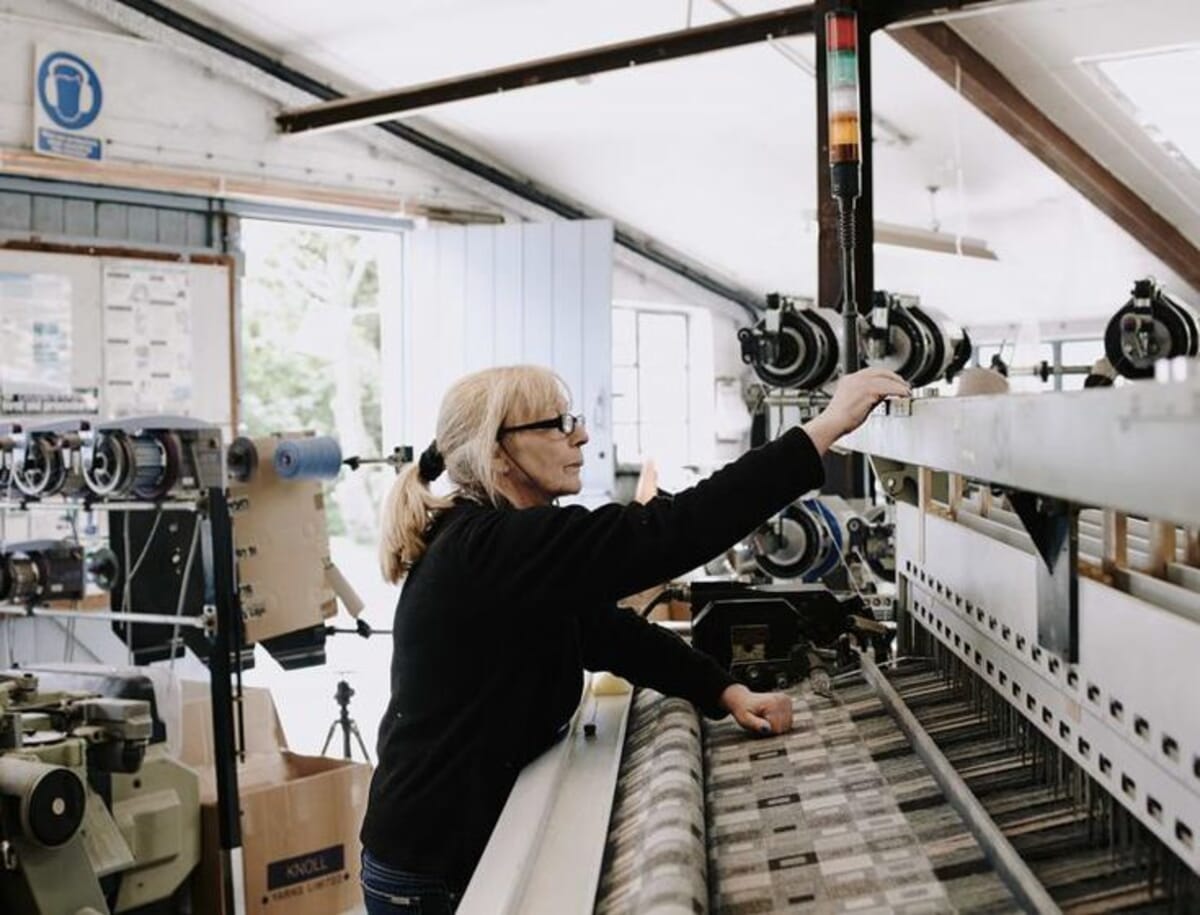
First, tariff turbulence. The duty picture shifted twice in two years. Country-specific IEEPA "reciprocal" tariffs (Vietnam 46%, Bangladesh 37%) were imposed in April 2025, then struck down by the Supreme Court on 20 February 2026, with refunds pending on entries filed between April 2025 and February 2026 (Holland & Knight, 2026). As of mid-2026, apparel enters under a flat 10% Section 122 reciprocal tariff on top of the MFN base, so a Chinese cotton tee lands near 34% effective (16.5% MFN + 7.5% Section 301 + 10%) and Vietnamese or Bangladeshi cotton near 26.5% (Budget Lab at Yale, 2026). Section 122 is itself set to expire 24 July 2026. Throughout, Mexico's USMCA duty-free position has stayed constant, making it disproportionately valuable.
What regulation changed
Second, regulation. California's SB62 banned piece-rate pay and made brands jointly liable for wage theft at any LA contractor (California DIR, 2024). The NY Fashion Sustainability Act requires brands above $100M revenue to disclose supply-chain emissions and labor data (NY State Senate, 2024). FTC penalties for false Made in USA claims now reach $53,088 per violation.
Third, speed. US reorder cycles run 3-5 weeks versus 10-16 weeks from Asia (OneAim Apparel logistics data, 2025-2026). For brands running 90-day sell-through cycles, that compression captures or misses second-season demand. In our pipeline, US brand inquiries about domestic and nearshore capacity are up 41% cumulatively from 2023 to 2026.
What does "Made in USA" actually mean under FTC and USMCA rules?
The FTC requires "Made in USA" products be "all or virtually all" domestic, meaning all significant parts, processing, and labor must be domestic (FTC Made in USA Labeling Rule, 2021). Civil penalties reach $53,088 per violation as of the 2025 adjustment. A hoodie sewn in LA from Pakistani fleece cannot legally carry an unqualified "Made in USA" tag.
Qualified claims and "Assembled in USA"
Brands using imported fabric pivot to qualified labels: "Made in USA of imported fabric" or "Assembled in USA from imported components." US shoppers consistently give an unqualified "Made in USA" label more credit than an "Assembled in USA" claim, which is why brands chase the unqualified standard.
Yarn-forward under USMCA
The yarn-forward rule determines duty-free eligibility. Yarn, fabric, and cut-and-sew must all happen within USMCA territory (USTR, 2020). A tee cut and sewn in Mexico from US yarn enters duty-free. The same tee built from Chinese yarn pays the full 16.5% MFN tariff. This is why Mexico's US-bound apparel cluster has reorganized around Carolina-spun yarn. For the region itself, see our page on clothing production in the Carolinas.
Berry Amendment for federal procurement
DoD apparel must be 100% domestic from fiber forward (Defense Logistics Agency, 2024). For brands chasing federal contracts, this is the strictest origin standard and effectively requires NC knit-mill or vertically integrated US woven supply.
Citation capsule: The FTC's "all or virtually all" standard carries civil penalties up to $53,088 per violation as of 2025 (FTC, 2025). Unqualified "Made in USA" labels command a meaningfully higher willingness to pay than qualified "Assembled in USA" claims.
How do CMT and FOB costs compare across the US, Mexico, and Asia?
The per-unit FOB price is the first number most founders see, and the most misleading. FOB excludes freight, duty, tariffs, QC, and labor-floor differences. The table below reflects 500-unit MOQs on first-order pricing across our 2024-2026 placement data.
CMT cost per garment type (USD)
| Garment Type | USA (LA) CMT | Mexico CMT | Vietnam CMT | China CMT |
|---|---|---|---|---|
| Cotton t-shirt (180gsm) | $5.20-$6.40 | $1.95-$2.60 | $1.05-$1.40 | $1.20-$1.60 |
| Heavyweight hoodie (350gsm fleece) | $11.50-$15.20 | $4.80-$6.20 | $3.10-$4.20 | $3.40-$4.50 |
| 5-pocket denim jean (12oz rigid) | $14.20-$19.50 | $5.50-$7.40 | $3.40-$4.60 | $3.80-$5.10 |
| Polyester activewear top (recycled) | $9.80-$13.40 | $4.20-$5.60 | $2.40-$3.20 | $2.50-$3.40 |
| Lined jacket / outerwear | $24.50-$36.00 | $9.80-$14.20 | $5.20-$7.80 | $5.40-$8.10 |
| Woven cotton shirt (poplin) | $8.40-$11.20 | $3.40-$4.50 | $2.10-$2.80 | $2.30-$3.10 |
Source: see in-text citations in this section.
Sources: OneAim Apparel internal data 2024-2026; California DIR, 2024; INEGI, 2024.
CMT in the US runs 4-5x Vietnam and 2.5-3x Mexico across most categories. Mexico typically lands at 35-45% of US CMT, which is why Mexican-sewn programs dominate the under-$30 retail price segment.
Full landed cost: 500-unit cotton tee to a US warehouse (illustrative)
| Cost Component | USA (LA) | Mexico (Guanajuato) | Vietnam | China | Bangladesh |
|---|---|---|---|---|---|
| Fabric | $2.95 | $2.40 | $1.85 | $1.90 | $1.80 |
| CMT | $5.80 | $2.28 | $1.23 | $1.40 | $1.05 |
| FOB unit cost | $8.75 | $4.68 | $3.08 | $3.30 | $2.85 |
| Sea freight (per unit) | $0.00 | $0.18 (truck) | $0.46 | $0.42 | $0.50 |
| US import duty (illustrative) | $0.00 | $0.00 (USMCA) | $0.51 (16.5%) | $0.81 (24.5%) | $0.47 (16.5%) |
| Section 301 add-on (illustrative) | $0.00 | $0.00 | $0.00-$0.31 | included | $0.00 |
| QC inspection | $0.10 | $0.18 | $0.25 | $0.25 | $0.28 |
| Total landed | $8.85 | $5.04 | $4.30 | $4.78 | $4.10 |
| Total lead time | 5-7 weeks | 5-7 weeks | 11-14 weeks | 12-15 weeks | 13-17 weeks |
Source: see in-text citations in this section.
Sources: OneAim Apparel 2024-2026; USITC HTS, 2026; Drewry WCI, 2026.
The three patterns in the landed cost
Three patterns emerge. Bangladesh holds the absolute landed-cost floor at $4.10. Mexico under USMCA lands within $0.74 of Vietnam while matching US lead times. The US carries roughly a 2x landed-cost premium versus Asia, but the gap to Mexico is only 75%.
In our placements, the most surprised brands assumed Vietnam was decisively cheaper than Mexico. Once you stack 16.5% duty plus higher freight onto Vietnamese FOB, Mexican USMCA programs come within $0.74 per unit. For brands selling above $45 retail, that gap is noise.
What drives the Made in USA premium?
Roughly 60-65% of the US gap is direct labor, driven by California's $16.90/hour SB62 minimum. Another 15-20% is labor-overhead burden. The remaining 15-25% is fabric/trim premium and higher fixed-cost amortization in smaller US runs.
The labor floor is structural and won't move. The right question is "is this premium worth it for this product" rather than "how do I shrink it."
Labor cost context
| Origin | Avg hourly wage (USD) | Statutory floor |
|---|---|---|
| USA (California, SB62) | $16.90-$22.00 | $16.90/hr piece-rate banned |
| USA (NY garment district) | $16.00-$24.00 | $16.00/hr |
| USA (NC knit mills) | $14.50-$18.00 | Federal $7.25/hr (state higher) |
| Mexico | $2.20-$3.80 | General zone ~$17/day (MXN 315) |
| Vietnam | $1.80-$2.60 | Region 1 5.31M VND/month |
| China | $3.50-$5.20 | Region-set, $360+ in Guangdong |
| Bangladesh | $0.55-$0.95 | 12,500 BDT/month |
Source: see in-text citations in this section.
Sources: California DIR, 2024; INEGI, 2024; ILO, 2024; BGMEA, 2024.
A US California operator costs roughly 26x a Bangladeshi operator. Wages don't translate one-for-one into FOB (labor is 60-65% of CMT), but the structural gap won't close.
Try it free: Pressure-test these numbers with our garment cost calculator. 60 seconds, no email required.
Which origin has the fastest end-to-end production timeline?
US production wins decisively on lead time when fabric is positioned domestically. End-to-end timelines for a typical 500-unit cotton program:
| Phase | USA (LA) | Mexico | Vietnam | China | Bangladesh |
|---|---|---|---|---|---|
| Sampling | 8-14 days | 12-18 days | 14-22 days | 12-18 days | 16-24 days |
| Production (500 units) | 14-21 days | 21-30 days | 30-45 days | 25-35 days | 35-50 days |
| Transit to US East Coast DC | 2-5 days (truck) | 3-7 days (truck) | 30-40 days (sea) | 30-40 days (sea) | 32-45 days (sea) |
| US customs clearance | 0 days | 1-2 days | 2-5 days | 3-7 days | 2-5 days |
| Total to US warehouse | 24-40 days | 37-57 days | 76-112 days | 70-100 days | 85-124 days |
Source: see in-text citations in this section.
Sources: OneAim Apparel logistics data, 2024-2026.
US production lands roughly 50-70 days faster than Vietnam. Mexico lands 30-50 days faster than Vietnam. For brands running 90-day sell-through cycles, US compression captures the full second-season window.
First production vs reorder math
US first runs need 8-12 weeks. The real value shows on reorder, where fabric is positioned and patterns approved, so factories turn stock in 2-3 weeks. Brands re-cutting fast-moving SKUs every 4-6 weeks recover the US premium through reduced markdowns and higher full-price sell-through.
Air vs ocean trade-offs
Air freight from Ho Chi Minh to LAX runs roughly $4.20 per kilo in Q1 2026 (Freightos Baltic Index, 2026), adding about $0.85 per tee. That wipes out 40% of Vietnam's FOB advantage. Once you price in air freight on SKUs that actually move, the Made in USA premium starts looking cheap.
What MOQs can you actually negotiate in the US?
US cut-and-sew MOQs run 50-300 units per style for small contractors, while vertically integrated knit mills require 500-1,000 minimum (California Fashion Association, 2024). That floor is materially lower than the 1,000-3,000 unit standard across most Asian factories.
MOQ ranges by origin
| MOQ Range | USA (LA/NYC) | USA (NC) | Mexico | Vietnam | China | Bangladesh |
|---|---|---|---|---|---|---|
| Under 100 units | Common | Rare | Rare | Rare | Rare | Very rare |
| 100-300 units | Common | Some | Some | Rare | Rare | Rare |
| 300-1,000 | Common | Standard | Standard | Common at upper end | Some | Some |
| 1,000-5,000+ | Available | Preferred | Available | Standard | Preferred | Preferred |
Source: see in-text citations in this section.
Small cut-and-sew shops
LA and NYC shops accept 50-unit runs on simple tees and 100-150 units on complex cut-and-sew. The trade-off is per-piece costs run 20-35% above standard 500-unit runs.
Knit mills and vertical programs
NC knit mills need 500-1,000 units per color to justify a yarn count or dye batch. The vertical setup matters for true yarn-forward USMCA compliance and Berry-compliant federal contracts.
Mexico's middle ground
Mexican factories typically start at 300-500 units per color, higher than US small shops but lower than most Asian alternatives. For brands wanting MOQ flexibility close to US small-shop levels with cost closer to Asian levels, Mexico is the sweet spot.
Citation capsule: US cut-and-sew shops accept 50-300 units per style for small contractors (California Fashion Association, 2024), well below the 1,000-3,000 unit standard at most Asian factories.
How do quality standards and capacity compare across US clusters and offshore?
US quality is bifurcated by cluster. LA Basin shops range from premium to pop-up basics with wide variance. NC knit mills run consistently high quality. Asian tier-1 export factories match or exceed US quality on synthetics and complex construction.
LA Basin
LA County hosts the highest density of cut-and-sew shops in the country. California's $16.90/hour minimum under SB62 banned piece-rate pay and made brands jointly liable for wage theft. LA shops deliver best results for complex swim, activewear, and contemporary women's. Defect rates run 3-5% in tier-1 LA shops, climbing to 6-10% in lower-tier subcontractors.
NYC Garment District
Midtown holds a few thousand apparel jobs, sharply reduced since 2000 (Center for an Urban Future, 2023). The district specializes in samples, bridal, and luxury tailoring. MOQs stay low (30-100 units) but per-unit costs run 15-25% above LA.
North Carolina knit mills
NC operates the most vertically integrated knit supply chain in the Western Hemisphere. Mills in Gastonia, Hickory, and Asheboro spin yarn, knit greige, dye, finish, and sew within the state. Defect rates in NC tier-1 mills run 1.5-3%, the lowest of any US cluster.
Defect rate data
| Origin | Premium-tier | Mass-tier |
|---|---|---|
| USA (NC knit mills) | 1.5-3% | 3-5% |
| USA (LA / NYC cut-and-sew) | 3-5% | 6-10% |
| Mexico (tier-1 export) | 2.5-4% | 5-8% |
| Vietnam | 2-3.5% | 4-7% |
| China | 2-4% | 5-12% |
| Bangladesh | 2.5-4% | 6-12% |
Source: see in-text citations in this section.
Source: OneAim Apparel internal data 2024-2026.
US tier-1 knit mills genuinely match Asian tier-1 quality on cotton. The gap shows up in cut-and-sew complexity, where Asian tier-1 factories often have deeper construction expertise on outerwear and technical synthetics.
How do sustainability credentials and the New York Fashion Act compare?
US apparel production carries genuine sustainability advantages on logistics carbon and labor traceability, but trails Asian origins on certified-organic depth and recycled-fiber infrastructure.
Regulatory framework comparison
| Factor | USA | Mexico | Vietnam | China | Bangladesh |
|---|---|---|---|---|---|
| Environmental regulation | Strict (CA, NY) | Moderate, improving | Improving | State-led tightening | Moderate |
| Labor law enforcement | Strong (SB62, federal) | Variable | Variable | Variable | Improved post-2013 |
| Common certifications | Cotton USA, Berry, USA Cotton Trust | OEKO-TEX, BSCI | OEKO-TEX, BCI, GRS | OEKO-TEX, GRS, BSCI | OEKO-TEX, BSCI, BCI |
| Transparency / audit access | High | High | Generally accessible | Difficult below tier-1 | Generally accessible |
Source: see in-text citations in this section.
The US Cotton Trust Protocol enrolls large-scale cotton acreage across US growing regions (US Cotton Trust Protocol). For brands needing verifiable cotton origin without GOTS organic, Cotton USA is the default US-anchored standard.
The New York Fashion Sustainability Act
The NY Fashion Act applies to brands above $100M global revenue selling apparel in New York. It requires supply-chain mapping, environmental and social impact disclosure, science-based emissions targets, and remediation commitments (NY State Senate, 2024). In our pipeline, two brands above the threshold accelerated US and Mexico capacity-building specifically to compress NY Fashion Act compliance scope.
ESPR / DPP and US brands
The EU's ESPR and Digital Product Passport requirements still apply to US brands selling into the EU. Domestic US production simplifies DPP population because supply-chain hops are fewer. Brands moving organic cotton programs from China to NC mills typically save 35-50% on compliance documentation costs.
Citation capsule: The US Cotton Trust Protocol enrolls large-scale US cotton acreage for verifiable fiber origin (US Cotton Trust Protocol). The NY Fashion Sustainability Act imposes supply-chain mapping and emissions-disclosure burdens on brands above $100M revenue.
How well is your IP protected when you make in the US?
The US offers the strongest IP protection of any apparel sourcing origin. Domestic factory contracts are enforceable through US commercial courts, NDAs hold meaningful weight, and design copying is materially less common than in Chinese fast-fashion clusters.
| Factor | USA | Mexico | Vietnam | China | Bangladesh |
|---|---|---|---|---|---|
| IP legal framework | Strongest | Reasonable | Improving | Uneven enforcement | Reasonable |
| Risk of design copying | Low | Low-moderate | Moderate | Higher (Guangdong) | Moderate |
| NDA enforceability | Strong (US courts) | Reasonable | Reasonable | Difficult without local entity | Reasonable |
| Avg time to recover stolen IP | 6-18 months | 12-24 months | 18-30 months | 18-36 months | 18-30 months |
Source: see in-text citations in this section.
Sources: OneAim Apparel 2024-2026; USPTO, 2024.
Founders launching trend-driven product (streetwear capsules, drop-based releases) increasingly favor US production for IP control. The cost premium of $4-5 per tee is small relative to the brand-equity damage from a knockoff hitting Amazon two weeks before a launch drop.
What's it like to actually work with US factories?
Communication speed and English-native fluency are the operational advantages of US production that rarely make headline cost comparisons.
Practical collaboration factors
| Factor | USA | Mexico | Vietnam | China |
|---|---|---|---|---|
| Time zone overlap (US East Coast) | 0-3 hours | 0-2 hours | 11-12 hours ahead | 12-13 hours ahead |
| Primary business language | English | Spanish (English in export tier) | Vietnamese (English in export tier) | Mandarin (English improving) |
| Factory visit | Domestic flight | Short-haul | Long-haul, e-visa | Long-haul, visa |
| Communication style | Direct | Direct, relationship-driven | Indirect, relationship-driven | Indirect, relationship-driven |
| Typical email response | Same-day to 24h | 12-24h | 24-48h | 1-3 days |
Source: see in-text citations in this section.
We've seen sampling rounds compress by 40-60% when shifting from Chinese to domestic suppliers, primarily because back-and-forth iterations no longer absorb 24-hour cycles.
Currency and payment terms
| Factor | USA | Mexico | Vietnam | China |
|---|---|---|---|---|
| Quoted currency | USD | USD | USD | USD or RMB |
| Currency stability | Stable | Moderate (MXN drift) | Stable (managed VND) | Stable (managed RMB) |
| Typical payment terms | 50/50 | 30/70 | 30/70 | 30/70 |
| Payment processing | 1-2 days (ACH) | 2-3 days | 2-5 days | 2-5 days |
Source: see in-text citations in this section.
US payment terms (50/50) are tighter than offshore (30/70), a working-capital headwind for cash-constrained brands. The trade-off is rare LCs and 1-2 business day ACH.
Find your factory: Browse the free factory directory preview, or unlock the premium directory for $39.
Best Made in USA Categories vs Best Offshore Categories
The right sourcing decision depends on the product. Across our pre-2026 placement data, eight categories show clear best-fit answers.
Premium basics ($45+ retail)
USA wins. A $58 retail tee absorbs the $4.55 per-unit premium without crushing margin. NC vertical knit mills anchor here: yarn-forward USMCA compliance, 1.5-3% defect rates, Cotton USA traceability built in.
Denim
Split decision. US selvedge (Vidalia Mills) works for $90+ retail at $45-60 FOB. Mexican Puebla mills handle most $35-90 retail US-bound denim at FOB $14-22. Vietnam and China handle $25-50 retail at FOB $8-14.
Knitwear
USA or Mexico for cotton knits. NC mills run vertical cotton-to-knit programs. Mexican Guanajuato mills handle similar at 35-45% lower CMT. For wool, Italy and Portugal anchor premium; for synthetics, China leads.
Activewear and performance
Asia wins on cost, USA wins on premium. Vietnam and China dominate technical synthetics at scale, with China the dominant global source of synthetic apparel (UN Comtrade). US works for $80+ retail premium activewear.
Performance outerwear
Asia wins decisively. Lined jackets, technical shells, and puffers flow through Chinese and Vietnamese tier-1 factories with depth in down-fill traceability and bonded-seam construction. US production exists at $400+ retail but is structurally niche.
Fast-fashion and trend basics
Offshore wins. US economics break under $30 retail. The combination of $16.90 California wages and amortized overhead in 200-500 unit runs makes domestic fast-fashion uneconomic.
Berry-compliant federal
USA only. DoD programs require 100% domestic content from fiber forward (Defense Logistics Agency, 2024). NC vertical knit mills, Vidalia Mills denim, and a handful of woven mills are the structural supply base.
Brand-story narrative apparel
USA wins on marketing math. Younger US consumers increasingly pay a premium for clearly domestic apparel, with the effect strongest in outdoor and workwear categories.
When is Mexico under USMCA the better nearshoring play?
Mexico under USMCA delivers duty-free entry on yarn-forward apparel, 5-7 day trucking to any US DC, and FOB costs typically 35-45% below LA in our placements. For most US-bound brands selling under $50 retail, Mexico beats both domestic and Asian sourcing on total landed equation.
USMCA duty-free mechanics
When yarn, fabric, and sewing all happen within USMCA, apparel enters duty-free, a significant advantage over the 16.5% MFN on Asian cotton knits. The harder requirement is yarn sourcing: Carolina-spun yarn shipped to Puebla powers most yarn-forward US-bound programs.
Where Mexico's clusters sit
| Cluster | Specialty | Typical MOQ | FOB index vs USA |
|---|---|---|---|
| Puebla | Denim, woven bottoms | 500 units | 35-45% below LA |
| Guanajuato | Knits, activewear | 300-500 units | 40-50% below LA |
| Yucatan | Uniforms, workwear | 500-1,000 units | 35-45% below LA |
| Aguascalientes | Hosiery, basics | 1,000+ units | 40-50% below LA |
| Mexico State | Cut-and-sew small batch | 200-300 units | 25-35% below LA |
Source: see in-text citations in this section.
Sources: OneAim Apparel 2024-2026; INEGI, 2024.
Speed to US DCs
A container from Manzanillo to Laredo clears customs in 24-48 hours. Road freight to any US DC runs 3-7 days. The structural risk is cluster-specific capacity constraint: yarn-forward USMCA mills run at 80-90% utilization in 2026, so brands should book capacity 2-3 quarters ahead.
Go deeper in Mexico vs Asia nearshoring for US brands.
Should you split production across US, Mexico, and offshore?
In our pipeline since 2023, the brands performing best aren't choosing one origin. They're routing different products to different countries based on each origin's structural strengths.
| Product tier | Best origin | Reasoning |
|---|---|---|
| Premium basics ($45+ retail) | USA (NC mills, LA cut-and-sew) | Yarn-forward, brand story, low MOQs |
| Trend capsules and drops (200-500 units) | USA (LA cut-and-sew) | Speed, MOQ flexibility, IP control |
| Berry-compliant federal | USA (NC mills) | Statutory requirement |
| Volume cotton knits ($30-50 retail) | Mexico (Guanajuato) | USMCA duty-free, 5-7 day truck |
| 5-pocket denim ($35-90 retail) | Mexico (Puebla) | USMCA duty-free, vertical mills |
| Technical activewear, bonded seams | Vietnam or China | Synthetic depth, GRS infrastructure |
| Lined outerwear and puffers | Vietnam or China | Down traceability, technical fabric depth |
| High-volume basics (5,000+ units) | Bangladesh or Vietnam | Lowest landed cost at scale |
| Recycled polyester programs | China | GRS density, recycled-fiber infrastructure |
| Fast-fashion volume ($10-25 retail) | Bangladesh or Vietnam | US production uneconomic at this price |
Source: see in-text citations in this section.
The hybrid model spreads risk across geopolitical jurisdictions, currency exposures, and tariff regimes. Add US capacity once any of three thresholds hits: a single SKU exceeds $45 retail and 5,000 annual units, reorder cadence drops below 6 weeks, or NY Fashion Act compliance scope becomes meaningful.
For European alternatives, see our where to manufacture clothing 2026 guide and our Italy vs Portugal premium manufacturing comparison.
What does it cost to switch from offshore to US (or add US capacity)?
Brands moving programs from Asia to US face real one-off switching costs. Realistic breakdown for 6 SKUs at 500 units each:
| Switching cost item | Range (USD) | Notes |
|---|---|---|
| Tech pack reformatting | $400-$1,200 | Or $79/style if using a service |
| Sample production round (3 SKUs) | $450-$1,200 | US samples 30-50% above Asia |
| Factory visit (domestic, 2 days) | $800-$1,800 | LA or NYC |
| Sourcing or QC partner (optional) | $490 | Optional flat fee |
| First-batch fabric sourcing | $600-$1,500 | One-off; reused on repeat |
| FTC Made in USA compliance docs | $300-$900 | Origin verification |
| Typical total | $3,040-$7,090 | One-off; amortizes |
Source: see in-text citations in this section.
Source: OneAim Apparel internal sourcing data, 2024-2026.
The switching cost typically pays back within 2-4 production cycles for brands hitting Section 301 exposure on Chinese cotton, NY Fashion Act scope, or air-freight cost on fast-moving SKUs.
Payback period analysis
Take a 5,000-unit annual cotton tee program at $3.30 FOB. On the illustrative pre-2025 base MFN plus Section 301 rate alone (about $0.81 per unit at 16.5% MFN plus 7.5% Section 301), Chinese sourcing carried roughly $4,000 a year in US import duty. Under current 2026 rules the effective rate is higher: Chinese cotton lands near 34% effective once the provisional 10% Section 122 reciprocal tariff is layered on (16.5% MFN + 7.5% Section 301 + 10% Section 122, set to expire 24 July 2026), so actual duty per unit exceeds $0.81 and the Mexico-USMCA duty saving is correspondingly larger. Check the exact rate against the live USTR, CBP, and USITC HTS schedules before relying on any figure (Budget Lab at Yale, 2026). Either way, switching to Mexico under USMCA eliminates that duty entirely, covering a typical $4,000-$6,000 switching cost in year one. Switching to US is harder to justify on duty math alone because the FOB premium dwarfs duty savings. The US payback case rests on reorder speed, MOQ flexibility, and brand-story premium.
Running into nearshoring decisions? Get in contact and we’ll map the full picture for your brand, or grab a factory-ready tech pack for $79.
How do geopolitical, regulatory, and logistics risks compare?
| Risk factor | USA | Mexico | Vietnam | China | Bangladesh |
|---|---|---|---|---|---|
| Tariff / trade-policy risk | Very low | Low (USMCA renegotiation 2026) | Moderate | High (Section 301) | Moderate |
| Currency volatility | None (USD) | Moderate (MXN drift) | Low (managed VND) | Low (managed RMB) | Moderate (BDT) |
| Logistics disruption | Very low | Low (cross-border truck) | Moderate (Pacific routes) | Moderate | High (Chittagong) |
| Geopolitical risk | None | Low | Low | High (Taiwan, UFLPA) | Moderate |
| Regulatory compliance | Moderate (FTC, SB62, NY Act) | Low | Low | High (UFLPA, audit) | Moderate (Accord) |
| Force majeure | Wildfire (CA), hurricane (Carolinas) | Low | Typhoon | Industrial concentration | Flood, monsoon |
Source: see in-text citations in this section.
Sources: OneAim Apparel 2024-2026; USTR, 2024; USITC, 2026.
US production carries the lowest cross-border risk. The tradeoff is regulatory burden: SB62, NY Fashion Act, and FTC enforcement create domestic compliance overhead. Brands that hit production crises in 2022-2025 (UFLPA detentions, Suez disruption, Bangladeshi unrest) have all migrated some production into US or Mexico capacity.
Decision Framework: When to Choose Made in USA vs Offshore
Choose Made in USA when:
- Your retail price exceeds $45 with 4-5x markup unit economics
- Brand narrative leans on origin, heritage, or American-made positioning
- You restock winners on a 4-6 week reorder cadence
- You're chasing federal contracts requiring Berry compliance
- Your MOQs run 100-500 units per style and capsule testing is core
Choose Mexico (USMCA) when:
- Your retail sits between $30-$60 and Asian duty exposure is material
- You need 5-7 day truck delivery to US DCs without air freight
- MOQs in the 300-1,000 unit range fit your category mix
- Your product is cotton knits, denim, or workwear
- You can book capacity 2-3 quarters ahead
Choose Vietnam when:
- Your product is technical activewear, bonded-seam, or recycled polyester
- Retail price runs $25-60 and freight amortizes over 2,000+ units per style
- You can absorb roughly 26.5% effective duty on cotton (16.5% MFN + 10% Section 122, provisional)
- You can accept 11-14 week lead times plus customs
- Your brand has on-the-ground QC or a local QC partner
Choose China when:
- Your product is technical synthetic or complex construction at scale
- Volumes consistently exceed 5,000 units per style at $40+ retail
- You have strong on-the-ground QC and UFLPA-compliant cotton documentation
- Your primary market is not the US for cotton categories
- You can absorb roughly 34% effective US duty (MFN + Section 301 + Section 122, provisional)
Choose Bangladesh when:
- Your product is high-volume cotton basics or fast-fashion under $30 retail
- Unit volumes exceed 5,000 per style and freight amortizes well
- You can absorb roughly 26.5% effective duty (16.5% MFN + 10% Section 122, provisional) and 13-17 week lead times
- You have an on-the-ground QC partner for audit access
- Working capital can support longer cycles
For non-Asian alternatives, see our where to manufacture 2026 guide, Turkey vs Vietnam vs Bangladesh comparison, and EU vs Asia landed cost analysis. Country breakdowns: Mexico, Vietnam, China, Bangladesh.
Frequently Asked Questions About Made in USA vs Offshore Clothing
Is Made in USA worth the premium for a clothing brand?
It depends on retail price and brand story. Made in USA pencils when retail exceeds $45 and your brand can capture a marketing premium, and younger consumers increasingly pay up for clearly domestic apparel. For brands at $25-35 retail, the 2-3x landed-cost gap is hard to recover. For brands at $50+, US production typically pays back through speed, MOQ flexibility, and narrative.
What does the FTC Made in USA Standard actually require?
The FTC's "all or virtually all" standard requires all significant parts, processing, and labor be domestic (FTC Made in USA Labeling Rule, 2021). Civil penalties reach $53,088 per violation as of the 2025 adjustment. Imported fabric voids unqualified claims; brands must use "Made in USA of imported fabric" or "Assembled in USA" instead. Unqualified labels command a clear willingness-to-pay premium over qualified "Assembled in USA" claims.
Is Mexico under USMCA actually cheaper than Made in USA?
Yes, by 35-45% on CMT and 30-45% on full landed cost across most categories. A Mexican 500-unit cotton tee lands at $5.04 versus $8.85 from LA, both with 5-7 day delivery to US DCs. The catch is yarn sourcing: USMCA's yarn-forward rule requires US, Mexican, or Canadian yarn for duty-free entry (USTR, 2020). Carolina-spun yarn shipped to Puebla powers most yarn-forward Mexican programs.
What's the lowest MOQ I can get in the United States?
US cut-and-sew shops in LA and NYC routinely accept 50-100 units per style for simple knits (California Fashion Association, 2024). Jackets and pants typically require 100-150 units. Knit mills in the Carolinas need 500 minimum, often 1,000 per color on specialty yarns. MOQ flexibility is the second-largest structural advantage of US production after lead-time speed.
How long does a US clothing production run actually take?
First production in the US runs 8-12 weeks from PO to ship, while reorders complete in 3-5 weeks (OneAim Apparel logistics data, 2025-2026). Asia averages 14-20 weeks for first runs and 10-16 weeks for reorders including ocean freight. Mexico under USMCA delivers in 5-7 weeks total via truck. Air freight from Vietnam compresses Asian timelines to 6-8 weeks but adds roughly $0.85 per tee.
How do 2026 tariffs change the Made in USA vs offshore math?
Significantly, and the mechanism changed mid-cycle. The IEEPA "reciprocal" tariffs imposed on Asian apparel in 2025 were struck down by the Supreme Court on 20 February 2026 and replaced by a flat 10% Section 122 reciprocal tariff on top of the MFN base, with refunds pending on 2025 entries (Holland & Knight, 2026). That puts Chinese cotton near 34% effective and Vietnamese or Bangladeshi cotton near 26.5%, though Section 122 is set to expire 24 July 2026 (Budget Lab at Yale, 2026). Mexico under USMCA remains duty-free throughout, expanding its landed-cost advantage versus all Asian origins for US-bound cotton categories.
Where are the best US clothing factories located?
Three clusters dominate. LA Basin handles roughly 40% of US cut-and-sew capacity, specializing in knits, swim, and contemporary women's. NYC Garment District holds a few thousand apparel jobs (Center for an Urban Future, 2023) focused on samples, bridal, and luxury tailoring. The North Carolina knit belt runs the most vertically integrated knit supply chain in the Western Hemisphere, the structural backbone of yarn-forward USMCA and Berry-compliant programs.
Is Vietnam still cheaper than Mexico for US-bound apparel?
On FOB yes, on landed cost the gap is narrow. Vietnamese 180gsm cotton tees run $3.08 FOB versus $4.68 from Mexico in our 2024-2026 data. Once you stack 16.5% MFN duty plus higher freight onto Vietnam, Mexican USMCA programs come within $0.74 per unit on landed cost. For brands selling under $30 retail, that gap is real money. For brands above $45 retail, it's noise and Mexican speed wins.
What's the New York Fashion Sustainability Act and how does it affect sourcing?
The NY Fashion Act, signed in 2024, applies to brands with global revenue above $100 million selling apparel in New York (NY State Senate, 2024). It requires supply-chain mapping, environmental and social impact disclosure, science-based emissions targets, and remediation. The practical effect: long offshore supply chains carry meaningful disclosure burden that domestic and Mexico production largely sidestep.
Can small brands afford to manufacture in the USA?
Yes, especially at MOQs under 500 units per style. LA cut-and-sew shops accept 50-300 unit runs that no Asian factory will quote, making US production uniquely viable for capsule drops, test runs, and pre-order programs. The cost premium of $4-5 per tee on a 200-unit run gets amortized into a higher launch retail price, and the 4-week reorder speed lets winners be re-cut quickly. Brands targeting $35-55 retail can build sustainable economics around US small-shop sourcing.
Conclusion
The Made in USA vs offshore question has a right answer for your brand, your product, your retail price, and your reorder cadence. The cheapest FOB is meaningless if your inventory misses the second-season window or your tariff exposure collapses gross margin.
The smartest brands in our pipeline aren't choosing one country. They're building hybrid programs that match each product to the origin where craft and economics align: US for fast-turn premium and capsules, Mexico for volume knits and denim, Vietnam or China for technical and at-scale, Bangladesh for high-volume basics. Start where your current category demands, and expand the portfolio as volumes grow.
Talk to our team: get in contact with our team. No pitch, no upsell.
We're a group of 80 documented clothing manufacturers in the United States. Tell us your product, volume, and timeline. We'll place your production with the factory in our group built for it, usually within 24 hours. You produce directly with the factory. Flat fees, no markups, no pitch.
Get in contact Download the directory ($39)Need a tech pack? Get a factory-ready single-style tech pack for $79. See what's included.
References
- American Apparel & Footwear Association
- FTC Made in USA Labeling Rule
- Office of the US Trade Representative, USMCA
- USTR Section 301 Investigations
- USITC Harmonized Tariff Schedule
- US Bureau of Labor Statistics
- US Census Annual Survey of Manufactures
- California Department of Industrial Relations
- California Fashion Association
- Center for an Urban Future
- New York State Senate, Fashion Sustainability Act
- Defense Logistics Agency, Berry Amendment
- US Cotton Trust Protocol
- Cotton Council International / Cotton USA
- INEGI Mexico National Statistics
- OneAim Apparel logistics dataset (internal placement records), 2024-2026
- Drewry World Container Index
- Freightos Baltic Index
- WTO Stats (merchandise trade by product and economy)
- BGMEA Bangladesh
- ILO Labor Data
- McKinsey State of Fashion 2026
- UN Comtrade Database
- Holland & Knight, Supreme Court Strikes Down IEEPA Tariffs
- Budget Lab at Yale, State of US Tariffs After the SCOTUS Ruling
- White & Case, United States Terminates IEEPA-Based Tariffs Following Supreme Court Decision