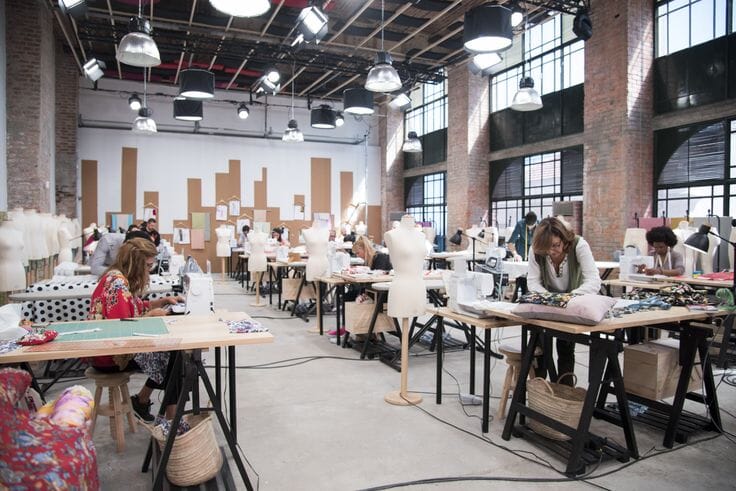
Italy anchors the largest luxury apparel production cluster in Europe, home to tens of thousands of fashion companies and a deep base of domestic wool, silk, and cashmere mills (ISTAT, 2024). For founders building premium, luxury, or luxury-adjacent brands, Italy is not just another sourcing option, it is the benchmark. The country pairs domestic wool, silk, and cashmere mills with factories whose craft traditions stretch back four or five generations. The 2026 shift adding pressure: the EU's Ecodesign for Sustainable Products Regulation (ESPR) and the Digital Product Passport (DPP) make traceable, durable garments a regulatory requirement, not a marketing claim. Italian factories were ready first.
The trade-offs are real. Italian cut-make-trim (CMT) runs 35 to 50 percent above Portugal and 2 to 4 times higher than Turkey or Vietnam, a gap that shapes where to manufacture clothing in 2026 for most premium brands. Mid-MOQ capacity (200 to 500 units) is scarce, since most premium mills protect long-standing luxury accounts. Language friction is genuine in Naples and Marche, where English-speaking sales teams remain rare. This guide walks through Italy's edge, where to source by district, realistic MOQs, lead times, ESPR readiness, and the pitfalls most first-time buyers miss.
Heads up: We're OneAim, a group of 100+ documented clothing manufacturers across 15+ countries. We've run programs in 15 countries since 2022. Operational data below comes from our actual production pipeline. External sources are cited inline.
Key Takeaways
- Italy owns the luxury tier. Italy anchors a disproportionate share of global luxury apparel production by value relative to its unit volume, despite producing under 3 percent of global garment volume (Bain & Company and Altagamma, 2025).
- CMT premium is structural. Italian CMT runs 35 to 50 percent over Portugal, 2 to 4x Turkey, driven by labor rates near $3,100 per month gross and integrated mill access.
- Districts are non-substitutable. Biella for wool and cashmere, Como for silk, Prato for recycled wool, Modena for fine knit, Veneto for leather, Marche for shoes. You don't shop one for another.
- MOQs settle at 100 to 300 units. Tier 2 premium factories accept 100-300 unit runs; sub-supplier factories handle 20-50 units with local introductions.
- ESPR-ready by default. Italian factories are aligned with the 2027 Digital Product Passport rollout, and Italian textile firms hold third-party sustainability certifications at high rates.
- Made in Italy 100% Law 55/2010. Full origin claim requires all four phases (weaving, cutting, sewing, finishing) inside Italy. Misuse is a documented risk.
Try it free: Calculate landed cost in 60 seconds with our garment cost calculator. No email required.
- Made in Italy 100% Law (Law 55/2010)
- Italian legislation reserving the "100% Made in Italy" label for garments where weaving, cutting, sewing, and finishing all take place inside Italy. Verified by Italian Customs Agency (ADM).
- Tracciabilità Tessile
- Italy's textile traceability framework, mapping each production phase from yarn to finished garment. Underpins origin claims and the upcoming DPP integration.
- ESPR (Ecodesign for Sustainable Products Regulation)
- EU regulation requiring durable, repairable, and recyclable garments. Apparel falls under ESPR Delegated Acts rolling out 2026 to 2028.
- DPP (Digital Product Passport)
- EU-mandated digital record of a garment's materials, origin, and care lifecycle. Apparel DPP launches in 2027 under ESPR.
- Biella wool
- Fine merino and cashmere wool spun and woven in the Biella district of Piedmont. Home to Loro Piana, Zegna, Reda, and Vitale Barberis Canonico.
- Como silk
- Woven and printed silk produced in the Como district of Lombardy, supplying roughly 80 percent of Europe's woven silk.
- Prato wool
- Recycled and regenerated wool processed in the Prato district of Tuscany, the global benchmark for circular wool with Cardato Recycled certification.
- FOB (Free on Board)
- Incoterm where the seller delivers goods cleared for export, loaded on the carrier at the named port. Buyer takes title and freight risk from there.
Why does Italy still win for premium clothing manufacturing?
Italy hosts over 45,000 fashion companies and employs roughly 400,000 textile and apparel workers, the largest concentration in Europe (Confindustria Moda, 2024). The country dominates the luxury tier because no other nation pairs domestic fiber spinning, multi-generational craftsmanship, and mill-to-factory proximity at the same density. Brunello Cucinelli, Loro Piana, and Zegna keep production almost entirely inside Italy for that reason.
The competitive edge is structural, not marketing. A founder sourcing cashmere in Italy can buy yarn spun in Biella, knitted in Perugia, and finished within a 200 kilometer radius, the kind of mill proximity that anchors any serious fabric sourcing strategy for clothing brands. That integration shortens feedback loops, reduces fabric waste versus split-country programs, and lets small brands iterate prototypes faster than in any other country.
In our placements across 15 countries, Italy is the only market where a 150-unit order at a Tier 2 factory can match the quality of a 5,000-unit run at a Tier 1 luxury house. The craft density compresses the quality gap in ways that don't exist in China, Portugal, or Vietnam, which is why the Italy vs Portugal premium manufacturing decision rarely comes down to price alone. That compression is what justifies the price premium for cashmere, tailoring, and leather programs.
There is a regulatory tailwind too. ESPR and the Digital Product Passport reward traceable, durable garments, and Italian factories already log most of that data for the Tracciabilità Tessile framework. Brands that need ESPR-ready supply chains in 2027 are arriving in Italy two years early.
Find your factory: Browse the free factory directory preview, or unlock the premium directory for $39 to see 100+ documented factories with direct contacts and MOQs.
Where are Italy's manufacturing clusters and what does each one make?
Italy's textile and apparel production concentrates across seven primary clusters, spanning Piedmont, Lombardy, Tuscany, Emilia Romagna, Veneto, Marche, and Campania (SMI Sistema Moda Italia, 2024). Each cluster owns one or two categories at the global benchmark level. Picking the right region is the single biggest sourcing decision a brand will make. Sending a cashmere program to Prato, or a recycled wool program to Biella, wastes roughly 4 to 6 weeks before the mismatch surfaces.
.jpeg)
Biella, Piedmont (wool and cashmere)
Biella is the global benchmark for fine wool and cashmere. The district houses Loro Piana, Zegna, Cerruti, Reda, Vitale Barberis Canonico, and over 80 active wool mills. Alpine water quality is essential for finishing. Yarn counts above 2/80 Nm are routine. Pricing runs 40 to 70 percent over equivalent Turkish or Romanian wool.
Como, Lombardy (silk weaving and printing)
Como produces roughly 80 percent of Europe's woven silk and holds the continent's largest digital silk printing capacity (Centro Tessile Serico, 2024). Mantero, Ratti, and Taroni print scarves for Hermes, Chanel, and Etro. Lead times for printed silk are 6 to 9 weeks once the strike-off is approved.
Prato, Tuscany (recycled wool and circular textiles)
Prato pioneered recycled wool in the 1950s and remains the global center. The district is Europe's largest concentration of textile recycling capacity (Prato Chamber of Commerce, 2024). Cardato Recycled is the local certification, recognized by GRS auditors. Stella McCartney, Patagonia, and Eileen Fisher source recycled wool here.
Modena and Emilia Romagna (fine gauge knitwear)
Modena, Carpi, and Reggio Emilia anchor Italy's fine gauge knit cluster. 12gg, 14gg, and 18gg machines run cotton, merino, and cashmere programs for both luxury and contemporary brands. Hand-linking capacity remains scarce but exists in Carpi.
Veneto (leather goods and outerwear)
Veneto, particularly the Riviera del Brenta district near Padua, is one of Europe's three primary leather hubs. Tanning, leather goods, and luxury footwear share the cluster. Bottega Veneta and Tod's source heavily here.
Marche (footwear and shoemaking)
Marche, with Fermo and Macerata at its core, is the leather footwear belt. Premium shoemakers, dress shoes, and sneaker programs all run here. LWG-certified tanneries are clustered in nearby Tuscany.
Citation capsule: Italy's textile industry concentrates in seven non-substitutable districts: Biella for wool, Como for silk, Prato for recycled wool, Modena for fine knit, Veneto for leather, Marche for footwear, and Naples for handcrafted tailoring (SMI Sistema Moda Italia, 2024).
What product categories does Italy actually win?
Italy anchors a disproportionate share of global luxury apparel manufacturing by value relative to its unit volume, while producing under 3 percent of global unit volume (Bain & Company and Altagamma, 2025). The comparative advantage is vertical: Italy wins on margin, not throughput. Brands chasing scale at low cost should look elsewhere. Brands chasing craft, fiber quality, or luxury price ceilings should look nowhere else.
Cashmere and luxury knitwear
Fine gauge knit (12gg, 14gg, 18gg) is Italy's signature category. Cashmere from factories in Umbria and Emilia Romagna sets the global retail ceiling. A Loro Piana cashmere sweater retails above $1,800 because of choices made on the factory floor: 2/28 Nm yarn, hand-linked seams, double-fashioned shoulders, four-day blocking. No other country matches this stack.
Luxury tailoring (Neapolitan and Milanese)
Italian tailoring splits into two schools. Neapolitan tailoring (Kiton, Cesare Attolini, Isaia) uses soft construction, unlined shoulders, and hand-stitched buttonholes. Milanese and Roman tailoring (Brioni, Caraceni) lean structured. Both require cutters and sewers with 10+ years of experience. Tier 1 fully canvassed jacket pricing starts near $400 FOB.
Premium denim finishing
Treviso denim finishers like Martelli and Everest dominate luxury washing contracts for Acne Studios, Re/Done, and Diesel premium lines. Raw shell construction often happens in Turkey or Tunisia, with finishing brought to Italy for the wash story. Pure Italian denim programs are rare and run hot.
Technical knit and intimates
Northern Italian mills supply technical knit fabric for activewear and intimates, including Eurojersey's Sensitive line. These are mid-tier rather than luxury, but quality consistently beats Asian alternatives.
Leather goods and outerwear
Marche, Tuscany, and Veneto leather factories supply Prada, Tod's, Bottega Veneta, and Hermes accessories. Lamb nappa, vegetable-tanned cowhide, and exotic leathers all run here. LWG certification is now baseline.
We recently helped a US contemporary brand move cashmere production from a Chinese factory to a factory outside Perugia. Unit cost rose 52 percent, but retail price moved from $285 to $495, and gross margin expanded from 58 to 71 percent. The Italian origin story carried the pricing power.

What MOQs and FOB pricing should you expect from Italian factories?
Italian MOQs settle between 100 and 300 units per style at documented premium factories, with 20 to 50 units possible at sub-supplier factories that accept direct work (OneAim Apparel internal data, 2024-2026). The MOQ ceiling rises sharply when specialty fabrics enter the picture. Mill minimums often set the true floor: Vitale Barberis Canonico cuts at 150 meters minimum on stock cloth, 300 meters on custom.
For founders launching a first collection, 150 units per style across 3 to 5 colors is a realistic plan. Anything below 100 typically requires a small family factory willing to handle finishing for a larger house during off-peak weeks. Those relationships exist but require local introductions.
MOQ reference table
| Factory tier | Typical MOQ per style | Fabric MOQ | Best for |
|---|---|---|---|
| Luxury house, Tier 1 | 500 to 1,000 units | 300 to 500 meters | Established luxury labels |
| Premium mid, Tier 2 | 100 to 300 units | 150 to 300 meters | Contemporary and emerging premium |
| Small factory, Tier 3 | 20 to 50 units | 50 to 150 meters | First collections, sample programs |
Source: see in-text citations in this section.
Sources: OneAim Apparel internal data 2024-2026.
FOB benchmarks at 200 units
Italian FOB runs 35 to 50 percent above Portugal and 2 to 4 times Turkey or Vietnam (OneAim sourcing data, 2024). The premium reflects labor rates of $3,100 per month gross versus $1,400 in Portugal, fabric quality, and finishing time per unit.
| Product | Fabric | Italy FOB | Portugal FOB | Premium vs Portugal |
|---|---|---|---|---|
| Cashmere sweater, 12gg | 100% cashmere | $118 to $165 | $72 to $95 | +64% |
| Tailored blazer | Super 120s wool | $185 to $265 | $115 to $155 | +62% |
| Premium denim, raw | 13oz Japanese selvedge | $58 to $82 | $42 to $58 | +38% |
| Leather jacket | Lamb nappa | $295 to $420 | $195 to $275 | +52% |
| Silk blouse | Como crepe de chine | $62 to $88 | $42 to $60 | +47% |
| Fine knit T-shirt | 18gg merino | $34 to $48 | $22 to $31 | +52% |
Source: see in-text citations in this section.
Sources: OneAim sourcing data, 2024; OneAim Apparel internal quotes from 14 Italian factories Q1 2026.
These ranges reflect 2026 Q1 quotes from 14 factories in our network across Biella, Prato, Treviso, Marche, and Naples. Cashmere pricing assumes Loro Piana or Cariaggi yarn. Blazer pricing assumes Vitale Barberis Canonico cloth. Hand finishing escalates costs further: a fully canvassed blazer with hand-stitched lapels and buttonholes adds $35 to $60 to the base FOB. Hand-linked cashmere adds $18 to $28.
Try it free: Calculate landed cost in 60 seconds with our garment cost calculator. No email required.
How long do Italian production lead times actually run?
Italian lead times run 8 to 14 weeks from approved pre-production sample to FOB-ready goods, with fabric sourcing adding 2 to 4 weeks for specialty mills (OneAim Apparel network timing, 2024-2026). Italy is slower than Turkey at 6 to 9 weeks, comparable to Portugal at 7 to 12 weeks, and dramatically faster than China at 14 to 22 weeks once shipping is included, a pattern that holds across our clothing manufacturing lead time by country benchmark.
Typical 12-week timeline
| Phase | Weeks | What happens |
|---|---|---|
| Fabric sourcing and delivery | 1 to 3 | Mill production, dye, finishing, transit to factory |
| Bulk cutting | 4 | Marker, lay, cut, bundle |
| Sewing and assembly | 5 to 8 | Operator runs, in-line QC |
| Finishing or knit linking | 9 to 10 | Pressing, hand-linking, washing, hand-stitch |
| QC, packing, freight prep | 11 to 12 | Final inspection, hangtag, polybag, FOB |
Source: see in-text citations in this section.
Sources: OneAim Apparel network timing 2024-2026.
The August shutdown is non-negotiable. Most Italian factories close from the second week of August through early September for ferragosto. Orders placed in June that need July or August production almost always slip to October. We've watched first-time founders lose entire AW seasons by under-budgeting this window. The rule we share with every client: add 3 weeks of buffer to any timeline that crosses August.
Sample lead times are a separate clock. A first proto sample takes 4 to 6 weeks from approved tech pack. Pre-production samples need another 2 to 3 weeks. Brands new to Italy should budget 10 to 14 weeks for development before bulk even starts.
How do Italy's sustainability standards and ESPR readiness compare?
Italy operates under EU textile regulation, the strictest framework globally, and Italian textile companies hold third-party sustainability certifications at high rates. For brands selling into Europe, this baseline removes most compliance friction. The 2027 Digital Product Passport rollout finds Italy already prepared.
Core certifications you'll see
- GRS (Global Recycled Standard). Dominant in Prato for recycled wool and cotton.
- LWG (Leather Working Group). Required by most luxury houses sourcing in Marche, Tuscany, and Veneto. Audits cover water use, chemical management, and traceability.
- GOTS. Organic cotton certification. Less common in Italy than in Portugal or Turkey, since Italy spins more wool than cotton.
- OEKO-TEX Standard 100. Chemical safety baseline, held by most weavers and dyers.
- Cardato Recycled. Prato's regional recycled wool certification, audited by the Prato Chamber of Commerce.
- Made in Italy 100% (Law 55/2010). Legal designation requiring all four phases (weaving, cutting, sewing, finishing) inside Italy.
ESPR and DPP readiness
The EU Ecodesign for Sustainable Products Regulation (ESPR) introduces durability, repairability, and recyclability standards for apparel through 2026 to 2028 (European Commission ESPR, 2024). The Digital Product Passport for apparel launches in 2027. Italian factories already capture much of the required data through Tracciabilità Tessile, the country's textile traceability framework. In our placements, Italian suppliers were the first to provide complete DPP-ready datasets without a separate paid audit.
For French market exits, the AGEC anti-waste law adds traceability and EPR registration requirements that Italian suppliers handle routinely.
Citation capsule: Italian textile firms hold third-party sustainability certifications at high rates. Combined with Tracciabilità Tessile traceability, Italy is among the most ESPR-ready apparel clusters ahead of the 2027 Digital Product Passport rollout.
How do tariffs and trade agreements work for Italian apparel?
Italy is an EU member, so duty depends entirely on the destination market. The base US Most Favored Nation (MFN) trade-weighted average on apparel is about 11.6 percent, with specific HTS lines ranging from 0 to 32 percent (USITC HTS, 2026). MFN is no longer the final US duty on EU apparel, however: the effective 2026 rate is governed by the EU-US framework that sets a 15 percent all-inclusive US tariff ceiling on most EU goods, on top of or in place of MFN, and it remains subject to change. Inside the EU, goods move duty-free under single market rules.
Key destination markets
| Destination | Tariff treatment | Notes |
|---|---|---|
| European Union | Zero duty | Single market, free movement |
| United Kingdom | Zero duty under TCA | Requires valid origin declaration |
| United States | Base MFN plus 2026 EU-US ceiling | Base MFN/HTS rates only: wool sweater ~16%, cotton blouse ~19.7%, leather jacket ~6%. Under the 2026 EU-US framework most EU apparel pays a 15% all-inclusive US tariff ceiling; lines above 15% MFN (much wool and cotton) pay MFN, while lower-MFN lines like leather are lifted toward 15%. Rates shifted repeatedly through 2025-26; check the current CBP/USITC schedule. |
| Japan | Zero duty under EU-Japan EPA | Origin certificate required |
| Canada | Zero duty under CETA | Origin certificate required |
| Switzerland | Zero duty under EFTA | EUR.1 movement certificate |
Source: see in-text citations in this section.
Sources: USITC HTS, 2026; European Commission Trade, 2024.
For US importers, duty is a real cost adder. As an illustrative, pre-2025 MFN-only example, a $165 FOB cashmere sweater would have landed near $195 after 16 percent duty and freight. Treat that as illustrative only: US duty on EU apparel changed repeatedly through 2025-26 (IEEPA country reciprocal tariffs, struck down by the Supreme Court in February 2026, then a Section 122 layer, then an EU-US framework setting a 15 percent all-inclusive tariff ceiling on most EU goods effective July 2026). Landed cost must be recomputed against the current CBP/USITC schedule at time of shipment (USITC HTS, 2026). Brands moving over 10,000 units annually often qualify for FTZ or bonded warehouse arrangements that defer duty until final sale.
EU intra-bloc trade is the structural advantage. A French, German, or Dutch brand sourcing in Italy pays no duty, no border friction, and ships in 2 to 4 days by road. Italian production lands in Paris faster than Portuguese production lands in Berlin.
Running into nearshoring decisions? Get in contact and we’ll map the full picture for your brand, or grab a factory-ready tech pack for $79.
What pitfalls and red flags trip up first-time buyers in Italy?
Italy's long tail of small factories creates real risk. A documented share of "Made in Italy" labels placed on garments have been found non-compliant with Law 55/2010 on inspection, often because final assembly happened in Italy while cutting and sewing occurred abroad. Verification is not optional, especially when a brand is paying a Made in Italy premium at retail.
Five red flags to watch
- "Made in Italy" with no phase disclosure. Ask which of the four phases (weaving, cutting, sewing, finishing) occurred inside Italy. Request photos or a factory audit before first PO.
- Family factories without compliance paperwork. Quality may be excellent, but missing OEKO-TEX, GRS, or LWG certificates kill sales to compliance-driven retailers like Net-a-Porter or Selfridges.
- Subcontracting to non-EU factories. Some Italian factories outsource cut-and-sew to Tunisia, Albania, or Romania, then finish in Italy to claim origin. This is legal in narrow structures but misleading at retail and a documented ADM enforcement target.
- Cash-only pricing and missing invoices. Italy still has a sizable grey market in apparel. Undocumented production isn't VAT compliant and creates import risk.
- Vague sample lead times. Legitimate factories quote pre-production sample timing of 4 to 6 weeks in writing. Hand-wave timelines signal over-booked or disorganized shops.
The single most common issue we resolve for clients is Made in Italy phase fraud surfacing at customs or retail. Our internal rule: physical factory audit before first production, signed origin verification letter on the purchase order, and random third-party inspection on the first two deliveries. Skipping the audit to save $1,200 in travel has cost brands over $40,000 in stranded inventory.
The second pitfall is mid-MOQ scarcity. Premium Italian factories prioritize long-standing luxury accounts. A new brand asking for 200 units of a structured blazer in March may get quoted September delivery, since the factory's spring slots are reserved. Booking 6 to 9 months ahead of season is normal in Italy, not aggressive.
Language friction is the third. In OneAim's documented network, roughly half of premium factories have English-speaking sales managers, concentrated in Biella, Milan, and Prato (OneAim Apparel internal data, 2024-2026). Naples and Marche factories often run primarily in Italian. A production partner or Italian-speaking project manager closes the gap.
When should you choose Italy? A decision framework
Italy is the right call when retail strategy supports a 35 to 50 percent FOB premium over Portugal, and the brand competes on craft, fiber, or origin story rather than price. The decision becomes obvious once category, retail tier, and volume are clear.
Choose Italy when:
- Your retail price tier is $300 and above for tops, $600+ for outerwear. Italian FOB only pencils when retail can absorb a 4-5x markup with $25-$60 added per unit for hand finishing.
- Cashmere, fine wool, silk, or premium leather is the hero fiber. No country matches Italy on these. Going elsewhere costs the brand 15 to 25 percent on wholesale margins long-term.
- Made in Italy is part of the brand story at retail. When the origin claim drives 20 percent or more of the consumer purchase decision, Italian production is structural, not optional.
- You're building for ESPR and DPP from day one. Italian factories are most ESPR-ready in Europe, with traceability data already captured for Tracciabilità Tessile.
- You sell into the EU and Japan more than the US. Zero-duty entry across both blocs erases part of the FOB premium.
- Volume sits between 100 and 1,500 units per style. This range matches Tier 2 premium factories without forcing luxury-house minimums.
Choose elsewhere when:
- Retail tier is below $200 for tops or $400 for outerwear: Portugal or Turkey will deliver better margins.
- Volume runs above 5,000 units per style with cost as the primary driver: China, Vietnam, or Bangladesh make more sense.
- The hero category is cotton jersey, basic sweatshirts, or athletic wear: Portugal and Turkey lead on these mid-premium categories.
- Speed to market under 8 weeks is non-negotiable: Turkey and Portugal beat Italian timelines.
Frequently Asked Questions About Clothing Manufacturing in Italy
What is the minimum budget to start a clothing collection in Italy?
Budget $25,000 to $75,000 for a first production run of 3 to 5 styles at 150 units each, including fabric, sampling, bulk production, and freight. Premium cashmere or leather programs push the higher end. Brands with tighter budgets often start in Portugal or Turkey and graduate to Italy for hero products.
Can I visit Italian factories before placing an order?
Yes, and we strongly recommend it for orders above $30,000. Most Italian factories welcome buyer visits with 2 to 3 weeks notice. Plan a 3 to 4 day trip to visit 4 to 6 factories within one cluster. Travel from the US runs $1,800 to $3,500 per person. Visiting two clusters in one trip is doable: Biella plus Como sit 90 minutes apart.
How does Italy compare to Portugal for premium production?
Italy leads on fiber quality, tailoring depth, and luxury finishing. Portugal leads on cost, speed, and mid-premium knitwear and jersey. For cashmere, structured tailoring, or leather, Italy wins. For cotton programs, sweatshirts, and contemporary knit, Portugal is often the smarter call. Portuguese FOB runs 35 to 50 percent below Italy on equivalent specs (OneAim sourcing data, 2024). Many brands split production across both.
What languages do Italian factories work in?
In OneAim's documented network, roughly half of premium factories have English-speaking sales and account managers, concentrated in Biella, Milan, and Prato (OneAim Apparel internal data, 2024-2026). Smaller factories in Naples and Marche often operate primarily in Italian. A production partner or Italian-speaking project manager closes the communication gap, especially for tech pack reviews.
When should I place orders for Fall-Winter 2026?
Place orders no later than early April 2026 for September and October deliveries. The August shutdown consumes 3 to 4 production weeks, and fabric mills often close the last two weeks of the month. Brands cutting it close lose an entire AW season when one sample revision pushes timing past the holiday window.
What is the Made in Italy 100% Law 55/2010?
Italian Law 55/2010 reserves the "100% Made in Italy" designation for garments where weaving, cutting, sewing, and finishing all occur inside Italy. The Italian Customs Agency (ADM) enforces compliance. A documented share of Made in Italy claims fail verification on inspection. Brands paying the premium should require phase-by-phase disclosure on every PO.
How does ESPR affect clothing manufacturing in Italy?
ESPR introduces durability, repairability, and recyclability requirements for apparel rolling out 2026 to 2028. Italian factories are among the most ESPR-ready in Europe, with a high share already holding sustainability certifications and most logging traceability data through Tracciabilità Tessile. The 2027 Digital Product Passport will require this data, and Italian suppliers can deliver it without separate audits.
What are realistic MOQs for new brands in Italy?
Premium Italian factories accept 100 to 300 units per style. Sub-supplier factories accept 20 to 50 units with local introductions. Fabric mill minimums often set the true floor, since specialty mills rarely cut below 150 meters. Plan 150 units per style across 3 to 5 colors as a realistic first-collection target (OneAim Apparel internal data, 2024-2026).
Which Italian region is best for cashmere knitwear?
Biella spins the yarn, but the knitting cluster sits in Umbria and Emilia Romagna, particularly Perugia, Carpi, and Modena. Loro Piana, Brunello Cucinelli, and Malo all anchor production there. Fine gauge machines (12gg to 18gg), hand-linking capacity, and access to Cariaggi or Loro Piana yarn make this region the right cashmere stack.
Are tariffs a factor when shipping Italian apparel to the US?
Yes, but the rate is not simply base MFN. Base MFN/HTS lines run about 16 percent on wool sweaters, 19.7 percent on cotton blouses, and 6 percent on leather jackets (USITC HTS, 2026), but these are base rates only. US duty on EU apparel shifted repeatedly through 2025-26, and under the 2026 EU-US framework most EU apparel pays a 15 percent all-inclusive ceiling: high-MFN lines like wool and cotton pay MFN, while lower-MFN lines like leather are lifted toward 15 percent. Recompute landed cost against the current CBP/USITC schedule at time of shipment rather than relying on any single figure. Brands above 10,000 annual units often use FTZ or bonded warehouse structures.
Conclusion
Italy is the correct manufacturing decision for brands whose retail strategy can support a 35 to 50 percent FOB premium over Portugal and 2 to 4 times Turkey. The country rewards patience, relationship investment, and realistic planning around the August shutdown. For cashmere, fine tailoring, premium denim finishing, leather, and silk, no other country matches Italy on quality ceiling or integrated supply chain depth. The 2027 ESPR and DPP rollout deepens that advantage, since Italian factories have been logging traceability data for over a decade.
For founders sourcing their first Italian production run, two moves matter most. First, pick the right cluster for the category: Biella for wool, Como for silk, Prato for recycled wool, Modena for fine knit, Veneto for leather, Marche for shoes, Naples for tailoring. Second, verify Made in Italy 100% compliance before the first purchase order. Get those right and the rest of the process is manageable.
The brands that win in Italy are the ones who treat sourcing as a five-year relationship, not a single transaction. Mills, factories, and finishers reward repeat work with priority slots, better pricing, and access to capacity that newcomers can't book.
Talk to a real person: get in contact with our team. No pitch, no upsell.
We're a group of 100+ documented clothing manufacturers across 15+ countries. Tell us your product, volume, and timeline. We'll route your brief to the factory in our group built for it, usually within 24 hours. You produce directly with the factory. Flat fees, no markups, no pitch.
Get in contact Download the directory ($39)Need a tech pack? Get a factory-ready single-style tech pack for $79. See what's included.
References
- ISTAT (Italian National Statistics Institute), Foreign Trade in Textiles and Apparel, 2024.
- Confindustria Moda, Italian Fashion Industry Annual Report, 2024.
- SMI Sistema Moda Italia, Textile District Revenue Report, 2024.
- Bain & Company and Altagamma, Luxury Goods Worldwide Market Study, 24th edition, 2025.
- Italian Customs Agency (ADM), Made in Italy Enforcement Report, 2024.
- European Commission, Ecodesign for Sustainable Products Regulation (ESPR), 2024.
- USITC Harmonized Tariff Schedule, 2026.
- European Commission, Trade Policy and EU Trade Agreements, 2024.
- Italian Law 55/2010, Made in Italy 100% Designation, 2010.
- Centro Tessile Serico, Como Silk District Report, 2024.
- Prato Chamber of Commerce, Recycled Textiles Annual Report, 2024.
- Camera Nazionale della Moda Italiana, Industry Outlook, 2024.
- OneAim sourcing data, 2024-2026.
- ICE Italian Trade Agency, Italian Fashion Export Data, 2024.
- Euratex, European Apparel and Textile Confederation Bulletin, 2024.

.jpeg)
