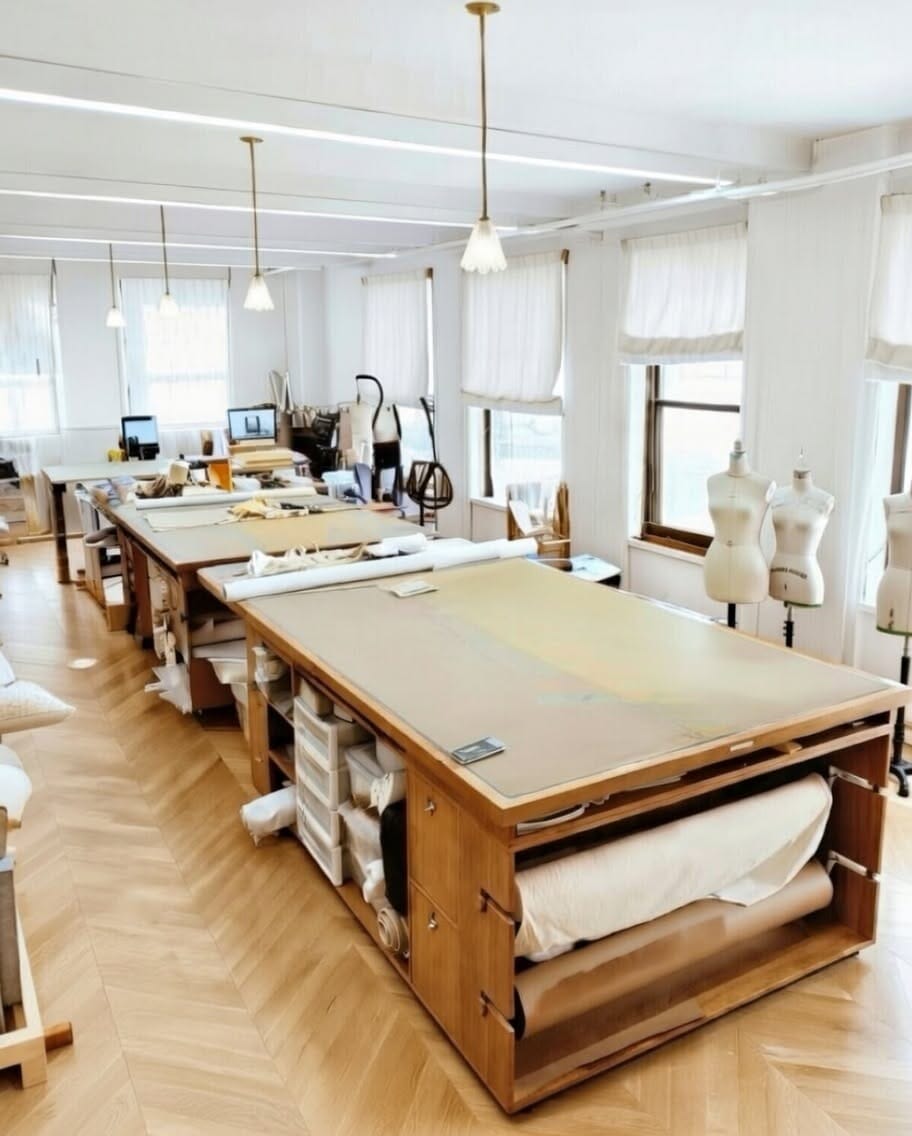
Very little clothing is sewn in Greater Boston, and many of the businesses that call themselves Boston clothing companies design here and sew somewhere else. We checked the names that come up most, each on its own website in November 2026, and sorted them by one question: where does the sewing happen? Two businesses say plainly that they cut and sew garments in Greater Boston: a short-run factory in East Boston that a workwear brand now owns, and a custom bridal studio in Quincy. Three well-known Boston labels design, pattern or sample here and have the garments made elsewhere, or no longer sew here at all.
The federal numbers explain why the first list is so short. Suffolk County, which contains the City of Boston, averaged 121 private-sector apparel manufacturing jobs across 9 establishments in 2024, according to the Bureau of Labor Statistics. The same county had 23 specialized design firms. This guide sets out who sews, who only designs, one famous factory we could not confirm, what the data says, and how to plan a collection when Boston is the place you design but not the place you produce.
About us: OneAim places and manages production with documented clothing factories in the United States. The businesses below are independent and are listed from their own public websites. None of them is a member of our group. What OneAim does instead: we place your production with a documented factory in our group built for your product.
The short list
- Two sewing floors, both specialised. WKWR Manufacturing in East Boston, formerly Classic Apparel of Boston, cuts and sews for 1620 Workwear, which bought it in 2025. Bremelia sews custom wedding gowns in Quincy.
- Design here, sew elsewhere. Sara Campbell designs and samples in its Boston headquarters and produces in New York, New Jersey and Massachusetts factories. Blauer keeps a Boston address while its history page lists factories in other states and Mexico.
- A shrinking count. Suffolk County apparel manufacturing jobs fell 75% from 2015 to 2024, from 493 to 121, while the number of establishments stayed at 7 to 9 (BLS QCEW).
- More designers than makers. In 2024 Suffolk County had 23 specialized design establishments against 9 apparel manufacturers; Middlesex County had 38 against 12.
- Design pays more. Jobs in Suffolk County specialized design firms averaged $110,454 in 2024, about two and a half times the $44,260 average in the county's apparel manufacturing.
- Ask where it is sewn. A Boston address, a Boston sample room and a Boston-made garment are three different things.
Free estimate: calculate your landed cost with our garment cost calculator in about a minute. No email needed.
Who sews in Boston and who only designs?
Here is the short version. The first two businesses passed our test for sewing in Greater Boston. The other three are real Boston clothing companies, but on their own websites the sewing happens elsewhere or has stopped.
| Business | Boston base | What happens in Greater Boston | Where the garments are sewn (its own words) | Sews for outside brands? |
|---|---|---|---|---|
| WKWR Manufacturing (Classic Apparel of Boston) | East Boston | Pattern, prototype, cutting and sewing | "Cut and sewn in our own factory in East Boston" | Not offered on its site; owned by 1620 Workwear |
| Bremelia | Quincy | Design, sewing and fittings of custom gowns | "Designed, sewn, and tailored in our Boston Studio" | No, sews for individual brides |
| Sara Campbell | Boston headquarters | Design, patternmaking and samples | Factories in New York, New Jersey and Massachusetts | No, its own label |
| Blauer | Boston office | Headquarters | Factories in other states and Mexico, per its history page | No, its own uniform lines |
| Alice Walk | Boston | Design and retail | Its site says it has moved away from in-studio custom production | No, its own label |
All five were checked on their own websites in November 2026. The last column is our reading of what each business publishes; confirm with the business before you plan around it.
How we checked Boston clothing businesses
We started from the names that appear in Boston manufacturer searches, press roundups and earlier versions of this guide, then opened each business's own website. We kept a business in the "sews here" group only if it passed three tests.
- It exists and is in Greater Boston. Its own site loads and gives a location in the city or the towns around it.
- It says the sewing happens here. The site states that garments are cut and sewn locally, not just designed, sold or fitted locally.
- Nothing on the site points elsewhere. Where a site names factories in other places, the business goes in the "designs here" group instead.
Businesses whose site did not load, now belongs to someone else, or does not say where garments are made were left out. So were custom clothiers that take measurements in Boston but do not say where the garments are sewn, and a bridal designer whose site now describes her as based in Brooklyn. We kept the scope to Greater Boston. The old mill cities about an hour south are a separate subject with their own factories, and we do not cover them here. Where a fact is a company's own statement, we say so. We did not visit any of these businesses.
The businesses that sew in Greater Boston
1. WKWR Manufacturing (Classic Apparel of Boston), East Boston
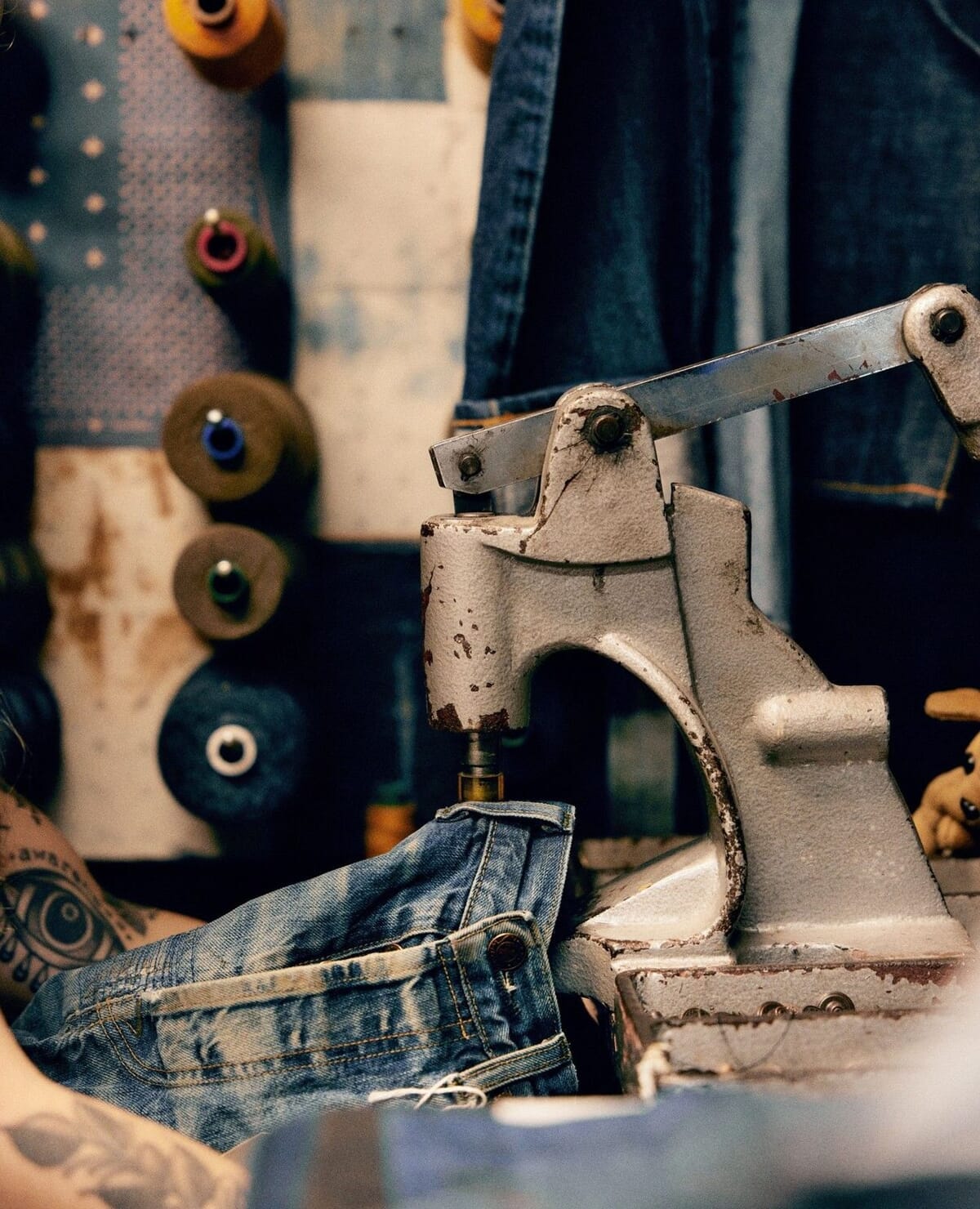
This is the clearest garment factory in the city that we could confirm on a company website. 1620 Workwear, a workwear brand based in Amesbury, Massachusetts, says its clothing is cut and sewn in its own factory in East Boston. In a release dated 9 September 2025, the company announced it had acquired Classic Apparel of Boston, the cut-and-sew facility that had been its primary product development and manufacturing partner since the brand's commercial launch in 2017. The factory now operates as WKWR Manufacturing, LLC, a wholly owned subsidiary of 1620 Workwear.
The two pages describe what the floor does. The release says Classic Apparel specializes in short- to medium-run cut-and-sew manufacturing and has more than two decades of experience serving premium US apparel brands and the US government. The factory page says pattern, prototype and production happen in one building, and that the floor has sewn for premium American labels and the United States government. It also says the company kept the leadership team that ran the factory and plans investments in machinery, workflow and workforce development.
Watch for: since September 2025 this is a brand's own factory. Neither page offers contract sewing for other labels, so do not assume there is a slot for your product. If you make technical workwear or other hard-wearing garments and want a Boston floor, ask 1620 directly whether it takes outside work, and expect the answer to depend on its own production calendar.
2. Bremelia, Quincy
Bremelia is a custom bridal studio, and its site is explicit about where the work happens. The home page carries the line "Handmade in Quincy, MA", and the process page says all dresses are designed, sewn and tailored in its Boston studio. The about page says the studio was previously located in Boston's South End and is now in Quincy Center as it has continued to grow, and that the founder started making wedding dresses for friends while studying fashion design at the Massachusetts College of Art and Design.
The process is made-to-measure. The process page describes a design package secured with a $400 payment, production that begins once design details and fabrics are locked in, and about 4 to 5 fittings from start to finish, all included in the custom dress price. Alongside fully custom gowns, the studio offers a core collection that brides can personalise, plus alterations and dress reconstruction.
Watch for: Bremelia sews one gown at a time for individual brides; it is not a manufacturer for brands. We include it because it is a working example of what still gets sewn in Greater Boston: skilled, made-to-measure work where the client comes to the studio for fittings.
Boston labels that design here and sew elsewhere
These three companies are real, established and Boston-based. What they do here is design, pattern, sample, sell or run the business. Their own websites place the sewing somewhere else, or say it has stopped.
Sara Campbell: Boston design and sample shop, production in three states
Sara Campbell is the most useful example of the split, because it describes it in detail. Its process page says its design team, patternmakers and sample shop work together under one roof in its Boston headquarters, where each design is constructed, fitted and perfected by an in-house team of fifteen. After a garment leaves the Boston sample shop, the same page says, it goes to the company's factories in New York, New Jersey and Massachusetts for production.
That is a model many Boston brands follow: keep the creative work and the first samples close, where the team can fit and correct a garment several times, and send the bulk run to factories a few states away. If you want to copy it, the production half is where you will need capacity. Our guides to clothing manufacturers in New York and clothing manufacturers in New Jersey cover the two states it names.
Blauer: a Boston name with factories elsewhere
Blauer is the company most often listed as a Boston clothing manufacturer, and its history shows why. Its about page says it was founded in 1936 by Louis Blauer as a contract sewing company making garments for department stores in the Boston area, and that as the business grew so did its factory in the Lechmere Square area of Cambridge. The company still gives a Boston address.
The same page then traces production out of the city. It describes a second factory opened in Missouri in 1965, which it says still operates making chemical and biological protective gear, later factories in Alabama, Mississippi and Arkansas, and a plant opened in Mexico in 1999 to produce trousers and shirts. The page does not describe sewing in Boston today.
Watch for: a company with "Manufacturing" in its name and a Boston address is not proof of a Boston sewing floor. Blauer makes its own uniform lines, which its site says are worn by public safety agencies across the US and Canada, and it is not a contract option for other brands.
Alice Walk: once sewn in a Boston studio, now a design-led label
Alice Walk shows that the line between the two groups moves over time. Its about page says the brand began as a custom clothing concept, sourcing fabrics from family-owned mills in Europe, and built an in-house production team that created each garment by hand in its Boston studio. The same page says the company has since moved away from custom production as it expanded into ready-to-wear staples.
The site does not say where the current ready-to-wear collection is made, so we list Alice Walk as a Boston label that designs here, not as a place to sew your collection. Older press about its hand-sewn Boston studio describes the business as it was, not as it is.
Checked and left out: Sterlingwear of Boston
Sterlingwear of Boston is the name most guides, including earlier versions of this one, put at the top of any Boston list. In August 2020 the City of Boston announced a contract with Sterlingwear, which it described as a locally owned, third-generation East Boston garment manufacturer, to produce up to 150,000 medical gowns for first responders. The same release said the company had been set to close after the federal government ended a 45-year contract for Navy wool peacoats, and called it the last remaining garment manufacturer in the City of Boston.
In November 2026 we could not confirm that it still sews. The web address the company used now shows an unrelated gambling site, and there is no current company page describing production. That does not prove the factory has closed, but we only list businesses we can verify on their own website today, so Sterlingwear is not on our list. If you know the company, ask it directly before you plan a run around it.
How much clothing is sewn in Boston?
Very little, and less each year. The Bureau of Labor Statistics counts private-sector apparel manufacturing jobs (NAICS 315) by county in its Quarterly Census of Employment and Wages. Suffolk County averaged 493 such jobs in 2015 and 121 in 2024, a fall of 75%. The number of establishments barely moved, staying between 7 and 9 every year.
Fewer jobs in the same number of workplaces means each one got smaller. In 2024 the county's 121 apparel manufacturing jobs were spread over 9 establishments, about 13 people each: the size of a workroom or a sample studio, not a production floor. The small rise to 180 jobs in 2023 did not last.
Middlesex County, north and west of the city, had 220 apparel manufacturing jobs in 12 establishments in 2024. Massachusetts as a whole had 1,372 jobs in 74 establishments, and 912 of those jobs, about two thirds, were in Bristol County, south of the Boston area. Suffolk and Middlesex together held 341, about a quarter of the state total. The state's remaining apparel sewing is mostly outside Greater Boston.
Why Boston has more designers than sewers
The same data set counts design firms under NAICS 541490. That category, other specialized design services, covers fashion designers working outside manufacturers, together with other design trades such as costume, jewellery and textile design, so it is a proxy rather than a pure fashion count. Even so, the comparison is clear: in every county around Boston where both figures are published, design establishments outnumber apparel manufacturers.
In 2024 Suffolk County had 23 specialized design establishments employing 105 people, against 9 apparel manufacturers. Middlesex County had 38 design establishments and 12 apparel manufacturers, and Norfolk County, south of the city, 19 and 8. Across Massachusetts there were 182 specialized design establishments, against 74 in apparel manufacturing.
Pay follows the same line. Jobs in Suffolk County specialized design firms averaged $110,454 a year in 2024; jobs in the county's apparel manufacturing averaged $44,260.
These are averages for every job in those establishments, from sewing to management, so they are not a sewing wage. But they show the economics behind the pattern in our list. A city with expensive space and well-paid design work keeps the design, the patterns and the samples, and the bulk sewing moves to places where floor space and labour cost less. Statewide, apparel manufacturing jobs averaged $48,645 in 2024, and nationally $57,949.
What the split means for a Boston brand
If you are building a clothing label in Boston, the split is not a problem to solve. It is the normal way the work is organised, and the companies above show three versions of it.
- Design and sample here, produce elsewhere. The Sara Campbell model: patterns and samples in Boston, bulk production with factories a few states away. It needs a reliable sample maker locally and a production partner you can reach.
- Own the factory. The 1620 model: buy or build a floor so production stays under your control. It takes volume and capital most new labels do not have.
- Make to order. The Bremelia model: a studio that sews one garment at a time for clients who come in for fittings. It works for high-value custom pieces, not for a wholesale range.
Most new brands start with the first. The hard part is the hand-off from sample to production: the factory needs a clear tech pack, approved samples and a quantity per style, per colour and per size. Our clothing sample rounds playbook walks through how to get from first sample to production approval.
How to tell a factory from a Boston address
Before you send a brief to anyone described as a Boston manufacturer, ask four questions. They take a minute and they separate a sewing floor from an office.
- Which building is the sewing done in, and can I visit? A factory names the place and agrees to a visit. A design office or a reseller usually cannot.
- Do you sew for other brands, and what is your minimum per style and per colour? A brand's own factory may not take outside work at all.
- What do you already make that is closest to my product? A bridal studio, a workwear floor and a uniform maker have very different machines and skills.
- Who makes the pattern, and who owns it? Settle pattern ownership in writing before the first sample, because in small runs the pattern is a large part of the cost.
Then check the answers against the company's own website. Every business in this guide is listed from what it publishes about itself, and that is the standard we suggest you use too.
Can you label a garment Made in Boston?
A city name is not a country-of-origin label. The FTC's Made in USA rule, 16 CFR Part 323, says a product may only be labelled Made in the United States when its final assembly or processing happens here, all significant processing happens here, and all or virtually all of its ingredients or components are made and sourced here.
For garments, the textile labelling rules in 16 CFR Part 303 add a practical case: a garment made in the United States from imported fabric must say so, and the rules give Made in USA of imported fabric as the example wording. Alice Walk's early garments, sewn in Boston from European mill fabrics, are the kind of product that wording describes. A line such as "designed in Boston" says where the design work happened and nothing about where the garment was sewn, so use it accurately and keep the country-of-origin label separate.
Which Boston business fits your brief?
- A custom wedding or evening gown for yourself: Bremelia, which designs, sews and fits each gown in its Quincy studio.
- Hard-wearing workwear sewn in Boston: ask 1620 Workwear whether its East Boston floor takes any outside work; its site describes it as the brand's own factory.
- Public safety uniforms: Blauer sells its own uniform lines; it is a supplier, not a factory for your designs.
- A first collection of your own designs: none of the five is set up for it. Develop the design and first samples locally if you can, and plan the bulk run with a factory built for your product.
Where to produce when Boston is too small
Stay in the Northeast if you want to keep visits easy. New York has the deepest sample and short-run base in the region, and our New York guide lists makers there. Our guides to New Jersey and Philadelphia cover two more options within a day's drive, and for outerwear like Blauer's, our US jacket manufacturers guide covers the category nationally.
For larger cut-and-sew runs, our Los Angeles clothing manufacturers guide and our USA apparel manufacturers guide cover the wider domestic market. This is where OneAim comes in: once your design and samples are ready, we place your production with a documented factory in our group built for the product.
Boston clothing production FAQ
Are there clothing manufacturers in Boston?
Very few. Suffolk County, which contains Boston, had 121 private apparel manufacturing jobs in 9 establishments in 2024 (BLS QCEW). We confirmed two businesses that sew garments in Greater Boston on their own websites: WKWR Manufacturing in East Boston, owned by 1620 Workwear, and the custom bridal studio Bremelia in Quincy.
Is there a garment factory in East Boston?
Yes. 1620 Workwear says its workwear is cut and sewn in its own factory in East Boston. It bought the factory, Classic Apparel of Boston, in September 2025, and it now operates as WKWR Manufacturing, LLC. Its site does not offer contract sewing for other brands.
Is Sterlingwear of Boston still open?
We could not confirm it. In 2020 the City of Boston called Sterlingwear the last remaining garment manufacturer in the city, but in November 2026 the company's former web address showed an unrelated site and no current company page describes production, so we left it off our list.
Is Blauer a Boston clothing factory?
Blauer was founded in Boston in 1936 as a contract sewing company and still gives a Boston address, but its own history page describes factories in Missouri, Alabama, Mississippi, Arkansas and Mexico, and does not describe sewing in Boston today.
Where does Sara Campbell make its clothes?
Its process page says design, patternmaking and sampling happen in its Boston headquarters, with an in-house team of fifteen, and production happens in its factories in New York, New Jersey and Massachusetts.
Why are there more designers than factories in Boston?
In 2024 Suffolk County had 23 specialized design establishments against 9 apparel manufacturers, and design jobs averaged $110,454 against $44,260 in apparel manufacturing (BLS QCEW). Design work stays in the city while bulk sewing moves to places with cheaper space and labour.
Can a garment sewn in Boston from imported fabric be labelled Made in USA?
Not without qualification. Under the FTC rule, all or virtually all components must be made and sourced in the US. For a garment made here from imported fabric, the textile labelling rules give Made in USA of imported fabric as the example wording.
OneAim places and manages production with 80 documented clothing manufacturers in the United States. Send the product, the quantity and your target date. Within 24 hours we reply, and we place the order with the US factory in our group that already makes it. Production, invoicing and shipping run directly between you and the factory. Flat fee, no mark-up.
Start my brief US factory directory ($49)References and data
- 1620 Workwear, factory page and acquisition release, 9 September 2025, checked November 2026. East Boston factory, WKWR Manufacturing, short- and medium-run cut and sew, history with premium labels and the US government. Company-stated.
- Bremelia, home page, about and custom process, checked November 2026. Quincy studio, sewing in-house, move from the South End, design package payment, fittings. Company-stated.
- Sara Campbell, our process, checked November 2026. Boston design and sample shop, in-house team, production factories in New York, New Jersey and Massachusetts. Company-stated.
- Blauer, about, checked November 2026. 1936 founding as a contract sewing company, Cambridge factory, later factories in other states and Mexico. Company-stated.
- Alice Walk, our story, checked November 2026. Origins as custom clothing sewn in a Boston studio, move away from custom production. Company-stated.
- City of Boston release on Sterlingwear of Boston, 17 August 2020, as republished by East Boston News. Medical gown contract, Navy peacoat contract, last remaining garment manufacturer in the city.
- US Bureau of Labor Statistics, Quarterly Census of Employment and Wages, NAICS 315, private ownership, annual averages 2015 to 2024 (Suffolk, Middlesex, Norfolk and Bristol counties, Massachusetts, United States), downloaded November 2026.
- US Bureau of Labor Statistics, Quarterly Census of Employment and Wages, NAICS 541490, private ownership, 2024 annual averages (Suffolk, Middlesex and Norfolk counties, Massachusetts), downloaded November 2026.
- 16 CFR Part 323, Made in USA Labeling Rule; 16 CFR Part 303, Textile Fiber Products Identification Act rules. eCFR, checked November 2026.
Every business named above appears in this source list. Locations, products, production sites and histories are the businesses' own published statements unless another source is cited; we did not visit them. No business here is a OneAim group member, and none paid to appear. Reviewed and updated 16 November 2026 by Will Godax.
Related guides
- Clothing manufacturers in New York
- Clothing manufacturers in New Jersey
- Clothing manufacturers in Philadelphia
- Clothing manufacturers in Portland