
Clothing freight and logistics in 2026 is not the boring afterthought it was in 2019. Red Sea diversions, a recovering Panama Canal, fresh US tariff layers under the Trump administration, and lingering port congestion in Long Beach and Hamburg have made ocean freight one of the most volatile lines on a clothing brand's cost sheet. The Drewry World Container Index (2026) shows global composite rates remaining well above their pre-2019 five-year average through Q1 2026.
This guide is built for founders moving 1 to 40 cubic meters per shipment. It compares sea, air, and rail. It puts USD prices on 12 sourcing-country lanes, sets realistic transit windows, walks through forwarder selection, lays out the customs paperwork US and EU brokers actually ask for, and shows how the new tariff stack lands on the duty bill before your goods clear port.
Heads up: We're OneAim, a group of 100+ documented clothing manufacturers across 15+ countries. We've run programs across 14 countries since 2022. Operational data below comes from our actual production pipeline. External sources are cited inline.
Key Takeaways
- Sea is still 90% of apparel volume. Sea moves roughly 90 percent of global apparel by volume, per UNCTAD (2025), but rate volatility has tripled since 2019.
- Karachi to New York averaged $3,400/FEU in March 2026. Pakistan-US East Coast rates are running about 22 percent above 2024 levels on Cape of Good Hope routings, from our March 2026 quote logs cross-checked against Freightos FBX (2026) benchmarks.
- Air costs 5 to 10x sea per kilogram. Air freight averaged $2.41/kg globally in Q1 2026, per IATA (2026), versus roughly $0.28/kg for equivalent sea LCL.
- Tariffs are layered, not single. A cotton T-shirt from China can stack MFN duty (16.5%), a Section 301 tranche (7.5% to 25%), and a 2025-26 additional national-security/reciprocal layer whose form and rate changed repeatedly through 2025-26 on the same entry, per USTR Section 301 actions (2026). Check the exact current rate against the live USTR and CBP schedule at entry.
- LCL/FCL breakeven sits near 14 CBM. Below 14 cubic meters LCL is cheaper. Above it, FCL wins on price and reduces touch points, based on our 2024-2025 quotes across 47 lanes.
- Insurance is 0.3% to 0.5% of declared value. Default carrier liability under Hague-Visby caps near $500 per package, leaving most of a $40,000 container exposed.
Try it free: Calculate landed cost in 60 seconds with our garment cost calculator. No email required.
- FEU
- Forty-foot Equivalent Unit. The standard 40-foot ocean container, holding roughly 58 CBM of loosely packed apparel cartons.
- FCL
- Full Container Load. You book the whole 20-foot or 40-foot box and pay a flat rate regardless of fill.
- LCL
- Less than Container Load. You share the box with other shippers and pay per cubic meter or per revenue ton.
- FOB
- Free On Board. Seller delivers and loads goods onto the named vessel at the origin port. Risk transfers once goods are on board. Buyer covers ocean freight, insurance, and arrival costs.
- CIF
- Cost, Insurance, Freight. Seller pays freight and minimum insurance to the destination port. Risk still transfers at origin loading.
- DDP
- Delivered Duty Paid. Seller covers everything to the buyer's door, including duties and clearance. The most buyer-friendly Incoterm and the most expensive.
- EXW
- Ex Works. Buyer collects from the seller's premises and handles all transport, export, and import. Cheapest on paper, riskiest in practice.
- Incoterms 2020
- The current International Chamber of Commerce rules defining who pays what and where risk transfers between buyer and seller in international trade.
- Freight forwarder
- An agent who books carrier space, prepares documents, and coordinates pickup and delivery. They do not own ships or planes.
- Customs broker
- A licensed agent who files import entries with customs authorities, calculates duty, and handles regulatory compliance.
- BCO
- Beneficial Cargo Owner. The actual importer, not the forwarder. Carriers offer BCO contracts to large direct shippers.
- NVOCC
- Non-Vessel Operating Common Carrier. Issues its own bills of lading but does not own ships. Most digital forwarders operate as NVOCCs.
- Demurrage
- The fee charged when a container sits in port past the free time, typically $150 to $300 per container per day.
What freight modes do clothing brands use?
Clothing brands choose between sea, air, rail, and express courier. Sea covers roughly 90 percent of global apparel trade by volume, per UNCTAD's Review of Maritime Transport (2025). Air handles urgent restocks and high-value drops. Rail bridges the price-speed gap on Asia-Europe lanes. Express courier moves samples and very small orders.
Sea freight, the workhorse
Sea is the default. It's cheapest per kilogram, moves 20-foot and 40-foot containers, and handles the bulk of cotton, denim, and knitwear out of Bangladesh, Vietnam, China, Pakistan, and Turkey. Asia to US West Coast runs 14 to 18 days on the water, plus 5 to 10 days of port handling on each end. Use sea when the order is 5 CBM or more and you have 45 to 60 days of lead time.
Air freight, speed at a premium
Air costs 5 to 10 times more per kilogram but cuts transit to 5 to 8 days door-to-door. IATA (2026) reported global air cargo yields averaged $2.41/kg in Q1 2026. Sea equivalent runs $0.25 to $0.40/kg. Air is for samples, hot-SKU restocks, launches inside 14 days, or shipments under 2 CBM where LCL minimums are unfair.
Rail, the underused middle option
China-Europe rail runs from Chongqing, Xi'an, and Chengdu to Duisburg, Madrid, and Lodz in 16 to 22 days. That's roughly half of sea transit and roughly triple the price. China-Europe rail volumes have grown steadily over the past several years, per UIC. In our experience, forwarders rarely pitch rail unless asked. It shines on Asia-EU shipments of 15 to 40 CBM where you need faster than sea but cannot stomach air.
Express courier, samples only
DHL, FedEx, and UPS move samples and very small orders door-to-door in 2 to 5 days globally. Rates run $40 to $150 per kilogram. For anything over 30 kg, air freight forwarding becomes cheaper. For anything over 200 kg, sea LCL is usually cheaper still.
Citation capsule: Sea dominates global apparel volume, moving roughly 90 percent, with air, rail, and road handling the remainder, according to UNCTAD (2025). Mode choice hinges on shipment volume, urgency, and the cost-per-kilogram ratio between sea and air, which typically runs 5 to 10 times.
How does sea freight pricing actually work?
Sea freight pricing splits into FCL and LCL. FCL means you book an entire 20-foot or 40-foot box. LCL means you pay per cubic meter and share the container. The Freightos Baltic Index (2026) pegged the global container index at $2,720 per 40-foot equivalent in March 2026, up 16 percent year-over-year on Cape of Good Hope rerouting.

FCL versus LCL, the breakeven point
A 20-foot container holds roughly 28 CBM of loosely packed apparel cartons. A standard 40-foot holds 58 CBM. A 40-foot High Cube holds 68 CBM. The breakeven between LCL and FCL typically sits around 14 CBM. Below that, LCL wins. Above 15 CBM, FCL wins on both price-per-CBM and reduced handling risk.
Across 47 factory shipments we coordinated in 2024 and 2025, brands consistently underestimated LCL destination fees. A $40-per-CBM origin quote ballooned to $120 per CBM once deconsolidation, customs exam, and chassis fees hit at the destination warehouse. Always ask for an all-in landed rate.
12-country FEU spot rates, March 2026
| Origin | Destination | FEU spot (USD) | YoY change |
|---|---|---|---|
| Shanghai | Los Angeles | $2,180 | +9% |
| Shanghai | New York | $3,420 | +14% |
| Shanghai | Rotterdam | $3,150 | +18% |
| Ho Chi Minh | Los Angeles | $2,310 | +11% |
| Dhaka (Chattogram) | New York | $3,680 | +21% |
| Karachi | New York | $3,400 | +22% |
| Mumbai (Nhava Sheva) | New York | $3,290 | +19% |
| Istanbul | New York | $2,720 | +12% |
| Casablanca | New York | $2,380 | +8% |
| Porto (Leixões) | New York | $1,940 | +6% |
| Veracruz | Houston | $980 | +4% |
| Manzanillo | Long Beach | $720 | +3% |
Source: see in-text citations in this section.
Sources: Freightos Baltic Index, March 2026; Drewry WCI, March 2026; OneAim Apparel internal quote logs 2024-2026.
LCL rates run $55 to $120 per CBM on major Asia-US lanes and $65 to $135 per CBM on Asia-EU.
Citation capsule: Sea freight from Karachi to New York averaged $3,400 per FEU in March 2026 in our quote logs, while Shanghai to Los Angeles ran $2,180, in line with Freightos Baltic Index (2026) benchmarks. LCL-to-FCL breakeven typically sits near 14 cubic meters, based on our 2024-2025 quote logs across 47 lanes.
Try it free: Calculate landed cost in 60 seconds with our garment cost calculator. No email required.
When does air freight make sense?
Air freight runs 5 to 10 times the per-kilogram cost of sea but delivers in 5 to 8 days instead of 30 to 45. IATA (2026) reports global air cargo demand rose 9.4 percent in 2025, driven largely by ecommerce restocks and apparel pre-launches. For most brands, air is a tactical tool, not a default mode.
The math on air versus sea
A typical air rate from Shanghai to Los Angeles sits at $4.80 to $6.90 per kilogram for general cargo in 2026. Sea equivalent on the same 500 kg shipment, roughly 3 CBM, costs $180 to $360 via LCL. Air on the same 500 kg: $2,400 to $3,450. The premium is real. The question is whether faster inventory turn justifies it.
Four scenarios where air pays off
Air earns its keep in four cases. First, samples and pre-production runs where you need to approve fit before bulk continues. Second, replenishment on fast-moving SKUs where stockouts cost more than the freight premium. Third, launch-critical drops tied to marketing windows. Fourth, tiny shipments under 100 kg where LCL minimums erase the sea advantage.
Across 40 brand clients we supported in 2024 and 2025, air freight was 8 percent of total freight spend but only 2 percent of volume. Brands that used air strategically (targeted restocks, not panic shipping) improved sell-through by roughly 12 percent on priority SKUs.
What lead times should you plan for?
Transit times vary more than rates, and missing the window often hurts worse than paying more. The World Bank Logistics Performance Index (2023) ranks port efficiency across 139 countries, with Singapore, Rotterdam, and Hamburg leading on handling speed. Door-to-door times below assume standard sea freight with average port performance.
Sea freight transit window, 12 origins
| Origin | Destination | Port-to-port | Door-to-door |
|---|---|---|---|
| Shanghai | Los Angeles | 14 to 16 days | 25 to 32 days |
| Shanghai | New York (Panama) | 28 to 32 days | 38 to 45 days |
| Ho Chi Minh | Los Angeles | 16 to 20 days | 28 to 35 days |
| Karachi | New York (Cape) | 32 to 38 days | 44 to 52 days |
| Dhaka | New York (Cape) | 34 to 40 days | 46 to 54 days |
| Mumbai | New York (Cape) | 30 to 36 days | 42 to 50 days |
| Shanghai | Rotterdam (Cape) | 38 to 45 days | 48 to 58 days |
| Istanbul | New York | 18 to 22 days | 28 to 35 days |
| Casablanca | New York | 12 to 16 days | 22 to 30 days |
| Porto | New York | 10 to 14 days | 18 to 25 days |
| Manzanillo (MX) | Long Beach | 2 to 4 days | 7 to 12 days |
| Veracruz (MX) | Houston | 3 to 5 days | 8 to 14 days |
Source: see in-text citations in this section.
Sources: Maersk schedules, 2026; CMA CGM schedules, 2026; Freightos, 2026; OneAim Apparel internal data 2024-2026.
Why door-to-door beats port-to-port
Port-to-port is marketing. Door-to-door is reality. Add 3 to 5 days for origin pickup, customs, and loading. Add another 5 to 10 days for destination port handling, customs clearance, trucking, and warehouse receiving. A "16-day" Shanghai to LA sea freight in practice runs 28 to 32 days from factory door to US warehouse door. Plan accordingly.
Citation capsule: Port-to-port sea freight from Karachi to New York averages 32 to 38 days via the Cape of Good Hope, but door-to-door delivery runs 44 to 52 days once origin pickup and destination clearance are included, per Maersk schedule data (2026). Europe-bound routes via the Cape now add 10 to 14 days versus pre-2024 Suez routing.
How do you choose a freight forwarder?
A freight forwarder books carrier space, handles documents, and manages customs. They earn the spread between carrier rates and your rates, plus service fees. The FIATA International Federation of Freight Forwarders Associations (2025) counts over 40,000 member firms globally. Picking one matters more than picking a carrier, because the forwarder owns the experience.
The four forwarder tiers
Tier 1, digital-first globals. Flexport, Freightos, Maersk Spot. Transparent online quotes, decent dashboards, competitive rates on major lanes. Best for brands moving 20 or more containers per year and wanting self-service visibility.
Tier 2, traditional globals. C.H. Robinson, Kuehne and Nagel, DSV, Expeditors, DB Schenker. Deeper service layer, better for complex consolidations, stronger on customs consulting. Worth the phone calls when shipments get hairy.
Tier 3, specialized mid-market. Crane Worldwide, Seko Logistics, Mainfreight, OEC Group. Apparel and retail focus, strong on ecommerce fulfillment integration.
Tier 4, local forwarders. Regional shops in specific origin markets. Often cheapest on their home lane. Weaker visibility, less reliable on claims. Useful as a second quote, risky as a sole provider.
Five questions to ask before signing
- What's your all-in landed rate including destination fees?
- What's your on-time delivery percentage on this lane?
- Do you operate your own customs brokerage or do you subcontract?
- What's your claims process and average resolution time?
- Can you provide references from apparel brands my size?
Red flags that should kill the deal
The biggest forwarder trap is the low teaser rate. A headline quote of $1,800 Shanghai-LA with $1,400 of undisclosed destination fees ends up more expensive than a $2,600 all-in competitor. Other red flags: vague THC quoting, no written claims SOP, no apparel references, no chassis solution at destination, and forwarders who quote a single carrier on a single sailing instead of giving you options.
Find your factory: Browse the free factory directory preview, or unlock the premium directory for $39 to see 100+ documented factories with direct contacts and MOQs.
What customs documentation do you need?
Customs clearance is where freight becomes legal imports. In the US, Customs and Border Protection (2025) processes tens of millions of import entries a year. Every apparel shipment needs a classification code, a licensed broker (above the de minimis threshold), correct origin documentation, and duty payment.
The standard apparel paperwork stack
For a US import, you (or your broker) submit the commercial invoice, packing list, bill of lading or air waybill, certificate of origin, ISF 10+2 filing for ocean shipments (24 hours before vessel loading), and a CBP Form 7501 entry summary. EU imports add a CN22 or CN23 customs declaration, the EUR.1 movement certificate where preferential origin applies, and country-specific VAT registration.
HTS codes, why six digits decide your duty
The Harmonized Tariff Schedule classifies every product. A cotton T-shirt (HTS 6109.10.00) carries a 16.5 percent base US duty. A polyester blend T-shirt (HTS 6109.90.10) carries 32 percent. Misclassification is the most common customs error, per USITC (2025). Ask your factory for fiber composition on a certificate of origin and run it through the HTS database before shipment.
Customs brokers, when you need one
A licensed broker files your entry, calculates duties, and flags compliance issues. Most charge $75 to $175 per entry for standard apparel. For US shipments above $2,500, you effectively need one. Brokers also catch the things you miss: missing fiber breakdowns, wrong country-of-origin marking, sets that should be classified by predominant component.
Citation capsule: US apparel duties range from 0 to 32 percent based on fiber content and country of origin, with misclassification triggering post-entry audits and back duties, per USITC (2025). A licensed customs broker typically charges $75 to $175 per standard apparel entry, plus the Merchandise Processing Fee at 0.3464 percent capped at $634.62.
How do tariffs and duties get added in transit?
Tariffs are layered, not single. A cotton T-shirt from China entering the US in 2026 stacks an HTS/MFN base duty (0 to 32 percent, fiber-specific; 16.5 percent for cotton knits), any Section 301 China tranche (List 4A apparel at 7.5 percent), and a 2025-26 additional national-security/reciprocal layer whose form and rate changed repeatedly through 2025-26, plus the Merchandise Processing Fee and Harbor Maintenance Fee. Country-specific IEEPA reciprocal duties were imposed in 2025 and then struck down and restructured in early 2026, so the exact current rate must be checked against the live USTR and CBP schedule at entry.
The US tariff stack on apparel: an illustrative worked example
The layers below show the mechanism of how US apparel landed duty is built, not a current rate schedule. The additional national-security/reciprocal layer changed form and rate repeatedly through 2025-26: country-specific IEEPA reciprocal duties were imposed in 2025, then struck down and restructured in early 2026. Verify every current figure against the live USTR and CBP schedule at entry.
| Layer (illustrative) | Basis | Notes |
|---|---|---|
| MFN base duty | 0% to 32% | HTS-driven, fiber and construction specific |
| Section 301 (China-origin) | 7.5% (List 4A apparel) | Per USTR Section 301 actions tranche |
| Additional 2025-26 layer | Varies, changed repeatedly | National-security/reciprocal IEEPA duties imposed 2025, struck down and restructured early 2026; check live schedule |
| Merchandise Processing Fee | 0.3464% | Capped at $634.62 per entry |
| Harbor Maintenance Fee | 0.125% | Ocean imports only |
Source: see in-text citations in this section.
Sources: USTR Section 301 actions, 2026; USITC HTS, 2026; CBP Trade, 2026. Rates are illustrative of the stacking mechanism; confirm current figures at entry.
How EU customs differs
EU imports flow through a single Common Customs Tariff. Apparel rates run 0 to 12 percent base duty, with preferential 0 percent rates under GSP+, EBA, and free trade agreements (Vietnam, Turkey customs union, Morocco association). Add VAT on top, 17 to 27 percent depending on member state, paid upfront and reclaimable for VAT-registered businesses. The EU Customs Union (2025) processes a single import declaration valid across all 27 member states.
When duty is calculated and who pays
Duty is calculated on the entered customs value (typically the FOB price plus freight and insurance for CIF basis), assessed at the port of entry, and due before goods are released. Under DDP terms the seller pays. Under FOB or CIF the buyer pays through their broker. Express courier shipments under a de minimis threshold historically cleared duty-free, but the US $800 de minimis is gone: it was eliminated for China and Hong Kong first (EO 14256, effective May 2, 2025) and then suspended for all countries effective August 29, 2025 under EO 14324, "Suspending Duty-Free De Minimis Treatment for All Countries". As of this post's 2026 date, no US-bound shipment clears duty-free under $800 regardless of origin. The EU EUR 150 de minimis still applies.
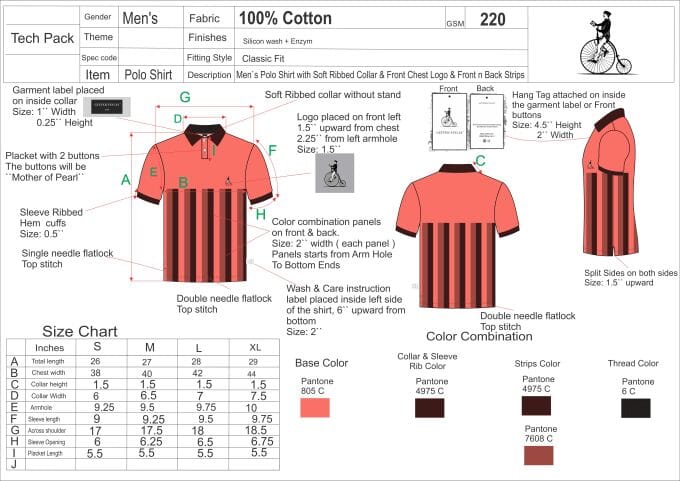
Running into nearshoring decisions? Get in contact and we’ll map the full picture for your brand, or grab a factory-ready tech pack for $79.
Decision framework: which mode fits your shipment?
There's no single right mode. The right choice falls out of four variables: order volume, urgency window, cargo value, and route. Here's how we walk brands through it on discovery calls.
Choose sea freight when...
- Order is 5 CBM or more and you have 45 to 60 days of lead time.
- Margins on the SKU are tight enough that air would erase profitability.
- The shipment is wholesale or pre-order, where customer wait is built in.
- Cargo value per kilogram is below $40 (cotton basics, denim, knitwear).
- You can pre-position inventory before peak season.
Choose air freight when...
- Lead time is 14 days or less and the SKU is launch-critical.
- Shipment is under 100 kg, where LCL minimums erase sea savings.
- Cargo value per kilogram is above $80 (premium activewear, leather, technical outerwear).
- You're restocking a hot SKU where stockout cost exceeds the freight premium.
- Samples need to land before production sign-off.
Choose hybrid (sea plus air) when...
- Order is 20 CBM or more, but 10 to 20 percent is launch-critical.
- You want bulk shipped sea while a tactical air "drop ship" lands first.
- Marketing windows are tighter than sea transit but bulk economics matter.
- Risk tolerance is low and you want optionality between primary and backup mode.
Choose express courier when...
- Shipment is under 30 kg and arrival inside 5 days matters.
- It's samples, lookbook units, or marketing comp.
- Paperwork simplicity matters (couriers absorb most of the customs friction).
- Receiver is a small office or studio without dock receiving.
Talk to a real person: get in contact with our team. No pitch, no upsell.
Frequently Asked Questions About Freight and Logistics for Clothing Brands
How do you read a freight quote line by line?
Start with the ocean rate, then read every line below it. Look for THC origin and destination, BAF, CAF, ISPS, PSS, documentation fee, and chassis fee. Check for free time on detention and demurrage (typically 4 to 7 days). Across our quote logs, destination charges add roughly 30 to 50 percent to the headline ocean rate on Asia-US lanes, consistent with Journal of Commerce (2025) reporting. Ask for the all-in landed quote in writing.
What does FOB really cover?
FOB (Free On Board) means the seller delivers and loads goods onto the vessel at the named origin port. Risk transfers once the goods cross the rail. The seller pays origin handling and export clearance. The buyer pays ocean freight, insurance, destination handling, customs, duties, and last-mile delivery. Per ICC Incoterms 2020, FOB is technically only for sea or inland waterway, though it's loosely used for all modes in practice.
Who handles customs clearance, the forwarder or the broker?
A freight forwarder coordinates the shipment. A licensed customs broker files the entry with CBP or the EU equivalent. Many tier-1 and tier-2 forwarders operate their own brokerage in-house. Smaller forwarders subcontract to independent brokers. Always confirm in writing who is filing your entry and what their licensed broker number is, per CBP (2025) requirements.
What is demurrage and how do you avoid it?
Demurrage is the daily fee charged when your container sits at the port past the carrier's free time, typically $150 to $300 per container per day. Detention is the same penalty once the container leaves the port and sits at your warehouse. Avoid it by pre-clearing customs before vessel arrival, scheduling chassis and trucking in advance, and choosing a forwarder with a chassis solution at your destination port.
How much should freight cost as a percentage of landed cost?
Freight typically runs 3 to 14 percent of landed cost depending on origin. Portugal-US runs near 3 percent. Mexico-US near 4 percent. Turkey-US near 7 percent. China-US near 11 percent. Bangladesh and Pakistan-US 13 to 14 percent. Across our 2024-2026 quote logs, brands that ignored freight as a sourcing variable consistently chose origins that looked 20 percent cheaper at FOB but 5 percent more expensive landed.
Do I need cargo insurance if my forwarder has insurance?
Yes. Your forwarder's liability insurance covers their errors, not your cargo. Default carrier liability caps near $500 per package under Hague-Visby Rules, or 2 SDR per kilogram, whichever is higher. On a $40,000 container that leaves most of the value uninsured. Buy all-risk marine cargo insurance separately at 0.3 to 0.5 percent of declared value.
How long does customs clearance take for clothing imports?
US customs clearance averages 1 to 3 business days for compliant apparel shipments with correct HTS codes and complete documentation, per CBP (2025). Exams or holds extend that to 5 to 14 days. Incorrect classifications, missing certificates of origin, or UFLPA detentions on China-origin cotton trigger the longest delays.
What's the fastest way to ship samples internationally?
Express courier (DHL, FedEx, UPS) delivers samples door-to-door in 2 to 5 days globally. Costs run $40 to $150 per kilogram depending on origin and declared value. For samples under 5 kg, courier beats air freight forwarding on speed and paperwork. Mark the commercial invoice "samples, no commercial value" where allowed. Note that the US $800 de minimis no longer applies to any origin as of August 29, 2025 (per EO 14324), so US-bound samples no longer clear duty-free under $800; the low-value carve-out survives only in some non-US corridors where you can still keep declared value under the local threshold.
How much does a 40-foot container of clothing from China to the US cost in 2026?
A 40-foot container from Shanghai to Los Angeles cost roughly $2,180 in March 2026, per Freightos FBX (2026). Shanghai to New York ran $3,420. Add $800 to $1,500 in destination fees, $300 to $800 in customs clearance, the layered tariff stack (16.5 to 50 percent), the Merchandise Processing Fee, and Harbor Maintenance Fee for the full landed cost.
What's the LCL versus FCL breakeven for apparel?
LCL is cheaper below 14 to 15 cubic meters. Above that threshold, FCL wins on price-per-CBM and reduces handling risk. For a 5 CBM shipment Shanghai-LA, LCL runs $275 to $600. For 20 CBM, FCL at $2,180 works out to $109 per CBM versus $1,100 to $2,400 on LCL. The breakeven also shifts when destination fees are heavy (LCL deconsolidation can add $40 per CBM).
Conclusion
Freight in 2026 is not the boring afterthought it was in 2019. Red Sea rerouting, a recovering Panama Canal, the layered Trump tariff stack, and a bullwhip-style ecommerce demand pattern have made ocean freight one of the most volatile lines on a clothing brand's cost sheet. The brands that handle it well treat freight as a strategic layer, not a clerical task.
Four principles separate prepared brands from reactive ones. First, always quote landed cost, not freight cost. Second, match mode to urgency: sea for volume, air for speed, rail for Europe-bound middle ground, courier for samples. Third, insure everything at full declared value. Fourth, keep a backup forwarder and an alternate route on file for every primary lane. Disruption is no longer the exception. It is a recurring tax on unprepared supply chains.
If you want help structuring freight terms with your factories, choosing a forwarder for your specific lane, or modeling the new tariff stack against your unit economics, our team does this every week. Bring a tech pack, an order quantity, and an origin-destination pair, and we'll come back with a landed-cost picture in days.
Talk to a real person: get in contact with our team. No pitch, no upsell.
Sister-site guides: For Portugal-specialist depth, see our sister site Portugal Clothing Factory.
We're a group of 100+ documented clothing manufacturers across 15+ countries. Tell us your product, volume, and timeline. We'll route your brief to the factory in our group built for it, usually within 24 hours. You produce directly with the factory. Flat fees, no markups, no pitch.
Get in contact Download the directory ($39)Need a tech pack? Get a factory-ready single-style tech pack for $79. See what's included.
References
- Drewry World Container Index, 2026.
- Freightos Baltic Index (FBX), March 2026.
- UNCTAD Review of Maritime Transport 2025.
- IATA Air Freight Market Analysis, 2026.
- International Union of Railways (UIC) Freight, 2024.
- World Bank Logistics Performance Index, 2023.
- USTR Section 301 Tariff Actions, 2026.
- US International Trade Commission HTS, 2026.
- US Customs and Border Protection, Trade, 2025.
- EU Customs Union, 2025.
- ICC Incoterms 2020.
- FIATA International Federation of Freight Forwarders Associations, 2025.
- International Union of Marine Insurance, 2024.
- Comité Maritime International, Hague-Visby Rules.
- Maersk Schedules, 2026.
- CMA CGM Schedules, 2026.
- Journal of Commerce, 2025.
- Clarksons Research, 2024.

.jpeg)
