A bandana made in the USA needs three things done here: the cloth, the cutting and hemming, and the print. Most companies selling custom bandanas only do the last step, often on squares sewn somewhere else. A smaller group cuts and sews its own squares, and a few name the US mill behind the cloth. If "printed and sewn in the USA" is the brief, that is the group you need.
This guide covers that group. We checked four US shops on their own websites in November 2026: one in South Carolina that names its Carolina mill and finisher, one in New Jersey that cuts and sews its own squares, and two print studios in Colorado and Texas. We also walk through one brand's fully domestic supply chain, then the decisions that set your price and your label: print method, ink, edge finish, fabric origin and, if you compare with imports, the duty line. Every company and number below is listed in the Sources section.
About us: OneAim places and manages production with documented clothing factories in the United States. The companies below are independent businesses listed on public sources, not members of our group. What OneAim does instead: we place your production with a documented factory in our group built for your product.
The short list
- Three steps, three questions. Ask where the cloth was woven, where the squares were cut and hemmed, and where they were printed. A "made in USA" print shop can still use imported fabric.
- Minimums are low. Raw Paw in Austin publishes a minimum of 50. The Bandanna Company sets 100 pieces for a multi-colour imprint. AMBRO in New Jersey sets 144.
- The label has rules. The FTC allows an unqualified "Made in U.S.A." only when the product is made in the US from US-made materials. Otherwise the label reads like "Made in U.S.A. of imported fabric".
- Edge finish matters at customs. A hemmed cotton bandana falls under HTS 6213.20.10 at 13.2% general duty. One that is overlock stitched but not hemmed falls under 6213.20.20 at 7.1%.
- Imports are shrinking. US imports of handkerchiefs (HS 6213), where small cotton bandanas are classified, fell from $44.8 million in 2019 to $26.1 million in 2024 (WITS).
- Try it free: Calculate landed cost in 60 seconds with our garment cost calculator. No email needed.
What does "printed and sewn in the USA" mean for a bandana?
A bandana looks like the simplest product in apparel, and in construction it is: a square of cotton with its four edges finished. That simplicity hides a supply chain with three separate steps, and each one can happen in a different country.
- Cloth. A mill weaves the cotton, and a finisher dyes it (for solid colours) or prepares it for printing. This is where most "made in USA" claims quietly stop being true.
- Cutting and hemming. The cloth is cut into squares, usually 22 by 22 inches, and the edges are hemmed or overlocked. This is the "sewn" in sewn in the USA.
- Printing. A decorator screen prints, discharge prints, rotary prints or digitally prints the design. This is the step most custom bandana sellers actually do.
A print shop that buys finished blanks and prints them in Ohio is printing in the USA. Whether the bandana is "made in the USA" depends on where the other two steps happened. That is not a technicality. It decides what you can legally print on the label and say on the product page.
What the FTC label rules say
Bandanas are flat textile goods, and the Federal Trade Commission's textile labeling guide lists handkerchiefs among the covered products. According to the guide, a label may say "Made in U.S.A." only if the product is made entirely in the US from US-made materials. A product made here from imported cloth must say so in one statement, such as "Made in U.S.A. of imported fabric", without separating the two parts (FTC).
For flat goods such as handkerchiefs and scarves the FTC adds a specific note: Customs requires identification of the country where the fabric was made. So a bandana cut, sewn and printed in New Jersey from imported cloth is a legitimate US-made product, but its label has to name the fabric's origin too. Ask every supplier the three questions above before you write "Made in USA" anywhere.
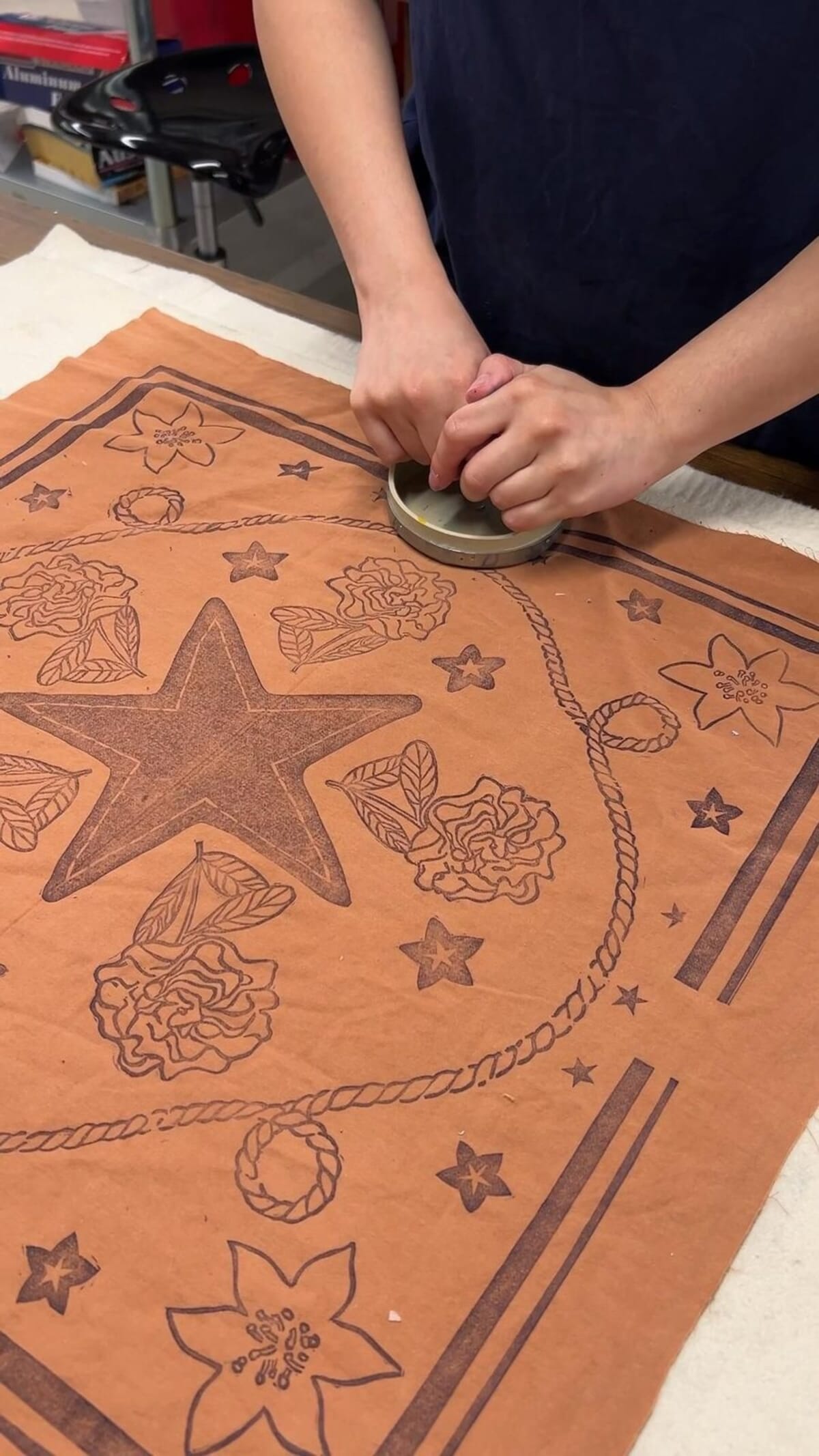
How we checked these bandana shops
We started from companies that say they make or print bandanas in the US and kept only those whose own website states where the work happens. Every figure in the profiles below, minimums, sizes, ink, fees and lead times, is quoted from the company's own pages, checked in November 2026. We did not visit the shops, so treat each figure as the company's published statement and confirm it in writing before you order.
We left out companies that sell custom bandanas but do not say where they print or sew, overseas makers, and retail brands that do not take custom orders. The one exception is Mister Bandana, a retail brand we include only because it publishes a rare, detailed map of a fully domestic bandana supply chain.
| Company | Where | What it says it does in the US | Published minimum |
|---|---|---|---|
| The Bandanna Company | Greenville, SC | American-made bandannas with US mill (Hamrick Mills, Gaffney SC) and finisher (Tryon Finishing, Tryon NC); four in-house imprinting processes | 100 pieces for a multi-colour imprint |
| BandanasOnline (AMBRO Manufacturing) | Flemington, NJ | Cuts and sews its own 22 x 22 inch squares and prints them in house; imports the fabric | 144 pieces |
| Pine Printshop | Fort Collins, CO | Water-based printing on 100% Made in USA cotton bandanas with serged edges | Not published |
| Raw Paw | Austin, TX | Screen prints bandanas, "Made in Austin, Texas"; blank origin not stated | 50 |
Which US shops print and sew bandanas?
Four, in our check, each with a different mix of the three steps. They are listed from the most vertical to the most print-focused, not ranked.
The Bandanna Company (Greenville, South Carolina)
The closest thing to a vertical US bandana maker in our check. The company says it has been a proud part of Greenville, SC since 1946 and runs a "fully vertical, print-on-demand production" model. It names its US partners on its own site: Hamrick Mills in Gaffney, South Carolina, for woven fabric, and Tryon Finishing in Tryon, North Carolina, for cloth finishing and dyeing (The Bandanna Company). It is a division of Carolina Creative Enterprises.
It also describes "the industry's only in-house, four USA-made imprinting processes": digital, screen, rotary and duplex printing (four print processes). Its screen printing page lists 1 to 4 colours, and its terms say silkscreen imprints can run up to six colours, with each colour needing its own screen and running charge. The minimum order for a multi-colour imprint is 100 pieces, and orders ship FOB factory in Greenville (art requirements and terms).
Read the catalogue carefully. The same site also lists an "Imports" category and its terms mention import orders, so not every bandanna it sells is domestic. If US origin is the point, ask for the domestic cloth in writing and the label wording that goes with it.
BandanasOnline by AMBRO Manufacturing (Flemington, New Jersey)
AMBRO Manufacturing is a third-generation garment decorating and manufacturing business at 6 Kings Court, Flemington, New Jersey, that lists screen printing and embroidery as its core work (AMBRO). Its bandana site, BandanasOnline, says "each bandana is cut and sewn by us using American labor" and that it merrows all four edges, prints with water-based discharge pigments, and stocks more than 20 colours of American-made bandanas in its New Jersey facility (BandanasOnline).
It is also open about the cloth: "We import high quality fabric, cut and sew them into 22″ x 22″ hemmed square bandanas" (BandanasOnline FAQ). That makes it a true US cut-sew-and-print operation on imported fabric, which is exactly the case the FTC's "of imported fabric" wording exists for. Note that one page says merrowed edges and another says hemmed squares; ask which finish your order gets, because it changes the customs code if you ever compare with an import.
On its custom bandana page AMBRO publishes a minimum order of 144 pieces, a standard 22 by 22 inch size with 14 by 14 inch hankies and 27 by 27 inch jumbo bandanas also listed, and a typical turnaround of 10 to 15 business days after proof approval (AMBRO custom bandanas). BandanasOnline quotes 12 to 14 days. It offers standard screen printing of 20 by 20 inches, full-bleed printing to the edges and four-colour process.
Pine Printshop (Fort Collins, Colorado)
A print studio that prints exclusively with water-based inks, which it says are PVC and phthalate-free. Its bandanas are "100% Made In USA from 100% cotton", measure 22 by 22 inches and have serged edges (Pine Printshop). Pine does not say who sews its blanks, so ask if you need that detail for a label.
Its pricing notes are useful for budgeting: a $35 ink change fee for every ink colour after the first, and a $35 custom ink mix fee for colours outside its standard palette. It warns that some fabric colours react less to its inks, so prints on those come out muted and not fully opaque. The site shows a current turnaround of 14 business days and free shipping in the USA. No minimum is published; you request a quote.
Raw Paw (Austin, Texas)
An artist-run print studio whose bandana page says "Made in Austin, Texas". It prints one to three colours on 22 by 22 inch, 100% premium cotton bandanas, with a 20 by 20 inch print area, in water-based or discharge ink. The minimum is 50, price breaks fall at 50, 100, 200, 350, 500 and 1,000+ bandanas, and a custom ink match costs $25 per ink (Raw Paw).
Raw Paw does not state where its blanks are sewn. If you need the full "printed and sewn" claim, ask before you approve the order, or ask whether it can print on US-sewn blanks you supply.
Discharge in one line: discharge ink removes the dye from a dark cotton square instead of sitting on top of it, so the print feels like the cloth. It is why bandana printers lean on discharge and water-based inks rather than the plastisol used on many t-shirts.
Bottom line: US bandana printers publish some of the lowest minimums in custom apparel. Raw Paw in Austin, Texas, publishes a minimum of 50 bandanas; The Bandanna Company in Greenville, South Carolina, sets 100 pieces for a multi-colour imprint; and AMBRO Manufacturing in Flemington, New Jersey, sets 144 pieces for custom printed bandanas, according to each company's website in November 2026.
What does a fully domestic bandana supply chain look like?
Mister Bandana, a New York brand founded in 2018, publishes the clearest picture of a domestic chain in our research. It is a retail brand with no custom service, so it is not a supplier for your run, but its About page reads like a map of where US bandana work still happens (Mister Bandana):
- Cotton: from American-based suppliers in the Carolinas and the Garment District of New York, much of it grown domestically and milled in South Carolina.
- Printing: a network of independently owned printers in Virginia, New York, North Carolina and California.
- Cutting and hemming: cutters and hemmers in South Carolina, North Carolina and the New York Garment District.
- Packing: assembled in its own New York office with US-made packaging.
Two lessons for a brand. First, a fully domestic bandana is usually a chain of three or four specialists, not one factory, so someone has to manage the hand-offs, the dye lots and the counts between them. Second, the Carolinas show up at every step: weaving, finishing and hemming. That lines up with the South Carolina partners The Bandanna Company names. If you want a bandana alongside other products made in that region, our guide to clothing manufacturers in the Carolinas covers the wider cut-and-sew base.
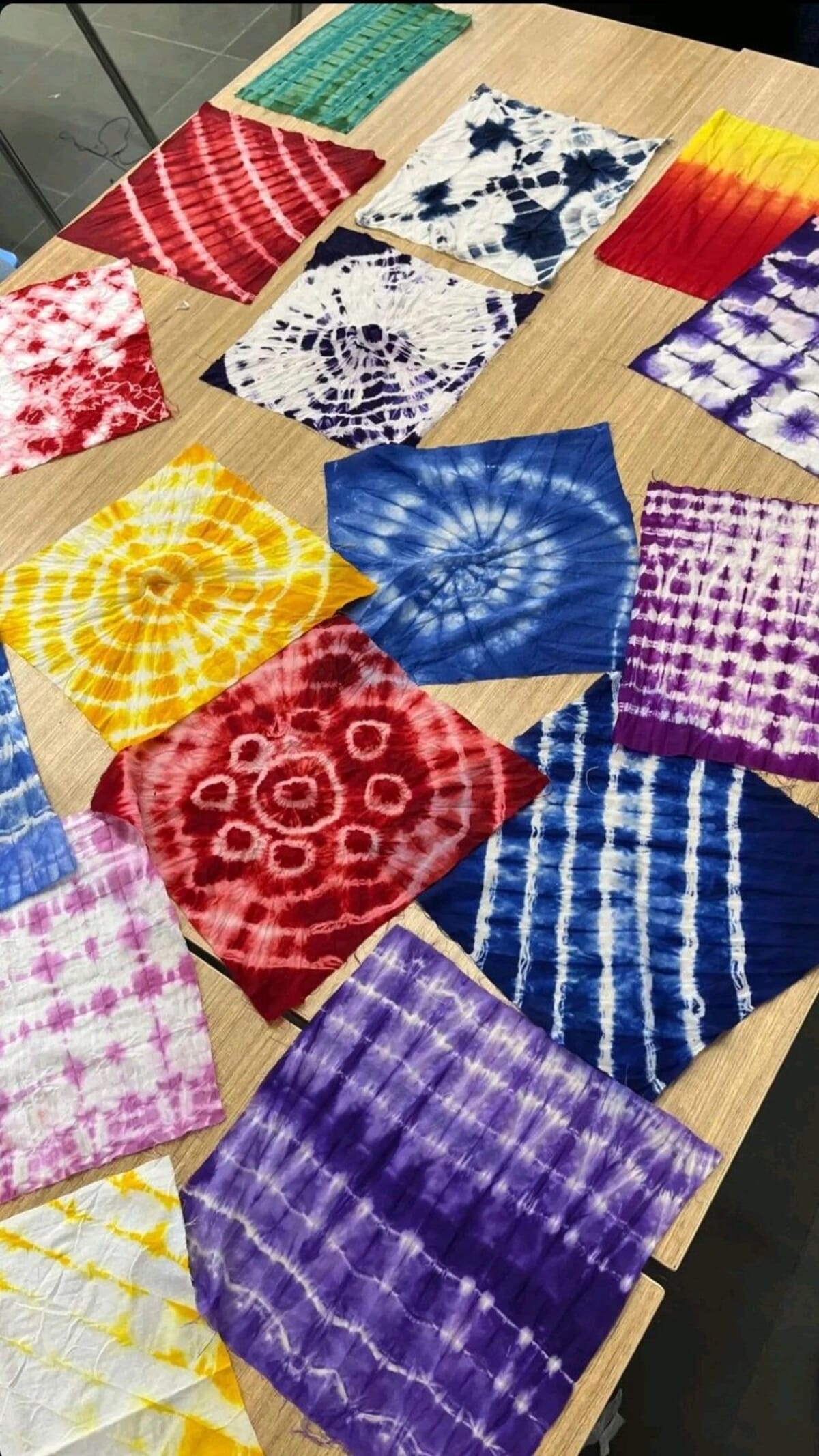
Which print method should you choose for a bandana?
The print method decides the hand of the finished bandana, how many colours you can afford and whether the design can run to the edge. The four processes The Bandanna Company describes cover most of what US shops offer.
| Method | How it works | Design limits | Good for |
|---|---|---|---|
| Screen printing | Ink laid onto a dyed cloth through a screen, one screen per colour | Needs a border at The Bandanna Company: an 18 x 18 inch imprint on a 22 inch blank. Raw Paw and BandanasOnline print 20 x 20 inches | Logos and simple artwork in a few colours |
| Discharge printing | Removes dye from a coloured cloth, often with a water-based system | Works on dyed cotton; results vary by fabric colour | Soft prints on dark bandanas |
| Rotary printing | Water-based pigment dyes absorbed into white cloth from a rotating cylinder | No set-up or screen charge for extra colours at The Bandanna Company; quantities can vary by about 5% | Many colours, all-over patterns, larger runs |
| Digital printing | Large-format inkjet printing from a design file onto white cloth | Full colour on the front, back left white | Photographic or many-colour art in small runs |
| Duplex printing | Printed on both sides so the outline shows on each face | Used on The Bandanna Company's USA-made paisley | A reversible, woven-looking bandana |
The cost logic follows the screens. Each extra screen-print colour adds a screen and a press run, which is why Pine charges $35 for each ink after the first and why The Bandanna Company sets a 100-piece floor for multi-colour silkscreen. Rotary printing flips that: at The Bandanna Company its terms say there is no set-up or screen charge for additional colours, but exact quantities cannot be guaranteed and it ships plus or minus 5% (terms). Order a few more than you need if the count matters, for example for a team or an event.
Colour matching on a bandana
Matching a brand colour on a dyed bandana is harder than on paper. The Bandanna Company guarantees a Pantone match only on white or natural bandannas, and says fabric colours can vary from one lot to the next. Pine warns that some fabric colours take its ink weakly. If the colour is part of your brand, print on white or natural cloth, approve a physical sample, and keep the approved piece for the reorder.
Hemmed or serged: why the edge finish matters
Bandanas reach the printer with one of two edges. A hem folds the raw edge over and stitches it down. A serged or merrowed edge wraps the raw edge in an overlock stitch. Pine's bandanas have serged edges. BandanasOnline says it merrows all four edges. Both work; a hem looks more traditional and a merrowed edge is flatter and faster.
The finish also changes the customs code, which matters when you compare a US quote with an import. US Customs ruled in 2016 that two 21 by 21 inch, 100% cotton bandanas hemmed on all sides were handkerchiefs under HTS 6213.20.1000 at 13.2% duty (CBP ruling N277766). In a 2005 correction, it moved a 14 by 14 inch promotional bandana to 6213.20.2000 at 7.1%, because "further examination reveals that the item is overlock stitched, but not hemmed" (CBP ruling L87506).
The size matters too. The note quoted in both rulings says square scarf-type articles with no side over 60 centimeters are classified as handkerchiefs (heading 6213), and larger ones go to heading 6214. A standard 22 inch bandana is about 56 centimeters, so it stays a handkerchief. A 27 inch jumbo, about 69 centimeters, does not.
| HTS line | Description | General duty | Note |
|---|---|---|---|
| 6213.20.10 | Handkerchiefs of cotton: hemmed, not containing lace or embroidery | 13.2% | Free for imports from AU, BH, CL, CO, IL, JO, KR, MA, OM, P, PA, PE, S, SG |
| 6213.20.20 | Handkerchiefs of cotton: other (for example overlocked, not hemmed) | 7.1% | Same free-trade list |
| 6213.90.10 | Handkerchiefs of man-made fibers | 10.8% | For polyester bandanas |
These are the general rates in the US tariff schedule (USITC HTS). Additional duties can apply on top for some countries of origin, so check the current schedule on the day you compare quotes. For a US-made bandana there is no import duty, which narrows the price gap with imports more than the unit quote alone suggests.
How big is the bandana import market?
There is no separate trade code for bandanas, but small square cotton bandanas sit in heading 6213, handkerchiefs, as the rulings above show. That heading is a fair proxy for the imported bandanas a US-made product competes with.
US imports of handkerchiefs were $44.8 million in 2019. They jumped to $74.5 million in 2020, then fell back to $32.4 million in 2021 and $26.1 million in 2024 (WITS). The 2020 jump came in the year many people wore bandanas as face coverings; BandanasOnline, for example, says it has made custom bandana face masks since March 2020. We cannot say how much of the jump that explains.
China supplied $34.5 million of the 2019 total, about 77%, and $14.1 million of the 2024 total, about 54%, by our arithmetic on the same WITS tables. India ($3.8 million), Italy ($3.5 million) and France ($2.3 million) followed in 2024. For a US brand the point is simple: the imported bandana market is small and shrinking, which leaves room for a domestic product with a clear origin story and a label to match.
Bottom line: US imports of handkerchiefs (HS 6213), the heading where US Customs classifies small square cotton bandanas, fell from $44.76 million in 2019 to $26.13 million in 2024 after a 2020 peak of $74.45 million, according to WITS data from UN Comtrade. China's share fell from about 77% to about 54% over the same period.
How long does a US bandana run take?
Two to three weeks after artwork approval is the published norm among the shops we checked:
- Pine Printshop: current turnaround of 14 business days for new orders.
- BandanasOnline / AMBRO: 12 to 14 days on BandanasOnline; 10 to 15 business days after proof approval on the AMBRO bandana page, with rush options.
- The Bandanna Company: production time listed on each product page, in working days, starting only after a complete order with artwork, shipping and credit details.
Two clauses in The Bandanna Company's terms are worth copying into your own brief: production starts only once artwork is approved, and art fixes after the second proof revision are charged at $125 per hour. Send vector artwork with fonts converted to outlines, or raster art at 300 dpi at full imprint size; Pine asks for a raster canvas of at least 22 by 22 inches at 300 dpi. Most delays on a simple product like a bandana come from artwork, not sewing.
What to put in a bandana brief
A bandana brief fits on one page. These are the lines that prevent the common surprises:
- Size: 22 by 22 inches is the standard at every shop above. Smaller hankies and 27 inch jumbos exist at AMBRO; check the customs note if you compare with imports.
- Fabric: 100% cotton is standard. State whether you need US-woven cloth, and ask the supplier where the fabric was made.
- Edge: hemmed or serged/merrowed. Name it, and ask for a photo of the edge on the sample.
- Base colour: pick from the shop's stock colours, and check whether that colour takes ink well.
- Print method and colours: screen, discharge, rotary or digital; number of colours; border or full bleed.
- Colour standard: Pantone references, printed on white or natural if the match must be exact.
- Quantity: above the shop's minimum, with a note on whether plus or minus 5% is acceptable.
- Label and claims: the exact origin wording, for example "Made in U.S.A." or "Made in U.S.A. of imported fabric", agreed with the supplier before printing.
- Packing: bulk, folded, or individually bagged with a header card.
For the wider trim and label side of a product launch, see our trims and labels guide for clothing brands. If the bandana sits next to knit accessories, our scarf manufacturers guide and beanie manufacturers guide cover the same buying decisions for those products.
When is a bandana part of a bigger production run?
A one-off promotional bandana belongs with one of the shops above. It gets more complicated when the bandana is part of a collection: matching a print on shirts and bandanas, using your own fabric, a custom size, a woven or printed label, or a brand that wants every piece made in the US with one origin story. Then the bandana is a cut-and-sew item on a woven product, and it should be planned with the rest of the range.
That is the kind of brief our team handles. We are a group of US clothing factories; we look at the full range, place the bandana and the garments with the factory in our group built for them, and manage production from sample to delivery. See made in USA clothing brands for how other brands present US origin, or the Texas clothing manufacturers guide if you are near Austin.
Bandanas made in the USA: FAQ
Who makes bandanas in the USA?
Among the shops we checked, The Bandanna Company in Greenville, South Carolina, names Hamrick Mills (Gaffney, SC) and Tryon Finishing (Tryon, NC) as its US partners. BandanasOnline by AMBRO Manufacturing cuts, sews and prints in Flemington, New Jersey, on imported fabric. Pine Printshop in Colorado and Raw Paw in Texas print bandanas in house.
What is the minimum order for custom bandanas made in the USA?
It depends on the shop. Raw Paw in Austin publishes a minimum of 50. The Bandanna Company sets 100 pieces for a multi-colour imprint. AMBRO Manufacturing sets 144 pieces for custom printed bandanas. Pine Printshop quotes on request.
Can a bandana made from imported fabric be labeled Made in USA?
Not with an unqualified "Made in U.S.A." label. The FTC allows that only when the product is made entirely in the US from US-made materials. A bandana cut, sewn and printed here from imported cloth should carry wording such as "Made in U.S.A. of imported fabric".
What size is a standard bandana?
22 by 22 inches in 100% cotton at every US shop we checked. AMBRO also lists 14 by 14 inch hankies and 27 by 27 inch jumbo bandanas. The print area is usually 20 by 20 inches, or 18 by 18 inches on The Bandanna Company's bordered screen prints.
What ink is best for printing bandanas?
Water-based or discharge ink. Both leave a soft print on cotton worn against the skin. Pine Printshop prints only with water-based ink, Raw Paw offers water-based or discharge, and BandanasOnline uses water-based discharge pigments.
What is the import duty on cotton bandanas?
Small hemmed cotton bandanas are classified as handkerchiefs under HTS 6213.20.10, with a 13.2% general duty. Overlocked bandanas that are not hemmed fall under 6213.20.20 at 7.1%. Additional duties can apply for some countries, so check the current schedule. A US-made bandana pays no import duty.
How long does a custom bandana order take in the USA?
Around two to three weeks after artwork approval at the shops we checked: Pine Printshop shows 14 business days, BandanasOnline 12 to 14 days, and AMBRO 10 to 15 business days after proof approval.
OneAim places and manages production with 80 documented clothing manufacturers in the United States. Send the product, the quantity and your target date. Within 24 hours we reply, and we place the order with the US factory in our group that already makes it. Production, invoicing and shipping run directly between you and the factory. Flat fee, no mark-up.
Start my brief US factory directory ($49)References and data
- The Bandanna Company, Hav-A-Hank brand page, About, Four print processes, Screen printing and Art requirements and terms, checked November 2026. Source of the Greenville history, the Hamrick Mills and Tryon Finishing partners, the four processes, the 18 x 18 inch screen imprint, colour counts, the 100-piece multi-colour minimum, rotary and quantity terms, Pantone, art and freight terms. Company-stated.
- AMBRO Manufacturing, About us and Custom printed bandanas, checked November 2026. Source of the address, third-generation history, services, the 144-piece minimum, sizes and the 10 to 15 business day turnaround. Company-stated.
- BandanasOnline, Made in the USA bandannas and Custom printed bandanas made in USA, checked November 2026. Source of the cut-and-sew, merrowed edge, imported fabric, discharge ink, print area, four-colour process, face mask and turnaround statements. Company-stated.
- Pine Printshop, Bandana printing, checked November 2026. Source of the Fort Collins address, Made in USA blank, serged edge, water-based ink, $35 fees, colour reactivity note, turnaround and artwork requirements. Company-stated.
- Raw Paw, Custom screen printed bandanas, checked November 2026. Source of the Austin origin statement, the minimum of 50, price breaks, size, print area, inks and the $25 ink match. Company-stated.
- Mister Bandana, About, checked November 2026. Source of the 2018 founding and the cotton, printing, cutting and hemming locations. Company-stated; a retail brand with no custom service.
- Federal Trade Commission, Threading Your Way Through the Labeling Requirements Under the Textile and Wool Acts. Source of the "Made in U.S.A." and "of imported fabric" rules and the flat goods note.
- US Customs and Border Protection ruling NY N277766 (25 August 2016) and ruling NY L87506 (16 September 2005), via the CBP CROSS database. Source of the hemmed and overlocked classifications, duty rates and the 60 centimeter note.
- US International Trade Commission, Harmonized Tariff Schedule, heading 6213, checked November 2026. Source of the 13.2%, 7.1% and 10.8% general rates and the free-trade list.
- WITS (World Bank) US imports of HS 6213 for 2019, 2020, 2021, 2022, 2023 and 2024, UN Comtrade data. Source of the import values and partner figures; shares are our arithmetic.
Every company named above appears in this source list. Minimums, fees, lead times and origin statements are the companies' own published statements, labelled as such in the text; we did not inspect the shops. No company here is a OneAim group member, and none paid to appear. Reviewed and updated 10 November 2026 by Will Godax.