Fashion’s environmental impact is massive, but smarter fabric choices can help reduce it. Here’s the reality: the industry contributes 10% of global carbon emissions, 60% of clothing contains plastic-based synthetics, and 87% of garments end up in landfills. Sustainable fabrics offer a way forward, focusing on organic, recycled, and biodegradable materials that minimize harm to the planet.
This guide covers 10 fabric options that balance performance with eco-conscious production. Each material is evaluated based on water use, carbon emissions, biodegradability, and best applications. Highlights include:
- Organic Cotton: Uses 91% less water than conventional cotton and avoids harmful chemicals.
- Hemp: Grows fast, improves soil health, and absorbs more CO₂ than it emits.
- Tencel (Lyocell): Made from wood pulp in a closed-loop process that recycles 99% of solvents.
- Recycled Polyester: Converts plastic waste into durable fabric, cutting carbon emissions by up to 70%.
- Bamboo: Naturally pest-resistant, requires minimal water, and offers antibacterial properties.
- Linen: A low-water crop that sequesters carbon and thrives in poor soil.
- Modal: Derived from beech trees, it uses less water and energy compared to cotton.
- Piñatex: Made from pineapple leaf waste, offering a plant-based leather alternative.
- Regenerative Cotton: Farming methods that restore soil health and capture carbon.
- Plant-Based Elastics: Rubber and sugarcane alternatives to petroleum-based spandex.
Quick Tip: Look for certifications like GOTS, FSC, or OEKO-TEX to ensure materials meet sustainable standards. Each fabric has unique benefits, so choosing the right one depends on your product’s needs and environmental priorities. Let’s dive into the details.
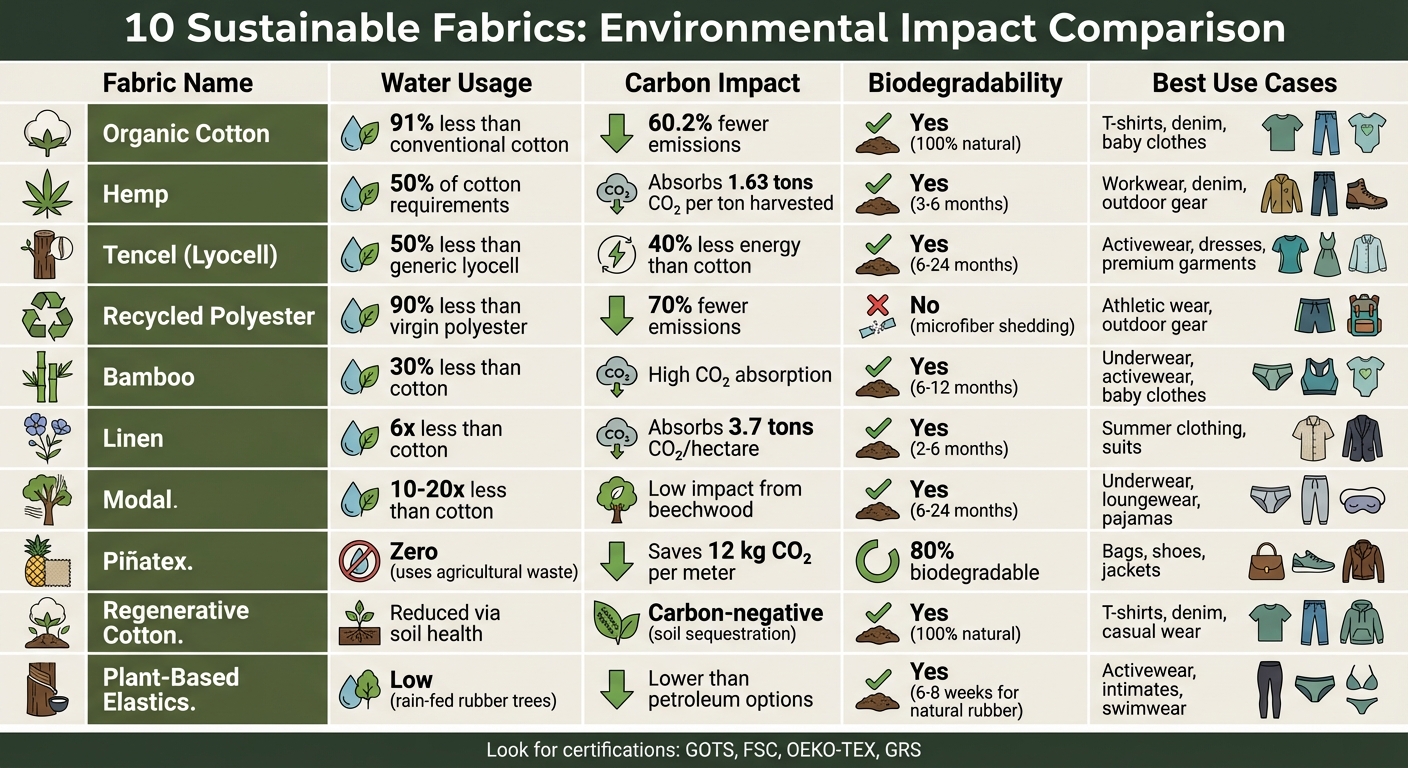
Sustainable Fabric Comparison: Water Usage, Carbon Impact & Biodegradability
THE MOST SUSTAINABLE FABRICS // which textiles are the best for the planet and why
sbb-itb-76527d2
1. Organic Cotton
Organic cotton is cultivated using non-GMO seeds and avoids synthetic pesticides, herbicides, or fertilizers. Farmers rely on natural methods like crop rotation, composting, and biological pest control (often using beneficial insects or neem-based solutions) to maintain healthy soil and manage pests. These practices significantly reduce water pollution, a common issue in conventional cotton farming.
The contrast between organic and conventional cotton is striking. Conventional cotton uses 16% of the world’s pesticides while taking up just 2.5% of global farmland. Organic cotton, on the other hand, slashes pesticide use by 98% and can use up to 91% less water. For example, rain-fed organic cotton requires only 182 liters (48 gallons) of water per kilogram of lint, compared to 2,120 liters (560 gallons) for conventional cotton. Producing a single conventional cotton T-shirt demands 2,700 liters (713 gallons) of water.
Initiatives like Chetna Organic in India showcase the real-world benefits of organic cotton. Supporting 35,000 farmers, the project has cut water use by 50% and boosted farmer incomes by 20% through sustainable practices and premium pricing. Similarly, brands like Patagonia have shifted to 100% GOTS-certified organic cotton, reducing water use and pesticide pollution in their supply chains.
Here’s a closer look at the benefits of organic cotton across environmental impact, production processes, and applications.
Environmental Benefits
Organic cotton farming offers substantial environmental advantages. Practices like crop rotation and composting not only enhance soil fertility but also contribute to carbon sequestration. By eliminating synthetic chemicals, organic cotton mitigates water pollution and prevents eutrophication - an issue where excessive nutrients create aquatic "dead zones". These methods also promote biodiversity, protecting beneficial insects and supporting natural ecosystems. Additionally, organic cotton generates 60.2% fewer carbon emissions compared to conventional cotton.
Production Process
The processing of organic cotton avoids harsh chemicals, opting instead for enzyme-based scouring, natural dyes, and even waterless dyeing methods. Certifications like the Global Organic Textile Standard (GOTS) and Organic Content Standard (OCS) ensure that the fiber is tracked from farm to finished product, meeting strict environmental and social guidelines. By 2023, 3.2% of the global cotton supply was certified organic.
Water Usage
Organic cotton relies heavily on rain-fed cultivation, which drastically reduces the need for irrigation compared to conventional methods.
Biodegradability
As a natural fiber, 100% organic cotton is fully biodegradable. Its chemical-free production process allows for the use of biodegradable finishes, ensuring it decomposes without leaving harmful residues.
Suitability for Apparel Types
Organic cotton’s softness, breathability, and hypoallergenic qualities make it perfect for a variety of clothing. It’s widely used for T-shirts, denim, baby clothes, activewear, and even medical textiles like bandages. Its versatility and comfort have made it a go-to material for sustainable fashion collections across many categories.
2. Hemp
Hemp stands out as one of the most efficient crops in the realm of sustainable fashion. On just one acre, it can produce up to 1,500 pounds of fiber - about three times more than cotton grown on the same amount of land. Plus, it grows quickly, maturing in 90 to 120 days, which means farmers in the right climates can harvest it multiple times a year. Another bonus? Hemp naturally resists pests and diseases, so it doesn’t need synthetic pesticides or herbicides.
Hemp doesn’t just deliver high yields - it actively improves the land it grows on. Its deep roots prevent soil erosion, help with aeration, and even clean up contaminated soil by absorbing heavy metals like mercury and zinc. On top of that, hemp captures carbon at an impressive rate: for every ton harvested, the plant absorbs about 1.63 tons of CO₂ during its growth.
Big brands are already making use of hemp’s benefits. Patagonia’s Workwear line combines hemp with organic cotton and recycled polyester, cutting water use by 50% compared to traditional cotton garments. Levi’s Wellthread collection uses "cottonized hemp", softened through an enzymatic process that reduces water and chemical usage compared to conventional denim. Suppliers like Hemp Fortex are also leading the charge, using GOTS-certified organic farming methods and blockchain platforms like TextileGenesis to ensure full traceability in their supply chains.
Environmental Benefits
Hemp offers some major environmental perks. It uses only 50% of the water that cotton requires. During its growth, it absorbs 15 tons of CO₂ per hectare, and every part of the plant is put to use - stalks are turned into textiles and building materials, while seeds are processed into food, oils, and biofuels. Even better, hemp farming can boost soil health by increasing organic matter from 0.87% to 2.4%, leaving the land in better condition than before.
Production Process
Hemp cultivation starts with dense planting to encourage tall, slim stalks that grow between 3 and 15 feet high. Once harvested, the stalks go through an enzymatic retting process to break down pectins, followed by decortication, where machines separate the long bast fibers. These fibers are then combed and spun into yarn for various uses, from coarse to fine fabrics. Modern processing methods have even "cottonized" hemp through enzyme washing and mechanical treatments, making it softer and more wearable than ever before.
Water Usage
One of hemp’s standout qualities is its minimal water needs. The crop often thrives on rainwater alone, using only about one-third to one-fifth of the water that cotton requires. To put it in perspective, a single hemp T-shirt can be made with as little as 100 liters of water, compared to the staggering 2,700 liters needed for a cotton T-shirt. This reliance on natural rainfall reduces the need for irrigation systems that strain groundwater resources.
Biodegradability
Hemp fabric is 100% biodegradable and compostable. It can decompose within 3 to 6 months, leaving no harmful residues or microplastics behind. Unlike synthetic fabrics, which can shed microplastics during washing and linger in landfills for decades, hemp breaks down naturally and cleanly.
Suitability for Apparel Types
Hemp’s durability - three times stronger than cotton - makes it perfect for tough garments like workwear, outerwear, and denim. Its natural resistance to bacteria and odors makes it a great choice for activewear and sportswear. Hemp is also breathable and moisture-wicking, keeping wearers cool and dry, which makes it ideal for T-shirts, shirts, and summer clothing in hot or humid weather. For outdoor enthusiasts, hemp offers natural UV protection. Over time, hemp fabrics soften with washing while maintaining their strength. Designers often blend hemp with materials like organic cotton, silk, or Tencel to create high-end garments that are both comfortable and stylish.
3. Tencel (Lyocell)
Tencel, a branded lyocell fiber developed by Lenzing AG, has gained popularity among designers as an eco-conscious alternative to traditional fabrics. It’s derived from wood pulp - mainly from eucalyptus, beech, spruce, and pine trees - sourced from FSC or PEFC-certified forests. The production process uses a closed-loop system where wood pulp is dissolved in N-Methylmorpholine N-oxide (NMMO), a non-toxic organic solvent. Impressively, over 99.8% of the solvent and water are recovered and reused, cutting down on waste and avoiding the harsh chemicals typically associated with rayon production. From start to finish, the transformation from raw cellulose to fiber takes just about two hours. In 2022, Lenzing AG launched the world’s largest lyocell fiber plant in Prachinburi, Thailand, with an annual capacity of 100,000 tonnes. The facility operates as carbon-neutral and is entirely biomass-powered.
Environmental Benefits
Tencel Lyocell fibers offer a greener alternative by using at least 50% less water and emitting significantly fewer carbon emissions compared to generic lyocell. TÜV AUSTRIA certifies the fabric as fully biodegradable and compostable across soil, freshwater, and marine environments. The eucalyptus trees used in production can store between 15.7 and 25.3 tonnes of CO₂ per hectare each year, while the entire process consumes 40% less nonrenewable energy than cotton. Lenzing has also set ambitious goals to cut production site emissions by 42% and supply chain emissions by 25% by 2030, based on 2021 levels. These eco-friendly features align seamlessly with the innovative production techniques that follow.
Production Process
The production of Tencel involves dissolving wood pulp in NMMO, which is then extruded through spinnerets into a water bath. This causes the fibers to regenerate, while the solvent is continuously recovered and reused. Lenzing’s REFIBRA technology incorporates at least 30% recycled cotton or post-consumer waste into new lyocell fibers. This efficient process not only conserves resources but also keeps water usage impressively low.
Water Usage
Tencel stands out for its ability to absorb up to 50% more moisture than cotton, making it both breathable and comfortable. Additionally, it retains about 85% of its strength when wet, offering greater durability compared to most other cellulosic fibers.
Biodegradability
Garments made from pure Tencel decompose naturally within 6 to 24 months. However, blending it with synthetic fibers like elastane or using toxic dyes can slow down or prevent biodegradation. For the best environmental results, choose clothing made entirely from Tencel or blended with natural fibers like organic cotton or wool.
Suitability for Apparel Types
Tencel’s moisture-wicking capabilities and strength make it ideal for activewear, denim, and premium garments. Its soft texture and elegant drape lend themselves beautifully to dresses and blouses. Designers also frequently combine Tencel with cotton or wool to enhance durability and reduce wrinkling. With its combination of eco-friendly production and outstanding performance, Tencel has become a go-to choice for those prioritizing sustainable fashion.
4. Recycled Polyester
Recycled polyester (rPET) turns plastic waste - mainly discarded water bottles - into durable fabric. About 99% of rPET comes from used PET bottles, with some manufacturers also using recycled polyester garments and industrial scraps. To put it into perspective, five plastic bottles can produce enough fiber for a single T-shirt. By diverting plastic from landfills and oceans, rPET reduces reliance on petroleum, unlike virgin polyester, which is entirely petroleum-based. This approach addresses waste issues while promoting sustainable production practices.
Environmental Benefits
Recycled polyester offers notable environmental advantages. Transforming plastic bottles into textiles cuts energy use by 59%–63%, reduces water consumption by 90%, and lowers carbon emissions by around 70% compared to virgin polyester [41, 44]. Each ton of rPET saves three barrels of oil and three cubic meters of landfill space. Projections show that increasing rPET adoption by just 10% could prevent 50 million tons of CO₂ emissions by 2035.
Take Adidas as an example. In 2024, the company pledged to eliminate virgin plastics from its products. Their Ultraboost sneakers use 12 plastic bottles per pair, and by 2025, over 90% of their sportswear will feature recycled materials. Similarly, H&M Group signed a $600 million agreement with Syre in March 2024 to scale up production, aiming for 3 billion recycled garments annually by 2030.
Production Process
About 80% of rPET is produced through mechanical recycling. This process involves sorting bottles by color, washing away impurities, shredding them into flakes, melting the flakes into pellets, and then extruding the pellets into fibers. Chemical recycling, on the other hand, breaks plastics down into their base monomers, which can then be reassembled into high-quality fibers comparable to virgin polyester. This method allows for potentially infinite recycling.
Laura Murphy, Research Director at Wood Mackenzie Chemicals, commented, "These bottle wars will not end well for fiber companies", highlighting the growing trend toward textile-to-textile recycling, where old garments are repurposed into new ones instead of competing with the beverage industry for plastic bottles.
Water Usage
The production of rPET is far more water-efficient than traditional polyester manufacturing. It uses 90% less water by skipping the extraction and refinement stages associated with petroleum.
Biodegradability
Despite its many advantages, recycled polyester is not biodegradable. Without proper recycling, it can linger in ecosystems for centuries [45–48]. Additionally, rPET garments release about 31% more microfibers during washing - approximately 1,193 fibers compared to 908 from virgin polyester. To address this, consumers can use laundry bags like Guppyfriend, which trap up to 90% of microfibers, and wash clothes in cold water. Certifications such as the Global Recycled Standard (GRS) or Recycled Claim Standard (RCS) also ensure that claims about recycled content are verified by third parties.
Suitability for Apparel Types
Recycled polyester matches virgin polyester in durability and moisture-wicking properties. Its hydrophobic and quick-drying qualities make it perfect for athletic wear, swimwear, and outdoor gear. For instance, Patagonia introduced a fleece jacket made from recycled bottles in 1993, and by 2025, 87% of its product lines incorporated recycled materials. rPET is also used in hoodies, T-shirts, and corporate apparel. It’s particularly well-suited for items like outerwear, backpacks, and footwear, which are washed less frequently, helping to minimize microfiber release into water systems. This fabric choice aligns with the growing push toward more eco-conscious production methods.
5. Bamboo
Bamboo fabric comes from one of the fastest-growing plants on the planet. Unlike cotton, bamboo doesn’t need replanting - it regenerates from its own roots. Plus, it thrives without pesticides or fertilizers and uses about 30% less water. Bamboo’s natural antimicrobial properties also protect it from pests and fungi.
Environmental Benefits
Bamboo forests are incredible when it comes to absorbing carbon dioxide. They soak up more CO₂ and release more oxygen than the same area of trees. Thanks to their deep root systems, they prevent soil erosion, restore degraded land, and improve water retention. On top of that, growing bamboo uses far less water compared to cotton farming. With the bamboo textile market expected to hit $2 billion by 2030, its environmental advantages are gaining attention.
Production Process
Bamboo fabric can be made in three main ways:
- Mechanical processing, which produces bamboo linen.
- Lyocell processing, where non-toxic solvents are used in a closed-loop system.
- Viscose/rayon processing, which involves chemicals that are only eco-friendly if recycled in a closed-loop system.
Biodegradability
As a natural fiber, bamboo breaks down quickly - around 6 months in compost or up to a year in natural conditions. High-quality bamboo fabric keeps over 80% of its antibacterial properties even after 50 washes, thanks to its inherent qualities. When shopping, look for certifications like OEKO-TEX Standard 100, GOTS, or FSC to ensure responsible sourcing and processing.
Suitability for Apparel Types
Bamboo’s natural breathability and moisture-wicking abilities make it perfect for items like underwear, activewear, baby clothes, and pajamas. Its unique fiber structure, with tiny micro-gaps, provides excellent ventilation - keeping you cool in summer and warm in winter. Bamboo fabric also blocks up to 98% of harmful UV rays, a bonus for outdoor clothing. While incredibly soft, bamboo fabric needs gentle care: wash it in water below 86°F (30°C) and line dry in the shade to maintain its antibacterial properties and avoid pilling.
With its blend of performance features and eco-conscious benefits, bamboo stands out as a fantastic sustainable fabric. Its versatility and minimal environmental footprint make it a strong choice in the growing world of sustainable materials.
6. Linen
Linen is another standout fabric for sustainable clothing, offering both performance and eco-conscious benefits. Made from flax, this resilient crop thrives in poor soils and requires minimal fertilizers or pesticides. Unlike cotton, which depends heavily on insecticides, flax is naturally resistant to pests.
Environmental Benefits
Flax is a champion in carbon capture. In just 100 days, one hectare of flax can absorb about 3.7 tons of CO₂. Across Europe, flax cultivation helps sequester around 250,000 tons of CO₂ every year. It also uses significantly less water than cotton - about six times less - and relies primarily on rainfall rather than irrigation. Plus, every part of the flax plant is utilized, whether for linseed oil or bio-based products, making it an efficient and sustainable crop. Flax also plays a role in improving soil health when used in crop rotation systems with crops like wheat or legumes, helping to prevent nutrient depletion.
"When you think about preferred materials in the sustainability space, no matter who you're asking or what you want to weigh more than other factors, linen comes out on top."
– Kathleen Talbot, Chief Sustainability Officer, Reformation
These benefits make linen an environmentally friendly choice from the ground up.
Production Process
Flax harvesting is done with care to preserve the fibers and minimize soil disruption. The plants are uprooted whole, then left in the field for dew retting - a natural process that uses moisture and bacteria to break down the outer layers without extra water or chemicals. Once dried, the stalks go through scutching (mechanical beating) to separate the fibers, followed by hackling, which combs and sorts them. The fibers are then spun into yarn, often using wet-spinning techniques for added strength and smoothness. Certifications like "European Flax" or "Masters of Linen" ensure the flax was grown without irrigation or GMOs, and dew-retted linen is the most eco-friendly option.
This careful and natural processing enhances linen's sustainability and ensures it decomposes quickly when discarded.
Biodegradability
Pure, untreated linen breaks down impressively fast. When buried in soil, it can start decomposing in just two weeks. Unlike synthetic fabrics, which can take centuries to degrade, linen fully decomposes in two to six months. It also avoids the issue of shedding microplastics, both during use and after disposal. For the best sustainability at the end of its life, choose 100% linen free from synthetic blends like polyester or elastane.
Suitability for Apparel Types
Linen’s breathability and ability to wick moisture make it perfect for summer clothing like shirts, dresses, and lightweight pants. However, it’s increasingly being used year-round for suits, trousers, and even home items like bedding and upholstery. The fabric is two to three times stronger than cotton when dry and becomes even stronger when wet. It can absorb up to 20% of its weight in moisture without feeling damp. Another perk? Linen softens over time, becoming more comfortable with use rather than wearing out.
In 2024, Eileen Fisher reported that 99% of the linen in its collections is organic. Through their take-back program, they’ve received linen garments over 30 years old that still look fantastic. While linen is more expensive than cotton or synthetics due to its labor-intensive production, demand remains high. As of early 2024, European flax fiber prices had risen 55% year-over-year, partly due to climate-related supply challenges.
7. Modal
Modal is a semi-synthetic fabric derived from the cellulose of beech trees. Unlike standard rayon, which weakens when wet, Modal - also known as HWM rayon - maintains its strength in water, making it more durable during washing. Beech trees are fast-growing, require no pesticides, and thrive on land unsuitable for food crops, making them an efficient resource.
Environmental Benefits
Beech trees, the source of Modal, grow quickly and absorb carbon efficiently. They also produce up to 10 times more fiber per acre than cotton while using significantly less water - anywhere from 10 to 20 times less. High-quality Modal, such as TENCEL™ Modal by Lenzing, is manufactured using a closed-loop process that recycles about 99% of the water and solvents involved.
In 2025, Threads 4 Thought, a sustainable fashion brand, incorporated Lenzing Modal into its collections. The main factory's water-recycling system saved over 500 million gallons of water in a single year by recovering 80% of industrial wastewater.
Production Process
The process starts with beech wood being mulched into chips to extract cellulose. This cellulose is treated with sodium hydroxide and carbon disulfide to create a liquid solution, which is then spun into fibers through a sulfuric acid bath. Certified Modal production uses less sodium hydroxide than traditional viscose methods and can incorporate non-toxic solvents. Look for FSC (Forest Stewardship Council) or PEFC certifications to ensure the wood is sustainably sourced. However, not all Modal production follows closed-loop standards, and in some cases, it may result in chemical pollution. The overall process is water-efficient, contributing to Modal's low environmental impact.
Water Usage
Modal production is highly efficient in terms of water. Beech trees require 10 times less irrigation than cotton and can grow with natural rainfall alone. This drastically reduces the water footprint from cultivation to production, strengthening Modal's reputation as a low-impact fabric.
Biodegradability
Certified Modal is biodegradable and compostable, typically breaking down within 6 to 24 months. Being plant-based, it decomposes naturally, unlike synthetic materials that linger for centuries. However, this biodegradability applies only to 100% Modal fabrics; blends with polyester or other synthetics do not degrade as effectively.
Suitability for Apparel Types
Modal’s silky softness and moisture-wicking qualities make it perfect for intimate garments like underwear and camisoles, as well as activewear, loungewear, and pajamas. It absorbs 50% more moisture than cotton and shrinks less than 3%, compared to cotton's 5–10%. While it works well for flowy garments like wrap dresses, it’s less suitable for structured clothing like tailored jackets. Wholesale prices for Modal range from $8 to $12 per yard, higher than cotton's $4 to $8 per yard.
8. Piñatex (Pineapple Leaf Fiber)
Piñatex is a plant-based textile created by Dr. Carmen Hijosa, made from pineapple leaf fibers as an alternative to traditional leather. This material typically combines around 80% pineapple leaf fibers with 20% polylactic acid (PLA), a plastic derived from corn starch. Since the fibers are sourced from agricultural waste - specifically leftover leaves from pineapple harvests - no extra land, water, or fertilizers are required. This approach makes the process efficient and environmentally conscious.
Environmental Benefits
The pineapple industry produces about 13 million tons of leaf waste annually. Piñatex takes advantage of this by repurposing the leaves, preventing them from being burned or left to decompose, which helps cut greenhouse gas emissions. In fact, each meter of Piñatex saves roughly 12 kg of CO₂ emissions. The leftover biomass from fiber extraction can also be reused as organic fertilizer or bio-gas, supporting a sustainable, closed-loop system.
"The manufacturing process of Piñatex does not include the use of toxic chemicals and heavy metals, which are harmful to both the environment and the people making the material." - Ananas Anam
Production Process
After harvesting pineapples, the leaves are collected and processed through decortication, a method that extracts the long fibers. These fibers are then washed, sun-dried, and enzyme-treated to remove pectin and soften the material. The result is a non-woven mesh known as "Piñafelt", which is coated with either a bio-based or polyurethane resin for durability, water resistance, and a leather-like finish.
Water Usage
Piñatex production is highly efficient in terms of water. The decortication process doesn’t require water, and since the raw material comes from existing pineapple crops, there’s no need for additional irrigation.
Biodegradability
About 80% of Piñatex is biodegradable under industrial composting conditions. However, its current protective top layer is petroleum-based and not compostable. Efforts are underway to develop a fully biodegradable alternative.
Suitability for Apparel Types
Piñatex works best for structured items like footwear, handbags, belts, and jackets - essentially products that traditionally use leather. It’s been featured in high-profile collections, such as Hugo Boss’s vegan sneakers in 2018 and H&M’s "Conscious Exclusive Collection" in 2019, which included a Piñatex jacket and boots. Chanel also used gold-tone Piñatex for a high-fashion hat. Its breathability, flexibility, and water resistance make it ideal for accessories like wallets and watch straps, as well as outerwear like parkas. However, with only 11% of cowhide’s tensile strength, it’s not suitable for heavy-duty workwear. On the plus side, it’s about 30% cheaper than traditional leather, making it an appealing option for sustainable fashion. Piñatex offers designers an exciting material to expand their eco-friendly creations.
9. Regenerative Cotton
Regenerative cotton takes sustainable farming a step further by not just preserving the land but actively improving it. Unlike organic cotton, these practices pull carbon from the air and store it in the soil, essentially turning farms into carbon sinks. The approach is grounded in five key principles: minimizing soil disturbance, keeping living roots in the ground year-round, maintaining soil cover, increasing crop diversity, and incorporating livestock into the farming system [85, 86, 87].
Environmental Benefits
The environmental impact of regenerative cotton is impressive. Strategies like no-till farming and cover cropping (e.g., planting winter wheat between cotton cycles) can cut soil erosion by about 70% compared to traditional methods. Healthier soil acts like a sponge, improving water retention and filtration, which reduces the need for irrigation [85, 87]. Programs such as the U.S. Regenerative Cotton Fund aim to pull 1 million metric tons of carbon from the atmosphere by 2026. These efforts also promote biodiversity and reduce reliance on harmful chemicals - a major win considering conventional cotton farming accounts for up to 25% of global chemical use [87, 88].
"Soil health is a win-win for the farmer. It not only provides the opportunity to pull more carbon into the soil, but it also provides the opportunity to help the farmer adapt to the effects of climate change." – Dr. Christine Morgan, Chief Scientific Officer, Soil Health Institute
Production Process
Regenerative cotton farming treats the land as a whole ecosystem. Farmers use conservation tillage methods like no-till or strip-till, rotate crops with nitrogen-rich plants such as peanuts or soybeans, and rely on biological pest control instead of heavy pesticide use. Programs like the U.S. Climate Smart Cotton Program support over 1,600 U.S. cotton growers, aiming to produce 4 million bales of “Climate Smart” cotton while cutting emissions by 1 million metric tons. These methods also save farmers money, reducing costs by $47 per acre and boosting net income by about $100 per acre.
Water Usage
With its ability to increase soil organic matter, regenerative cotton requires less water. The healthier soil holds onto moisture longer, reducing the need for irrigation - a critical advantage as U.S. soil continues to erode faster than it can naturally replenish [86, 87].
Biodegradability
Regenerative cotton is a natural fiber, making it fully biodegradable.
Suitability for Apparel Types
Regenerative cotton works well across a variety of clothing types, from t-shirts and underwear to denim and casual wear [86, 90]. Its strength and durability make it especially valued in heavyweight denim (14 oz), where it creates unique, complex fade patterns that are popular in vintage-style washes. In 2018, Patagonia launched its first crop of Regenerative Organic Certified cotton with over 150 small-scale farms in India. This initiative has since grown to support thousands of farmers transitioning to more sustainable practices. For sourcing, look for certifications like Regenerative Organic Certified (ROC) or GOTS, and consider programs like "Cotton in Conversion", which help farmers shift from conventional to regenerative farming methods [86, 89].
10. Plant-Based Elastics
Plant-based elastics present a promising alternative to synthetic stretch fabrics, tackling recycling challenges and reducing dependence on petrochemicals. These elastics, derived from natural rubber (Hevea brasiliensis) or sugarcane-based feedstocks, offer a renewable substitute for petroleum-based elastane. Considering that over 80% of clothing contains elastane - even though it makes up just 2% of a garment - it often hinders recycling efforts and contributes to microplastic pollution.
Environmental Benefits
Switching to plant-based elastics addresses several environmental concerns. Unlike synthetic options, these materials reduce petrochemical reliance and shrink the carbon footprint of apparel. Natural rubber elastics are biodegradable and compostable, unlike conventional elastane, which can linger in landfills for centuries. Even a small percentage of elastane can disrupt recycling processes. A notable innovation in this space is YULASTIC by Yulex, launched in March 2025. Made from FSC and PEFC-certified natural rubber, YULASTIC matches synthetic elastane in durability while offering superior elastic recovery.
"Mother Nature has been making the best polymers since day one. But we've replaced natural fibers with non-biodegradable plastics that last forever and are impossible to recycle. And look where that got us".
– CEO Liz Bui
Production Process
Natural rubber elastics are created by harvesting latex from sustainably managed rubber trees, followed by purification and filament production. Sugarcane-derived bio-based spandex is made by converting plant sugars into polymers. For example, Hyosung produces regen™ BIO Spandex, a USDA-certified material available in two versions: regen™ BIO 70 (70% bio-content) and regen™ BIO 98 (98% bio-content). Unlike conventional elastane, which relies on energy-intensive processes and hazardous chemicals like dimethylacetamide (DMAC), plant-based alternatives employ cleaner methods that reduce chemical risks and water usage.
Water Usage
Sugarcane-based elastics generally require less land, fertilizer, and water than corn-based bio-synthetics. Additionally, natural rubber plantations are often rain-fed, leading to low to medium water consumption - a stark contrast to the high water demands of synthetic elastane production.
Biodegradability
Natural rubber elastics can biodegrade in worm farms within 6–8 weeks under optimal conditions. However, only 21% of bio-based stretch fibers are fully or partially biodegradable, and just 4% are recyclable. To ensure genuine biodegradability, it is essential to verify certifications and production methods when choosing plant-based elastics.
Suitability for Apparel Types
These elastics excel in garments that need significant stretch and recovery, such as denim, socks, activewear, swimwear, intimates, and childrenswear. They provide soft, lasting stretch that resists sagging or bagging. Beyond apparel, they are used in medical items like face masks, bandages, surgical caps, and compression garments, where skin safety is paramount. When sourcing plant-based elastics, look for certifications like FSC or PEFC for natural rubber and OEKO-TEX Standard 100 (Class I for baby items) to ensure that materials are safe and free from harmful substances. These elastics combine environmental care with reliable performance, making them a smart choice for sustainable fashion.
Fabric Comparison Table
Choosing sustainable fabrics means considering factors like water usage, carbon emissions, and biodegradability. The table below breaks down ten eco-friendly materials across these dimensions, helping you decide which is best for your apparel needs. It highlights essential data to streamline your decision-making process.
| Fabric | Water Usage | Carbon Impact | Biodegradability | Production Method | Best Garment Types |
|---|---|---|---|---|---|
| Organic Cotton | 91% less water than conventional cotton | Reduced environmental footprint | Fully biodegradable | Grown without synthetic pesticides or fertilizers | Everyday basics, t-shirts, underwear, denim, babywear |
| Hemp | Low; mostly rain-fed | Carbon-negative; improves soil quality | Fully biodegradable | Uses phytoremediation | Outerwear, denim, bags, durable items |
| Tencel (Lyocell) | Closed-loop water and solvent recovery (>99%) | Low impact; made from sustainably sourced wood pulp | Fully biodegradable | Closed-loop solvent recovery process | Dresses, activewear, luxury basics |
| Recycled Polyester | ~70 liters per kg of polymer | Uses 59% less energy and emits 32% less carbon than virgin polyester | Non-biodegradable; requires microplastic filtration | Made from post-consumer plastic bottles | Activewear, fleece, outdoor gear |
| Bamboo | Recycles over 99% of water | Absorbs ~12 tons of CO₂ per hectare annually | Fully biodegradable | Processed in a closed-loop system | Undergarments, socks, loungewear |
| Linen | Minimal irrigation; thrives on marginal land | Low carbon footprint | Fully biodegradable | Grown with limited inputs, enhancing soil health | Summer shirts, trousers, dresses |
| Modal | Efficient water use in production | Low impact from beechwood pulp | Biodegradable | Uses a solvent recovery system | Intimates, soft basics, performance blends |
| Piñatex | Made from agricultural byproducts, no extra water needed | Saves ~12 kg of CO₂ per linear meter | Biodegradable | Derived from pineapple leaf fibers | Bags, shoes, jackets |
| Regenerative Cotton | Water use varies; focuses on soil health | Supports carbon capture | Fully biodegradable | Uses farming practices to restore ecosystems | High-quality basics, everyday wear |
| Plant-Based Elastics | Not specified | Lower impact than petroleum-based options | Varies | Sourced from renewable materials | Activewear, intimates |
To ensure genuine sustainability, check for certifications like GOTS, OEKO-TEX, and GRS. Use this guide to match fabric choices with your garment production goals.
Conclusion
Choosing sustainable fabrics goes beyond reducing your carbon footprint - it's about creating a brand that connects with today’s mindful consumers. The fashion industry is responsible for about 10% of global carbon emissions, but every thoughtful fabric choice can make a difference. Take organic cotton, for example - it uses 91% less water than conventional cotton. Or hemp, which actually absorbs more CO₂ than it emits during its growth cycle, making it a carbon-negative option. Clearly, style and sustainability can go hand in hand.
Working with a manufacturer skilled in eco-friendly materials can simplify the process. For instance, OneAimApparel offers low minimum orders (starting at just 50 units) and provides expert support with certifications like GOTS and OEKO-TEX. Whether you're launching your first collection or revamping an existing line, partnering with experienced professionals ensures your fabric choices align with your design goals and production needs.
Consumer trends are also driving the shift toward sustainability. Organic cotton production is growing at an impressive 37% annually to meet rising demand. Meanwhile, Millennials and Gen Z are increasingly drawn to brands that reflect their values. By incorporating materials like Tencel, recycled polyester, or regenerative cotton into your designs, you’re not just keeping up with the market - you’re positioning your brand as a forward-thinking leader in the fashion world.
"For custom apparel makers, incorporating eco-friendly clothing materials is not just about ethics; it's a strategic move to align with market expectations, elevate brand value, and differentiate in a crowded space."
– KuteTailor
Start small - introduce one sustainable fabric in your next collection. Test the waters, refine your approach, and watch your impact grow. A single step toward responsible fashion can set the tone for a brighter, more sustainable future.
FAQs
Which sustainable fabric is best for my product type?
The most suitable sustainable fabric depends on what you're creating and the characteristics you need. Organic cotton is a great choice for everyday essentials like T-shirts and jeans. If you need something tougher, hemp is an excellent option. For a fabric that uses minimal water, linen is a smart pick. TENCEL™ Lyocell works beautifully for high-end or more technical pieces. When it comes to activewear, recycled polyester or nylon stands out. Think about factors like durability, texture, and how easily the material can be recycled to make the best decision.
Which certifications should I look for on sustainable fabrics?
When selecting fabrics, keep an eye out for certifications such as GOTS (Global Organic Textile Standard), OEKO-TEX (Standard 100 and STeP), Fairtrade, BCI (Better Cotton Initiative), FSC, and Bluesign. These labels guarantee that the materials meet strict standards for environmental impact, social responsibility, and chemical safety, making it easier to opt for fabrics that support sustainable practices.
Are recycled synthetics still eco-friendly if they shed microplastics?
Recycled synthetics, such as polyester, play a role in cutting down plastic waste and decreasing the need for new raw materials. However, there's a downside: these materials tend to release more microplastics during washing compared to their virgin counterparts. These tiny particles can end up polluting waterways and harming marine ecosystems. While repurposing plastic is a step in the right direction, the overall environmental impact hinges on finding a balance between reducing waste and addressing the microplastic pollution problem, which is still a major issue.