Starting a clothing brand doesn’t require massive inventory. You can work with manufacturers specializing in low Minimum Order Quantities (MOQs) - typically 10–100 pieces per style, size, or color. This approach reduces upfront costs, minimizes unsold inventory, and allows for testing designs before scaling production.
Here’s how to find the right manufacturer:
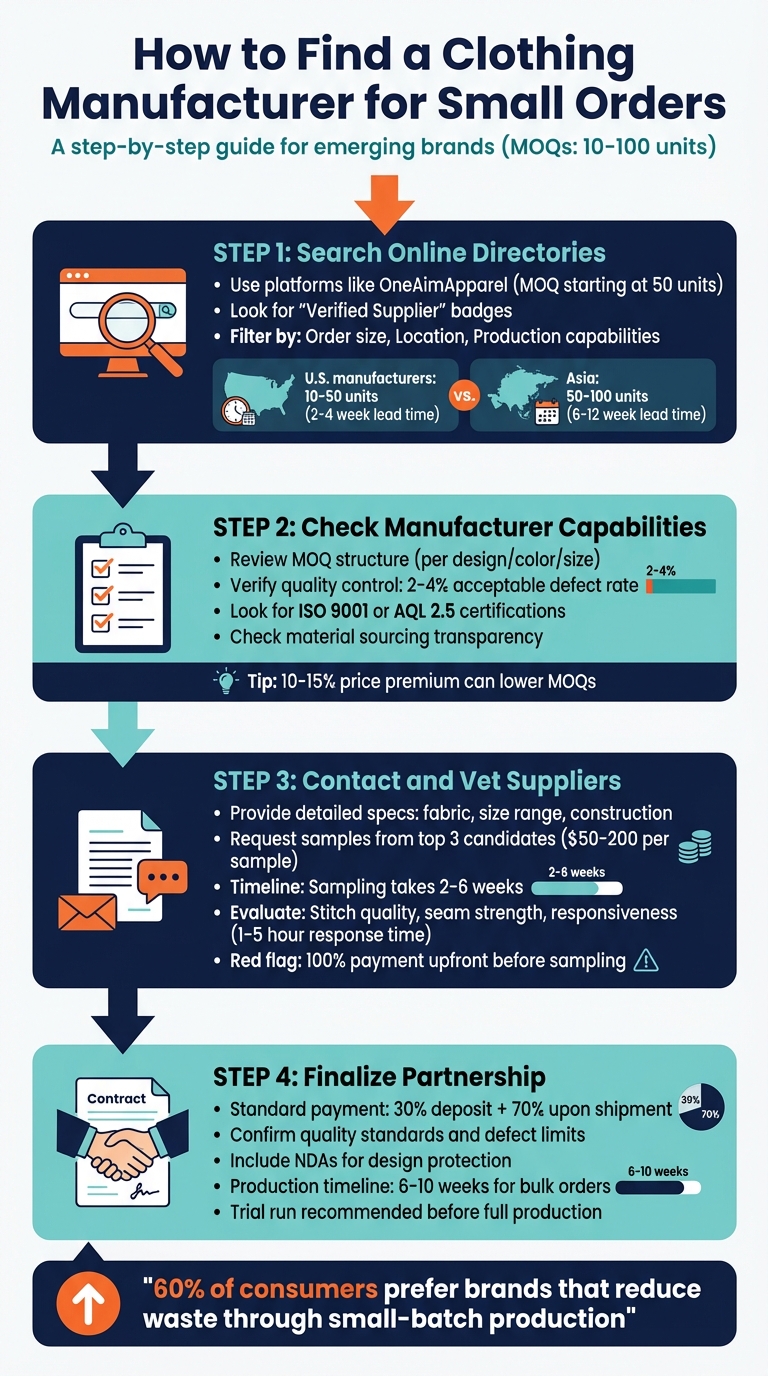
- Search Online Directories: Platforms like OneAimApparel connect you with verified suppliers accepting low MOQs, starting at 50 units. Use filters for order size, location, and production capabilities.
- Check Manufacturer Capabilities: Understand their MOQ structure, quality control processes, and production capacity. Look for flexibility (e.g., splitting quantities across designs) and transparency in material sourcing.
- Contact and Vet Suppliers: Write clear inquiries with detailed specs (e.g., fabric, size range). Request samples to evaluate quality and responsiveness before committing.
- Finalize Agreements: Review contracts for payment terms, timelines, and quality standards. Ensure clear expectations for small orders, including trial runs or pooled fabric options.
Low MOQ manufacturing helps emerging brands test designs cost-effectively while aligning production with demand. By focusing on clear communication, quality checks, and detailed agreements, you can build a reliable partnership and bring your designs to market confidently.
4-Step Process to Find Clothing Manufacturers for Small Orders
Step 1: Search Online Directories for Manufacturers
Find Manufacturers on Online Platforms
Online directories offer an excellent way to connect with verified suppliers. For instance, OneAimApparel is a platform that helps emerging brands find manufacturers willing to accept low MOQs - starting at just 50 units. Beyond connecting you to suppliers, they also assist with design, material selection, and quality control throughout the process.
OneAimApparel provides detailed profiles for each supplier, including information on production timelines, pricing, and client portfolios. This makes it easier to identify partners that align with your specific needs for small orders.
When using such platforms, focus on features like "Verified Supplier" badges or "Trade Assurance" programs. These indicators show that the manufacturer has been vetted for reliability and quality. Suppliers with these badges often respond quickly, which is a strong sign of dependability.
Once you’ve identified potential suppliers, refine your search with filters tailored to your product requirements and order size.
Filter Search Results by Order Size
OneAimApparel’s filtering tools allow you to narrow down manufacturers based on your specific production needs. Start by setting your MOQ requirement to ensure the supplier can handle your order size. Be sure to clarify whether the MOQ applies to each design, color, or size, as some factories may require 50 units per variation.
You can also apply filters based on geographic location. For example, U.S.-based manufacturers often accept MOQs as low as 10–50 units and have shorter lead times of 2–4 weeks. On the other hand, offshore suppliers in Asia might require 50–100 units, with lead times ranging from 6–12 weeks.
Another useful filter is production capabilities. Look for manufacturers that specialize in the techniques you need, such as "Cut-and-Sew", "Digital Printing (DTG)", or "Private Label." For smaller runs, digital printing can make orders as low as 25 units cost-effective, while traditional screen printing typically requires over 200 units.
Lastly, prioritize suppliers offering prototyping or sample services. This allows you to evaluate the construction and fit of your product before committing to a full production run.
sbb-itb-76527d2
Step 2: Check Manufacturer Capabilities
Review MOQs and Production Capacity
When dealing with small-batch production, understanding minimum order quantities (MOQs) is a must. MOQs can be tricky - some manufacturers apply them to your total order, while others break them down by design, color, or size. For instance, a factory might agree to a 50-unit minimum but require 50 units per color, quickly turning your commitment into 200 or more units.
To avoid surprises, ask manufacturers to explain their MOQ structure clearly. Find out if they allow you to split quantities across multiple SKUs. Manufacturers with flexible production systems or "micro-factories" are ideal for small-scale runs, as they avoid the high costs of mass tooling and are designed for adaptability.
Another useful tip? Work with suppliers who stock fabric inventory. In 2021, Lena Ruiz, founder of Thread & Grain, negotiated a lower MOQ with a Portuguese mill by opting for their existing GOTS-certified yarn. Instead of the original 2,000-unit minimum, she secured a deal for 300 units by agreeing to a 12% price premium. Over time, her consistent orders dropped the MOQ to just 150 units.
If you're looking to negotiate lower MOQs, emphasize your potential for future orders. Offering a slight per-unit premium - typically around 10–15% - can make manufacturers more willing to accommodate smaller runs. Additionally, ask about their material sourcing practices. Manufacturers who can name specific mills for fabrics and dyes demonstrate maturity and transparency, which are essential for small-batch production.
Once you’ve clarified their MOQs, shift your focus to their quality control processes.
Check Quality Control Methods
A manufacturer’s quality control system is a key indicator of their reliability. In apparel production, acceptable defect rates usually fall between 2% and 4%. Before committing, confirm that the manufacturer follows standardized quality control methods, such as AQL 2.5, or holds certifications like ISO 9001, which ensures they have documented quality management protocols.
Request pre-production samples to evaluate the quality of their work. These samples, which typically cost between $50 and $200, allow you to assess stitch quality, seam strength, and overall construction. For a thorough evaluation, consider ordering two identical samples: send one to a third-party lab for material testing (checking factors like shrinkage, tensile strength, and weight), and keep the other for an internal fit review.
Good quality control also involves strong communication and reliability. Top small-batch manufacturers often respond to inquiries within 1 to 5 hours. For example, Dongguan Zhongyi Clothing Co., Ltd. has earned a 4.9/5.0 rating, a 98.2% on-time delivery rate, and BSCI certification, reflecting their commitment to quality and efficiency.
Ask suppliers about their defect reporting systems and material traceability practices. Reliable manufacturers should openly share their quality control protocols and provide client references. Be cautious if they refuse, citing "NDAs", as this could signal a lack of transparency. With nearly 60% of consumers now favoring brands that prioritize waste reduction, strong quality control and sustainable practices aren’t just good for production - they’re vital for building your brand’s reputation.
Step 3: Contact and Vet Manufacturers
Write Clear Inquiries to Manufacturers
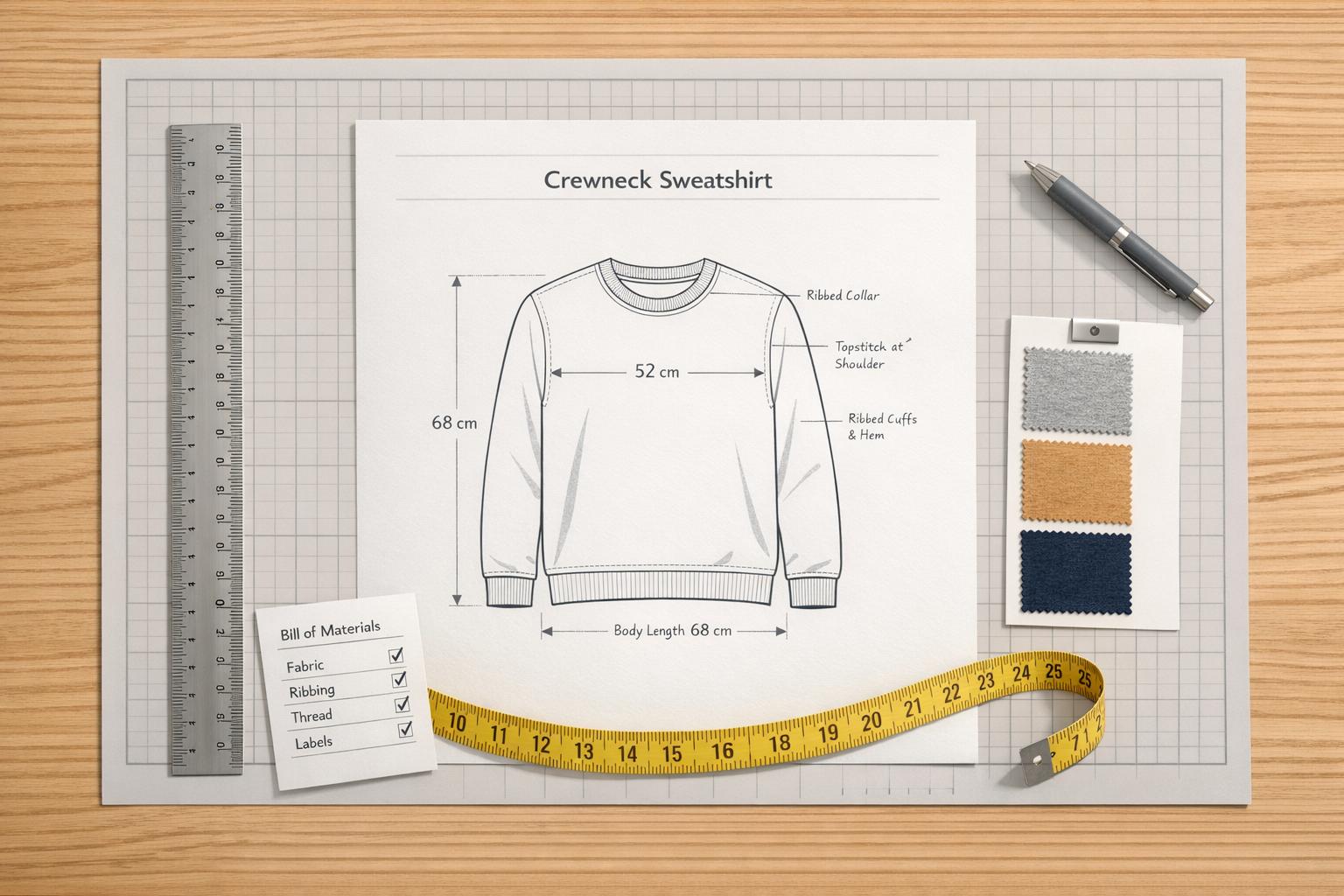
The first message you send to a manufacturer is crucial - it sets the tone for your potential partnership. Avoid vague questions like “Can you make hoodies?” Instead, provide detailed technical specifications. This includes flat technical sketches (front and back), fabric details (composition and weight in ounces or GSM), construction breakdowns, stitch types, and trim requirements like zippers, buttons, or labels.
Be upfront about your estimated order quantity and ask whether minimum order quantities (MOQs) apply per design, color, or size. Specify your size range (e.g., XS–XL) and the intended fit (oversized, slim-fit, or compression). Sharing your target cost per unit and planned retail price is also key. This helps both sides quickly assess if your pricing aligns. Many apparel brands aim for a 60% to 70% gross margin to cover expenses like marketing, fulfillment, and returns.
Set clear timeline expectations by sharing your desired launch date and asking for realistic lead times. Sampling typically takes 2–6 weeks, while bulk production can take 6–10 weeks. Let them know if you need Full Package Production (FPP), which includes fabric sourcing and packaging, or if you only require Cut-Make-Trim (CMT) services. Serious manufacturers will likely ask detailed questions about your tech pack, fabric, sizing, trims, and finishing requirements. As Garment Resources puts it:
"Without these, pricing is fantasy"
To streamline the process, create a supplier questionnaire in a spreadsheet. Use it to ask all potential manufacturers the same questions, making it easier to compare responses. Request tiered quotes for varying quantities - like 100, 500, and 1,000 units - to evaluate how scaling impacts your costs. Be cautious of manufacturers who agree to everything without asking technical questions, refuse to provide references due to NDAs, or demand full payment upfront before sampling.
Once you’ve gathered detailed responses, the next step is to evaluate suppliers by requesting samples.
Request Samples and Prototypes
Samples are where the talk becomes tangible. They give you a chance to see a manufacturer’s capabilities in action. Start by requesting samples from your top three candidates so you can compare quality, fit, and craftsmanship. Factories typically charge $50 to $200 or more per sample - sometimes double the bulk production rate - to cover the development costs. While this might seem like a hefty investment, it’s worth it. Poor communication or quality issues during sampling often predict bigger problems down the line.
When you receive a sample, inspect it thoroughly. Pay attention to stitching, seam consistency, and the attachment of components like buttons or zippers. Verify that the fabric matches the specified weight, texture, and stretch. For performance wear, test its stretch recovery and moisture-wicking properties. Double-check the sample against your size chart and tech pack measurements to confirm the manufacturer’s ability to follow grading rules accurately.
Sampling is also an opportunity to gauge the manufacturer’s communication and responsiveness. As Olivia Chen, a wedding stylist and fashion buyer, notes:
"Poor replies early on often indicate bigger issues later"
If a manufacturer is slow to respond during this early stage, they’re likely to be even slower once production begins.
Before investing in a custom prototype, ask to see showroom samples of their previous work. This can give you a sense of their general quality standards. Be honest about your actual order volume - don’t overpromise large quantities just to secure cheaper sampling. Misleading manufacturers can harm your reputation. As Melanie DiSalvo, founder of A Look Behind the Seams, explains:
"It takes the same amount of time and effort to develop a style for an order of just 10 garments as it does for an order of 10,000"
Step 4: Finalize the Partnership
Review Contracts and Agreements
Once your sample is approved, it’s time to finalize the payment terms and contracts. Payment terms often include a 30% deposit upfront, with the remaining 70% due upon shipment (commonly referred to as Cash Against Document or CAD) [5,21]. For higher-end or custom products, you might see deposits climb to around 50%. Be cautious about manufacturers who insist on 100% payment before production - this could leave you shouldering all the risk.
Double-check the Minimum Order Quantity (MOQ) structure, especially if it varies by design, color, or size, to avoid unwelcome surprises about order volumes. Clearly outline quality control standards, such as acceptable defect rates and measurement tolerances, and decide who will bear the responsibility for rework if defects exceed those limits [3,21,22].
Make sure your contract includes clauses about design ownership and enforce Non-Disclosure Agreements (NDAs) to safeguard your intellectual property [3,21]. For smaller or recurring orders, confirm how long the factory will store digital assets and patterns - ideally, this should be at least 24 months to maintain consistency for future production runs. Include realistic timelines in your agreement: sampling generally takes 2–6 weeks, while bulk production can take 6–10 weeks [22,28]. Also, set clear communication protocols for handling delays and include penalties for missed deadlines.
Before moving into full production, ask for a Pre-Production (PP) Sample. This sample acts as the benchmark for materials, stitching, and overall fit. Ensure your contract requires proper documentation for fabric dyes or specialty materials, especially to comply with U.S. regulations like CPSIA. If your product requires custom molds or dies, negotiate shared ownership or exclusive rights for a specified period, such as 24 months.
Plan production timelines based on your launch date. To gauge reliability, request delivery data from three recent orders. A variance of more than ±3 days on a 30-day lead time might signal poor scheduling. Finally, ensure your contract covers quality standards, approval processes, compensation policies for defective goods, and exit terms [5,35]. These measures help secure a smoother production process and reliable deliveries.
Set Clear Expectations for Small Orders
Once contracts are signed, focus on setting clear production expectations. Small orders are often slotted between larger ones, which can lead to delays. Request a detailed production schedule upfront and confirm whether the manufacturer can handle rush orders if needed [2,34]. If on-time delivery is critical, consider offering a small surcharge or higher per-unit price to cover the factory’s setup costs for smaller runs.
Whenever possible, opt for stock materials - using the manufacturer’s existing fabrics and trims can reduce MOQs and speed up production timelines. For custom materials, be prepared for longer lead times and higher costs. If you’re unsure about committing to a full production run, propose a trial run to test quality and timelines. Alternatively, you can negotiate MOQs by “pooling” fabric or combining counts across different colors and sizes of the same style. These strategies help manage risk while keeping your options open.
Keep all agreements and updates documented - whether through emails, tech packs, or project management tools - to ensure accountability. Schedule regular check-ins with a dedicated account manager to stay on track [5,35]. As Amanda Rango, Designer and Product Developer at ARD Fashion Consulting, puts it:
"The apparel production process can feel overwhelming, but with clear communication, proper planning, and realistic expectations, you can navigate it successfully."
Understanding Minimum Order Quantities For Fashion Brand
Conclusion
Choosing the right clothing manufacturer for small orders revolves around three key factors: ensuring low MOQs, confirming quality control measures, and fostering a partnership built on effective communication. Low MOQs - typically between 10 and 100 units per style - give you the flexibility to test designs without overcommitting resources, which is critical in a market where nearly 60% of consumers value brands that actively reduce waste.
Quality control is essential to protecting your brand's reputation. The industry standard for acceptable defect rates ranges between 2–4%, so it's important to include these benchmarks in your contracts. Always request pre-production samples to check construction and fit. As Jiya Choudhary from Maker's Row advises:
"A little investment of time to get the best fit for your brand can build the foundation for growth in satisfying customers and, most importantly, long-term success."
Your manufacturer should be seen as a strategic partner, not just a supplier. Start small with a trial run of one style to evaluate their reliability, then gradually expand production as trust develops. Provide detailed tech packs and maintain consistent communication throughout the process. Whether you opt for domestic manufacturers with 2–4 week turnarounds or offshore options for lower costs, the strength of this partnership will ultimately have a bigger impact on your success than the initial price tag.
The shift toward small-batch production has opened up new opportunities for agile, direct-to-consumer brands. By focusing on responsive communication during your initial outreach, negotiating MOQs that align with your growth plans, and formalizing agreements around timelines and quality, you can reduce financial risks while setting your business up for long-term success. These steps not only streamline your production process but also give your brand a competitive advantage in today's evolving fashion market.
FAQs
What’s the fastest way to confirm a factory’s true MOQ?
The fastest way to find out a factory’s actual MOQ is to ask the manufacturer directly during your first inquiry. Make sure your questions are clear and specific, and request a direct confirmation to prevent any confusion. You can also check supplier profiles on platforms like Maker’s Row or Alibaba, as they often list detailed MOQ information. This can help you confirm details early and avoid wasting time.
How do I protect my designs when working with a new manufacturer?
To make sure your designs are protected, it's important to understand your intellectual property rights. Copyrights are key for securing ownership over graphic designs and patterns, while trademarks or design patents can help shield your work from being imitated.
For added security, consider using confidentiality agreements or non-disclosure agreements (NDAs) to keep your designs private. Keep an eye on the market to spot any potential copies, and don’t hesitate to enforce your rights if necessary. If you’re unsure where to begin, consulting with an intellectual property attorney can provide valuable guidance and help you develop a solid protection strategy.
What should I test on a sample before approving production?
Before giving the green light to a sample, it's crucial to test its key elements to maintain quality and consistency:
- Fit and measurements: Ensure the garment aligns with your exact specifications and fits as intended.
- Construction and stitching: Inspect seams and stitching to confirm they can withstand wear and tear.
- Materials and finishing: Double-check that the fabric, trims, and finishing touches meet your quality standards.
- Fabric quality: Run tests for shrinkage, colorfastness, and how well the fabric recovers its shape after stretching.
- Appearance: Verify that prints, embroidery, and colors match your design vision.
By thoroughly testing these aspects, you can avoid costly issues during bulk production.