When choosing the best fabric for t-shirts, it all comes down to comfort, durability, breathability, cost, and eco-friendliness. Here's a quick rundown of the top 8 fabrics and how they stack up:
- 100% Cotton: Soft, breathable, and affordable, but prone to shrinking and fading.
- Cotton-Polyester Blend: Combines cotton's comfort with polyester's durability and wrinkle resistance, though less eco-friendly.
- Tri-Blend: A mix of cotton, polyester, and rayon, offering premium softness and drape but harder to recycle.
- Ring-Spun Cotton: Softer and more durable than regular cotton, with a smoother texture at a slightly higher price.
- Polyester: Moisture-wicking, durable, and quick-drying, but less breathable and not biodegradable.
- Bamboo: Luxuriously soft, hypoallergenic, and eco-friendly, though more expensive and requires gentle care.
- Organic Cotton: Grown without harmful chemicals, offering softness and sustainability but at a higher cost.
- Modal: Silky, lightweight, and moisture-absorbing, with a premium feel and better durability than cotton.
Quick Comparison
| Fabric Type | Comfort | Durability | Breathability | Eco-Friendliness | Cost |
|---|---|---|---|---|---|
| 100% Cotton | High | Moderate | High | Moderate | Low |
| Cotton-Poly Blend | Moderate | High | Moderate | Low | Low |
| Tri-Blend | Very High | High | Moderate | Low | High |
| Ring-Spun Cotton | High | High | High | Moderate | Moderate |
| Polyester | Moderate | Very High | Low | Low | Low |
| Bamboo | Very High | High | Very High | High | High |
| Organic Cotton | High | High | High | Very High | Moderate-High |
| Modal | Very High | High | Very High | High | High |
Each fabric has its pros and cons, so your choice depends on your priorities - whether it's softness, longevity, eco-consciousness, or budget. Keep reading for a detailed breakdown of each material.
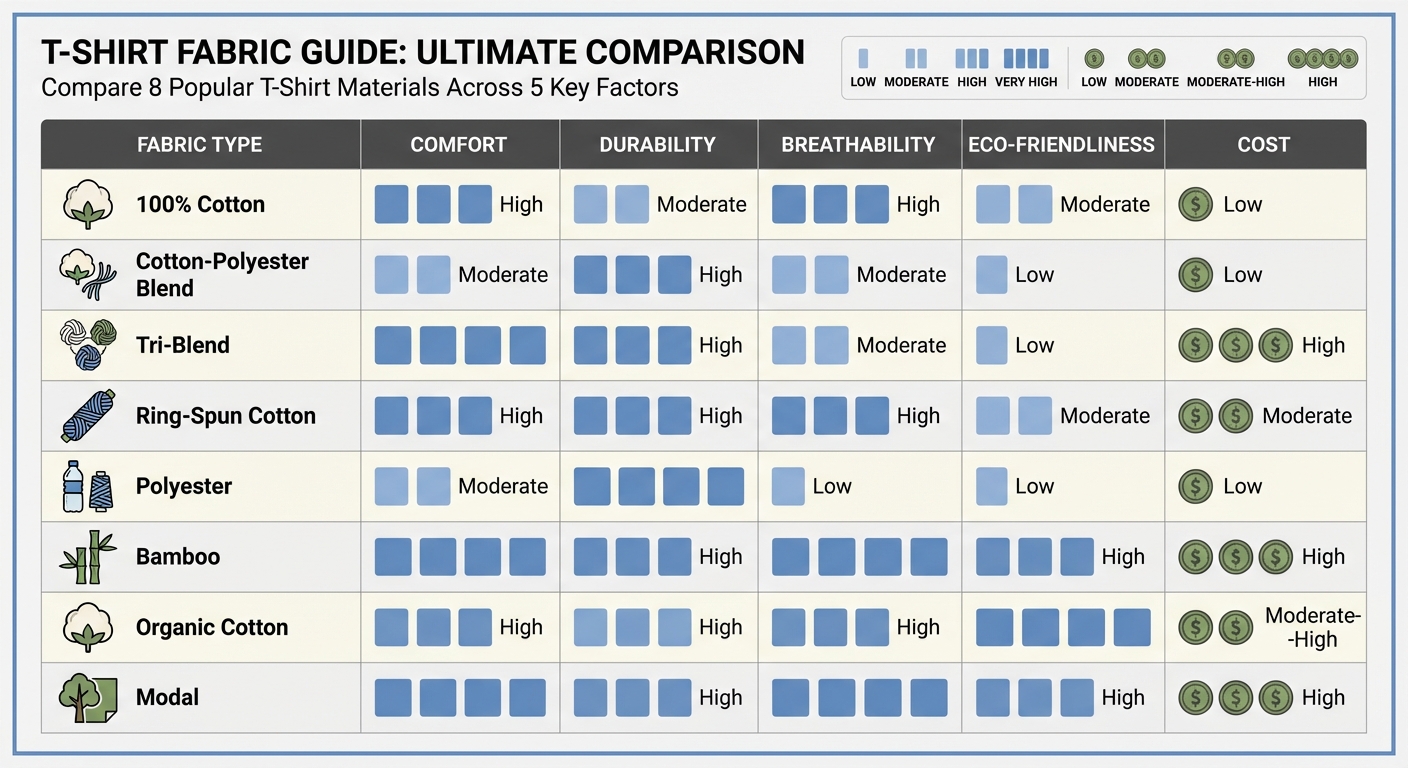
T-Shirt Fabric Comparison: 8 Materials Rated by Comfort, Durability, Breathability, Eco-Friendliness and Cost
1. 100% Cotton
Comfort
Known as the "Classic Comfort King", 100% cotton is naturally soft and gentle on the skin, making it a popular choice for clothing. Processes like combing and ring-spinning refine the fibers, while higher yarn counts (like 40s or 50s) create a smoother, more polished texture. This combination delivers a luxurious feel that's hard to beat.
Breathability
Cotton allows air to circulate freely, keeping you cool on hot days. While it absorbs moisture rather than wicking it away, its lightweight and breathable nature prevents that sticky, clingy feeling. This airflow makes it a reliable choice for warm weather, even if it doesn't wick sweat like some synthetic fabrics.
Durability
Cotton holds up well for daily wear, but its natural fibers can wear out faster than synthetics over time. Without pre-shrinking, cotton garments may shrink in the wash, and frequent laundering can lead to fading. To extend the life of your cotton clothing, stick to cold water washes and use low heat when drying.
Sustainability
Cotton is biodegradable, giving it an edge over synthetic materials when it comes to environmental impact. That said, conventional cotton farming often involves synthetic fertilizers and pesticides. Opting for organic or recycled cotton is a smarter choice for reducing environmental strain.
Cost-Effectiveness
Basic cotton is budget-friendly, making it a go-to for bulk purchases and promotional items. Premium varieties like Pima, Supima, and organic cotton come at a higher price due to their longer fibers and eco-conscious production. However, even these premium options strike a great balance between comfort and value.
sbb-itb-76527d2
Cotton vs Poly vs 50/50 vs Tri-blends: The T-Shirt Test Part 1
2. Cotton-Polyester Blend
Looking at comfort, durability, breathability, environmental impact, and cost, cotton-polyester blends stand out for their practical benefits. Adding polyester to cotton changes the fabric's performance in noticeable ways.
Comfort
Cotton-polyester blends bring together the best of both worlds: the softness of cotton and the lightweight, moisture-wicking qualities of polyester. This combination creates a fabric that feels softer than pure polyester. Common blend ratios include 65% polyester/35% cotton for extra durability, 50/50 for a balanced feel, and 52% cotton/48% polyester for that softer, retail-quality texture. CVC (Chief Value Cotton) blends, which have more than 50% cotton, aim to replicate the feel of pure cotton but with added strength.
Durability
Adding polyester gives these blends a major durability boost. They’re stronger and hold up better over time compared to 100% cotton. These fabrics resist stretching, fading, and wear while maintaining their shape and minimizing shrinkage. Plus, their natural wrinkle resistance makes them easy to care for - ideal for everyday wear or travel.
Breathability
When it comes to airflow, cotton-polyester blends sit in the middle - better than polyester but not as breathable as pure cotton. While they don’t match cotton's superior breathability, their moisture-wicking and quick-drying properties make them a practical choice for activewear or humid climates.
Environmental Impact
On the downside, these blends aren’t very eco-friendly. The polyester component, being petroleum-based, makes recycling difficult and the fabric largely non-biodegradable. This is worth considering when weighing their overall impact.
Cost
Cotton-polyester blends are a budget-friendly option, sitting between the cost of basic cotton and premium specialty fabrics. They’re especially economical for large-scale production and are often cheaper than 100% organic cotton. For promotional items, a 50/50 blend offers a good mix of softness, durability, and affordability.
3. Tri-Blend
Tri-blend fabric takes the cotton-polyester combination a step further by adding a third fiber - rayon. Typically made up of 50% polyester, 25% cotton, and 25% rayon, this blend provides an excellent mix of breathability, durability, and softness. Cotton ensures natural airflow, polyester adds strength and moisture-wicking abilities, and rayon contributes a silky smooth texture and elegant drape. The result? A t-shirt that feels perfectly worn-in from day one.
Comfort
One of the standout features of tri-blend fabrics is their softness. The rayon element gives the material a silky, luxurious touch that many people find even smoother than pure cotton or polyester.
As Bryan Robinson from TshirtGrowth puts it, tri-blend "has the advantage of taking the best qualities from the three fabrics from which it is created".
This fabric naturally conforms to the body, offering a flattering drape and a slight stretch that makes movement effortless. Plus, its moisture-wicking properties keep you feeling dry and comfortable, even during active use.
Durability
Polyester plays a key role in the durability of tri-blend shirts. These shirts are designed to resist common issues like stretching, sagging, and pilling, outperforming 100% cotton in these areas. They also maintain their shape and color through repeated washes and are less prone to wrinkles and shrinkage.
For instance, the District DM130 Perfect Tri Tee, available in 36 colors, and the affordable Next Level NL6010 are great examples of the 50/25/25 tri-blend composition, balancing quality and longevity. However, while durable, tri-blends come with some environmental concerns.
Sustainability
Tri-blend fabrics have environmental drawbacks. The polyester component, being petroleum-based, contributes to a higher carbon footprint and sheds microplastics into waterways with each wash.
Dr. Lena Patel from the Sustainable Apparel Research Group explains, "When you wear a 50% polyester shirt, every wash releases microfibers into waterways".
Rayon, though derived from wood pulp, requires chemical processing that can harm the environment. Additionally, the combination of synthetic and natural fibers makes these shirts difficult to recycle and non-biodegradable.
Cost-Effectiveness
Tri-blend shirts tend to be more expensive upfront compared to basic cotton or cotton-polyester blends. This higher price reflects their premium three-fiber construction. However, their durability often justifies the cost, as they resist the shrinking and stretching that can shorten the lifespan of 100% cotton shirts. For example, the Next Level NL6010 offers a tri-blend experience at a fraction of the price of higher-end options.
4. Ring-Spun Cotton
Ring-spun cotton takes the traditional cotton experience to the next level with a specialized spinning process. Unlike standard open-end spinning, this method continuously twists and thins cotton strands into a fine, strong rope of fibers. By aligning the fibers and discarding shorter, irregular ones, the result is a fabric that's smoother, softer, and feels "worn-in" right from the start. Like other fabrics, it is evaluated based on comfort, durability, breathability, sustainability, and cost.
Comfort
The comfort of ring-spun cotton comes from its unique yarn construction. A higher singles count - such as 30 for premium options compared to 18 for standard - creates a finer, softer yarn.
"The softness of ringspun cotton isn't just marketing, it's science. The continuous spinning process removes rough edges, making the yarn finer and denser." – Apparelbus
Popular choices include the Bella+Canvas 3001 Jersey T-Shirt, which uses a proprietary combed and ring-spun process with eco-friendly dyes and reduced water usage. Another favorite is the Next Level 3600 Premium Fitted Crew, featuring 32 singles combed ring-spun cotton for an ideal balance of softness and durability. For a budget-friendly pick, the Gildan Softstyle offers an affordable entry into ring-spun fabrics with a noticeable improvement in softness over standard cotton.
Durability
Thanks to the twisting process, ring-spun cotton produces stronger, more cohesive yarn with fewer imperfections. This makes it resistant to pilling, fraying, and losing shape, even after repeated washes. In fact, many find that it feels even softer over time. However, while it outlasts standard cotton in durability, it doesn’t quite match the resistance to shrinking and mechanical stress that polyester provides.
"Ring-spun cotton is one step up from COE [carded open-end] in softness and in cost as well... the small increase in cost is more than made up for by the increase in softness." – UberPrints
It’s worth noting that the ring-spinning process is much slower - about seven times slower than open-end spinning - contributing to its higher quality and cost. Most ring-spun cotton garments shrink about 3%–7%, so choosing "pre-shrunk" versions can help maintain a consistent fit.
Breathability
The finer weave of ring-spun cotton enhances airflow and drape, retaining the natural breathability of cotton while feeling lighter and more comfortable. This makes it a great choice for everyday wear and warm-weather activities.
Sustainability
Ring-spun cotton’s durability means garments last longer, reducing the need for frequent replacements. As a natural, biodegradable fiber - especially when organically sourced and grown without harmful pesticides - it offers an eco-conscious alternative. A 2025 Global Lifestyle Monitor survey found that about 75% of consumers worldwide prefer clothing made from cotton or cotton blends over synthetic fabrics. This reflects a growing preference for environmentally friendly and long-lasting materials.
Cost-Effectiveness
Ring-spun cotton falls into the mid-price range. It’s more expensive than regular cotton but often costs less than premium blends. Despite the higher upfront cost, its durability and maintained appearance make it a smart long-term investment. Wholesale prices start at around $1.63, with bulk discounts available, such as 5% off for orders over $1,000 and 15% off for orders above $5,000. For premium softness, look for a singles count of 30 or higher when shopping.
5. Polyester
Polyester, a synthetic material derived from petroleum, is designed for strength and performance. Created by melting plastic and spinning it into fibers, it has become the most widely used synthetic fabric in the clothing industry. Its popularity is especially notable in athletic wear, uniforms, and gear where durability is key.
Let’s break down how polyester performs across key factors.
Comfort
Polyester isn’t as soft as cotton due to its synthetic makeup. It’s lightweight and often blended with spandex to improve flexibility for athletic use. However, its plastic-like texture can feel rough and may irritate sensitive skin. Another downside is its tendency to hold onto body odors more than natural fabrics if not washed promptly.
Durability
When it comes to durability, polyester excels. It resists stretching, creasing, and general wear and tear. Unlike cotton, it doesn’t fade or shrink over time. Additionally, it’s abrasion-resistant, wrinkle-resistant (often eliminating the need for ironing), and holds its size and shape even after multiple washes.
Breathability
Polyester has some trade-offs in breathability. It’s less breathable than natural fabrics and can trap heat. However, it compensates with moisture-wicking properties that pull sweat from the skin and allow it to evaporate quickly. This makes it a practical choice for intense physical activities, and it dries significantly faster than cotton.
Sustainability
Traditional polyester has serious environmental challenges. Its production is energy-intensive, releasing approximately 282 million metric tons of CO₂ annually. It’s also non-biodegradable, taking up to 200 years to decompose in landfills. Washing polyester adds to the issue, as it sheds microplastics that pollute waterways and harm aquatic life. Recycled polyester (rPET) offers a more eco-friendly option, with about five plastic bottles being repurposed to make one t-shirt. This recycled fiber maintains its quality through several recycling cycles.
Cost-Effectiveness
Polyester is budget-friendly, especially for large-scale production. Basic polyester t-shirts are priced between $10 and $25. While recycled polyester options may be slightly more expensive due to sustainable processing, the fabric’s durability and wrinkle resistance make it a cost-effective choice in the long run. Additionally, polyester is ideal for sublimation printing, as its synthetic fibers bond well with ink, creating vibrant and lasting designs.
This wraps up our evaluation of polyester, rounding out the review of synthetic fabrics.
6. Bamboo
Bamboo fabric is an intriguing alternative to polyester, offering a blend of comfort and sustainability. Derived from one of the fastest-growing plants on Earth, bamboo can grow up to three feet in a single day. It’s ready for harvest in just 3–5 years, making it a renewable resource. Once processed, its fibers create an incredibly smooth material that’s become a go-to for t-shirts. Jerry Lee, an expert in apparel manufacturing at Modaknits, highlights its appeal: "Bamboo is softer and more breathable than cotton, making it a premium option for comfort".
Here’s how bamboo stacks up in key areas:
Comfort
Bamboo t-shirts are known for their luxurious softness, often compared to silk or cashmere. Unlike cotton, bamboo’s fibers glide smoothly over the skin, reducing irritation. Its hypoallergenic and antimicrobial properties make it an excellent choice for sensitive skin [41,24]. Additionally, bamboo excels at moisture-wicking, keeping you dry during workouts or hot days. Thanks to its natural antibacterial qualities, bamboo fabric resists odors, meaning you may not need to wash it as often as cotton.
Durability
With proper care, bamboo t-shirts can last 3–5 years. The fabric is naturally stronger than cotton, especially when wet, and holds dyes exceptionally well, ensuring vibrant colors through repeated washes [44,46]. Bamboo also resists pilling and maintains its shape better over time, unlike cotton, which can sag or stretch [46,48]. However, bamboo is sensitive to heat and can shrink by 5%–10% if exposed to high temperatures, compared to cotton’s 3%–5% shrinkage rate. To keep bamboo garments in top condition, it’s best to wash them in cold water (86°F or lower) and air dry them [45,47].
Breathability
Bamboo fabric’s unique micro-gap structure promotes excellent airflow, making it far more breathable than synthetic materials like polyester. It absorbs moisture up to three times faster than cotton and dries quickly, helping to keep you cool and comfortable throughout the day.
Sustainability
Bamboo is a standout in terms of eco-friendliness. It grows up to 10 times faster than traditional trees, thrives on rainwater, and uses 30%–70% less water than cotton [41,45]. Naturally pest-resistant, bamboo doesn’t require pesticides or chemical fertilizers [41,43]. After harvest, it regenerates from its roots, helping to prevent soil erosion.
Companies like tasc Performance are leading the way with sustainable bamboo blends (52% organic cotton, 43% bamboo viscose, 5% elastane). Their manufacturing partners reuse 99% of wastewater and power facilities with 100% wind and solar energy. For the most eco-conscious choice, look for bamboo labeled as "mechanically processed" or produced through "closed-loop" systems, which minimize chemical runoff [12,41].
Cost-Effectiveness
Bamboo t-shirts tend to cost more than standard cotton due to the complexity of their production [24,41]. However, their durability, natural UV resistance (UPF 50+), and reduced need for frequent washing can make them a smart investment [44,46]. The fabric’s ability to retain its softness and vibrant colors over time adds to its appeal for those who value both comfort and sustainability.
7. Organic Cotton
Organic cotton builds on the eco-conscious appeal of bamboo by offering a more traditional fabric that doesn’t compromise on environmental responsibility. It’s grown without synthetic pesticides, herbicides, or genetically modified seeds, making it a cleaner choice for t-shirt production.
"Research shows that organic agriculture is a good option for food security… and [is] more sustainable in the long-term" – United Nations Conference of Trade and Development
Let’s dive into what makes organic cotton a standout option for comfort, durability, and sustainability.
Comfort
Organic cotton delivers the familiar softness and breathability many love, but without the environmental downsides. With its matte softness that gets even better after every wash, this fabric becomes more comfortable over time as the fibers relax. It’s lightweight and breathable, allowing for natural air circulation while maintaining a cozy, non-clingy fit. Free from chemical residues like formaldehyde or AZO dyes, it’s also hypoallergenic and gentle on sensitive skin. While bamboo offers a silky, cool touch, organic cotton provides a warmer, more grounded feel - one that 72% of surveyed consumers associate with "classic comfort" and "everyday reliability".
Durability
Despite its natural origins, organic cotton is impressively durable, retaining its softness and structure through multiple washes. Its natural strength ensures it withstands regular wear, though it’s worth noting that it may shrink during the first few washes unless pre-shrunk by the manufacturer. In January 2026, editors at The Good Trade tested top brands like Quince and Terra Thread and found their organic cotton t-shirts maintained their shape and opacity over time.
"Each of the shirts on this list is made with durable fibers that are soft, strong, and still feel new through many washes" – Kayti Christian, Senior Content Strategist at The Good Trade
For optimal durability, look for pre-shrunk options or heavier fabrics (measured in GSM), which offer better structure and longevity.
Breathability
Organic cotton is naturally breathable, making it a great choice for warm weather and extended wear. Its air pockets allow heat to escape and absorb moisture effectively, though it doesn’t wick moisture as quickly as bamboo or polyester. This makes it particularly well-suited for dry heat conditions, where its breathability can shine.
Sustainability
This is where organic cotton truly makes an impact. It uses 71%–91% less water than conventional cotton, which can require up to 2,700 liters to produce a single t-shirt. Organic farming avoids synthetic chemicals, reducing toxic runoff into waterways and protecting ecosystems. Additionally, practices like crop rotation and composting help cut soil erosion by 26%. Perhaps most impressively, organic production can slash greenhouse gas emissions by up to 94%, thanks to the elimination of synthetic fertilizers and pesticides.
"Organic cotton isn't just a fabric choice; it's a statement of intent" – Elisa Muresan
For the most eco-friendly option, choose GOTS-certified t-shirts, which adhere to strict environmental and social standards.
Cost-Effectiveness
Organic cotton t-shirts tend to cost more than conventional ones due to labor-intensive farming and lower yields. Prices range from $15–$24 for affordable brands like Quince and Pact, $30–$48 for mid-range options like Everlane and Patagonia, and up to $100 for premium brands like The Classic T-Shirt Company. However, the higher cost is offset by the fabric’s durability, biodegradability, and environmentally conscious production process.
8. Modal
Modal wraps up our fabric comparison as a rayon-based material crafted from beech tree cellulose. Known for its luxurious silk-like texture at a more accessible price point, it’s often referred to as an "affordable luxury" fabric.
Comfort
Modal is celebrated for its unmatched softness - testing shows it’s 2–3 times softer than standard cotton. The fibers are finer and rounder, creating a smooth surface that feels gentle on the skin and reduces irritation. With the ability to absorb 50% more water than cotton, modal excels at wicking away moisture and keeping you dry. Plus, its plant-based origins make it naturally hypoallergenic, and it maintains its silky texture and drape even after multiple washes.
"A modal T-shirt feels comfortable in the morning, stays fresh through the day, and still looks good after months of wear." – Lavender Hill Clothing
Durability
Modal is far less prone to shrinking than cotton - typically shrinking less than 3%, compared to cotton's 5–10%. It also holds dye exceptionally well, resisting fading even after repeated washes. Another bonus? Modal has a lower tendency to pill compared to bamboo or regular cotton. However, pure modal fibers can weaken with frequent, heavy washing, which is why blending it with cotton or a small percentage of elastane is common to boost its strength.
Breathability
Modal is excellent at keeping you cool, thanks to its breathability and ability to regulate temperature. It allows air to circulate freely and releases moisture quickly, making it a go-to choice for activewear or warm-weather clothing.
Sustainability
Beech trees used for modal production require significantly less water - 10–20 times less than conventional cotton. High-quality processes, like Tencel™ Modal’s closed-loop system, recover 95% of the chemicals and solvents used during production. Modal is also fully biodegradable and doesn’t shed microplastics like polyester does. However, the production process can involve carbon disulfide, which poses risks if not managed properly. To ensure ethical and sustainable sourcing, look for certifications such as FSC, PEFC, EU Ecolabel, or OEKO-TEX Standard 100.
Cost-Effectiveness
Modal fabric typically costs between $8 and $12 per yard, compared to $4–$8 for standard cotton. Finished modal T-shirts often sell for 20–50% more than similar cotton options. While the upfront cost is higher, modal’s durability, color retention, and resistance to wear make it a smart investment for anyone seeking a premium feel with lasting quality.
This concludes our fabric comparison, setting the stage to weigh the overall pros and cons of each material.
Advantages and Disadvantages of Each Fabric
Choosing the right fabric isn't just about looks - it's about balancing comfort, cost, and environmental impact. Natural fibers like 100% cotton and ring-spun cotton are known for their softness and breathability, but they come with challenges like wrinkling and shrinking. On the other hand, polyester is a durable, wrinkle-resistant option, though it tends to trap odors and lacks the natural feel of cotton. For eco-conscious buyers, fabrics like organic cotton, bamboo, and modal offer a more sustainable choice, using much less water than conventional cotton (which requires around 2,700 liters per shirt). However, recycling blended fabrics, such as cotton-polyester or tri-blends, remains a major hurdle.
Sustainability is playing a bigger role in fabric selection. Biodegradable options like organic cotton, bamboo, and modal are gaining traction for their lower environmental footprint. However, blends - while durable and wrinkle-resistant - are difficult to recycle, making them less eco-friendly.
When it comes to cost, the spectrum is wide. Standard cotton and cotton-polyester blends are budget-friendly and ideal for bulk orders or promotional items. Meanwhile, premium fabrics like tri-blends, bamboo, and modal come with a higher price tag but deliver unmatched softness and durability. Ring-spun cotton offers a middle ground, combining quality with a moderate price point.
Here’s a quick look at the pros and cons of each fabric:
| Fabric Type | Key Advantages | Key Disadvantages |
|---|---|---|
| 100% Cotton | Soft, breathable, hypoallergenic, biodegradable | Prone to shrinking and wrinkling; uses a lot of water |
| Cotton-Polyester Blend | Durable, wrinkle-resistant, affordable, holds shape | Less breathable; sheds microplastics; hard to recycle |
| Tri-Blend | Ultra-soft, great drape, vintage look, premium feel | Expensive; prone to pilling; nearly impossible to recycle |
| Ring-Spun Cotton | Softer and more durable than standard cotton; good for printing | Higher cost; can shrink |
| Polyester | Moisture-wicking, quick-drying, durable, colorfast | Retains odors; non-biodegradable; less natural feel |
| Bamboo | Antibacterial, hypoallergenic, sustainable, softer than cotton | Slow drying; chemical-heavy processing; needs gentle care |
| Organic Cotton | Pesticide-free, biodegradable, hypoallergenic, sustainable | More expensive; limited color options; still water-intensive |
| Modal | Silky feel; excellent at absorbing moisture | Prone to pilling; delicate; higher cost |
Each fabric has its strengths and weaknesses, making it essential to weigh your priorities - whether that's comfort, durability, sustainability, or budget - before making a decision.
Conclusion
When selecting the right fabric for your product, it’s essential to consider its intended purpose and the priorities of your brand. For everyday apparel, 100% cotton and ring-spun cotton stand out for their breathability and comfort. On the other hand, 100% polyester is perfect for sportswear, thanks to its moisture-wicking and quick-drying properties. If durability and wrinkle resistance are key - like for corporate uniforms or workwear - cotton-polyester blends are a solid choice.
For brands focusing on eco-conscious consumers, organic cotton and bamboo offer sustainable options that align with environmental values, even if they come with a higher price tag. These materials appeal to the growing number of consumers who prioritize sustainability. Meanwhile, premium brands often opt for tri-blends, which deliver an ultra-soft, luxurious feel that supports higher price points.
To bring your fabric choice to life, collaborating with an experienced manufacturer is crucial. OneAimApparel offers a variety of material options, ranging from cost-effective standard cotton to high-end sustainable fabrics. With a low minimum order of just 50 units, you can experiment with different fabrics without taking on unnecessary risk. They also provide fabric swatches and fit samples, giving you the chance to assess key qualities like softness, drape, and shrinkage before committing to bulk production. Whether you choose classic cotton or premium sustainable materials, aligning your fabric choice with your brand vision starts with the right manufacturing partner.
FAQs
Which t-shirt fabric is best for hot, humid weather?
Linen and other lightweight, breathable fabrics work perfectly for hot, humid weather. They promote airflow and dry quickly, keeping you cool and comfortable throughout the day.
How can I prevent t-shirts from shrinking or fading?
To keep your t-shirts from shrinking, always follow the care label instructions. Stick to washing them in cold water and steer clear of high heat when drying. For new cotton t-shirts, pre-soaking them in cold water before their first wash can minimize initial shrinkage.
To maintain vibrant colors and prevent fading, turn your t-shirts inside out before washing, use cold water, and avoid high heat in both washing and drying. These simple steps can help your t-shirts retain their size, color, and overall fabric quality for longer.
What fabric is best for eco-friendly t-shirts that still feel soft?
For t-shirts that are gentle on both your skin and the planet, organic cotton and TENCEL™ Lyocell stand out as excellent options. Organic cotton is not only biodegradable but also grown without synthetic pesticides, providing a natural and comfortable feel for everyday wear. On the other hand, TENCEL™ Lyocell is crafted through a closed-loop process, reducing waste while delivering an incredibly smooth and soft texture. These materials combine eco-friendly practices with comfort, making them perfect for those who prioritize sustainability in their wardrobe.
