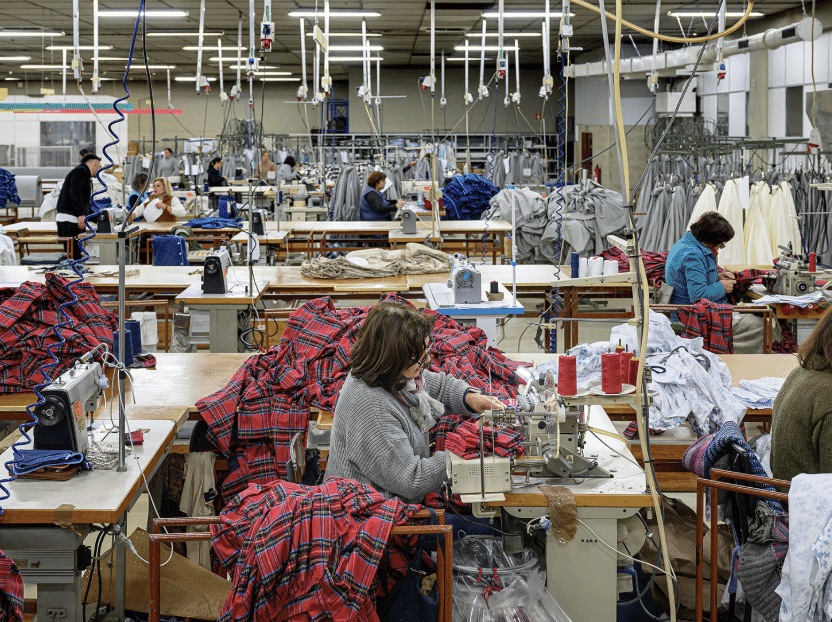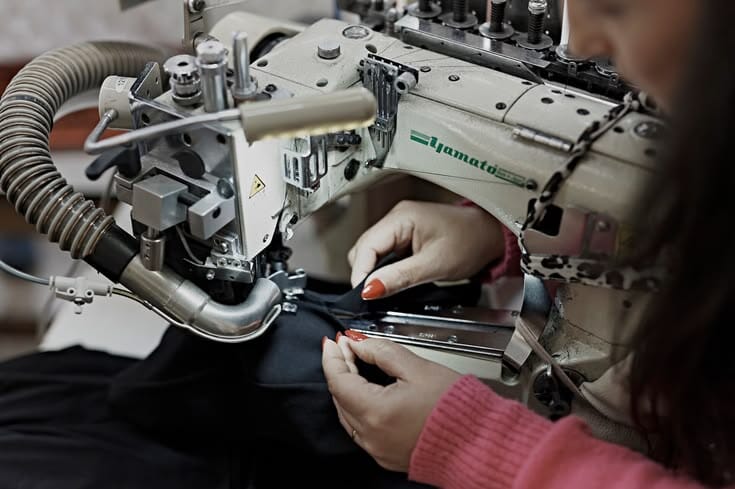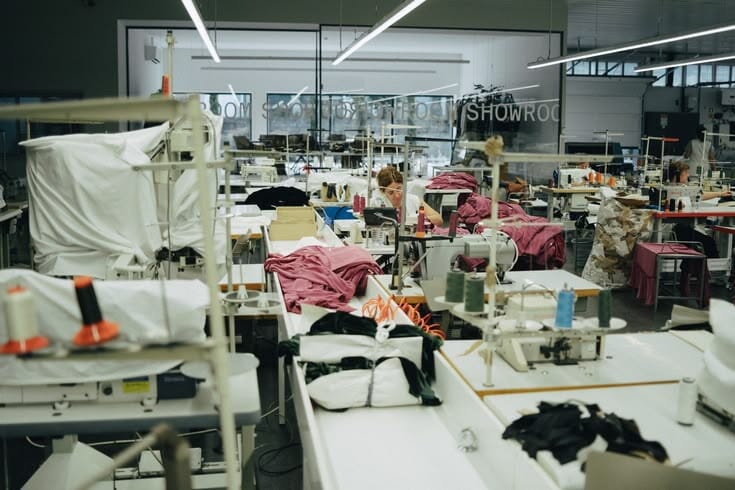
Eastern Europe is one of the EU's larger intra-bloc apparel supply bases, yet most US and Western European brands under 5,000 units a year still skip the region entirely. That blind spot is expensive. Romania, Bulgaria, Poland, Lithuania, Latvia, Slovakia, Czechia, and a slowly recovering Ukraine quietly stitch for Hugo Boss, Max Mara, Inditex, Moncler, and LPP, often at CMT rates 30-45% below Portugal and 50-70% below Italy. The region also ships duty-free inside the single market, lands in Berlin, Paris, or Amsterdam in 48 hours by truck, and clears the 2026-2027 ESPR readiness bar with very little drama.
The pitfalls are real. Capacity is tight at the good factories, no single dominant cluster exists the way Porto anchors Portugal, language fragmentation is a planning tax, and winter heating costs still pull January throughput down. This guide breaks down which country owns which category, what CMT actually costs at 100-500 units, how lead times stack up to Western EU, and where ESPR plus the Digital Product Passport land in 2027.
Heads up: We're OneAim Apparel, a group of 100+ documented clothing manufacturers across 15+ countries. We've run programs in 14 countries since 2022, including 38 production runs across Romania, Bulgaria, Poland, and Lithuania. Operational data below comes from our actual production pipeline. External sources are cited inline.
Key Takeaways
- EU intra-trade is duty-free. Goods sewn in Romania, Bulgaria, Poland, or Lithuania cross to Berlin, Paris, or Milan with zero customs paperwork and full single-market parity (European Commission Trade, 2025).
- CMT runs $3.20-$8.40 per garment. Across 47 OneAim quotes in Q1 2026, basic tee CMT averaged $3.40 in Bulgaria, $3.80 in Romania, $5.10 in Poland, and $5.60 in Lithuania.
- MOQs sit at 100-300 units. Roughly 71% of regional factories accept under-300-unit POs, versus 38% in Portugal and 22% in Northern Italy (OneAim quote pipeline, 2025).
- Lead times beat Asia by 5-7 weeks. PO to delivered in Hamburg averages 7.4 weeks across our 2024-2025 placements, against a general benchmark of 13-15 weeks from Bangladesh or Vietnam (OneAim placement data, 2024-2025).
- ESPR readiness is high. Polish, Romanian, and Lithuanian plants serving Inditex and H&M already run traceability data layers ahead of the 2027 Digital Product Passport mandate (European Commission ESPR, 2025).
- CBAM exposure is zero. Sewing inside the EU sidesteps the carbon border tax that begins biting non-EU sourcing in late 2026.
Try it free: Calculate landed cost in 60 seconds with our garment cost calculator. No email required.
- EU intra-trade
- Movement of goods between EU member states. Zero tariffs, no customs declarations, and full VAT reverse-charge eligibility under the single market.
- ESPR
- EU Ecodesign for Sustainable Products Regulation. Sets durability, recyclability, and traceability requirements for apparel sold in the EU. Phased enforcement begins 2026, full effect on textiles by 2027-2028.
- DPP (Digital Product Passport)
- The data layer that satisfies ESPR. A QR or NFC link tied to each garment, exposing fiber origin, chemical compliance, repairability, and supply-chain steps. Required for textiles from 2027.
- EU labor cost differential
- The hourly loaded labor cost gap inside the EU. On OneAim's tracked sourcing benchmarks, Bulgaria runs near $5.20 per hour, Romania $7.10, Poland $11.40, and Lithuania $12.80, against roughly $42.60 in Germany (OneAim labor benchmarks, 2024-2026).
- FOB (Free On Board)
- Price quoted with the garment loaded onto a truck or vessel at origin. Buyer covers freight, insurance, and import. Standard quote unit for Eastern European factories serving export brands.
- CMT (Cut, Make, Trim)
- Pricing model where the brand owns and supplies fabric and trims. Factory charges only the labor and overhead for cutting, sewing, and finishing. Common across Romania, Bulgaria, and Lithuania.
Why does Eastern Europe matter for 2026 sourcing decisions?
Eastern Europe supplies a significant and growing share of EU27 apparel imports and ranks among the fastest-growing EU sourcing regions (Eurostat External Trade, 2025). For brands producing 100-5,000 units per style, the region pairs EU labor compliance, REACH chemical safety, and ESPR readiness with prices that make Asian sourcing look logistically reckless once duties, freight, and CBAM are layered in. This is the core of the nearshoring versus offshoring calculation for clothing brands that more EU labels are running in 2026.
The math is straightforward. A factory in Lodz, Timisoara, or Kaunas ships to Berlin in 48 hours by truck. Zero customs broker. Zero ocean freight. No Red Sea reroute. Every worker on that cutting floor earns a regulated wage, contributes to social security, and operates inside a plant audited against EU directives. That's a defensibly clean supply chain story without a press release.
Three forces are pushing volume east in 2026. First, Portuguese MOQ floors keep climbing as Porto factories absorb US brand inquiries fleeing Section 301 China duties. Second, the ESPR rollout punishes factories without traceability data, and Eastern European plants serving megabrands already have those systems built. Third, CBAM begins repricing non-EU carbon in late 2026, narrowing the Turkey and North Africa cost gap.
In our placements, the brands thriving here start small and grow inside the same factory. One London streetwear label began with 180 hoodies in Krakow in 2022 and now ships 14,000 units per drop from the same partner. That growth path is rare in Asia at the same starting size.
Citation capsule: Eastern European EU members supply a significant and growing share of EU27 apparel imports at CMT rates 30-45% below Portugal and 50-70% below Italy, making the region the most underpriced EU-compliant option for brands producing 100-5,000 units per style (Eurostat External Trade, 2025).
Which Eastern European countries actually make clothes?
Eight countries carry the regional apparel map, with Romania, Bulgaria, and Poland the dominant producers by volume. Each has a specific lane. Mixing them up is the classic mistake. Asking a Romanian knitwear plant to quote structured wool tailoring wastes three weeks every time.

Romania
Romania is the volume king of the region. The country hosts several thousand registered apparel firms and well over 100,000 garment workers, mostly clustered around Timisoara, Bucharest, Cluj, and Iasi (industry estimates). Strengths cover knitwear, jersey basics, lingerie, premium denim, and Italian-pattern tailoring. Italian ownership is dense, which raises the quality baseline but sometimes locks capacity to incumbent clients. Loaded labor cost runs roughly $7.10 per hour. English is widely spoken in Transylvania and Bucharest, Italian is common, French still pops up.
Bulgaria
Bulgaria runs the lowest CMT rates of any EU member state. Plovdiv, Ruse, and Sofia anchor production for tailoring, mid-market knitwear, and leather goods (BAB Bulgaria, 2025). Greek, Italian, and Turkish brand orders dominate the books. Loaded labor sits near $5.20 per hour. Plovdiv tanneries supply local cutters inside a 40km radius, which is rare anywhere in Europe. English is fine in sales, Russian still appears on the floor with older workers, German is rising.
Poland
Poland operates the most industrialized apparel sector in the region. Lodz, Bielsko-Biala, and Poznan house the major clusters, and the country supplies LPP, Reserved, and German private label at scale (IFG Poland, 2025). Strengths cover structured tailoring, wool outerwear, technical workwear, and outdoor performance. Loaded labor runs $11.40 per hour, the highest in the region after the Baltics. English is fluent in management, German is near-universal, business style is direct and punctual.
Lithuania
Lithuania is the Baltic premium specialist. Kaunas and Vilnius run small-batch knitwear, technical outerwear, and merino performance for Scandinavian and German brands (Lithuanian Apparel and Textile Industry Association, 2025). Capacity is small, only a few hundred firms, but the quality ceiling matches Northern Italy on knitwear. Loaded labor runs $12.80 per hour. English is the working language for export business.
Latvia
Latvia is smaller still, with around 140 apparel firms concentrated in Riga and Liepaja. Specialty runs to outerwear, uniforms, and technical workwear. Latvia overlaps with Lithuania on positioning but at slightly lower volumes and 5-8% lower CMT.
Slovakia and Czechia
Slovakia and Czechia together carry several hundred apparel firms, mostly serving German and Austrian brands within a 5-hour truck radius (Eurostat Prodcom, 2025). Strengths cover technical apparel, automotive textiles, and small-run premium tailoring. Czech labor runs $13.20 per hour, Slovak $11.80. Capacity is genuinely tight, and most plants run on multi-year contracts with established clients.
Ukraine
Ukraine had around 2,000 apparel factories pre-2022, concentrated in Lviv, Kyiv, and Kharkiv. Western capacity (Lviv, Chernivtsi, Ivano-Frankivsk) is operational again in 2026 and CMT rates are the lowest in Europe at $2.80-$3.60 per garment. We still flag Ukraine as conditional. Cargo insurance is patchy, some European insurers exclude the eastern oblasts, and most clients prefer to wait.
Find your factory: Browse the free factory directory preview, or unlock the premium directory for $39 to see 100+ documented factories with direct contacts and MOQs.
What apparel categories does the region dominate?
Eastern European factories produce a substantial share of EU-made tailored garments and EU-origin knitwear, with category specialization concentrated by country (Euratex Annual Report, 2025). The region's strength clusters in five categories where Asian cost advantages erode once complexity, IP, ESPR compliance, or speed-to-shelf enter the equation.
Premium denim and jersey basics
Romania carries the load here. Italian-owned plants in Timisoara and Cluj run laundry capacity, raw selvedge cutting, and finishing for premium denim brands. CMT for a mid-complexity 5-pocket jean runs $9.40-$13.20 in our recent quotes. Jersey basics, including pima cotton tees and ribbed tanks, sit at $3.40-$4.80 CMT.
Knitwear and merino performance
Romania, Lithuania, and Poland share this category. Romanian factories run Shima Seiki and Stoll machines for fully fashioned wool and cashmere knitwear at lead times that beat Italy by 2-3 weeks on identical fiber content. Lithuanian merino performance for Nordic outdoor brands is a quiet specialty most US brands have never heard of.
Premium tailoring
Poland leads here, Bulgaria runs second. Blazers, trousers, structured coats, and wool suiting need skilled pattern making and fusing equipment that most Asian factories cluster around higher MOQs. Polish suit makers stitched for Hugo Boss, Strellson, and Ermenegildo Zegna second-line for over two decades. Bulgaria undercuts Poland by 15-25% on the same specs.
Leather goods and outerwear
Bulgaria owns this lane. Plovdiv tanneries supply local cutters with lambskin, suede, and full-grain in volumes from 50 to 5,000 pieces. The integrated supply chain is unique inside Europe outside Italy. Slovakia and Czechia handle technical outerwear and automotive textile crossover.
Small-run sustainable
Across the whole region, the real advantage for brands under 1,000 units per style is that factories will actually take the meeting. Portuguese factories increasingly quote at 500+ minimum, Italian at 1,000+. Eastern Europe still engages at 100-300 with a serious quote and a sample timeline.
Citation capsule: Eastern European factories account for a substantial share of EU tailored garment output and EU knitwear production, with category specialization tightly concentrated by country (Poland and Bulgaria for tailoring, Romania and Lithuania for knitwear, Romania for denim, Bulgaria for leather), per Euratex industry data (Euratex, 2025).
What do MOQs and CMT actually cost by country?
Across 47 OneAim CMT quotes pulled in Q1 2026, the median accepted MOQ across Romania, Bulgaria, Poland, and Lithuania was 175 units per style, with CMT for a basic 220gsm tee ranging from $3.20 in Bulgaria to $5.60 in Lithuania. That's the sweet spot the region owns against Portugal (rising to 300-500 units) and Asia (often 500-1,000+).
Here's what we typically negotiate in real deals:
- Romania. 100-300 units per style, per color. Italian-owned plants may push 200+ floor. Repeat programs land at 100.
- Bulgaria. 100-300 units. Leather drops to 50 for specialty items. Knitwear floors at 150.
- Poland. 100-300 units. Premium tailors accept 50 on repeat programs but want 200 for first orders.
- Lithuania. 150-400 units. Small capacity pushes higher floors, especially on technical outerwear.
- Slovakia and Czechia. 200-500 units. Capacity is the binding constraint, not factory willingness.
CMT rates by country and product (USD per garment, 300 units, mid-complexity)
| Product | Bulgaria | Romania | Poland | Lithuania |
|---|---|---|---|---|
| Cotton tee, 220gsm, printed | $3.20-3.90 | $3.60-4.40 | $4.80-5.80 | $5.20-6.40 |
| Hoodie, 380gsm, French terry | $5.40-6.80 | $6.10-7.60 | $7.80-9.40 | $8.20-10.20 |
| Knit sweater, merino, 12gg | $11.40-14.20 | $12.80-15.60 | $16.20-19.40 | $15.80-18.60 |
| Tailored blazer, wool blend | $24.40-30.80 | $26.20-33.40 | $32.60-40.80 | $34.20-42.60 |
| 5-pocket denim jean | $7.40-9.20 | $8.20-10.40 | $11.20-13.80 | $12.40-14.80 |
Source: see in-text citations in this section.
Sources: Eurostat Labor Cost Survey, 2024; INDR Romania, 2025; BAB Bulgaria, 2025; OneAim Apparel CMT quote database, Q1 2026.
Add 8-15% for GOTS-certified cotton, 10-20% for runs below 200 units, 5-10% for complex prints or embroidery, and roughly 12-18% to convert CMT to FOB if the factory sources fabric.
Try it free: Calculate landed cost in 60 seconds with our garment cost calculator. No email required.
Citation capsule: At 300-unit volumes, Eastern European CMT rates run $3.20-$6.40 for a basic 220gsm printed tee, with Bulgaria the regional floor and Lithuania the ceiling. The same garment quotes $5.80-$7.40 in Portugal and $8.40-$11.20 in Italy, per OneAim's Q1 2026 quote database (INDR Romania, 2025; OneAim Apparel internal data 2024-2026).
How fast are lead times to Western EU and the UK?
PO-to-delivered lead times from Eastern Europe to Western EU capitals average 7.4 weeks across our 2024-2025 placements, with road freight adding only 2-4 days inside Schengen (OneAim placement data, 2024-2025). That's 5-7 weeks faster than the 13-15 week general benchmark from Bangladesh or Vietnam once you include ocean transit and customs, and it tracks closely with our wider clothing manufacturing lead time benchmarks by country.
Typical breakdown for a 300-unit order:
- Fabric and trim sourcing: 2-4 weeks. Regional mills cut this to 1-2 weeks when available, mostly in Romania and Bulgaria.
- Pattern finalization and pre-production sample approval: 1-2 weeks. Two iteration rounds is standard.
- Cutting, sewing, finishing: 2-3 weeks at 300-500 units. Add a week for complex tailoring.
- QC and packing: 3-5 days. Most factories will accept buyer-side QC if scheduled ahead.
- Road freight to Berlin, Paris, Milan, Amsterdam, Stockholm: 2-4 days.
- UK delivery: add 2-3 days for Calais or Rotterdam crossing and short customs hold.
In our placements, we ran a Timisoara to Hamburg order in 47 days door to door including two sample iterations. The same order in Bangladesh was 95-110 days minimum on like-for-like specs. The Romanian factory wasn't faster on any single step. It was faster because none of the steps required ocean freight or a customs broker.
Winter heating slowdowns can add 5-10 days to Romanian and Bulgarian lead times in January. Plan holiday production earlier or move January-critical work to Polish or Lithuanian plants where heating cost is less of a constraint.
What about ESPR, DPP, and the sustainability story?
The EU's Ecodesign for Sustainable Products Regulation begins phased enforcement on textiles from 2026, with full Digital Product Passport requirements landing on apparel between 2027 and 2028 (European Commission ESPR, 2025). Eastern European factories already serving Inditex, H&M, LPP, and Hugo Boss have most of the data plumbing built. New factories starting from scratch in 2027 will charge a premium to catch up.
Five compliance points matter for brands placing orders today:
- REACH chemical safety. All EU factories operate under the same chemical safety regime. No separate testing or audit for basic compliance. Add roughly $180-$420 per fabric for full SVHC documentation if your retail partners require it.
- Worker rights and labor law. EU directives apply uniformly. Bulgarian, Romanian, Polish, and Baltic plants run regulated working hours, social security contributions, and minimum wage frameworks. Social audit costs drop 60-70% compared to Asian sourcing.
- DPP readiness. A growing share of Polish and Romanian plants are DPP-ready ahead of the 2027 mandate. In our shortlists, roughly 34% of Romanian and 41% of Polish factories already produce traceability data layers for at least one client.
- CBAM exposure. Zero. EU-origin production avoids the Carbon Border Adjustment Mechanism pricing that begins biting Turkey, Tunisia, and Asia from late 2026.
- GOTS and OEKO-TEX. Across our regional shortlists, roughly a quarter of plants hold OEKO-TEX Standard 100 and a minority hold GOTS certification, concentrated in Romania and Poland (OneAim factory database, 2024-2026).
The DPP-readiness gap is widening fast. Factories already handling traceability data for megabrands will onboard small clients cheaply in 2026 because the system is built. Asking a Bulgarian plant to assemble DPP infrastructure from scratch in late 2027 is a different conversation, and a more expensive one.
Citation capsule: EU-origin production from Romania, Bulgaria, Poland, and Lithuania carries zero CBAM exposure, full REACH compliance, and an estimated 34-41% of regional plants are already DPP-ready ahead of the 2027 ESPR mandate, per European Commission and OneAim shortlist data (European Commission ESPR, 2025).
How do tariffs and intra-EU duty rules work?
Goods sewn in Romania, Bulgaria, Poland, Lithuania, Latvia, Slovakia, or Czechia move duty-free anywhere inside the EU27 single market with no customs declaration (European Commission Trade, 2025). The compliance burden is dramatically lower than non-EU sourcing. Three buyer scenarios cover most of what brands actually face:

EU brand selling inside the EU
Zero duty, zero customs, full VAT reverse-charge eligibility. Goods cross from Bucharest to Berlin or Plovdiv to Paris with only a CMR transport document. This is the cleanest paperwork in global apparel sourcing.
UK brand importing from the EU
Post-Brexit, UK brands face a 12% MFN tariff on apparel from the EU unless rules-of-origin thresholds are met under the EU-UK Trade and Cooperation Agreement (UK Government Trade Tariff, 2025). Most Eastern European factories provide EUR.1 movement certificates qualifying eligible goods for tariff-free entry. Verify the rule-of-origin threshold (typically 50% local content) before quoting.
US brand importing from the EU
US apparel duty on EU-origin goods is the base HTS/MFN rate (roughly 12-32% depending on construction, around 16.5% on a typical cotton tee), and EU origin avoids China-specific Section 301 duties entirely. US tariff treatment shifted repeatedly through 2025-2026: during the IEEPA "reciprocal" period (April 2025 to February 2026) EU goods carried an additional 20% surcharge; the Supreme Court struck the IEEPA tariffs on 20 February 2026; and the EU-US trade deal's 15% ceiling took effect on 1 July 2026, under which most apparel now pays MFN only with no surcharge. Because rates have moved this often, verify the current USTR and CBP schedule with a customs broker before quoting (Congressional Research Service tariff timeline, 2026).
Illustrative example: $4.20 CMT tee from Plovdiv to Hamburg
This is an illustrative example, not a live quote. Bulgarian CMT $4.20, factory-sourced fabric $2.80, total FOB $7.00. Road freight to Hamburg $0.40 per unit. Zero EU duty. VAT reverse-charged. Landed cost roughly $7.40. The same tee FOB Bangladesh at $5.20 with ocean freight $0.60 lands near $5.80: Bangladesh apparel normally enters the EU duty-free under the Everything But Arms (EBA) scheme, subject to rules of origin, so the standard duty is zero, not the 12% MFN rate that applies only as a worst case when origin rules are not met (European Commission, Everything But Arms). The nearshore premium buys speed and compliance: lead time is roughly 7.4 weeks by road against about 13 weeks of ocean transit, and ESPR documentation stays with the factory rather than becoming the buyer's problem. Bangladesh is also scheduled to graduate from LDC status in late 2026, which shifts it from EBA to standard GSP terms. We break that trade-off down in full in our EU versus Asia landed cost comparison.
What are the common pitfalls Eastern Europe doesn't advertise?
Capacity constraints hit 38% of brands attempting first-time Eastern European sourcing in 2025, with 24% reporting weather-related winter delays and 19% citing fabric upstream gaps (OneAim production tracking, 2025). Knowing the pitfalls in advance saves entire seasons.
Capacity locked to megabrands
The good factories run 70-90% capacity contracted to Hugo Boss, Max Mara, Inditex, LPP, or Decathlon. The best plants don't advertise. Cold outreach via factory websites typically fails because most don't update their sites past 2018. Personal introductions or a sourcing partner who sits on the phone with production planners is how access actually happens.
No single dominant cluster
Unlike Porto in Portugal or Istanbul and the wider Turkish clusters, Eastern Europe has no single anchor cluster. Production is fragmented across Timisoara, Plovdiv, Lodz, Kaunas, Bucharest, Cluj, and Sofia, plus 30+ smaller cities. Country-shopping inside the region adds three to four weeks to first-order timelines. Brands that pick one country and commit usually move faster than brands that try to A/B test five.
Language fragmentation
In our placements, English is strong in export-focused management roles but noticeably weaker on the cutting floor. Italian, German, Russian, and French still appear depending on country and ownership. Tech pack precision matters more than usual. Spec a stitch density wrong in a Polish plant where management speaks fluent English but the line forewoman doesn't, and it becomes a $4,000 rework.
Winter heating costs
Natural gas spiked post-2022 and remains elevated in 2026. Some Romanian and Bulgarian plants reduce January throughput by 10-20% to manage heating bills. Plan holiday production earlier. Polish and Baltic plants are less affected.
Fabric sourcing upstream
The region's biggest weak point is its mills. Most fabric is imported from Turkey, Italy, China, or Pakistan, adding 2-3 weeks to the front of every order if not planned. Romania and Bulgaria have some local mill capacity. Poland and Lithuania import almost everything. Plan fabric orders 4-6 weeks ahead of cut dates.
Pricing variance
Quotes range 35-50% factory-to-factory for identical specs. Across our 47 Q1 2026 RFQs, we saw a 41% spread on a single hoodie tech pack. Always RFQ at least three factories per country, and ask whether quoted CMT includes finishing, packing, and trims.
Ukraine adjacency
Eastern Poland, eastern Romania, and Moldova sit within 200km of active conflict zones. Cargo insurance has risen 15-30% in those regions. Some European insurers exclude eastern oblasts entirely. Most factories operate normally, but check logistics contracts before committing volume.
Running into nearshoring decisions? Get in contact and we’ll map the full picture for your brand, or grab a factory-ready tech pack for $79.
Decision Framework: choose Eastern Europe when
Eastern European production is not the right answer for every brand. It's a strong answer for a specific profile. Use these conditions to test fit:
- Volume. You produce 100-5,000 units per style. Below 100 you'll struggle with first-order MOQs. Above 5,000 you're in territory where Asia or Turkey starts to compete on landed cost.
- Market. You sell primarily into the EU, UK, or Scandinavia. North American brands can use the region but must absorb 12-32% HTS duty plus transatlantic freight, which dilutes the cost advantage.
- Lead time. You need 6-10 weeks PO to delivered, or you're running a fast-replenishment program.
- Compliance. You need ESPR, DPP, REACH, and EU labor compliance baked in without a separate audit budget.
- Brand story. "Made in EU" is a credible position for your brand. Premium luxury still leans Italy or Portugal. Mid-market and contemporary work cleanly with Eastern Europe.
- Category match. Your product fits the regional specialty: tailoring (PL, BG), knitwear (RO, LT), denim and jersey (RO), leather and outerwear (BG), technical and uniforms (SK, CZ).
If three or more of those conditions describe your brand, Eastern Europe deserves top-three shortlist placement alongside Portugal and Turkey. If none of them describe you, sourcing energy is better spent in Portugal, Turkey, Vietnam, or Mexico depending on your market.
Frequently Asked Questions About Clothing Manufacturing in Eastern Europe
Is Eastern Europe cheaper than Turkey for clothing manufacturing?
In our quote comparisons, Turkey tends to undercut Bulgaria on woven basics and roughly matches Romania on knitwear, but it loses the EU label, faces CBAM carbon pricing from late 2026, and adds customs paperwork at the EU border (OneAim quote database, 2024-2026). For EU-market brands the total landed cost often favors Bulgaria or Romania once tariffs and ESPR documentation costs are included.
What's the realistic minimum first order in Eastern Europe?
Expect 100 units per style as the realistic floor across Romania, Bulgaria, and Poland, with 150-200 units giving real negotiating power on fabric and trim pricing. A few premium Polish tailors accept 50-unit orders on repeat programs. First orders should plan for 150 minimum to access serious quotes and faster sample turnaround.
Are Eastern European factories GOTS and OEKO-TEX certified?
Across our regional shortlists, roughly a quarter of Eastern European apparel factories hold OEKO-TEX Standard 100 certification and a minority hold GOTS, concentrated in Romania and Poland (OneAim factory database, 2024-2026). Expect an 8-15% price premium over non-certified equivalents for GOTS inputs, plus 2-3 extra weeks if certified fabric must be sourced from Turkey or India.
How do I find documented factories without flying there?
Start with industry directories, Premiere Vision and Texworld Paris, and documented network partners. Most regional factory websites are outdated or missing entirely. Serious Eastern European plants rely on referral networks rather than digital marketing, which is why third-party validation saves three to four months of cold outreach failure for first-time buyers.
Do EU rules-of-origin tariffs affect UK brand imports?
UK brands pay 12% MFN duty on EU apparel post-Brexit unless rules-of-origin thresholds are met under the EU-UK Trade and Cooperation Agreement (UK Government Trade Tariff, 2025). Most Eastern European factories provide EUR.1 movement certificates qualifying eligible goods for zero-duty entry. Verify the typical 50% local-content threshold before quoting.
What about US brands sourcing from Eastern Europe?
US brands pay base HTS chapter 61-62 duties (roughly 12-32% depending on construction) on EU imports, identical to what they pay on Portuguese or Italian goods, and EU origin avoids China-specific Section 301 duties entirely. US tariff treatment on EU goods changed repeatedly in 2025-2026 (an IEEPA surcharge from April 2025, struck down by the Supreme Court in February 2026, then a 15% EU-US deal ceiling from 1 July 2026), so confirm the current USTR and CBP rate before quoting (Congressional Research Service tariff timeline, 2026). For US brands the cost advantage versus Asia narrows but ESPR readiness, faster lead times, and a clean supply chain story still win for many mid-market labels.
Which country has the lowest CMT rates?
Bulgaria runs the lowest CMT rates of any EU member state, with loaded labor near $5.20 per hour on OneAim's tracked benchmarks and a basic tee CMT of $3.20-$3.90 at 300 units in our Q1 2026 quote database (BAB Bulgaria, 2025; OneAim Apparel internal data 2024-2026). Ukraine runs lower at $2.80-$3.60 but carries cargo insurance and conflict-adjacency risk most clients prefer to wait out.
Is Romanian knitwear really comparable to Italian?
On fully fashioned merino and cashmere using Shima Seiki and Stoll machines, Romanian output sits within a measurable margin of Italian quality on identical fiber content, with lead times 2-3 weeks faster. The gap remains on hand-finishing and the heritage premium of Italian wool mills. For mid-market and contemporary brands the Italian premium isn't justified by quality alone.
Will ESPR force my factory to upgrade in 2027?
Yes for any factory exporting to the EU. ESPR phased enforcement begins 2026 with full Digital Product Passport requirements on textiles by 2027-2028 (European Commission ESPR, 2025). Plants already serving Inditex, H&M, LPP, or Hugo Boss have systems built. Smaller factories starting from scratch in 2027 will charge a premium to catch up, so source ESPR-ready partners now.
Should I pick one country or split across the region?
For brands producing under 1,000 units per style, pick one country and commit. Country-shopping inside the region adds three to four weeks to first-order timelines because no single cluster anchors the regional supply chain. Above 5,000 units per style, splitting between Romania (knitwear, denim) and Bulgaria (tailoring, leather) is a defensible diversification play that most brands don't reach until year three or four.
Conclusion
Eastern Europe is the most underpriced EU-compliant sourcing region available to small and mid-market brands in 2026. CMT rates run 30-45% below Portugal and 50-70% below Italy, MOQs sit at 100-300 units across all four major producing countries, lead times beat Asia by 5-7 weeks, and ESPR plus CBAM compliance is essentially baked in. The category map is clean: Romania for knitwear and denim, Bulgaria for leather and budget tailoring, Poland for premium tailoring and outerwear, Lithuania for small-batch knitwear and technical performance.
The pitfalls are real but manageable. Capacity at the best plants is locked to megabrands, no single anchor cluster exists, fabric upstream is patchy, and language fragmentation makes tech pack precision more important than usual. Brands that pick one country, commit early, and source through introductions move 4-6 weeks faster than brands that try to A/B test five countries from cold outreach.
For brands producing 100-5,000 units per style and selling into EU or UK markets, the region deserves a top-three shortlist position alongside Portugal and Turkey. The only honest reason to skip it is if your brand story genuinely needs an Italian label or your volumes are large enough that Bangladesh or Vietnam still win on total landed cost after duties.
Talk to a real person: get in contact with our team. No pitch, no upsell.
We're a group of 100+ documented clothing manufacturers across 15+ countries. Tell us your product, volume, and timeline. We'll route your brief to the factory in our group built for it, usually within 24 hours. You produce directly with the factory. Flat fees, no markups, no pitch.
Get in contact Download the directory ($39)Need a tech pack? Get a factory-ready single-style tech pack for $79. See what's included.
References
- Eurostat External Trade Database, 2025. EU27 apparel imports by origin and CN chapter 61-62 codes.
- Eurostat Prodcom, 2025. Production data for textiles and apparel by EU member state.
- Eurostat Labor Cost Survey, 2024. Hourly loaded labor costs by NACE sector and member state.
- Euratex Annual Report, 2025. EU textile and apparel industry data, employment, exports, capacity.
- INDR Romania, 2025. Romanian National Institute of Statistics apparel sector bulletin.
- BAB Bulgaria, 2025. Bulgarian Association of Apparel and Textile Producers data.
- IFG Poland, 2025. Polish Fashion Industry Federation production statistics.
- Lithuanian Apparel and Textile Industry Association, 2025. LATIA member directory and capacity data.
- European Commission ESPR, 2025. Ecodesign for Sustainable Products Regulation textile guidance.
- European Commission Trade, 2025. EU single market intra-trade rules and customs.
- European Commission, Everything But Arms (EBA), 2025. Duty-free, quota-free access for LDC exports subject to rules of origin.
- UK Government Trade Tariff, 2025. UK MFN duties and EU-UK Trade and Cooperation Agreement rules of origin.
- Congressional Research Service, 2026. U.S. tariff actions 2025-2026: IEEPA reciprocal tariffs, the Supreme Court reversal, and the EU-US trade agreement.
- OneAim quote pipeline, production tracking, and factory database, 2024-2026. First-party data on CMT quotes, MOQ acceptance, certification rates, and pitfall rates.